This Pork and Kimchi Fried Rice is a vibrant, umami-packed meal that transforms humble leftovers into a weeknight superstar. The spicy, tangy kimchi melds perfectly with savory ground pork for a deeply flavorful and addictive dish. It comes together faster than takeout and fills your kitchen with an incredible aroma.
Looking for Pork and Kimchi Fried Rice inspiration? You'll love what we have! Explore more Savory Combo Recipes recipes or discover our Breakfast & Brunch favorites.



Why You’ll Love This Pork and Kimchi Fried Rice
- Flavor explosion: Spicy, salty, sweet, and umami in every bite.
- Fast & forgiving: A 20-minute meal perfect for leftovers.
- Perfect texture: Chewy rice, tender pork, and crunchy kimchi.
- Balanced indulgence: Hearty and satisfying with protein and veggie power.
Ingredients & Tools
- 450 g cooked and cooled jasmine or medium-grain rice (day-old is best!)
- 225 g ground pork
- 250 g cabbage kimchi, roughly chopped
- 2 tbsp kimchi juice (from the jar)
- 1 small yellow onion, finely diced
- 2 cloves garlic, minced
- 1 tbsp fresh ginger, grated
- 3 scallions, thinly sliced (whites and greens separated)
- 2 tbsp soy sauce (or tamari)
- 1 tbsp gochujang (Korean chili paste)
- 1 tsp sesame oil
- 2 tbsp neutral oil (like avocado or canola)
- 2 large eggs
- 1 tbsp toasted sesame seeds, for garnish
Tools: A large wok or a 12-inch non-stick skillet, a sturdy spatula, and a small bowl for the sauce.
Notes: Don’t skip the kimchi juice—it’s liquid gold that adds a huge punch of fermented flavor. And using cold, day-old rice is non-negotiable for that perfect, separate grain texture.
Nutrition (per serving)
| Calories: | 485 kcal |
| Protein: | 24 g |
| Fat: | 22 g |
| Carbs: | 45 g |
| Fiber: | 3 g |
Serves: 3 | Prep Time: 10 minutes | Cook Time: 15 minutes | Total Time: 25 minutes
Before You Start: Tips & Ingredient Notes
- Your rice matters most. Freshly cooked rice is too moist and steamy, which will lead to a gummy, clumpy fried rice. Using rice that’s been cooked, spread on a tray to cool, and refrigerated overnight gives you dry, separate grains that fry up perfectly.
- Don’t be shy with the kimchi. A good, pungent, fermented kimchi is the star here. If your kimchi tastes a little bland, it might not be fermented enough. The funkier, the better for building a deep, complex base flavor.
- Get your mise en place ready. Fried rice cooks very quickly, so have all your ingredients chopped, measured, and within arm’s reach. Once you start cooking, there’s no time to run back to the cutting board.
- Understand your heat source. You want high, consistent heat to achieve that characteristic “wok hei” or slightly smoky, seared flavor. If you’re using a standard home stove, make sure your pan is screaming hot before you add the first ingredient.
How to Make Pork and Kimchi Fried Rice
Step 1: Start by prepping your sauce. In a small bowl, whisk together the soy sauce, gochujang, and that precious kimchi juice. This little step ensures all your flavors are evenly distributed later on, so you don’t get a pocket of super-salty soy sauce in one bite. The gochujang might be a little stubborn to mix in, but just keep whisking—it will dissolve into a beautifully red, savory paste.
Step 2: Place your wok or large skillet over high heat and let it get properly hot. Add the neutral oil and swirl it around. You’ll know it’s ready when the oil shimmers. Add the ground pork, using your spatula to break it up into small crumbles. Let it cook undisturbed for a minute to get a nice sear, then continue cooking until it’s no longer pink and has started to brown slightly. This builds a fantastic savory foundation.
Step 3: Push the pork to one side of the pan. To the empty space, add the diced onion, the white parts of your scallions, the minced garlic, and grated ginger. Sauté this for just 60-90 seconds—you just want the aromas to bloom and the onions to turn translucent. Be careful not to burn the garlic, or it’ll turn bitter. The smell at this stage is absolutely intoxicating.
Step 4: Now, add the chopped kimchi. Stir everything together and cook for another 2-3 minutes. You’re looking for the kimchi to soften a bit and its vibrant red color to deepen. This cooking step really mellows the raw fermented edge and integrates its flavor beautifully with the pork and aromatics.
Step 5: It’s rice time! Add your cold, day-old rice to the pan. Use the back of your spatula to press down and break up any large clumps. Toss and stir-fry everything together for 2-3 minutes, until the rice is heated through and each grain is coated in the oils and juices from the pan. You should hear a satisfying sizzle.
Step 6: Pour your pre-mixed sauce over the rice. Work quickly, tossing and stirring continuously to ensure every single grain gets a kiss of that savory, spicy sauce. Keep stir-frying for another 2 minutes until the sauce is fully incorporated and the rice has taken on a uniform reddish hue. The whole mixture should look glossy and smell incredible.
Step 7: Push the fried rice to the perimeter of the wok, creating a well in the center. Crack the two eggs into this well. Let them set for about 30 seconds, then quickly scramble them with your spatula right in the center of the pan. Once they’re about 80% cooked—still a bit wet—mix them into the rest of the fried rice. This gives you lovely, fluffy ribbons of egg throughout.
Step 8: Turn off the heat. Now, drizzle the sesame oil over the top and add most of the green scallions (save a few for garnish). Give everything one final, vigorous toss. The residual heat will wilt the scallions perfectly and release the fragrance of the sesame oil without burning it. Taste and adjust seasoning if needed, though it’s unlikely.
Storage & Freshness Guide
- Fridge: Store in an airtight container for up to 3 days.
- Freezer: Freeze for up to 1 month; thaw in fridge before reheating.
- Reviving: Reheat in a skillet with a splash of water or oil to re-crisp.
Serving Suggestions
Complementary Dishes
- Simple Cucumber Salad — The cool, crisp, and slightly sweet-vinegary crunch of a quick-pickled cucumber salad provides a refreshing counterpoint to the rich, spicy fried rice.
- Korean Spinach Side Dish (Sigeumchi Namul) — This classic banchan, made with blanched spinach and sesame, adds a lovely earthy note and another textural element to your meal.
- Pan-fried Dumplings (Mandu) — Because who doesn’t love dumplings? Their crispy bottoms and juicy filling make them the perfect edible shovel for extra bites of rice.
Drinks
- Iced Barley Tea (Boricha) — A classic, nutty, and caffeine-free Korean drink that is incredibly soothing and helps balance the spice from the gochujang and kimchi.
- Crisp Lager — A cold, light beer like a pilsner or a Korean lager cuts through the richness of the pork and cleanses the palate beautifully between bites.
- Soju Cocktail — Mix soju with a little club soda and a squeeze of fresh lime for a bubbly, slightly sweet alcoholic drink that pairs wonderfully with the robust flavors.
Something Sweet
- Honey Butter Toast — Thick, toasted bread slathered with whipped honey butter and a sprinkle of salt is a surprisingly perfect, simple, and comforting end to this savory meal.
- Green Tea Ice Cream — The slightly bitter, earthy notes of matcha ice cream are a fantastic palate cleanser and provide a cool, creamy finish.
- Sweet Red Bean Buns (Hoppang) — A warm, steamed bun filled with sweet, pasty red bean is a traditional and deeply satisfying way to end your Korean-inspired feast.
Top Mistakes to Avoid
- Mistake: Using warm, freshly cooked rice. This is the number one reason fried rice turns out mushy. The excess moisture in fresh rice steams instead of fries, resulting in a sticky, clumpy mess rather than distinct, chewy grains.
- Mistake: Crowding the pan with cold ingredients. If you dump all your cold rice and veggies into a pan at once, you’ll kill the heat. A hot pan is essential for that seared, smoky flavor. Add ingredients in stages to maintain temperature.
- Mistake: Over-stirring the rice. Let the rice sit for 30-60 seconds at a time against the hot surface of the wok. This allows it to develop a slight crispness and that desirable “wok hei” flavor. Constant stirring just steams it.
- Mistake: Adding sesame oil too early. Sesame oil has a low smoke point and a delicate flavor that burns easily. Always add it at the very end, off the heat, to preserve its beautiful aroma and taste.
Expert Tips
- Tip: Freeze your rice for the best texture. If you don’t have day-old rice, spread freshly cooked rice on a baking sheet, let it cool completely, and then pop it in the freezer for 20-30 minutes. This dries it out rapidly and mimics the effect of overnight refrigeration.
- Tip: Use your spatula to press and sear. Once the rice is in the pan, don’t just toss it. Press it down firmly against the hot surface with your spatula and let it sit for a minute. This creates delicious little crispy bits throughout the dish.
- Tip: Customize your protein and veggies. This recipe is a fantastic template. Swap the pork for ground chicken, beef, or even firm tofu. Toss in a handful of frozen peas, corn, or diced carrots with the onions for extra color and nutrition.
- Tip: Amp up the umami with a secret ingredient. For an even deeper flavor, add a teaspoon of fish sauce or a sprinkle of MSG (like Accent) along with the soy sauce. It adds a savory backbone that’s seriously next-level.
FAQs
Can I make this vegetarian?
Absolutely! It’s an easy swap. Simply omit the ground pork and use a block of firm or extra-firm tofu. Crumble the tofu and pan-fry it until golden before proceeding with the recipe. You might want to add an extra tablespoon of soy sauce or a splash of vegetarian oyster sauce to compensate for the lost savoriness from the pork.
My fried rice is turning out soggy. What did I do wrong?
This almost always comes down to the rice. It was either too fresh/moist to begin with, or you didn’t use enough heat to properly fry it. Ensure your rice is cold and dry, and don’t be afraid of a very hot pan. Also, if your kimchi was particularly watery, try squeezing out some of the excess liquid before chopping and adding it to the wok.
How can I control the spice level?
The heat primarily comes from the kimchi and the gochujang. For a milder dish, use a “mild” kimchi and reduce or omit the gochujang. You can always add a pinch of red pepper flakes at the end if you want a little heat back. For more spice, add a teaspoon of gochugaru (Korean chili flakes) with the sauce.
What’s the best way to store and reheat leftovers?
Store any leftovers in an airtight container in the refrigerator for up to 3 days. The best way to reheat it is in a wok or skillet over medium-high heat with a tiny splash of water or oil. This will re-crisp the rice. Microwaving will steam it and make it soft again, so I don’t recommend it.
Can I use a different type of rice?
Jasmine and medium-grain rice are ideal because of their texture and slight stickiness, but you can use other types. Short-grain sushi rice will be much stickier, while long-grain brown rice will be chewier and more separate. Just remember the golden rule: whatever rice you use, it must be cooked and thoroughly cooled beforehand.



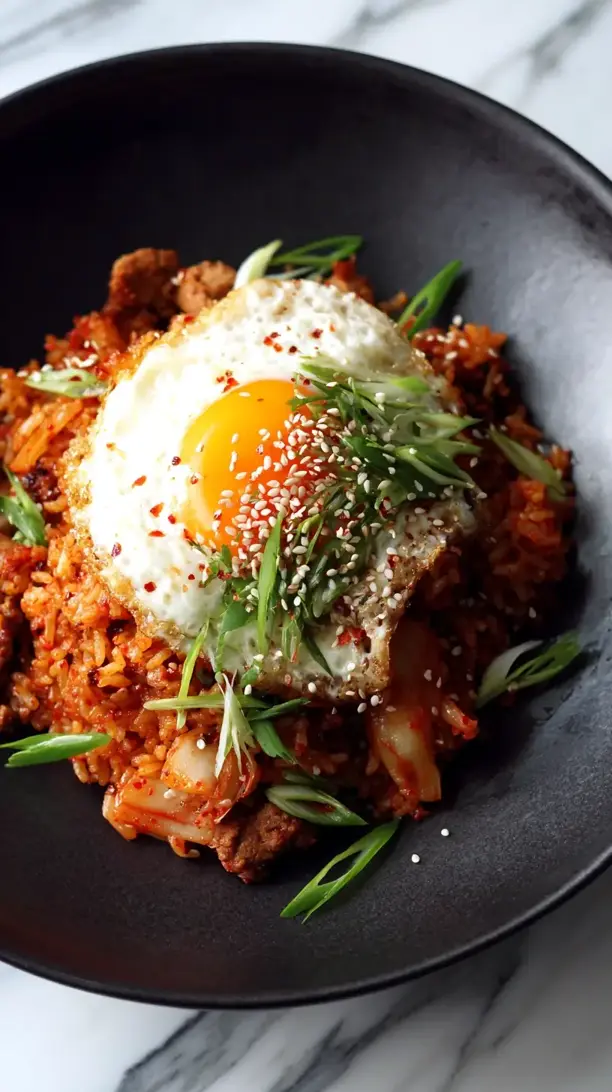
Pork And Kimchi Fried Rice
Make this easy Pork and Kimchi Fried Rice in just 25 minutes! A flavorful, spicy weeknight meal that's better than takeout. Get the recipe now!
Ingredients
For the Ingredients
-
450 g cooked and cooled jasmine or medium-grain rice
-
225 g ground pork
-
250 g cabbage kimchi (roughly chopped)
-
2 tbsp kimchi juice
-
1 small yellow onion (finely diced)
-
2 cloves garlic (minced)
-
1 tbsp fresh ginger (grated)
-
3 scallions (thinly sliced (whites and greens separated))
-
2 tbsp soy sauce
-
1 tbsp gochujang
-
1 tsp sesame oil
-
2 tbsp neutral oil
-
2 large eggs
-
1 tbsp toasted sesame seeds (for garnish)
Instructions
-
Start by prepping your sauce. In a small bowl, whisk together the soy sauce, gochujang, and that precious kimchi juice.01
-
Place your wok or large skillet over high heat and let it get properly hot. Add the neutral oil and swirl it around. Add the ground pork, using your spatula to break it up into small crumbles. Let it cook undisturbed for a minute to get a nice sear, then continue cooking until it’s no longer pink and has started to brown slightly.02
-
Push the pork to one side of the pan. To the empty space, add the diced onion, the white parts of your scallions, the minced garlic, and grated ginger. Sauté this for just 60-90 seconds—you just want the aromas to bloom and the onions to turn translucent.03
-
Now, add the chopped kimchi. Stir everything together and cook for another 2-3 minutes.04
-
Add your cold, day-old rice to the pan. Use the back of your spatula to press down and break up any large clumps. Toss and stir-fry everything together for 2-3 minutes, until the rice is heated through and each grain is coated in the oils and juices from the pan.05
-
Pour your pre-mixed sauce over the rice. Work quickly, tossing and stirring continuously to ensure every single grain gets a kiss of that savory, spicy sauce. Keep stir-frying for another 2 minutes until the sauce is fully incorporated and the rice has taken on a uniform reddish hue.06
-
Push the fried rice to the perimeter of the wok, creating a well in the center. Crack the two eggs into this well. Let them set for about 30 seconds, then quickly scramble them with your spatula right in the center of the pan. Once they’re about 80% cooked—still a bit wet—mix them into the rest of the fried rice.07
-
Turn off the heat. Now, drizzle the sesame oil over the top and add most of the green scallions (save a few for garnish). Give everything one final, vigorous toss.08
Not what you're looking for?