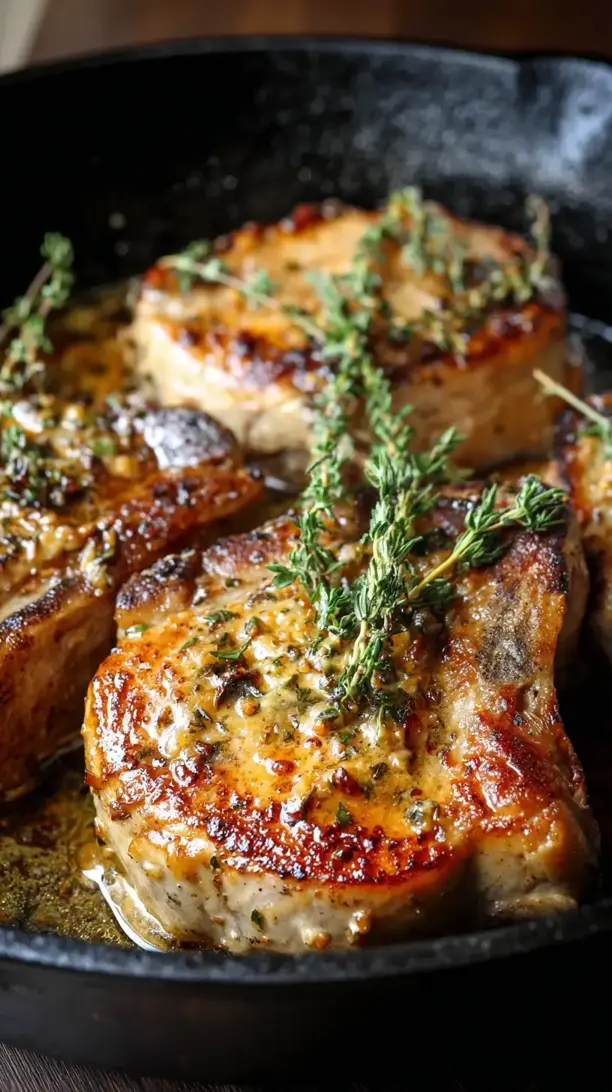
This Pork Chop Skillet is a one-pan wonder that delivers maximum flavor with minimal fuss. Juicy, bone-in chops are seared golden, then simmered in a savory pan sauce with onions, garlic, and apple cider vinegar. It’s a complete, comforting meal perfect for any night of the week.
Looking for Pork Chop Skillet inspiration? You'll love what we have! Explore more Dinner Ideas recipes or discover our Dessert Recipes favorites.



Why You’ll Love This Pork Chop Skillet
- One-Pan Wonder: Everything cooks in a single skillet for incredible flavor and easy cleanup.
- Game-Changing Sauce: The fond creates a deeply savory, glossy, restaurant-quality pan sauce.
- Incredibly Versatile: Easily swap herbs, add cream, or include mushrooms or apples to customize.
- Perfect Texture: Foolproof method ensures a crisp exterior and tender, juicy interior every time.
Ingredients & Tools
- 4 bone-in pork chops, about 1-inch thick
- 2 tbsp olive oil
- 1 large yellow onion, thinly sliced
- 4 cloves garlic, minced
- 1 cup chicken broth
- 2 tbsp apple cider vinegar
- 1 tbsp Dijon mustard
- 2 tsp fresh thyme leaves (or 1 tsp dried)
- 3 tbsp unsalted butter, cold and cubed
- To taste kosher salt and freshly ground black pepper
Tools: A large (12-inch) oven-safe skillet is essential, along with tongs and a whisk.
Notes: Don’t use thin, boneless chops—the bone-in, one-inch thickness is key for a juicy result. Cold butter stirred in at the end creates a luxuriously smooth, emulsified sauce.
Nutrition (per serving)
| Calories: | 485 kcal |
| Protein: | 35 g |
| Fat: | 36 g |
| Carbs: | 5 g |
| Fiber: | 1 g |
Serves: 4 | Prep Time: 10 minutes | Cook Time: 25 minutes | Total Time: 35 minutes
Before You Start: Tips & Ingredient Notes
- Bring your chops to room temperature. Taking the pork chops out of the fridge 20-30 minutes before cooking is a small step with a huge impact. It helps them cook more evenly, preventing a cold center and an overcooked exterior.
- Dry the chops thoroughly. Use a paper towel to pat the pork chops completely dry before seasoning. Any surface moisture will create steam and prevent that beautiful, crisp, golden-brown sear we’re after. This is non-negotiable for a perfect crust.
- Don’t skip the bone. Bone-in pork chops are inherently more flavorful and forgiving than boneless. The bone acts as an insulator, helping the meat cook more slowly and evenly, which results in a much juicier final product.
- Have your ingredients prepped and ready. Once you start searing, things move quickly. Having your onion sliced, garlic minced, and broth measured out (this is called your *mise en place*) ensures a smooth, stress-free cooking process and prevents anything from burning.
How to Make Pork Chop Skillet
Step 1: Start by prepping your pork chops. Pat them completely dry with paper towels—this is the secret to a good sear. Generously season both sides with kosher salt and freshly ground black pepper. Let them sit at room temperature while you preheat your skillet.
Step 2: Place your large, oven-safe skillet over medium-high heat and add the olive oil. You’ll know the oil is hot enough when it shimmers. Carefully place the pork chops in the pan, being sure not to overcrowd them. You should hear a confident sizzle the moment they hit the surface.
Step 3: Now, this is crucial: don’t move them! Let the chops sear undisturbed for about 4-5 minutes, until a deep golden-brown crust forms on the bottom. You can gently lift a corner to peek. When they release easily from the pan, use tongs to flip them over. Sear the other side for another 4-5 minutes.
Step 4: Transfer the seared pork chops to a clean plate. They won’t be fully cooked through yet, and that’s exactly right—they’ll finish cooking later. You’ll notice those gorgeous browned bits stuck to the bottom of the pan; that’s pure flavor gold, so don’t you dare scrub it out!
Step 5: Reduce the heat to medium and add the sliced onion to the same skillet. Sauté for about 5-6 minutes, stirring occasionally and scraping up those browned bits with your spoon. The onions will soften and become fragrant, taking on a lovely golden color from the pan drippings.
Step 6: Add the minced garlic and fresh thyme, and cook for just one more minute until incredibly fragrant. Be careful not to let the garlic burn, as it can turn bitter. The aroma at this stage is just heavenly.
Step 7: It’s deglazing time! Pour in the apple cider vinegar—it will sizzle and steam dramatically. Use your whisk to scrape every last bit of fond from the bottom of the pan. Let it reduce for about 30 seconds, then whisk in the Dijon mustard and chicken broth.
Step 8: Bring the sauce to a lively simmer and let it cook for 2-3 minutes to reduce slightly. You’ll notice it starting to thicken ever so slightly and the flavors will begin to meld together beautifully.
Step 9: Return the pork chops and any accumulated juices from the plate back into the skillet, nestling them into the onions and sauce. Simmer everything together for another 5-7 minutes, until the pork chops are cooked through to an internal temperature of 145°F (63°C).
Step 10: Turn off the heat. Now for the final, magical touch: add the cold, cubed butter to the skillet. Swirl and whisk the pan continuously until the butter has melted and emulsified into the sauce, making it rich, glossy, and velvety. Taste the sauce and adjust seasoning with more salt or pepper if needed.
Storage & Freshness Guide
- Fridge: Store leftovers in an airtight container for up to 3 days.
- Freezer: Freeze in a sealed container for up to 2 months. Thaw in fridge before reheating.
- Reviving: Reheat gently in a covered skillet with a splash of broth over low heat to prevent toughness.
Serving Suggestions
Complementary Dishes
- Creamy Mashed Potatoes — The ultimate vehicle for that incredible pan sauce. The fluffy, buttery potatoes soak up every last drop, creating the perfect bite.
- Buttered Egg Noodles — A simple, comforting base that doesn’t compete with the main event. The noodles provide a soft, neutral canvas for the savory pork and sauce.
- Garlic Sautéed Green Beans — Their crisp-tender texture and slight bitterness offer a fresh, vibrant contrast to the rich, savory flavors of the skillet.
Drinks
- A Light-Bodied Red Wine — Like a Pinot Noir or Gamay. Their bright acidity and red fruit notes cut through the richness of the pork and butter sauce beautifully without overwhelming the palate.
- A Crisp Hard Cider — The apple notes are a classic pairing with pork, and the carbonation and slight sweetness provide a refreshing counterpoint to the savory dish.
- Sparkling Water with Lemon — For a non-alcoholic option, the bubbles and citrus cleanse the palate between each rich, flavorful bite, keeping everything tasting fresh.
Something Sweet
- Classic Apple Crisp — The warm, spiced apples and oat topping continue the cozy, autumnal theme and feel like a natural, comforting follow-up to the savory main course.
- Dark Chocolate Pots de Crème — A rich, silky chocolate dessert provides a deep, bittersweet finish that contrasts elegantly with the meal’s savory notes.
- Vanilla Bean Panna Cotta — Its cool, creamy simplicity is a light and elegant way to end the meal without feeling too heavy after a satisfying skillet dinner.
Top Mistakes to Avoid
- Mistake: Moving the chops too soon. If you try to move or flip the pork chops before a crust has formed, they’ll tear and stick to the pan. That initial undisturbed sear is what creates a beautiful, non-stick surface.
- Mistake: Overcrowding the pan. If you cram too many chops into the skillet, the temperature will plummet, and they’ll steam instead of sear. Cook in batches if your pan isn’t large enough to give them plenty of space.
- Mistake: Skipping the resting step. I know it’s tempting to dig right in, but letting the pork chops rest for a few minutes after cooking allows the juices to redistribute throughout the meat. If you cut in immediately, all those precious juices will end up on your plate, not in your bite.
- Mistake: Adding the butter over high heat. The final butter must be swirled in off the heat. If the sauce is too hot, the butter will separate and make the sauce greasy instead of creamy and emulsified.
Expert Tips
- Tip: Use a meat thermometer. This is the single best way to guarantee perfectly cooked, juicy pork every single time. Pull the chops from the heat at 140°F (60°C), and they’ll carry over to a safe and succulent 145°F (63°C) as they rest.
- Tip: Brown your butter for a nutty twist. Before starting the pork, melt the butter in the skillet and cook it until it foams and smells nutty. Pour it out, then use it to sear the chops. It adds an incredible depth of flavor to the entire dish.
- Tip: Add a touch of cream or crème fraîche. For an even richer, more luxurious sauce, whisk in a couple of tablespoons of heavy cream or crème fraîche along with the cold butter at the very end. It creates a velvety, decadent texture.
- Tip: Get creative with the acid. No apple cider vinegar? A dry white wine, lemon juice, or even a splash of sherry vinegar can work wonderfully. The acid is crucial for balancing the richness and deglazing the pan.
FAQs
Can I use boneless pork chops for this recipe?
You can, but you’ll need to adjust the cooking time. Boneless chops are typically thinner and will cook much faster. Reduce the initial searing time to about 3 minutes per side, and the final simmering time in the sauce to just 2-3 minutes. Keep a very close eye on them with a meat thermometer to prevent overcooking, as they dry out more easily than their bone-in counterparts.
My sauce is too thin. How can I thicken it?
If your sauce hasn’t reduced enough, the easiest fix is to remove the pork chops and let the sauce simmer over medium heat for a few more minutes until it reaches your desired consistency. Alternatively, you can make a quick slurry by mixing a teaspoon of cornstarch with a tablespoon of cold water, then whisking it into the simmering sauce. It will thicken up almost instantly.
What does “deglazing” actually do?
Deglazing is simply the process of adding a liquid (like vinegar, wine, or broth) to a hot pan to dissolve the browned bits of food stuck to the bottom. Those bits, called *fond*, are packed with concentrated flavor. By loosening them with liquid, you’re incorporating all that deliciousness directly into your sauce, which is what gives it such a deep, complex, savory character.
Can I make this Pork Chop Skillet ahead of time?
You can sear the pork chops and prepare the sauce base (onions, garlic, broth) a few hours in advance. Store them separately in the fridge. When ready to serve, gently reheat the sauce, add the chops back in, and finish cooking until heated through. I don’t recommend fully cooking and reheating, as the chops can become tough.
What’s the best way to reheat leftovers?
The gentler, the better! To keep the pork from toughening up, reheat it slowly in a covered skillet with a splash of extra broth or water over low heat. You can also use the microwave at 50% power, checking and stirring frequently. The sauce may separate a little, but a quick whisk should bring it back together.


Pork Chop Skillet
Make this easy Pork Chop Skillet recipe for a juicy, one-pan dinner with a savory pan sauce. Ready in 35 minutes! Get the step-by-step guide now.
Ingredients
For the Ingredients
-
4 bone-in pork chops (about 1-inch thick)
-
2 tbsp olive oil
-
1 large yellow onion (thinly sliced)
-
4 cloves garlic (minced)
-
1 cup chicken broth
-
2 tbsp apple cider vinegar
-
1 tbsp Dijon mustard
-
2 tsp fresh thyme leaves (or 1 tsp dried)
-
3 tbsp unsalted butter (cold and cubed)
-
kosher salt and freshly ground black pepper (to taste)
Instructions
-
Start by prepping your pork chops. Pat them completely dry with paper towels—this is the secret to a good sear. Generously season both sides with kosher salt and freshly ground black pepper. Let them sit at room temperature while you preheat your skillet.01
-
Place your large, oven-safe skillet over medium-high heat and add the olive oil. You’ll know the oil is hot enough when it shimmers. Carefully place the pork chops in the pan, being sure not to overcrowd them. You should hear a confident sizzle the moment they hit the surface.02
-
Now, this is crucial: don’t move them! Let the chops sear undisturbed for about 4-5 minutes, until a deep golden-brown crust forms on the bottom. You can gently lift a corner to peek. When they release easily from the pan, use tongs to flip them over. Sear the other side for another 4-5 minutes.03
-
Transfer the seared pork chops to a clean plate. They won’t be fully cooked through yet, and that’s exactly right—they’ll finish cooking later. You’ll notice those gorgeous browned bits stuck to the bottom of the pan; that’s pure flavor gold, so don’t you dare scrub it out!04
-
Reduce the heat to medium and add the sliced onion to the same skillet. Sauté for about 5-6 minutes, stirring occasionally and scraping up those browned bits with your spoon. The onions will soften and become fragrant, taking on a lovely golden color from the pan drippings.05
-
Add the minced garlic and fresh thyme, and cook for just one more minute until incredibly fragrant. Be careful not to let the garlic burn, as it can turn bitter. The aroma at this stage is just heavenly.06
-
It’s deglazing time! Pour in the apple cider vinegar—it will sizzle and steam dramatically. Use your whisk to scrape every last bit of fond from the bottom of the pan. Let it reduce for about 30 seconds, then whisk in the Dijon mustard and chicken broth.07
-
Bring the sauce to a lively simmer and let it cook for 2-3 minutes to reduce slightly. You’ll notice it starting to thicken ever so slightly and the flavors will begin to meld together beautifully.08
-
Return the pork chops and any accumulated juices from the plate back into the skillet, nestling them into the onions and sauce. Simmer everything together for another 5-7 minutes, until the pork chops are cooked through to an internal temperature of 145°F (63°C).09
-
Turn off the heat. Now for the final, magical touch: add the cold, cubed butter to the skillet. Swirl and whisk the pan continuously until the butter has melted and emulsified into the sauce, making it rich, glossy, and velvety. Taste the sauce and adjust seasoning with more salt or pepper if needed.10
Not what you're looking for?