This Quick and Easy Pancit is a streamlined version of the beloved Filipino classic. Tender rice noodles, colorful vegetables, and a savory sauce come together in one pan for a deeply satisfying meal. It’s the perfect weeknight dinner that feels both comforting and special.
Love Quick and Easy Pancit? So do we! If you're into Dinner Ideas or curious about Chicken Recipes, you'll find plenty of inspiration below.



Why You’ll Love This Quick and Easy Pancit
- Fast & Fuss-Free: Active cooking takes just 20 minutes with minimal prep.
- Huge Flavor Payoff: Umami depth from soy sauce and broth with aromatic garlic and ginger.
- Incredibly Versatile: Easily adapt with your favorite protein or keep it vegetarian.
- Perfect Texture: Rice noodles achieve a beautiful tender bite coated in glossy sauce.
Ingredients & Tools
- 200 g rice sticks (bihon noodles)
- 2 tbsp vegetable oil
- 1 medium onion, thinly sliced
- 4 cloves garlic, minced
- 1 tbsp fresh ginger, grated
- 200 g chicken breast, thinly sliced (or shrimp, or firm tofu)
- 1 large carrot, julienned
- 1/2 small cabbage, thinly sliced
- 100 g green beans, trimmed and cut into 1-inch pieces
- 2 stalks celery, sliced diagonally
- 60 ml soy sauce (or tamari for gluten-free)
- 1 tbsp fish sauce (optional, but recommended for depth)
- 750 ml chicken or vegetable broth
- 1 lemon or calamansi, cut into wedges for serving
- 2 green onions, sliced for garnish
Tools: A large wok or a very large, deep skillet, tongs or two large forks for tossing.
Notes: Don’t stress if you’re missing one vegetable—the beauty here is in the mix. The fresh ginger and garlic are non-negotiable for that signature aroma, and using a good-quality broth makes a world of difference in the final flavor.
Nutrition (per serving)
| Calories: | 320 kcal |
| Protein: | 18 g |
| Fat: | 8 g |
| Carbs: | 45 g |
| Fiber: | 4 g |
Serves: 4 | Prep Time: 15 minutes | Cook Time: 15 minutes | Total Time: 30 minutes
Before You Start: Tips & Ingredient Notes
- Don’t skip soaking the noodles. Just a quick 10-15 minute soak in warm water makes them pliable and ensures they cook evenly in the sauce without becoming a starchy, clumpy mess.
- Cut your vegetables uniformly. This isn’t just for looks—it ensures everything cooks at the same rate. You want a bit of crunch from the carrots and beans, not raw hard bits or mushy overcooked pieces.
- Have your broth warm. Adding cold broth to the hot pan will drastically drop the temperature and pause the cooking process. Having it warm helps everything come together seamlessly and quickly.
- Your wok or pan should be screaming hot. A properly heated cooking surface is key for stir-frying. You want to hear a satisfying sizzle when the aromatics hit the oil—that’s where the flavor foundation is built.
How to Make Quick and Easy Pancit
Step 1: Place your rice noodles in a large bowl and cover them with warm (not boiling) water. Let them sit for about 10-15 minutes until they are pliable but still firm. They will finish cooking in the sauce later. While they soak, this is the perfect time to prep all your vegetables and protein. Having everything ready to go (your *mise en place*) makes the actual cooking process a breeze.
Step 2: Heat the vegetable oil in your large wok or skillet over medium-high heat. Once the oil is shimmering, add the sliced onion and cook for about 2 minutes until it starts to soften. Then, add the minced garlic and grated ginger. The aroma at this point is just… wow. Stir constantly for about 30 seconds to one minute—you just want it fragrant, not burnt. Burnt garlic will make the whole dish bitter.
Step 3: Add your thinly sliced chicken (or protein of choice) to the wok. Spread it out in a single layer and let it sear for a minute before stirring. Cook until it’s no longer pink on the outside, about 3-4 minutes. It doesn’t need to be fully cooked through yet, as it will continue to cook with the vegetables and noodles.
Step 4: Now, toss in all your harder vegetables: the julienned carrots and the green beans. Stir-fry them for 2-3 minutes. You’ll notice the vibrant orange of the carrots becoming even brighter. They should start to soften slightly but still retain a good crunch. This initial cook for the harder veggies ensures they won’t be raw in the final dish.
Step 5: Add the softer vegetables—the thinly sliced cabbage and celery. Give everything a good toss. The cabbage will wilt down significantly, so don’t be alarmed if your pan looks very full at first. Cook for another 2 minutes until the cabbage has softened.
Step 6: Pour in the warm chicken broth, followed by the soy sauce and fish sauce (if using). Bring the liquid to a lively simmer. You should see bubbles breaking the surface all over. Let it simmer for about 2 minutes to allow the flavors to start melding together.
Step 7: Drain your soaked rice noodles and add them directly to the simmering broth and vegetable mixture. Using tongs or two forks, gently toss and lift the noodles, ensuring they all get submerged in the liquid. The trick is to coat every strand. The noodles will absorb the broth and soften to perfection.
Step 8: Continue to cook, tossing frequently, for about 3-5 minutes. The liquid will reduce and be absorbed, leaving you with a glossy sauce that coats everything. The noodles are done when they are tender but still have a slight chew. Take a bite to test! If it seems a bit dry, you can add a splash more broth or water.
Step 9: Do a final taste test. Does it need a bit more salt? A dash more soy sauce? Maybe a crack of black pepper? Adjust to your liking. Once you’re happy, turn off the heat. Transfer your glorious pancit to a serving platter and get ready for the finishing touches.
Step 10: Garnish generously with the sliced green onions and serve immediately with lemon or calamansi wedges on the side. Squeezing that fresh citrus juice over the top right before eating is non-negotiable—it brightens up the entire dish and cuts through the richness beautifully.
Storage & Freshness Guide
- Fridge: Store in an airtight container for up to 3 days.
- Freezer: Not recommended; noodles can become mushy upon thawing.
- Reviving: Reheat in a skillet with a splash of broth or water to loosen noodles.
Serving Suggestions
Complementary Dishes
- Lumpia Shanghai — These crispy, savory spring rolls are the ultimate textural contrast to the soft noodles and make any meal feel like a proper feast.
- Simple Grilled Chicken Skewers — If you want an extra protein boost, some simply seasoned grilled chicken on the side complements the pancit without overpowering its delicate flavors.
- Atchara (Filipino Pickled Papaya) — The sweet, sour, and crunchy pickle provides a fantastic palate cleanser and a burst of acidity that resets your taste buds between bites.
Drinks
- Iced Calamansi Juice — The quintessential Filipino drink, its sweet and tangy profile is a perfect match for the savory, umami-rich notes of the pancit.
- San Miguel Beer — A crisp, light lager that cuts through the dish’s richness beautifully. It’s a classic pairing for a reason.
- Sparkling Water with Lemon — For a non-alcoholic option, the bubbles and citrus are incredibly refreshing and help balance the savory flavors.
Something Sweet
- Halo-Halo — The legendary Filipino shaved ice dessert with its mix of sweet beans, jellies, and leche flan is a celebratory and wonderfully contrasting end to the meal.
- Leche Flan — A rich, creamy caramel custard that feels indulgent and luxurious after the light, savory noodles.
- Fresh Sliced Mangoes — Sometimes, simple is best. The natural sweetness and juiciness of ripe mangoes are a flawless, refreshing finish.
Top Mistakes to Avoid
- Over-soaking the noodles. If you let them sit in water for too long, they’ll become too soft and mushy when you add them to the pan. You’re just looking for pliable, not fully cooked.
- Crowding the pan. Using a pan that’s too small means you’ll steam the vegetables instead of stir-frying them. You lose that slight char and concentrated flavor. A large wok is your best friend here.
- Burning the garlic and ginger. They cook in less than a minute. If they burn, they’ll impart a bitter taste to the entire dish. Keep the heat controlled and your stirring constant.
- Skipping the citrus squeeze at the end. I know it seems like a small thing, but that hit of fresh acidity at the end is what lifts the entire dish from good to absolutely unforgettable. Don’t forget it!
Expert Tips
- Tip: For a deeper, more complex flavor, add a teaspoon of oyster sauce along with the soy sauce. It adds another layer of savory umami that is just incredible.
- Tip: If you want a bit of heat, add a finely chopped bird’s eye chili (siling labuyo) when you’re cooking the garlic and ginger. It infuses the oil with a gentle, pervasive spice.
- Tip: To make this ahead, prepare the recipe but stop before adding the noodles. Store the vegetable and protein mixture and the soaked, drained noodles separately. When ready to serve, reheat the mixture with a splash of broth, then add the noodles and finish as directed.
- Tip: For extra color and a slight peppery bite, stir in a handful of fresh snow peas during the last minute of cooking with the cabbage.
- Tip: Leftovers reheat surprisingly well. Add a tablespoon or two of water or broth to the pan when reheating to loosen up the noodles and prevent them from drying out or sticking.
FAQs
Can I use a different type of noodle?
Absolutely! While rice sticks (bihon) are traditional, you can use other thin noodles. Vermicelli rice noodles work perfectly. Some versions even use a combination of rice noodles and canton (wheat) noodles. Just adjust the cooking time according to the package directions for the specific noodle you choose, as absorption rates can vary.
My pancit turned out a bit soggy. What happened?
This usually happens for one of two reasons: either the noodles were over-soaked and became too soft before cooking, or there was too much liquid in the pan when you finished. The goal is to have the noodles absorb most, but not all, of the broth, leaving a light sauce. Next time, try reducing the broth by about 100 ml, or let it simmer for a minute or two longer to reduce further.
Is it okay to use frozen vegetables?
You can, but the texture will be different. Frozen vegetables release more water as they cook, which can make your pancit wetter. If you do use them, I’d recommend a stir-fry mix, and add them straight from the freezer during the last 3-4 minutes of cooking. There’s no need to thaw them first. For the best crunch and flavor, fresh is definitely preferred.
How long do leftovers last in the fridge?
Leftovers will keep well in an airtight container in the refrigerator for up to 3 days. The noodles will continue to absorb moisture, so they might dry out a bit. The best way to reheat is in a skillet or microwave with a small splash of water or broth to bring back the sauciness.
Can I make this vegetarian or vegan?
Easily! For a vegetarian version, simply omit the chicken and use firm tofu (pan-fry it first for best texture) and vegetable broth. For vegan, do the same and also ensure your fish sauce is omitted or replaced with a vegan fish sauce alternative. The dish is incredibly adaptable and still packed with flavor.



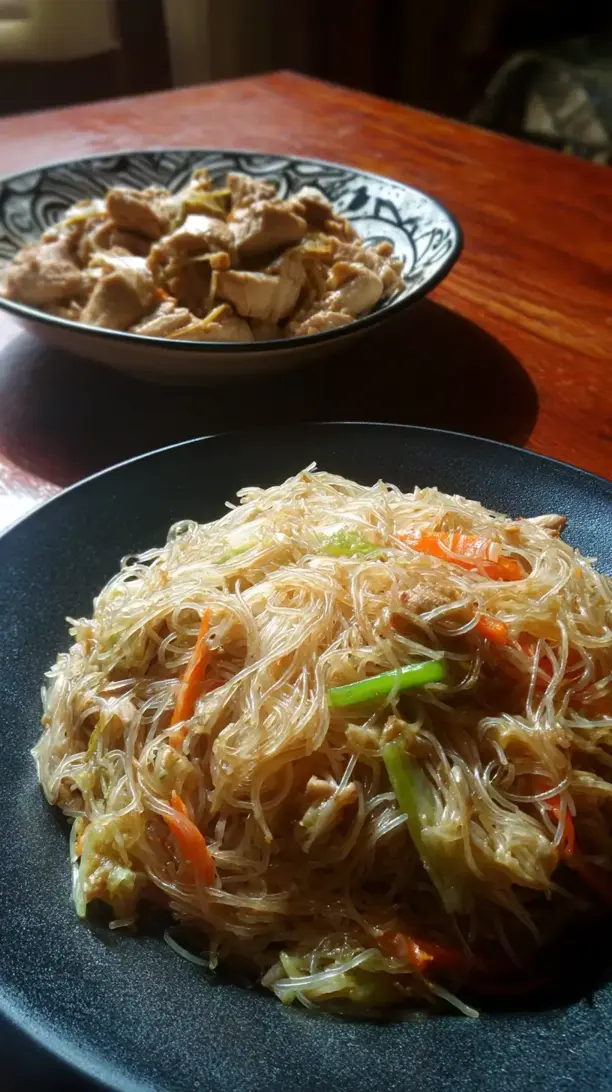
Quick And Easy Pancit
Make this authentic Quick and Easy Pancit in just 30 minutes! A savory Filipino noodle stir-fry packed with veggies and flavor. Get the simple recipe now!
Ingredients
For the Ingredients
-
200 g rice sticks (bihon noodles)
-
2 tbsp vegetable oil
-
1 medium onion (thinly sliced)
-
4 cloves garlic (minced)
-
1 tbsp fresh ginger (grated)
-
200 g chicken breast (thinly sliced (or shrimp, or firm tofu))
-
1 large carrot (julienned)
-
0.5 small cabbage (thinly sliced)
-
100 g green beans (trimmed and cut into 1-inch pieces)
-
2 stalks celery (sliced diagonally)
-
60 ml soy sauce (or tamari for gluten-free)
-
1 tbsp fish sauce (optional, but recommended for depth)
-
750 ml chicken or vegetable broth
-
1 lemon or calamansi (cut into wedges for serving)
-
2 green onions (sliced for garnish)
Instructions
-
Place your rice noodles in a large bowl and cover them with warm (not boiling) water. Let them sit for about 10-15 minutes until they are pliable but still firm. They will finish cooking in the sauce later. While they soak, this is the perfect time to prep all your vegetables and protein. Having everything ready to go (your *mise en place*) makes the actual cooking process a breeze.01
-
Heat the vegetable oil in your large wok or skillet over medium-high heat. Once the oil is shimmering, add the sliced onion and cook for about 2 minutes until it starts to soften. Then, add the minced garlic and grated ginger. The aroma at this point is just… wow. Stir constantly for about 30 seconds to one minute—you just want it fragrant, not burnt. Burnt garlic will make the whole dish bitter.02
-
Add your thinly sliced chicken (or protein of choice) to the wok. Spread it out in a single layer and let it sear for a minute before stirring. Cook until it’s no longer pink on the outside, about 3-4 minutes. It doesn't need to be fully cooked through yet, as it will continue to cook with the vegetables and noodles.03
-
Now, toss in all your harder vegetables: the julienned carrots and the green beans. Stir-fry them for 2-3 minutes. You’ll notice the vibrant orange of the carrots becoming even brighter. They should start to soften slightly but still retain a good crunch. This initial cook for the harder veggies ensures they won't be raw in the final dish.04
-
Add the softer vegetables—the thinly sliced cabbage and celery. Give everything a good toss. The cabbage will wilt down significantly, so don’t be alarmed if your pan looks very full at first. Cook for another 2 minutes until the cabbage has softened.05
-
Pour in the warm chicken broth, followed by the soy sauce and fish sauce (if using). Bring the liquid to a lively simmer. You should see bubbles breaking the surface all over. Let it simmer for about 2 minutes to allow the flavors to start melding together.06
-
Drain your soaked rice noodles and add them directly to the simmering broth and vegetable mixture. Using tongs or two forks, gently toss and lift the noodles, ensuring they all get submerged in the liquid. The trick is to coat every strand. The noodles will absorb the broth and soften to perfection.07
-
Continue to cook, tossing frequently, for about 3-5 minutes. The liquid will reduce and be absorbed, leaving you with a glossy sauce that coats everything. The noodles are done when they are tender but still have a slight chew. Take a bite to test! If it seems a bit dry, you can add a splash more broth or water.08
-
Do a final taste test. Does it need a bit more salt? A dash more soy sauce? Maybe a crack of black pepper? Adjust to your liking. Once you're happy, turn off the heat. Transfer your glorious pancit to a serving platter and get ready for the finishing touches.09
-
Garnish generously with the sliced green onions and serve immediately with lemon or calamansi wedges on the side. Squeezing that fresh citrus juice over the top right before eating is non-negotiable—it brightens up the entire dish and cuts through the richness beautifully.10
Not what you're looking for?