
This Roasted Garlic and Potato Soup is deeply comforting and elegant in its simplicity. Roasting the garlic transforms it into a sweet, caramelized powerhouse that melds beautifully with earthy potatoes. It’s velvety, luxurious, and perfect for a cozy meal.
If you're looking for the perfect Roasted Garlic and Potato Soup, you're in the right place. Whether you love Soup Recipes or want to explore our Christmas Cookie collection, we've got you covered.


Why You’ll Love This Roasted Garlic and Potato Soup
- Deep, complex flavor: Roasted garlic adds incredible depth with minimal effort.
- Creamy texture, naturally: Starchy potatoes create a velvety base without heavy cream.
- Wonderfully versatile: A fantastic blank canvas for your favorite toppings.
- Amazing aroma: Your kitchen will smell like comforting aromatherapy.
Ingredients & Tools
- 2 whole heads of garlic
- 1 tbsp olive oil, plus 2 tbsp for cooking
- 1 large yellow onion, diced
- 2 lbs Yukon Gold or Russet potatoes, peeled and cubed
- 4 cups vegetable or chicken broth
- 1 tsp fresh thyme leaves (or ½ tsp dried)
- ½ cup heavy cream or full-fat coconut milk
- To taste, salt and freshly ground black pepper
- For garnish, chopped chives, crispy bacon bits, or a drizzle of truffle oil
Tools: A large soup pot or Dutch oven, a baking sheet, aluminum foil, a blender or immersion blender
Notes: Don’t skip roasting the garlic—it’s the soul of this recipe. A flavorful broth makes a difference.
Nutrition (per serving)
| Calories: | 320 kcal |
| Protein: | 7 g |
| Fat: | 14 g |
| Carbs: | 45 g |
| Fiber: | 4 g |
Serves: 4 | Prep Time: 20 minutes | Cook Time: 50 minutes | Total Time: 1 hour 10 minutes
Before You Start: Tips & Ingredient Notes
- Which potatoes are best? For the creamiest texture, go with starchy potatoes like Russets. For a slightly waxier, hold-their-shape-better texture, Yukon Golds are a fantastic middle ground. I personally love Yukon Golds for this soup.
- Can I use pre-minced garlic? Honestly, I wouldn’t recommend it for this particular recipe. The flavor profile of roasted whole garlic cloves is completely different—sweet, mellow, and complex—and it’s central to the soup’s character.
- Don’t rush the roasting. The garlic needs time in the oven to become soft, golden, and sweet. If it’s not completely tender and spreadable, it hasn’t roasted long enough. Patience is key here.
- Broth matters. Since the broth is a main component, using a high-quality, low-sodium version allows you to control the salt level perfectly. A homemade broth would be sublime, but a good store-bought one works wonderfully.
How to Make Roasted Garlic and Potato Soup
Step 1: First, let’s roast that garlic. Preheat your oven to 400°F (200°C). Slice about ½ inch off the top of each garlic head to expose the cloves. Place each head on a piece of foil, drizzle with a tablespoon of olive oil, and wrap them up into little packets. Roast for 35-40 minutes, until the cloves are deeply golden, soft, and fragrant. You’ll know they’re done when you can easily squeeze the paste out.
Step 2: While the garlic is cooling, heat the remaining 2 tablespoons of olive oil in your large soup pot over medium heat. Add the diced onion and cook, stirring occasionally, for about 8-10 minutes until it’s soft and translucent. You’re not looking for color here, just sweetness. This step builds a great flavor base.
Step 3: Add the cubed potatoes and thyme to the pot. Stir everything together so the potatoes get nicely coated in the oil and onion. Cook for just another minute to let the thyme become fragrant. This quick toast really wakes up the herb’s essential oils.
Step 4: Now, carefully squeeze the soft, roasted garlic paste from each clove into the pot. It might feel a bit messy, but that’s okay—get every last bit in there! Pour in the broth, bring everything to a boil, then reduce the heat to a simmer. Let it cook, uncovered, for 20-25 minutes, until the potatoes are completely fork-tender.
Step 5: This is the fun part. Remove the pot from the heat. Using an immersion blender, carefully blend the soup directly in the pot until it’s completely smooth. If you’re using a countertop blender, work in batches and be very careful—the soup is extremely hot. Never fill the blender more than halfway, and hold the lid down with a kitchen towel.
Step 6: Once the soup is silky smooth, stir in the heavy cream. Return the pot to low heat just to warm it through—you don’t want it to boil after adding the cream. Now, taste it! This is where you season it perfectly. Add salt and plenty of black pepper until it sings. The soup should be rich, earthy, and with a beautiful sweetness from the garlic.
Storage & Freshness Guide
- Fridge: Cool completely and store in an airtight container for up to 3 days.
- Freezer: Freeze before adding cream for up to 3 months; thaw in fridge before reheating.
- Reviving: Reheat gently on the stovetop, stirring often; thin with broth if needed.
Serving Suggestions
Complementary Dishes
- A simple, crusty baguette — There’s nothing better for dipping and scooping up every last bit of this creamy soup. The contrast between the crunchy crust and soft interior is just perfect.
- A sharp arugula salad with a lemon vinaigrette — The peppery, bitter greens and bright, acidic dressing cut through the soup’s richness beautifully, balancing the whole meal.
- A grilled cheese sandwich — Go for a mature cheddar or gruyère. The crispy, buttery bread and melted cheese create the ultimate comfort food pairing that feels both nostalgic and utterly satisfying.
Drinks
- A crisp, unoaked Chardonnay — Its bright acidity and notes of green apple complement the soup’s creamy texture and earthy flavors without overpowering them.
- A dark, malty lager or amber ale — The toasted notes in the beer mirror the caramelized flavors of the roasted garlic, creating a really harmonious sip between spoonfuls.
Something Sweet
- Warm apple crumble with vanilla ice cream — The warm, spiced fruit and cold, creamy ice cream is a classic dessert that continues the theme of warmth and comfort from the main course.
Top Mistakes to Avoid
- Mistake: Blending hot soup in a sealed blender. The steam pressure can blow the lid right off, creating a dangerous and very messy situation. Always vent the blender lid and hold a kitchen towel over the top.
- Mistake: Underseasoning. Potatoes and broth need a good amount of salt to truly shine. Season in stages, especially at the end after you’ve added the cream, to build layers of flavor.
- Mistake: Boiling the soup after adding the cream. This can cause the dairy to curdle or separate, giving the soup a grainy texture. Just warm it through gently.
- Mistake: Using watery potatoes. Avoid new potatoes or red potatoes, as they have a higher water content and a waxier texture, which won’t break down to create that signature creamy body.
Expert Tips
- Tip: Roast extra garlic. Seriously, roast a third or even a fourth head. You can stir the extra paste into mashed potatoes, spread it on toast, or whisk it into salad dressings. It keeps in the fridge for a week.
- Tip: Add a Parmesan rind. If you have one stashed in your freezer, toss the rind into the pot while the soup simmers. It adds an incredible layer of savory, umami depth that’s just magical.
- Tip: For a super-silky finish, pass it through a sieve. After blending, press the soup through a fine-mesh sieve with the back of a ladle. It’s an extra step, but it catches any tiny fibrous bits for an impossibly smooth restaurant-quality texture.
- Tip: Let the soup rest before serving. Soups, especially creamy ones, often taste better after sitting for 15-20 minutes off the heat. The flavors have a chance to meld and deepen beautifully.
FAQs
Can I make this soup ahead of time?
Absolutely, and it might even be better the next day! Let the soup cool completely before storing it in an airtight container in the refrigerator for up to 3 days. The flavors really intensify as it sits. When reheating, do so gently over low heat on the stovetop, stirring frequently. You may need to add a splash of broth or water as it will thicken up in the fridge.
How can I make this soup vegan?
It’s very easy! Simply use vegetable broth and substitute the heavy cream with full-fat canned coconut milk. The coconut milk provides a wonderful richness and a slight sweetness that actually pairs really well with the roasted garlic. Just be sure to use the unsweetened variety.
My soup is too thick. How can I thin it out?
No problem at all! Just gradually whisk in a little more broth, water, or even some extra cream until it reaches your desired consistency. Add it a quarter-cup at a time, stir well, and check the texture. It’s much easier to thin a soup than to thicken it back up.
Can I freeze Roasted Garlic and Potato Soup?
You can, but with a small caveat. Cream-based soups can sometimes separate or become grainy upon thawing. For the best results, freeze the soup *before* you add the cream. Then, when you’re ready to eat, thaw it overnight in the fridge, reheat it, and stir in the fresh cream at the end.
What’s the best way to reheat leftover soup?
The stovetop is your best friend here. Gently warm it over low to medium-low heat, stirring often to prevent it from sticking to the bottom of the pot. Avoid the microwave if you can, as it can heat unevenly and may cause the cream to separate. If you must use a microwave, do it in short bursts, stirring between each one.



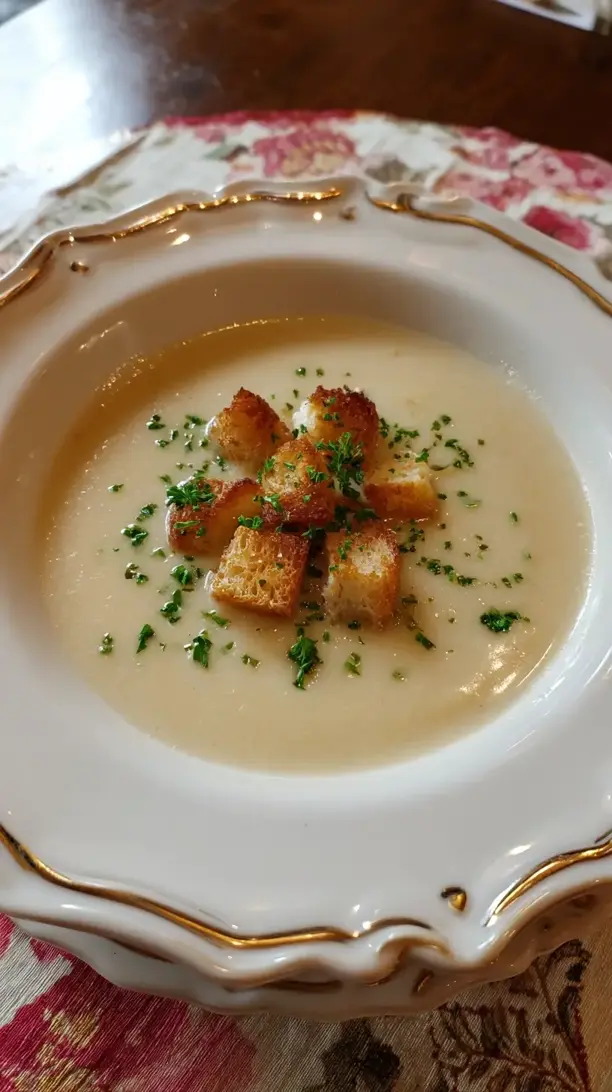
Roasted Garlic And Potato Soup
Learn how to make the best Roasted Garlic and Potato Soup. This creamy, elegant comfort food is surprisingly simple. Get the full recipe and start cooking!
Ingredients
For the soup:
-
2 whole heads garlic
-
1 tbsp olive oil
-
2 tbsp olive oil
-
1 large yellow onion (diced)
-
2 lbs Yukon Gold or Russet potatoes (peeled and cubed)
-
4 cups vegetable or chicken broth
-
1 tsp fresh thyme leaves (or ½ tsp dried)
-
½ cup heavy cream or full-fat coconut milk
-
salt and freshly ground black pepper (to taste)
-
chopped chives, crispy bacon bits, or a drizzle of truffle oil (for garnish)
Instructions
-
First, let’s roast that garlic. Preheat your oven to 400°F (200°C). Slice about ½ inch off the top of each garlic head to expose the cloves. Place each head on a piece of foil, drizzle with a tablespoon of olive oil, and wrap them up into little packets. Roast for 35-40 minutes, until the cloves are deeply golden, soft, and fragrant. You’ll know they’re done when you can easily squeeze the paste out.01
-
While the garlic is cooling, heat the remaining 2 tablespoons of olive oil in your large soup pot over medium heat. Add the diced onion and cook, stirring occasionally, for about 8-10 minutes until it’s soft and translucent. You’re not looking for color here, just sweetness. This step builds a great flavor base.02
-
Add the cubed potatoes and thyme to the pot. Stir everything together so the potatoes get nicely coated in the oil and onion. Cook for just another minute to let the thyme become fragrant. This quick toast really wakes up the herb’s essential oils.03
-
Now, carefully squeeze the soft, roasted garlic paste from each clove into the pot. It might feel a bit messy, but that’s okay—get every last bit in there! Pour in the broth, bring everything to a boil, then reduce the heat to a simmer. Let it cook, uncovered, for 20-25 minutes, until the potatoes are completely fork-tender.04
-
This is the fun part. Remove the pot from the heat. Using an immersion blender, carefully blend the soup directly in the pot until it’s completely smooth. If you’re using a countertop blender, work in batches and be very careful—the soup is extremely hot. Never fill the blender more than halfway, and hold the lid down with a kitchen towel.05
-
Once the soup is silky smooth, stir in the heavy cream. Return the pot to low heat just to warm it through—you don’t want it to boil after adding the cream. Now, taste it! This is where you season it perfectly. Add salt and plenty of black pepper until it sings. The soup should be rich, earthy, and with a beautiful sweetness from the garlic.06
Not what you're looking for?