
Roasting tomatoes transforms them into a deep, caramelized essence of summer. This Roasted Tomato Basil Bisque captures that magic in a velvety, luxurious bowl of comfort. The secret is a slow roast and a final swirl of cream for a complex flavor you can’t get from a can.
Nothing beats a great Roasted Tomato Basil Bisque. Whether you're a fan of Soup Recipes or want to try something from our Crockpot Recipes selection, keep scrolling!



Why You’ll Love This Roasted Tomato Basil Bisque
- Deep caramelized flavor: Roasting unlocks natural sweetness and smoky depth.
- Creamy yet light: A modest amount of cream adds silkiness without heaviness.
- Perfect for meal prep: Flavor improves overnight and it freezes beautifully.
- Elegant & approachable: Simple roast-simmer-blend process impresses with ease.
Ingredients & Tools
- 2 lbs ripe Roma tomatoes, halved
- 1 large yellow onion, roughly chopped
- 4 cloves garlic, peeled
- 3 tbsp olive oil
- 1 tsp kosher salt, plus more to taste
- ½ tsp freshly cracked black pepper
- 1 tbsp tomato paste
- 4 cups vegetable broth (low sodium)
- 1 cup packed fresh basil leaves, plus more for garnish
- ½ cup heavy cream
- 1 tsp granulated sugar (optional, to balance acidity)
Tools: A large baking sheet, a large pot or Dutch oven, an immersion blender or standard countertop blender
Notes: Use ripe, fragrant Roma tomatoes for best flavor. Fresh basil is essential—do not substitute dried.
Nutrition (per serving)
| Calories: | 245 kcal |
| Protein: | 4 g |
| Fat: | 18 g |
| Carbs: | 20 g |
| Fiber: | 5 g |
Serves: 4 | Prep Time: 15 minutes | Cook Time: 1 hour | Total Time: 1 hour 15 minutes
Before You Start: Tips & Ingredient Notes
- Why Roma tomatoes? They have a denser flesh and fewer seeds than other varieties like beefsteak, which means less water and a more concentrated, robust tomato flavor in your final bisque.
- Don’t skip the roasting step. This is the non-negotiable foundation of flavor. Roasting caramelizes the natural sugars in the vegetables, creating a deep, sweet, and slightly smoky base that boiling just can’t replicate.
- Use low-sodium broth. This gives you complete control over the seasoning. As the soup reduces, the saltiness can concentrate, so it’s much safer to start with a less-salty base and adjust at the end.
- Why add the basil at the end? Basil’s delicate, aromatic oils are volatile and can become bitter if cooked for too long. Stirring it in just before blending preserves its fresh, vibrant character.
How to Make Roasted Tomato Basil Bisque
Step 1: Preheat your oven to 400°F (200°C). Arrange the halved Roma tomatoes (cut-side up), chopped onion, and peeled garlic cloves on a large baking sheet. Drizzle everything generously with the olive oil and sprinkle with the salt and pepper. Use your hands to toss it all together, making sure every piece is lightly coated. You’ll notice the oil helps the seasonings cling and promotes beautiful, even browning.
Step 2: Roast the vegetables for 35-45 minutes. You’re looking for the tomatoes to be soft, collapsed, and charred in spots, and the onions to be tender and golden brown. The garlic should feel completely soft when pierced with a knife. That caramelization you see is pure flavor gold—don’t be afraid of a little black on the edges of the tomatoes.
Step 3: Carefully transfer the roasted vegetables and all the juicy bits from the pan into a large pot or Dutch oven. Add the tomato paste and cook over medium heat for about one minute, stirring constantly. This “toasts” the paste, deepening its flavor and removing any raw, tinny taste.
Step 4: Pour in the vegetable broth, using a wooden spoon to scrape up any browned bits stuck to the bottom of the pot. Those bits are packed with flavor! Bring the mixture to a simmer, then reduce the heat and let it cook gently for about 15 minutes. This allows the flavors to meld together beautifully.
Step 5: Turn off the heat. Now, stir in the packed cup of fresh basil leaves. They’ll wilt almost instantly in the hot liquid, releasing their incredible perfume. This is when the soup truly comes to life.
Step 6: Carefully blend the soup until it’s perfectly smooth. If using an immersion blender, do it right in the pot. For a standard blender, work in batches, never filling the jar more than halfway, and hold the lid down with a kitchen towel—hot soup expands and can cause a dangerous explosion. The texture should be velvety and uniform.
Step 7: Return the smooth soup to the pot over low heat. Stir in the heavy cream. Now is the time to taste and season. Does it need more salt? A crack of pepper? If it tastes a little too sharp or acidic, that’s when you’d stir in the optional teaspoon of sugar to balance it out. Heat it through gently—do not let it boil after adding the cream.
Step 8: Ladle the bisque into bowls. Garnish with a drizzle of cream, a few fresh basil leaves, and a grind of black pepper. Serve it immediately and listen for the happy sighs. The aroma alone is worth the effort.
Storage & Freshness Guide
- Fridge: Cool completely, then store in an airtight container for up to 4 days.
- Freezer: Freeze before adding cream for up to 3 months. Thaw in fridge overnight.
- Reviving: Reheat gently on stovetop; stir in cream after thawing if frozen.
Serving Suggestions
Complementary Dishes
- A truly epic grilled cheese sandwich — The classic pairing for a reason. Use a sturdy sourdough and a mix of sharp cheddar and gruyère for the ultimate crispy, cheesy dipper.
- A simple, crisp green salad — Something with a sharp vinaigrette, like an arugula salad with shaved parmesan, cuts through the bisque’s richness perfectly and adds a fresh contrast.
- Garlic bread or cheesy breadsticks — For when you want to lean all the way into the cozy, carb-y comfort. They’re perfect for swiping up every last drop from the bowl.
Drinks
- A crisp, unoaked Chardonnay — Its bright acidity and notes of citrus and green apple complement the tomato’s acidity and cleanse the palate between creamy, savory spoonfuls.
- Sparkling water with lemon — The bubbles and citrus are a non-alcoholic option that does the same job of cutting through the richness and refreshing your taste buds.
- An ice-cold lager — The clean, crisp bitterness of a good lager is a fantastic counterpoint to the sweet, creamy soup, making for a surprisingly perfect pub-style pairing.
Something Sweet
- Lemon sorbet — Its sharp, clean, and icy-cold finish is the ultimate palate cleanser after a rich and savory meal, leaving you feeling refreshed and satisfied.
- Dark chocolate truffles — A few bites of something intensely chocolatey and not too sweet provide a sophisticated, decadent endnote that doesn’t overwhelm.
- Shortbread cookies — Their simple, buttery sweetness and crumbly texture are a gentle, comforting way to end the meal without any fuss.
Top Mistakes to Avoid
- Mistake: Using underripe or out-of-season tomatoes. They lack the necessary sugar content and will result in a flat, acidic soup no matter how long you roast them. Your bisque will only ever be as good as your main ingredient.
- Mistake: Blending the soup while it’s too hot in a sealed blender. The steam pressure can blow the lid right off, creating a dangerous and very messy situation. Always vent the blender and hold the lid down firmly.
- Mistake: Boiling the soup after adding the cream. This can cause the cream to curdle or separate, giving your beautiful bisque a grainy texture. Just warm it through gently over low heat.
- Mistake: Skimping on the fresh basil or adding it too early. Cooked basil loses its vibrant green color and fresh, peppery aroma, turning dull and slightly bitter. It’s a finishing herb, not a simmering one.
Expert Tips
- Tip: For an extra layer of flavor, add a parmesan rind to the pot while the soup is simmering. It melts into the broth, adding a wonderful savory, umami depth that is just incredible. Remember to fish it out before blending!
- Tip: If you prefer a super-silky, restaurant-style texture, pass the blended soup through a fine-mesh sieve. This will catch any tiny bits of tomato skin and seeds, resulting in an impossibly smooth bisque.
- Tip: For a dairy-free version, swap the heavy cream for full-fat canned coconut milk. It provides a similar richness and creamy texture, with a very subtle tropical note that actually works quite well with the tomatoes and basil.
- Tip: If your bisque is a bit too thick after blending, simply thin it out with a splash more vegetable broth until it reaches your desired consistency. It’s much easier to thin a soup than to thicken it!
FAQs
Can I make this bisque ahead of time?
Absolutely, and I often do! This soup is a fantastic make-ahead meal. Let it cool completely after cooking, then store it in an airtight container in the refrigerator for up to 4 days. The flavors meld and deepen, making it even better the next day. Reheat it gently on the stovetop over low heat, stirring occasionally.
How do I freeze roasted tomato basil bisque?
Freeze it before adding the cream for the best results. The dairy can sometimes separate upon thawing. Portion the cooled, cream-free soup into freezer-safe containers or bags, leaving some space for expansion. It will keep well for up to 3 months. Thaw in the fridge overnight, then reheat and stir in the cream just before serving.
My soup is too acidic. What can I do?
This can happen, especially with less-ripe tomatoes. The trick is to balance it out. First, make sure you’ve added enough salt, as it can help mitigate perceived acidity. If it’s still too sharp, stir in that optional teaspoon of granulated sugar, or even a tiny pinch of baking soda (start with 1/8 tsp)—it neutralizes acid. A splash of cream can also help mellow it.
Can I use an immersion blender vs. a regular blender?
You can use either, and they both have pros and cons. An immersion blender is easier and creates less mess since you blend right in the pot. A regular countertop blender often creates a slightly smoother, more aerated texture, but you have to work in batches and be very careful with the hot liquid. Both will give you a delicious result.
What’s the difference between a bisque and a soup?
Traditionally, a bisque is a smooth, creamy, and highly seasoned soup classically made from puréed shellfish. In modern terms, “bisque” generally refers to any rich, creamy, puréed soup. The key differentiators for this recipe are the velvety texture from the cream and the depth of flavor achieved by roasting and puréeing the main ingredient.



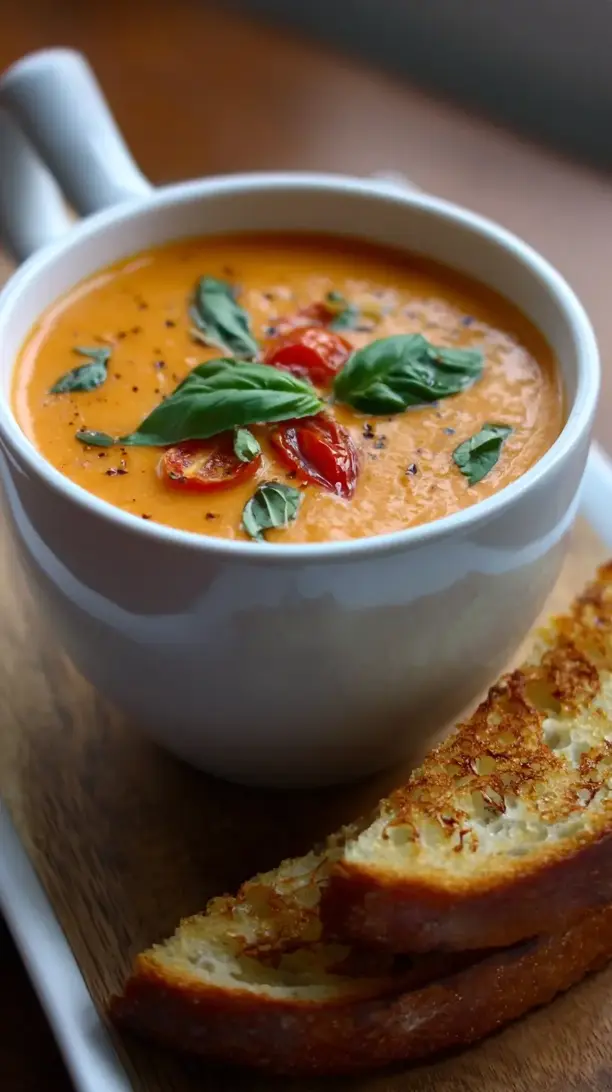
Roasted Tomato Basil Bisque
Learn how to make the best Roasted Tomato Basil Bisque with this easy recipe. Deep, caramelized flavor and a velvety texture make it the ultimate comfort food. Get the recipe now!
Ingredients
For the Ingredients
-
2 lbs ripe Roma tomatoes (halved)
-
1 large yellow onion (roughly chopped)
-
4 cloves garlic (peeled)
-
3 tbsp olive oil
-
1 tsp kosher salt (plus more to taste)
-
0.5 tsp freshly cracked black pepper
-
1 tbsp tomato paste
-
4 cups vegetable broth (low sodium)
-
1 cup packed fresh basil leaves (plus more for garnish)
-
0.5 cup heavy cream
-
1 tsp granulated sugar (optional, to balance acidity)
Instructions
-
Preheat your oven to 400°F (200°C). Arrange the halved Roma tomatoes (cut-side up), chopped onion, and peeled garlic cloves on a large baking sheet. Drizzle everything generously with the olive oil and sprinkle with the salt and pepper. Use your hands to toss it all together, making sure every piece is lightly coated.01
-
Roast the vegetables for 35-45 minutes. You’re looking for the tomatoes to be soft, collapsed, and charred in spots, and the onions to be tender and golden brown. The garlic should feel completely soft when pierced with a knife.02
-
Carefully transfer the roasted vegetables and all the juicy bits from the pan into a large pot or Dutch oven. Add the tomato paste and cook over medium heat for about one minute, stirring constantly.03
-
Pour in the vegetable broth, using a wooden spoon to scrape up any browned bits stuck to the bottom of the pot. Bring the mixture to a simmer, then reduce the heat and let it cook gently for about 15 minutes.04
-
Turn off the heat. Now, stir in the packed cup of fresh basil leaves.05
-
Carefully blend the soup until it’s perfectly smooth. If using an immersion blender, do it right in the pot. For a standard blender, work in batches, never filling the jar more than halfway, and hold the lid down with a kitchen towel.06
-
Return the smooth soup to the pot over low heat. Stir in the heavy cream. Now is the time to taste and season. If it tastes a little too sharp or acidic, that’s when you’d stir in the optional teaspoon of sugar to balance it out. Heat it through gently—do not let it boil after adding the cream.07
-
Ladle the bisque into bowls. Garnish with a drizzle of cream, a few fresh basil leaves, and a grind of black pepper.08
Not what you're looking for?