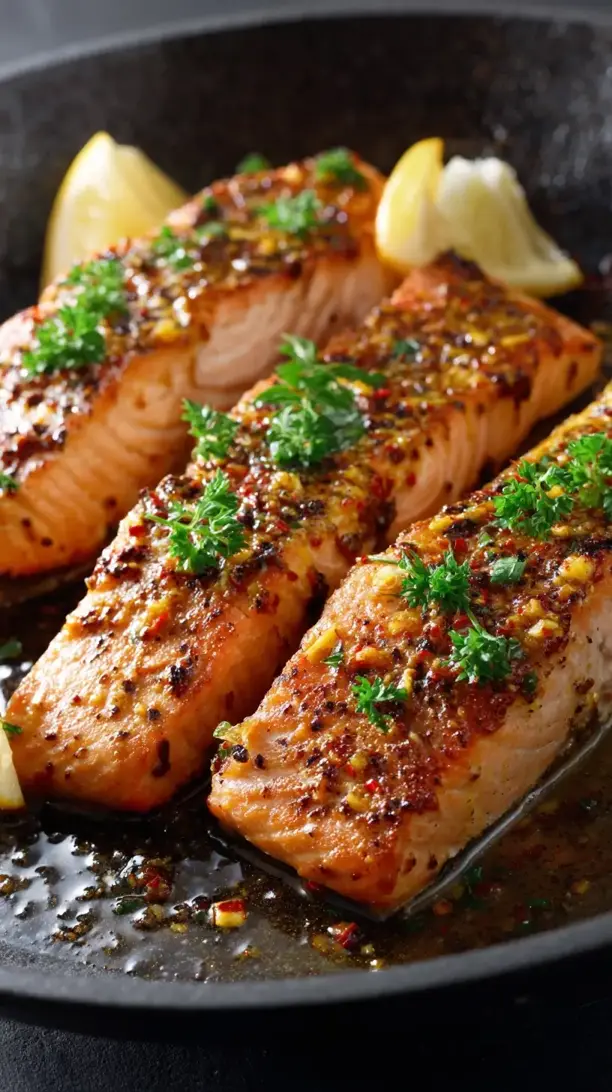
This Salmon and Honey Mustard Glaze recipe transforms humble fish into something spectacular with minimal effort. The sweet honey and tangy mustard create a caramelized, glossy crust that seals in moisture. It’s a fast, impressive dish perfect for weeknights or entertaining.
Craving a delicious Salmon and Honey Mustard Glaze? You've come to the right spot! From Savory Combo Recipes favorites to amazing Dessert Recipes recipes, there's something here for everyone.


Why You’ll Love This Salmon and Honey Mustard Glaze
- Fast & Easy: Ready in under 30 minutes with minimal hands-on work.
- Perfect Flavor Balance: Sweet honey and tangy mustard caramelize into a savory crust.
- Impressively Simple: Looks and tastes gourmet with very little effort.
- Endlessly Adaptable: Easily customize with chili flakes, herbs, or other tweaks.
Ingredients & Tools
- 4 salmon fillets (about 150-180 g each), skin-on or skinless
- 3 tablespoons honey
- 2 tablespoons Dijon mustard
- 1 tablespoon whole grain mustard
- 2 cloves garlic, minced
- 1 tablespoon fresh lemon juice
- 1 tablespoon olive oil
- 1/2 teaspoon smoked paprika
- 1/4 teaspoon black pepper
- 1/2 teaspoon salt (or to taste)
- 1 tablespoon fresh parsley, chopped (for garnish)
- Lemon wedges for serving
Tools: A small bowl for mixing, a baking sheet, parchment paper or aluminum foil, a pastry brush (optional but helpful), and a microplane or garlic press.
Notes: The quality of your honey and mustard really makes a difference here—a good, raw honey and a robust Dijon will give you the most complex and delicious glaze. And don’t skip the fresh lemon juice; its acidity is crucial for balancing the sweetness.
Nutrition (per serving)
| Calories: | 320 kcal |
| Protein: | 28 g |
| Fat: | 16 g |
| Carbs: | 15 g |
| Fiber: | 1 g |
Serves: 4 | Prep Time: 10 minutes | Cook Time: 12-15 minutes | Total Time: 25 minutes
Before You Start: Tips & Ingredient Notes
- What kind of salmon should I use? I prefer skin-on, center-cut fillets for this recipe. The skin helps protect the bottom of the fish from overcooking and gets wonderfully crispy. Look for fillets that are similar in thickness for even cooking.
- Is the type of mustard important? Yes, and here’s why. Using both Dijon and whole grain mustard gives you the best of both worlds—Dijon provides a smooth, sharp base, while the whole grain adds texture and a pop of flavor. If you only have one type, it will still work, but the combination is superior.
- Can I make the glaze ahead of time? Absolutely! You can whisk the glaze ingredients together and store them in an airtight container in the fridge for up to 3 days. This is a fantastic time-saver if you’re planning for a busy week.
- What if my honey is crystallized? No problem at all. Gently warm the honey jar in a bowl of hot water for a few minutes, or microwave it in a microwave-safe bowl for 10-15 seconds to liquefy it again before mixing.
How to Make Salmon and Honey Mustard Glaze
Step 1: Preheat your oven to 200°C (400°F) and prepare your baking sheet. Line a rimmed baking sheet with parchment paper or aluminum foil for easy cleanup. A little drizzle of olive oil on the paper will help prevent any sticking, though the glaze usually takes care of that. Pat your salmon fillets completely dry with paper towels—this is a small but crucial step for getting a nice sear on the glaze instead of steaming the fish.
Step 2: Whisk the glaze ingredients together. In a small bowl, combine the honey, Dijon mustard, whole grain mustard, minced garlic, lemon juice, olive oil, smoked paprika, salt, and pepper. Whisk it until it’s completely smooth and emulsified. You’ll notice the mixture will thicken slightly as you whisk. Give it a quick taste—this is your chance to adjust the seasoning. Want it tangier? A bit more mustard. Sweeter? A tiny drizzle more honey.
Step 3: Season and glaze the salmon. Place the dried salmon fillets on your prepared baking sheet. Season them lightly with a pinch more salt and pepper. Now, using a pastry brush or the back of a spoon, generously coat the top and sides of each fillet with the honey mustard glaze. Don’t be shy—you want a good, even layer that will caramelize into a beautiful crust. You should use about three-quarters of the glaze at this stage.
Step 4: Bake to perfection. Place the baking sheet in the preheated oven and bake for 12-15 minutes. The exact time will depend on the thickness of your fillets. You’re looking for the salmon to be opaque and flake easily with a fork, and for the glaze to be bubbly and slightly darkened around the edges. A little trick—if you have an instant-read thermometer, the internal temperature should read about 52-54°C (125-130°F) for medium-rare, or 57°C (135°F) for medium. The salmon will continue to cook a bit after you take it out of the oven.
Step 5: Glaze and rest. Carefully remove the baking sheet from the oven. Using the remaining glaze, brush another thin layer over the top of each hot fillet. This final glaze adds an extra layer of shine and flavor. Let the salmon rest on the baking sheet for about 3-5 minutes before serving. This allows the juices to redistribute throughout the fish, ensuring every single bite is moist and delicious.
Step 6: Garnish and serve. Transfer the glazed salmon to serving plates. Sprinkle with the freshly chopped parsley for a burst of color and freshness, and serve immediately with lemon wedges on the side. A final squeeze of lemon juice right before eating really makes all the flavors sing.
Storage & Freshness Guide
- Fridge: Store leftovers in an airtight container for up to 2 days.
- Freezer: Not recommended; the glaze may separate and texture can suffer.
- Reviving: Reheat gently in a 300°F oven for about 10 minutes to retain moisture.
Serving Suggestions
Complementary Dishes
- Garlic Herb Roasted Asparagus — The earthy, savory notes of asparagus are a classic partner for salmon, and they can roast on a separate rack in the oven at the same time.
- Lemon-Dill Quinoa — This light and fluffy grain soaks up the extra glaze beautifully, and the dill echoes the flavors in the fish perfectly.
- Creamy Mashed Potatoes — For the ultimate comfort food pairing, the rich, creamy potatoes are a wonderful contrast to the tangy, glazed salmon.
Drinks
- A Crisp Sauvignon Blanc — The wine’s citrusy and herbal notes cut through the richness of the dish and complement the lemon in the glaze.
- A Light Pale Ale — The slight bitterness of a good pale ale balances the sweetness of the honey and stands up well to the mustard’s tang.
- Sparkling Water with Lemon — A simple, refreshing non-alcoholic option that cleanses the palate between each flavorful bite.
Something Sweet
- Lemon Sorbet — A light, palate-cleansing dessert that continues the citrus theme without feeling too heavy after the main course.
- Almond Tuiles — These delicate, crispy cookies have a nutty flavor that pairs wonderfully with the caramelized notes of the glaze.
- Fresh Berry Pavlova — The sweet meringue and tart berries provide a stunning, elegant finish that feels special but isn’t too complicated.
Top Mistakes to Avoid
- Mistake: Not patting the salmon dry. If the surface of the salmon is wet, the glaze won’t stick properly and you’ll end up with a runny, steamed coating instead of a beautiful caramelized one.
- Mistake: Overcooking the salmon. Salmon continues to cook after it comes out of the oven (carryover cooking). Taking it out when it’s just slightly under your desired doneness is the key to a moist, not dry, result. I’ve messed this up before too, and it’s a real shame.
- Mistake: Using all the glaze before baking. Saving a bit of glaze to brush on at the end gives the salmon a gorgeous, restaurant-quality glossy finish and an extra hit of fresh flavor.
- Mistake: Skipping the rest time. Slicing into the salmon immediately after baking will cause all those precious juices to run out onto the plate. Letting it rest for a few minutes ensures the moisture stays locked in.
Expert Tips
- Tip: For an extra flavor boost, marinate the salmon in half of the glaze for 20-30 minutes in the fridge before baking. This allows the flavors to penetrate the fish more deeply, resulting in an even more flavorful dish.
- Tip: If you love a bit of char, switch your oven to a high broil for the last 1-2 minutes of cooking. Watch it like a hawk! This will blister and darken the glaze, adding a fantastic smoky, slightly bitter counterpoint to the sweetness.
- Tip: To check for doneness without a thermometer, gently press the top of the salmon with your finger or a fork. It should feel firm but still have a little give, and it should flake apart easily. If it feels mushy, it needs more time; if it’s hard and tough, it’s overdone.
- Tip: For a richer, creamier glaze, stir in a tablespoon of full-fat Greek yogurt or crème fraîche into the mixture. This creates a more decadent sauce that clings to the salmon beautifully.
FAQs
Can I use a different type of fish?
Absolutely! This honey mustard glaze is incredibly versatile. It works wonderfully on firm white fish like cod or halibut, though you may need to reduce the cooking time slightly as those fillets are often thinner. It’s also fantastic on chicken breasts or pork chops—just adjust the baking time accordingly based on the protein’s thickness and recommended internal temperature.
How should I store and reheat leftovers?
Store any leftover salmon in an airtight container in the refrigerator for up to 2 days. To reheat, I strongly recommend using an oven or toaster oven at a low temperature (around 150°C / 300°F) for about 10 minutes. Microwaving will work in a pinch, but it can make the fish rubbery and overcook it very quickly. The gentle heat of an oven will warm it through without further cooking it.
My glaze is too thin. How can I thicken it?
If your glaze seems a bit runny, you have a couple of options. You can simply simmer it in a small saucepan over low heat for 3-5 minutes to reduce and thicken it. Alternatively, you can add a teaspoon of tomato paste or a pinch of cornstarch slurry (mix 1/2 tsp cornstarch with 1 tsp water) while heating, which will help it thicken into a more paste-like consistency perfect for brushing.
Can I make this on the grill instead?
Yes, and it’s delicious! Preheat your grill to medium-high heat. Make sure the grates are very clean and well-oiled to prevent sticking. Place the glazed salmon fillets skin-side down (if skin-on) on the grill. Close the lid and cook for about 8-12 minutes, depending on thickness. Do not flip the salmon if it has skin; just cook it until done. The grill will give the glaze a wonderful smoky flavor.
Is there a good substitute for honey?
For a similar sweetness, you can use maple syrup, which will add a lovely, deep flavor. Agave nectar is another good option. If you need a sugar-free alternative, a sugar-free maple-flavored syrup can work, though the flavor profile will be slightly different and it may not caramelize in quite the same way.


Salmon And Honey Mustard Glaze
Make perfect Salmon and Honey Mustard Glaze in under 30 minutes! This easy recipe creates a sweet, tangy crust with minimal effort. Get the recipe now!
Ingredients
For the Salmon and Glaze
-
4 salmon fillets (about 150-180 g each, skin-on or skinless)
-
3 tablespoons honey
-
2 tablespoons Dijon mustard
-
1 tablespoon whole grain mustard
-
2 cloves garlic (minced)
-
1 tablespoon fresh lemon juice
-
1 tablespoon olive oil
-
0.5 teaspoon smoked paprika
-
0.25 teaspoon black pepper
-
0.5 teaspoon salt (or to taste)
-
1 tablespoon fresh parsley (chopped, for garnish)
-
Lemon wedges (for serving)
Instructions
-
Preheat your oven to 200°C (400°F) and prepare your baking sheet. Line a rimmed baking sheet with parchment paper or aluminum foil for easy cleanup. A little drizzle of olive oil on the paper will help prevent any sticking, though the glaze usually takes care of that. Pat your salmon fillets completely dry with paper towels—this is a small but crucial step for getting a nice sear on the glaze instead of steaming the fish.01
-
Whisk the glaze ingredients together. In a small bowl, combine the honey, Dijon mustard, whole grain mustard, minced garlic, lemon juice, olive oil, smoked paprika, salt, and pepper. Whisk it until it’s completely smooth and emulsified. You’ll notice the mixture will thicken slightly as you whisk. Give it a quick taste—this is your chance to adjust the seasoning. Want it tangier? A bit more mustard. Sweeter? A tiny drizzle more honey.02
-
Season and glaze the salmon. Place the dried salmon fillets on your prepared baking sheet. Season them lightly with a pinch more salt and pepper. Now, using a pastry brush or the back of a spoon, generously coat the top and sides of each fillet with the honey mustard glaze. Don’t be shy—you want a good, even layer that will caramelize into a beautiful crust. You should use about three-quarters of the glaze at this stage.03
-
Bake to perfection. Place the baking sheet in the preheated oven and bake for 12-15 minutes. The exact time will depend on the thickness of your fillets. You’re looking for the salmon to be opaque and flake easily with a fork, and for the glaze to be bubbly and slightly darkened around the edges. A little trick—if you have an instant-read thermometer, the internal temperature should read about 52-54°C (125-130°F) for medium-rare, or 57°C (135°F) for medium. The salmon will continue to cook a bit after you take it out of the oven.04
-
Glaze and rest. Carefully remove the baking sheet from the oven. Using the remaining glaze, brush another thin layer over the top of each hot fillet. This final glaze adds an extra layer of shine and flavor. Let the salmon rest on the baking sheet for about 3-5 minutes before serving. This allows the juices to redistribute throughout the fish, ensuring every single bite is moist and delicious.05
-
Garnish and serve. Transfer the glazed salmon to serving plates. Sprinkle with the freshly chopped parsley for a burst of color and freshness, and serve immediately with lemon wedges on the side. A final squeeze of lemon juice right before eating really makes all the flavors sing.06
Not what you're looking for?