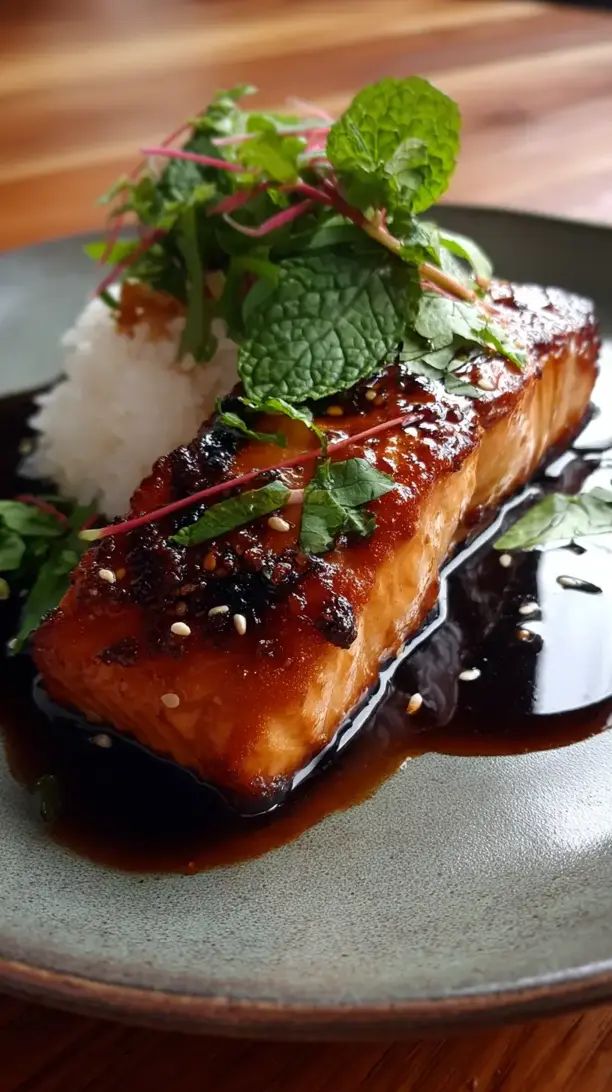
This salmon and miso glaze recipe creates a stunning, restaurant-quality meal with minimal effort. The rich, savory-sweet miso paste caramelizes into a glossy crust while keeping the fish moist inside. It’s a perfect balance of umami and sweetness that feels both elegant and easy.
Nothing beats a great Salmon and Miso Glaze. Whether you're a fan of Savory Combo Recipes or want to try something from our Appetizers & Snacks selection, keep scrolling!



Why You’ll Love This Salmon and Miso Glaze
- Fast & simple: Active prep is under 10 minutes for a stunning dinner.
- Complex flavor, easy process: Umami miso, sweet mirin, and salty soy create depth in minutes.
- Versatile: Works with other fatty fish and is easily adjustable to taste.
- Visually impressive: The glaze caramelizes into a beautiful, dark crust.
Ingredients & Tools
- 4 salmon fillets, skin-on or skinless (about 150-180 g each)
- 3 tablespoons white miso paste
- 2 tablespoons mirin
- 1 tablespoon soy sauce (or tamari)
- 1 tablespoon rice vinegar
- 1 tablespoon honey or maple syrup
- 1 teaspoon freshly grated ginger
- 1 small garlic clove, minced
- 1 teaspoon sesame oil (optional, for extra aroma)
- To garnish: thinly sliced scallions and toasted sesame seeds
Tools: A small bowl for mixing, a whisk or fork, a baking sheet lined with parchment paper, and a pastry brush for easy glazing.
Notes: Use good-quality white miso for mild sweetness, and don’t skip the fresh ginger and garlic—they cut through the richness.
Nutrition (per serving)
| Calories: | 320 kcal |
| Protein: | 35 g |
| Fat: | 16 g |
| Carbs: | 9 g |
| Fiber: | 1 g |
Serves: 4 | Prep Time: 10 minutes | Cook Time: 12-15 minutes | Total Time: 25 minutes
Before You Start: Tips & Ingredient Notes
- What kind of miso should I use? White (shiro) miso is ideal for its mild, slightly sweet flavor. Red miso is stronger and saltier, so if you use it, you might want to reduce the soy sauce slightly and add a touch more honey to balance it.
- Is the skin a deal-breaker? Not at all! Cooking salmon with the skin on helps it hold its shape and adds a lovely textural element if you get it crispy. If you prefer skinless, that works beautifully too—just keep a close eye on the cooking time as it can cook a little faster.
- Can I make the glaze ahead? Absolutely. The glaze can be mixed and stored in an airtight container in the fridge for up to 5 days. This makes for an even quicker dinner—just pull it out, glaze your fish, and bake.
- Don’t skip the resting time. Letting the salmon sit for a few minutes after it comes out of the oven is crucial. It allows the juices to redistribute throughout the fillets, ensuring every single bite is moist and flavorful, not dry.
How to Make Salmon and Miso Glaze
Step 1: First, preheat your oven to 200°C (400°F). While it’s heating up, pat your salmon fillets completely dry with paper towels. This is a small but critical step—a dry surface will help the glaze stick properly and will also promote better browning, rather than steaming. Place the dried fillets on your parchment-lined baking sheet, ensuring they aren’t touching.
Step 2: Now, let’s make that magical glaze. In your small bowl, combine the white miso paste, mirin, soy sauce, rice vinegar, honey, grated ginger, and minced garlic. Whisk it all together until it’s completely smooth and well-combined. You’ll notice the texture is quite thick, almost like a loose paste. That’s perfect—it will thin out a little as it heats up and cling beautifully to the salmon.
Step 3: Using your pastry brush (or the back of a spoon), generously coat the top and sides of each salmon fillet with the miso glaze. Be sure to cover every bit of the surface—this is what’s going to create that incredible caramelized crust. You should use about three-quarters of the glaze at this stage; we’ll save the rest for a final brush right at the end.
Step 4: It’s time to bake. Slide the baking sheet into your preheated oven and let the salmon cook for 10-12 minutes. The exact time will depend on the thickness of your fillets. You’re looking for the salmon to be mostly opaque and to flake easily with a fork at the thickest part. The glaze will have started to darken and look set.
Step 5: For that final, restaurant-quality finish, switch your oven to the broiler/grill setting. Move the baking sheet to the top rack and broil for just 1-2 minutes. Watch it like a hawk! This brief blast of intense heat will bubble and char the glaze in spots, giving it a fantastic depth of flavor and a gorgeous glossy sheen.
Step 6: Carefully remove the salmon from the oven. While it’s still hot, brush the reserved glaze over the top. This last-minute layer adds a punch of fresh, un-cooked flavor that really brightens everything up. Let the salmon rest on the baking sheet for about 3-5 minutes before serving. This rest is non-negotiable for the juiciest result.
Step 7: To serve, transfer the glazed salmon fillets to plates. Finish with a sprinkle of thinly sliced scallions and a generous pinch of toasted sesame seeds. The green and white from the scallions and the nutty crunch from the seeds make for a beautiful presentation and add wonderful final layers of texture and flavor.
Storage & Freshness Guide
- Fridge: Store leftovers in an airtight container for up to 2 days.
- Freezer: Not recommended; the texture of the fish and glaze may suffer.
- Reviving: Reheat gently in a 150°C (300°F) oven for 10–15 minutes until warmed through.
Serving Suggestions
Complementary Dishes
- Steamed jasmine rice — The plain, fluffy rice is the perfect canvas to soak up every last drop of the delicious, savory-sweet glaze from the salmon.
- Quick-braised bok choy or broccoli — A simple green vegetable steamed or sautéed with a little garlic provides a fresh, crisp contrast to the rich, oily fish.
- Simple cucumber salad — Thinly sliced cucumbers tossed with a little rice vinegar and salt offer a bright, acidic crunch that cleanses the palate between bites.
Drinks
- Crisp, dry Riesling — The slight sweetness and high acidity of the wine beautifully balance the umami and fat in the dish, creating a truly harmonious pairing.
- Japanese lager or a light pale ale — The clean, effervescent quality of a cold beer cuts through the richness of the glaze and refreshes your palate.
- Green tea, hot or cold — The slight bitterness and grassy notes of a good sencha provide a soothing, traditional accompaniment that complements the miso’s earthy flavors.
Something Sweet
- Matcha ice cream — The bittersweet, earthy notes of matcha are a fantastic follow-up to the savory-sweet profile of the miso-glazed salmon.
- Mochi with red bean paste — These chewy, sweet treats offer a delightful textural contrast and a traditional Japanese finish to the meal.
- Fresh sliced mango — Sometimes simplicity is best. The bright, tropical sweetness of ripe mango is a refreshing and light way to end the dinner.
Top Mistakes to Avoid
- Mistake: Not patting the salmon dry. Any surface moisture will create steam, which prevents the glaze from properly adhering and caramelizing. You’ll end up with a steamed, pale fish instead of one with a beautiful crust.
- Mistake: Using the broiler unattended. The line between beautifully blistered and tragically burnt is incredibly thin. The high sugar content in the glaze means it can go from perfect to acrid in mere seconds. Stay by the oven door!
- Mistake: Overcooking the salmon. Salmon continues to cook from residual heat after it leaves the oven (carryover cooking). If you cook it until it’s completely firm in the center, it will be dry by the time you eat it. Pull it out when it’s still slightly translucent in the very middle.
- Mistake: Skipping the final glaze brush. That reserved, uncooked glaze isn’t just extra—it’s a flavor bomb. Adding it at the end introduces a brighter, more pronounced miso and ginger flavor that gets muted during cooking.
Expert Tips
- Tip: Let the salmon come to room temperature. Taking the salmon out of the fridge 15-20 minutes before cooking helps it cook more evenly. A cold fillet straight from the fridge can result in an overcooked exterior and an undercooked center.
- Tip: Grate your ginger frozen. Keep a knob of ginger in the freezer. When you need it, you can grate it directly on a microplane—skin and all—with zero mess and maximum efficiency. The frozen texture grates into a fine, fluffy pulp.
- Tip: Use the glaze as a marinade for other proteins. This mixture isn’t just for salmon! It’s fantastic on chicken thighs, pork chops, or even brushed onto roasted eggplant or cauliflower steaks. Just adjust cooking times accordingly.
- Tip: Create a double-layer for extra crispiness. For an even more robust crust, brush on a thin layer of glaze and let it sit for 5 minutes before applying the main, thicker coat. The first layer acts like a primer, sealing the surface and helping the second layer build up beautifully.
FAQs
Can I use a different type of fish?
Absolutely! This glaze is a superstar with any oily, firm-fleshed fish. Black cod (often called butterfish) is a classic pairing and becomes incredibly silky. Arctic char, sea bass, or even thicker cuts of tuna steak would all work wonderfully. Just be mindful that cooking times will vary based on the thickness and density of the fish you choose.
My glaze is too thick to brush. What should I do?
No problem at all. This usually happens if your miso is particularly thick or your honey has crystallized. Simply add a teaspoon of warm water at a time to the mixture, whisking well after each addition, until it reaches a brushable, paste-like consistency. A little liquid goes a long way, so add it gradually.
How can I tell when the salmon is perfectly cooked?
The most reliable method is to use a small knife to peek at the thickest part of the fillet. The flesh should be opaque and should just begin to flake when gently pressed with a fork. It’s okay if it’s still a tiny bit translucent in the very center—remember, it will continue to cook while resting. An instant-read thermometer is also a great tool; aim for about 52-54°C (125-130°F) in the center.
Can I cook this on the stovetop instead?
You sure can. Heat a tablespoon of neutral oil in a non-stick or cast-iron skillet over medium-high heat. Place the salmon fillets in, skin-side down if they have skin, and cook for 4-6 minutes. Flip, brush with the glaze, and cook for another 2-3 minutes. Then, you can either brush with more glaze and serve, or pop the whole oven-safe skillet under the broiler for a minute to caramelize the top.
How should I store and reheat leftovers?
Store any leftover salmon in an airtight container in the refrigerator for up to 2 days. To reheat, the oven is your best friend to avoid a rubbery texture. Place the salmon on a baking sheet in a 150°C (300°F) oven for about 10-15 minutes, until warmed through. You can also reheat it gently in an air fryer for 4-5 minutes at a lower temperature. Avoid the microwave if you can, as it will overcook the fish very quickly.



Salmon And Miso Glaze
Make restaurant-quality Salmon and Miso Glaze at home in under 30 minutes. This easy recipe delivers incredible umami flavor with a caramelized crust. Get the recipe now!
Ingredients
For the salmon and glaze:
-
4 salmon fillets (skin-on or skinless (about 150-180 g each))
-
3 tablespoons white miso paste
-
2 tablespoons mirin
-
1 tablespoon soy sauce (or tamari)
-
1 tablespoon rice vinegar
-
1 tablespoon honey or maple syrup
-
1 teaspoon freshly grated ginger
-
1 small clove garlic (minced)
-
1 teaspoon sesame oil (optional, for extra aroma)
-
thinly sliced scallions and toasted sesame seeds
Instructions
-
First, preheat your oven to 200°C (400°F). While it's heating up, pat your salmon fillets completely dry with paper towels. This is a small but critical step—a dry surface will help the glaze stick properly and will also promote better browning, rather than steaming. Place the dried fillets on your parchment-lined baking sheet, ensuring they aren't touching.01
-
Now, let's make that magical glaze. In your small bowl, combine the white miso paste, mirin, soy sauce, rice vinegar, honey, grated ginger, and minced garlic. Whisk it all together until it's completely smooth and well-combined. You'll notice the texture is quite thick, almost like a loose paste. That's perfect—it will thin out a little as it heats up and cling beautifully to the salmon.02
-
Using your pastry brush (or the back of a spoon), generously coat the top and sides of each salmon fillet with the miso glaze. Be sure to cover every bit of the surface—this is what's going to create that incredible caramelized crust. You should use about three-quarters of the glaze at this stage; we'll save the rest for a final brush right at the end.03
-
It's time to bake. Slide the baking sheet into your preheated oven and let the salmon cook for 10-12 minutes. The exact time will depend on the thickness of your fillets. You're looking for the salmon to be mostly opaque and to flake easily with a fork at the thickest part. The glaze will have started to darken and look set.04
-
For that final, restaurant-quality finish, switch your oven to the broiler/grill setting. Move the baking sheet to the top rack and broil for just 1-2 minutes. Watch it like a hawk! This brief blast of intense heat will bubble and char the glaze in spots, giving it a fantastic depth of flavor and a gorgeous glossy sheen.05
-
Carefully remove the salmon from the oven. While it's still hot, brush the reserved glaze over the top. This last-minute layer adds a punch of fresh, un-cooked flavor that really brightens everything up. Let the salmon rest on the baking sheet for about 3-5 minutes before serving. This rest is non-negotiable for the juiciest result.06
-
To serve, transfer the glazed salmon fillets to plates. Finish with a sprinkle of thinly sliced scallions and a generous pinch of toasted sesame seeds. The green and white from the scallions and the nutty crunch from the seeds make for a beautiful presentation and add wonderful final layers of texture and flavor.07
Not what you're looking for?