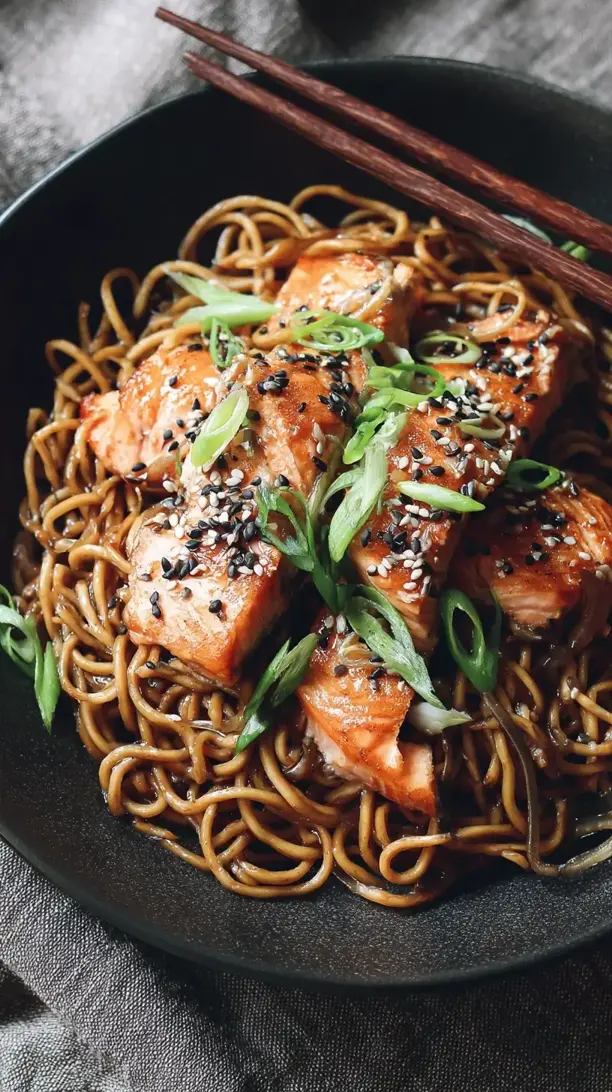
These Salmon and Sesame Noodles deliver a restaurant-worthy meal in under 30 minutes. Tender, crisp-skinned salmon meets springy noodles coated in a rich, nutty sesame sauce. It’s a complete, balanced bowl that’s both indulgent and fresh.
If you're looking for the perfect Salmon and Sesame Noodles, you're in the right place. Whether you love Savory Combo Recipes or want to explore our Chicken Thigh Recipes collection, we've got you covered.


Why You’ll Love This Salmon and Sesame Noodles
- Complete meal: Protein, carbs, and veggies all in one bowl.
- Addictive sauce: A nutty, savory, sweet, and spicy balance.
- Versatile template: Easily swap proteins or noodles.
- Texture contrast: Crisp salmon, springy noodles, and fresh crunch.
Ingredients & Tools
- 2 salmon fillets (about 150g each), skin on
- 200 g ramen or udon noodles
- 3 tbsp soy sauce (or tamari for gluten-free)
- 2 tbsp toasted sesame oil
- 1 tbsp rice vinegar
- 1 tbsp honey or maple syrup
- 1 tbsp smooth peanut butter or tahini
- 2 tsp sriracha or gochujang (adjust to taste)
- 2 cloves garlic, minced
- 1 tsp fresh ginger, grated
- 2 spring onions, thinly sliced
- 1 small carrot, julienned
- 1 tbsp sesame seeds, for garnish
- Fresh coriander or mint, for garnish
- Lime wedges, for serving
Tools: A large skillet or non-stick frying pan, a medium pot for noodles, a small whisk or fork for the sauce, and a microplane or fine grater for the ginger and garlic.
Notes: Use toasted sesame oil for deep, nutty aroma. Don’t skip fresh ginger and garlic—they make the sauce sing.
Nutrition (per serving)
| Calories: | 620 kcal |
| Protein: | 35 g |
| Fat: | 28 g |
| Carbs: | 55 g |
| Fiber: | 4 g |
Serves: 2 | Prep Time: 15 minutes | Cook Time: 15 minutes | Total Time: 30 minutes
Before You Start: Tips & Ingredient Notes
- Get your salmon skin crispy. The secret is a dry skin and a hot pan. Pat the salmon skin thoroughly with a paper towel right before cooking. A hot skillet will give you that satisfying, cracker-like crispness.
- Don’t overcook the salmon. Salmon is best when it’s still a little translucent and juicy in the center. It will continue to cook from residual heat after you take it out of the pan, so aim for just-cooked.
- Toast your sesame seeds. If you have a spare minute, toasting your sesame seeds in a dry pan until fragrant will elevate their nutty flavor and add a wonderful texture to the final dish.
- Taste your sauce and adjust. Everyone’s palate is different! Taste the sauce before you toss it with the noodles. Want it saltier? Add a dash more soy sauce. More tang? A squeeze of lime. Make it yours.
How to Make Salmon and Sesame Noodles
Step 1: Prepare the Sauce and Veggies. In a small bowl or jug, whisk together the soy sauce, toasted sesame oil, rice vinegar, honey, peanut butter, sriracha, minced garlic, and grated ginger until you have a smooth, emulsified sauce. It should look glossy and smell incredible. Prep all your vegetables now—thinly slice the spring onions, julienne the carrot, and chop your herbs. Having everything ready makes the cooking process seamless and stress-free.
Step 2: Cook the Noodles. Bring a medium pot of salted water to a rolling boil. Add your noodles and cook according to the package instructions until they are just al dente. You’ll notice they should still have a slight bite to them. Once cooked, drain them thoroughly but do not rinse—the starch helps the sauce cling to the noodles. Give them a very light drizzle of sesame oil and a quick toss to prevent them from sticking together while you cook the salmon.
Step 3: Pan-Sear the Salmon. While the noodles cook, pat the salmon fillets completely dry with paper towels, especially the skin. Season both sides generously with salt. Heat a tablespoon of neutral oil in a large non-stick skillet over medium-high heat. Once the oil is shimmering, place the salmon fillets in the pan skin-side down. Press down gently for a few seconds to ensure full contact with the pan. Cook for 4-6 minutes, without moving them, until the skin is golden brown and super crispy.
Step 4: Flip and Finish the Salmon. Carefully flip the salmon fillets. You’ll see the color has crept about two-thirds of the way up the side of the fish. Cook for just 1-2 more minutes on the flesh side. You’re aiming for a tender, flaky interior that’s still a bit pink in the very center. Transfer the salmon to a clean plate to rest. It will finish cooking gently from the residual heat.
Step 5: Combine and Toss Everything. Reduce the heat under the skillet to low. Add the cooked, drained noodles to the pan. Pour that gorgeous sesame sauce over the top, along with most of your sliced spring onions and carrots. Using a pair of tongs, toss everything together for a minute or two until the noodles are heated through and perfectly coated in the sauce. The warmth from the pan will mellow the raw garlic and ginger in the sauce beautifully.
Step 6: Assemble and Garnish. Divide the saucy noodles between two bowls. Break the rested salmon into large, beautiful chunks and place them on top of the noodles. Garnish generously with the remaining spring onions, carrots, a sprinkle of toasted sesame seeds, and a handful of fresh coriander or mint. Serve immediately with a lime wedge on the side for that essential bright, citrusy squeeze.
Storage & Freshness Guide
- Fridge: Store in an airtight container for up to 2 days.
- Freezer: Not recommended; noodles and salmon texture suffer.
- Reviving: Reheat gently in a skillet with a splash of water.
Serving Suggestions
Complementary Dishes
- A simple cucumber salad — The cool, crisp freshness of thinly sliced cucumbers with a splash of rice vinegar provides a perfect palate cleanser between bites of the rich, savory noodles.
- Quick-pickled radishes or carrots — A little tangy, crunchy pickle cuts through the richness of the salmon and sesame oil, adding another layer of flavor and texture to your meal.
- Steamed edamame with sea salt — It’s an easy, healthy starter that gets you in the Asian-inspired flavor zone and is fun to snack on while you put the finishing touches on the noodles.
Drinks
- Iced jasmine green tea — Its delicate, floral notes are a wonderful, non-alcoholic companion that doesn’t compete with the bold flavors of the dish.
- A crisp, dry Riesling — The slight sweetness and high acidity of this white wine beautifully balance the umami and spice in the noodles and cleanse the palate.
- A light Japanese lager — Think Asahi Super Dry. Its clean, crisp finish is the perfect counterpoint to the oily fish and rich sauce, making each bite taste new again.
Something Sweet
- Mango and sticky rice — The sweet, creamy coconut and fresh mango are a classic Southeast Asian dessert that feels like a natural, luxurious extension of this meal.
- Matcha ice cream — The slightly bitter, earthy notes of matcha provide a sophisticated and refreshing end to the meal, contrasting the savory notes you’ve just enjoyed.
- Lychee sorbet — It’s incredibly light and floral, with a bright, clean sweetness that acts as a perfect palate cleanser after the robust main course.
Top Mistakes to Avoid
- Mistake: Rinsing your cooked noodles. This washes away the surface starch that helps the delicious sauce cling to every strand. You’ll end up with a pool of sauce at the bottom of your bowl and bland noodles.
- Mistake: Moving the salmon too soon. I’ve messed this up before too… if you try to move the fillet before the skin has properly seared, it will tear and stick. Be patient and let the hot pan do its work for a perfect, crispy crust.
- Mistake: Using raw, un-toasted sesame oil. The flavor is completely different! Toasted sesame oil has a deep, nutty, complex aroma, while the raw version is much milder and won’t give you that signature flavor.
- Mistake: Overcooking the sauce. Once you add the sauce to the noodles, you just want to warm it through. Boiling it can cause the oils to separate and make the sauce look greasy and taste bitter.
Expert Tips
- Tip: Use the salmon resting time. While the salmon is resting on the plate, that’s your window to toss the noodles with the sauce in the same pan. The residual salmon fond (those tasty browned bits) will incorporate into the sauce, adding another layer of savory depth.
- Tip: Grate your garlic and ginger directly into the sauce. Using a microplane not only saves you time on chopping, but it also creates a fine paste that disperses more evenly throughout the sauce, ensuring every bite is packed with flavor.
- Tip: Add a splash of noodle water. When you’re tossing the noodles with the sauce, add a tablespoon or two of the starchy pasta water. It helps loosen the sauce to a silky, restaurant-quality consistency that coats the noodles perfectly.
- Tip: Let the salmon come to room temperature. Taking the salmon out of the fridge 15-20 minutes before cooking helps it cook more evenly, preventing a overcooked outside and a cold, undercooked center.
FAQs
Can I make this dish with a different protein?
Absolutely! This recipe is wonderfully adaptable. Skinless chicken thighs, pan-seared and sliced, work beautifully. For a vegetarian option, pan-fried cubes of firm tofu or tempeh are fantastic—just make sure to press the tofu first to get a nice crispy exterior. The cooking method remains largely the same; you’re just swapping out the central protein.
How do I store and reheat leftovers?
Store any leftovers in an airtight container in the fridge for up to 2 days. The best way to reheat is gently in a skillet over low heat with a tiny splash of water to re-emulsify the sauce. I’d recommend reheating the noodles and salmon separately if possible, as the microwave can make the salmon rubbery. The noodles might soften a bit, but the flavor will still be great.
My sauce is too thick. How can I thin it out?
No problem! This happens. The easiest fix is to whisk in a little warm water, one tablespoon at a time, until it reaches your desired consistency. You could also use a bit of the starchy noodle cooking water, which will also help the sauce cling better. If you find it too salty after thinning, a small extra drizzle of honey or a squeeze of lime can help balance it back out.
Is there a substitute for peanut butter?
Yes, if you have a nut allergy or just don’t have peanut butter, tahini (sesame seed paste) is the perfect substitute and keeps the nutty theme going. Alternatively, a tablespoon of hoisin sauce can provide a similar depth and slight sweetness, though the flavor profile will shift slightly.
Can I prepare any components ahead of time?
You can definitely get a head start! The sesame sauce can be whisked together and stored in the fridge for up to 3 days—just give it a good stir before using. You can also julienne your carrots and slice your spring onions a day in advance. I’d recommend cooking the salmon and noodles fresh, though, for the best texture.



Salmon And Sesame Noodles
Make delicious Salmon and Sesame Noodles in 30 minutes! A complete meal with crispy salmon & a savory sesame sauce. Get the easy recipe now!
Ingredients
For the Salmon and Noodles
-
2 salmon fillets (about 150g each, skin on)
-
200 g ramen or udon noodles
-
3 tbsp soy sauce (or tamari for gluten-free)
-
2 tbsp toasted sesame oil
-
1 tbsp rice vinegar
-
1 tbsp honey or maple syrup
-
1 tbsp smooth peanut butter or tahini
-
2 tsp sriracha or gochujang (adjust to taste)
-
2 cloves garlic (minced)
-
1 tsp fresh ginger (grated)
-
2 spring onions (thinly sliced)
-
1 small carrot (julienned)
-
1 tbsp sesame seeds (for garnish)
-
Fresh coriander or mint (for garnish)
-
Lime wedges (for serving)
Instructions
-
In a small bowl or jug, whisk together the soy sauce, toasted sesame oil, rice vinegar, honey, peanut butter, sriracha, minced garlic, and grated ginger until you have a smooth, emulsified sauce. It should look glossy and smell incredible. Prep all your vegetables now—thinly slice the spring onions, julienne the carrot, and chop your herbs. Having everything ready makes the cooking process seamless and stress-free.01
-
Bring a medium pot of salted water to a rolling boil. Add your noodles and cook according to the package instructions until they are just al dente. You’ll notice they should still have a slight bite to them. Once cooked, drain them thoroughly but do not rinse—the starch helps the sauce cling to the noodles. Give them a very light drizzle of sesame oil and a quick toss to prevent them from sticking together while you cook the salmon.02
-
While the noodles cook, pat the salmon fillets completely dry with paper towels, especially the skin. Season both sides generously with salt. Heat a tablespoon of neutral oil in a large non-stick skillet over medium-high heat. Once the oil is shimmering, place the salmon fillets in the pan skin-side down. Press down gently for a few seconds to ensure full contact with the pan. Cook for 4-6 minutes, without moving them, until the skin is golden brown and super crispy.03
-
Carefully flip the salmon fillets. You’ll see the color has crept about two-thirds of the way up the side of the fish. Cook for just 1-2 more minutes on the flesh side. You’re aiming for a tender, flaky interior that’s still a bit pink in the very center. Transfer the salmon to a clean plate to rest. It will finish cooking gently from the residual heat.04
-
Reduce the heat under the skillet to low. Add the cooked, drained noodles to the pan. Pour that gorgeous sesame sauce over the top, along with most of your sliced spring onions and carrots. Using a pair of tongs, toss everything together for a minute or two until the noodles are heated through and perfectly coated in the sauce. The warmth from the pan will mellow the raw garlic and ginger in the sauce beautifully.05
-
Divide the saucy noodles between two bowls. Break the rested salmon into large, beautiful chunks and place them on top of the noodles. Garnish generously with the remaining spring onions, carrots, a sprinkle of toasted sesame seeds, and a handful of fresh coriander or mint. Serve immediately with a lime wedge on the side for that essential bright, citrusy squeeze.06
Not what you're looking for?