This Sausage and Broccoli Rabe Pasta balances rustic comfort with sophisticated flavor. Bitter greens mellow against savory sausage, while garlic and red pepper flakes add a gentle kick. It’s a quick, versatile weeknight hero that comes together in under 30 minutes.
Love Sausage and Broccoli Rabe Pasta? So do we! If you're into Savory Combo Recipes or curious about Dessert Recipes, you'll find plenty of inspiration below.



Why You’ll Love This Sausage and Broccoli Rabe Pasta
- Flavor balance: Bitter greens and savory sausage complement each other perfectly.
- Quick prep: Ready in under 30 minutes, ideal for busy nights.
- Versatile ingredients: Easily adapt with sweet sausage, kale, or plant-based options.
- Better leftovers: Flavors deepen overnight for a delicious next-day meal.
Ingredients & Tools
- 400 g short pasta like rigatoni or orecchiette
- 450 g Italian sausage, casings removed
- 1 large bunch broccoli rabe, tough ends trimmed
- 4 cloves garlic, thinly sliced
- ½ tsp red pepper flakes (adjust to taste)
- 60 ml extra virgin olive oil
- 120 ml pasta water (reserved)
- 100 g grated Pecorino Romano cheese
- Salt and black pepper to taste
Tools: Large pot for boiling pasta, large skillet or Dutch oven, tongs, measuring spoons, grater
Notes: Use flavorful Italian sausage for best results, and don’t skip the pasta water—it creates a silky, cohesive sauce.
Nutrition (per serving)
| Calories: | 580 kcal |
| Protein: | 24 g |
| Fat: | 28 g |
| Carbs: | 58 g |
| Fiber: | 4 g |
Serves: 4 | Prep Time: 10 minutes | Cook Time: 20 minutes | Total Time: 30 minutes
Before You Start: Tips & Ingredient Notes
- Don’t skip blanching the broccoli rabe. A quick dip in boiling water tames its bitterness and brings out a brighter green color—it makes a huge difference in the final dish.
- Choose your sausage wisely. If you like a bit of heat, go for hot Italian sausage; for a milder flavor, sweet Italian sausage works beautifully. Either way, remove the casings before cooking for that perfect crumbled texture.
- Reserve that pasta water! I know I’ve mentioned it already, but it’s worth repeating. The starchy, salty water is your best friend when it comes to bringing the sauce together and making it glossy.
- Grate your own cheese. Pre-grated cheese often contains anti-caking agents that can make your sauce grainy. A block of Pecorino Romano grated fresh will melt smoothly and taste so much better.
How to Make Sausage and Broccoli Rabe Pasta
Step 1: Bring a large pot of generously salted water to a rolling boil. While you’re waiting, prep your broccoli rabe by trimming off the tough bottom inch or so of the stems—you’ll want to keep the tender leaves and florets. Once the water is boiling, add the broccoli rabe and blanch for about 2 minutes until it turns bright green and slightly tender. Quickly remove it with tongs (keep the water boiling!) and transfer to a bowl of ice water to stop the cooking. This step locks in that vibrant color and mellows the bitterness.
Step 2: Now, add your pasta to the same boiling water and cook according to package instructions until al dente. Remember, you’ll be finishing the pasta in the sauce, so it’s better to lean toward slightly underdone rather than overcooked. Just before draining, scoop out about a cup of that precious starchy pasta water—you’ll need it soon. Drain the pasta and set it aside for a moment.
Step 3: While the pasta cooks, heat a large skillet or Dutch oven over medium heat. Add a tablespoon of olive oil, then crumble in the sausage (casings removed). Cook, breaking it up with a wooden spoon, until it’s nicely browned and cooked through, which should take about 8–10 minutes. You’ll notice the fat rendering out and the sausage getting crispy edges—that’s exactly what you want for maximum flavor.
Step 4: Push the sausage to one side of the skillet and add the remaining olive oil to the empty space. Toss in the sliced garlic and red pepper flakes, and sauté for just about 30 seconds until the garlic becomes fragrant—be careful not to let it burn, or it’ll turn bitter. Now, squeeze any excess water from the blanched broccoli rabe, chop it roughly, and add it to the skillet. Give everything a good stir to combine.
Step 5: Add the drained pasta to the skillet, along with about half of the reserved pasta water. Toss everything together over low heat, letting the pasta drink up the flavors. You’ll see the sauce start to come together—it should look glossy and coat the back of a spoon. If it seems too dry, add more pasta water a splash at a time until it reaches the consistency you like.
Step 6: Turn off the heat and stir in most of the grated Pecorino Romano cheese, saving a little for garnish. The residual heat will melt the cheese beautifully into the sauce. Taste and adjust seasoning with salt and black pepper—keep in mind the cheese is salty, so you might not need much extra salt. Give it one final toss, and you’re ready to serve.
Storage & Freshness Guide
- Fridge: Store in an airtight container for up to 3 days.
- Freezer: Freeze in portions for up to 2 months; thaw overnight before reheating.
- Reviving: Reheat with a splash of water or broth to restore sauciness.
Serving Suggestions
Complementary Dishes
- A simple arugula salad — The peppery freshness of arugula dressed with lemon vinaigrette cuts through the richness of the pasta beautifully.
- Garlic bread or focaccia — Because who can resist mopping up every last bit of that savory sauce? It’s practically mandatory.
- Roasted cherry tomatoes — Their sweet, burst-in-your-mouth quality adds a lovely contrast and a pop of color to the plate.
Drinks
- A medium-bodied red wine like Sangiovese — Its bright acidity and cherry notes stand up to the sausage and bitter greens without overpowering them.
- Sparkling water with lemon — Sometimes you just want something crisp and non-alcoholic to cleanse the palate between bites.
- An Italian lager — The light, effervescent quality of a cold lager is refreshing and pairs wonderfully with the hearty flavors.
Something Sweet
- Lemon sorbet — Its bright, citrusy zing is the perfect palate-cleanser after a savory, garlicky meal.
- Almond biscotti — Crunchy, not too sweet, and ideal for dipping into a cup of espresso to round off the evening.
- Dark chocolate affogato — A scoop of vanilla gelato drowned in a shot of hot espresso—simple, elegant, and deeply satisfying.
Top Mistakes to Avoid
- Overcooking the broccoli rabe. If you boil it for too long, it becomes mushy and loses its vibrant color and pleasant texture. A quick blanch is all it needs.
- Using cold pasta water. Always add the reserved pasta water while it’s still hot—this helps it emulsify properly with the oil and cheese to create a silky sauce.
- Burning the garlic. Garlic can go from golden and fragrant to bitter and burnt in seconds. Keep the heat medium-low and stay close by once you add it to the pan.
- Skipping the pasta water. I know I sound like a broken record, but without that starchy liquid, your sauce might end up dry and lack that restaurant-quality gloss.
Expert Tips
- Tip: Brown the sausage well. Don’t rush this step—allowing the sausage to develop a deep, caramelized crust adds layers of flavor that you just can’t get from lightly cooked meat.
- Tip: Chop the broccoli rabe after blanching. It’s much easier to handle and chop when it’s already wilted, and you’ll get more even distribution throughout the pasta.
- Tip: Finish the pasta in the sauce. Letting the pasta cook for a final minute or two in the skillet allows it to absorb the flavors and ensures every bite is perfectly seasoned.
- Tip: Add a splash of lemon juice at the end. A little acidity right before serving can brighten up the whole dish and balance the richness of the sausage and cheese.
FAQs
Can I use regular broccoli instead of broccoli rabe?
Absolutely! While the flavor profile will be different—broccoli is milder and sweeter—it still works wonderfully. Just chop the broccoli into small florets and blanch them as you would the rabe. You might miss that characteristic bitterness, but it’ll still be a delicious, family-friendly meal.
What if I can’t find Pecorino Romano?
No worries—Parmigiano-Reggiano is a great substitute. It’s a bit nuttier and less salty than Pecorino, so you might need to adjust seasoning accordingly. Honestly, any hard, aged Italian cheese will do the trick here.
Can I make this dish ahead of time?
You can prep components in advance—blanch the broccoli rabe, brown the sausage, and grate the cheese—but I’d recommend assembling and serving it fresh. Pasta tends to absorb the sauce as it sits, so if you do have leftovers, revive them with a splash of water or broth when reheating.
Is broccoli rabe the same as broccolini?
They’re related but not the same! Broccoli rabe has thinner stems, more leaves, and a pronounced bitter flavor. Broccolini is sweeter and more tender. You can use broccolini here if you prefer, but you might want to reduce the blanching time since it cooks faster.
How spicy is this dish with the red pepper flakes?
It’s totally customizable! Half a teaspoon gives you a gentle warmth that most people enjoy, but if you’re sensitive to spice, start with a quarter teaspoon. Love heat? Crank it up to a full teaspoon—or add a pinch of chili crisp at the end for an extra kick.



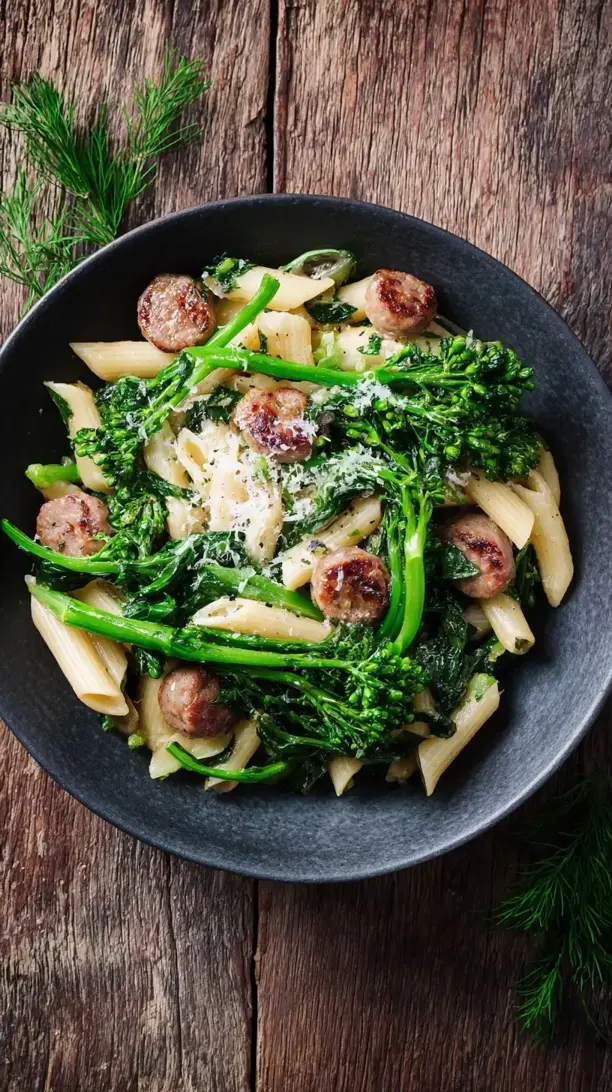
Sausage And Broccoli Rabe Pasta
Make this easy Sausage and Broccoli Rabe Pasta in under 30 minutes! A perfect balance of savory sausage and flavorful greens. Get the simple recipe now.
Ingredients
For the Ingredients
-
400 g short pasta (like rigatoni or orecchiette)
-
450 g Italian sausage (casings removed)
-
1 large bunch broccoli rabe (tough ends trimmed)
-
4 cloves garlic (thinly sliced)
-
0.5 tsp red pepper flakes (adjust to taste)
-
60 ml extra virgin olive oil
-
120 ml pasta water (reserved)
-
100 g grated Pecorino Romano cheese
-
Salt and black pepper (to taste)
Instructions
-
Bring a large pot of generously salted water to a rolling boil. While you’re waiting, prep your broccoli rabe by trimming off the tough bottom inch or so of the stems—you’ll want to keep the tender leaves and florets. Once the water is boiling, add the broccoli rabe and blanch for about 2 minutes until it turns bright green and slightly tender. Quickly remove it with tongs (keep the water boiling!) and transfer to a bowl of ice water to stop the cooking. This step locks in that vibrant color and mellows the bitterness.01
-
Now, add your pasta to the same boiling water and cook according to package instructions until al dente. Remember, you’ll be finishing the pasta in the sauce, so it’s better to lean toward slightly underdone rather than overcooked. Just before draining, scoop out about a cup of that precious starchy pasta water—you’ll need it soon. Drain the pasta and set it aside for a moment.02
-
While the pasta cooks, heat a large skillet or Dutch oven over medium heat. Add a tablespoon of olive oil, then crumble in the sausage (casings removed). Cook, breaking it up with a wooden spoon, until it’s nicely browned and cooked through, which should take about 8–10 minutes. You’ll notice the fat rendering out and the sausage getting crispy edges—that’s exactly what you want for maximum flavor.03
-
Push the sausage to one side of the skillet and add the remaining olive oil to the empty space. Toss in the sliced garlic and red pepper flakes, and sauté for just about 30 seconds until the garlic becomes fragrant—be careful not to let it burn, or it’ll turn bitter. Now, squeeze any excess water from the blanched broccoli rabe, chop it roughly, and add it to the skillet. Give everything a good stir to combine.04
-
Add the drained pasta to the skillet, along with about half of the reserved pasta water. Toss everything together over low heat, letting the pasta drink up the flavors. You’ll see the sauce start to come together—it should look glossy and coat the back of a spoon. If it seems too dry, add more pasta water a splash at a time until it reaches the consistency you like.05
-
Turn off the heat and stir in most of the grated Pecorino Romano cheese, saving a little for garnish. The residual heat will melt the cheese beautifully into the sauce. Taste and adjust seasoning with salt and black pepper—keep in mind the cheese is salty, so you might not need much extra salt. Give it one final toss, and you’re ready to serve.06
Not what you're looking for?