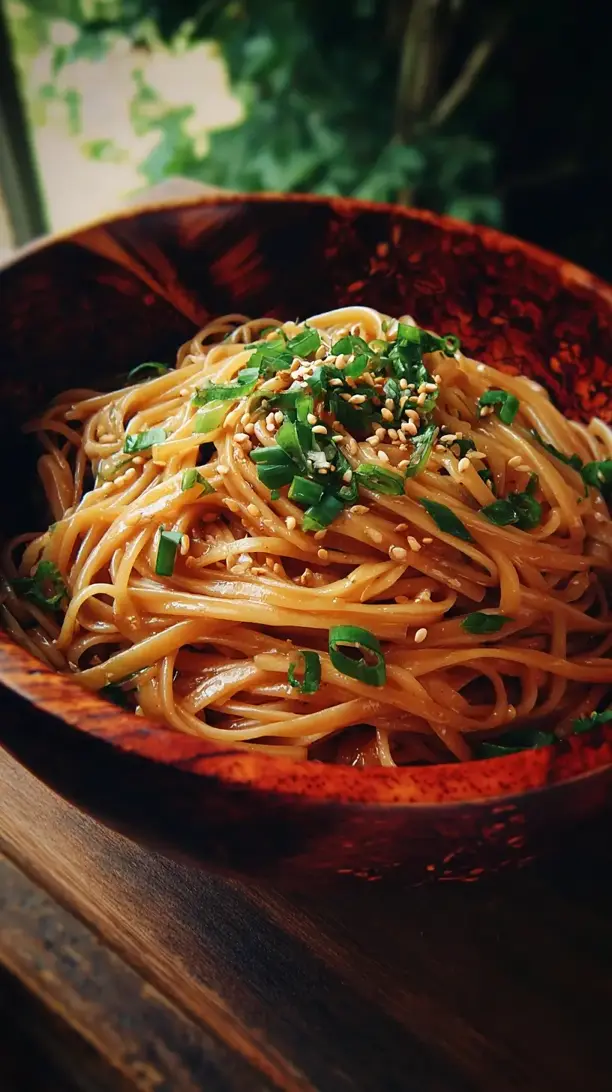
These sesame ginger noodles deliver a perfectly balanced sauce with nutty toasted sesame oil, zingy fresh ginger, and sweet-savory depth. Ready in about 20 minutes, they’re ideal for busy weeknights or make-ahead lunches. The dish is just as delicious served warm or cold straight from the fridge.
Love Sesame Ginger Noodles? So do we! If you're into Dinner Ideas or curious about Chicken Thigh Recipes, you'll find plenty of inspiration below.


Why You’ll Love This Sesame Ginger Noodles
Quick & versatile: Ready in pasta-boiling time with endless noodle and veggie options.
Addictive sauce: Perfect nutty, sweet, tangy, spicy balance you’ll want on everything.
Meal prep magic: Flavors deepen in the fridge for days, perfect for make-ahead meals.
Comforting yet light: Satisfying carb comfort without the heaviness of cream-based dishes.
Ingredients & Tools
- 400 g dried noodles (udon, soba, or linguine all work wonderfully)
- 4 tbsp soy sauce (or tamari for gluten-free)
- 3 tbsp toasted sesame oil
- 2 tbsp rice vinegar
- 1.5 tbsp honey or maple syrup
- 2 tbsp fresh ginger, finely grated
- 3 garlic cloves, minced
- 1-2 tsp chili paste or sriracha (adjust to your heat preference)
- 2 tbsp sesame seeds, for garnish
- 3 spring onions, thinly sliced
- Optional: shredded carrots, sliced cucumber, edamame, or cooked protein like chicken or tofu
Tools: A large pot for boiling noodles, a mixing bowl, a whisk, a microplane or fine grater for the ginger, and a colander.
Notes: The quality of your sesame oil and the freshness of your ginger really make a difference here. Using freshly grated ginger instead of the powdered stuff gives the sauce a vibrant, almost floral kick that you just can’t replicate. And that toasted sesame oil? It’s non-negotiable for that deep, nutty base flavor.
Nutrition (per serving)
| Calories: | 420 kcal |
| Protein: | 12 g |
| Fat: | 14 g |
| Carbs: | 65 g |
| Fiber: | 4 g |
Serves: 4 | Prep Time: 10 minutes | Cook Time: 10 minutes | Total Time: 20 minutes
Before You Start: Tips & Ingredient Notes
- Get your mise en place ready. This recipe comes together fast once you start cooking. Having your sauce whisked and your garnishes prepped before the noodles are done is the key to a stress-free experience.
- What’s the best noodle to use? You really can’t go wrong. Udon gives you a lovely chewy texture, soba offers a nutty flavor, and even standard spaghetti or linguine works in a pinch. Just avoid overly delicate noodles that might fall apart.
- Toasted vs. regular sesame oil. This is crucial! Toasted sesame oil is used for flavor, while the light-colored, regular kind is for cooking at high heat. You want the dark, toasted variety for that signature aroma.
- How to grate ginger without the mess. Use a microplane—it gives you a fine paste with all the juice and none of the stringy fibers. No microplane? The fine side of a box grater works too, just watch your knuckles!
- Taste and adjust as you go. The beauty of this sauce is its flexibility. Want it sweeter? Add a touch more honey. More tang? A splash of extra vinegar. Make it your own!
How to Make Sesame Ginger Noodles
Step 1: Bring a large pot of generously salted water to a rolling boil. You want it to taste like the sea—this is your only chance to season the noodles themselves. Add your dried noodles and cook according to the package directions until al dente. You’ll notice that for Asian-style noodles, this is often just 4-7 minutes, so don’t wander off!
Step 2: While the noodles are cooking, let’s make the magic sauce. In a bowl large enough to eventually hold all the noodles, combine the soy sauce, toasted sesame oil, rice vinegar, and honey. Whisk it vigorously until the honey is fully dissolved and the mixture looks emulsified and glossy.
Step 3: Now, add the flavor powerhouses. Grate your fresh ginger directly into the bowl—you’ll get all the precious juice this way. Mince the garlic as finely as you can and add that too. Finally, stir in your chosen amount of chili paste. Give it another good whisk and take a tiny taste. This is where you can adjust the balance to your liking.
Step 4: Your noodles should be done by now. Drain them in a colander, but here’s a pro move: do not rinse them! That thin layer of starch left on the noodles helps the sauce cling to every strand beautifully. Let them drain for just a moment, shaking the colander a few times.
Step 5: While the noodles are still very hot, immediately transfer them to the bowl with your waiting sauce. Using a pair of tongs or two forks, toss and lift the noodles continuously, ensuring every single strand gets coated. You’ll see the sauce soak in and the noodles will take on a beautiful, shiny appearance.
Step 6: Now for the final flourish. Sprinkle most of your sliced spring onions and sesame seeds over the noodles and give it one more gentle toss. Reserve a little of each for a pretty garnish on top when you serve. If you’re adding any extra veggies or protein, now is the time to fold them in gently.
Step 7: You can serve these noodles right away while they’re warm and comforting, or you can let them sit for 15-20 minutes to come to room temperature, which allows the flavors to meld even more. Either way, finish with that last sprinkle of green onions and sesame seeds for a pop of color and crunch.
Storage & Freshness Guide
- Fridge: Store in an airtight container for up to 4 days. Flavors deepen over time.
- Freezer: Not recommended as noodles can become mushy upon thawing.
- Reviving: If dry, add a splash of water or soy sauce when reheating.
Serving Suggestions
Complementary Dishes
- Quick-Pickled Cucumbers — Their sharp, acidic crunch is the perfect counterpoint to the rich, savory noodles and cuts through the oil beautifully.
- Steamed or Roasted Broccoli — The earthy, green flavor of broccoli soaks up the extra sauce wonderfully and adds a great textural contrast.
- Pan-Seared Tofu or Chicken — For a more substantial meal, a simple seared protein on the side makes this feel like a complete, restaurant-quality dinner.
Drinks
- Iced Green Tea with Lemon — The clean, slightly bitter notes of green tea cleanse the palate between bites and complement the ginger’s zing.
- A Crisp Lager or Pilsner — The carbonation and mild bitterness of a light beer work wonders against the umami and spice in the dish.
- Ginger Beer (non-alcoholic) — It’s a fun way to double down on the ginger flavor and adds a sweet, fizzy element to the meal.
Something Sweet
- Mango Sticky Rice — The sweet, creamy coconut and fresh mango are a classic Southeast Asian finish that feels light and refreshing after the noodles.
- Fortune Cookies and Green Tea Ice Cream — A simple, fun, and thematic way to end the meal with a little cool creaminess and a crunch.
- Lychee Sorbet — The floral, delicate sweetness of lychee is a stunningly light and elegant palate cleanser that doesn’t overpower the main course.
Top Mistakes to Avoid
- Mistake: Rinsing your cooked noodles. I’ve messed this up before too… rinsing washes away the starch that helps the sauce cling. You’ll end up with a pool of sauce at the bottom of the bowl and bland noodles.
- Mistake: Using old or powdered ginger. The flavor just isn’t the same. Fresh ginger has a bright, almost spicy quality that is the soul of this dish. Powdered ginger will make it taste dusty and flat.
- Mistake: Adding the sauce to cold noodles. The heat from the freshly cooked noodles helps the sauce absorb and infuse into every strand. If the noodles are cold, the sauce will just sit on top.
- Mistake: Skipping the toasting step for sesame seeds. If you have raw sesame seeds, take one minute to toast them in a dry pan until golden. It unlocks a nutty aroma that elevates the entire dish from good to unforgettable.
Expert Tips
- Tip: Make a double batch of the sauce. Seriously, you’ll thank yourself later. It keeps for a week in the fridge and is incredible as a salad dressing, marinade for grilled meats, or drizzled over steamed rice and veggies.
- Tip: Add a splash of noodle water. If your sauce seems a little too thick when you’re tossing, add a tablespoon or two of the starchy pasta water. It will loosen the sauce and help it coat the noodles more evenly.
- Tip: Let it rest before serving. While delicious immediately, letting the tossed noodles sit for 10-15 minutes allows the flavors to penetrate the noodles more deeply, resulting in a more cohesive and flavorful bite.
- Tip: Use a zester for the garlic. If you want an even more potent, well-distributed garlic flavor without any chunks, run your garlic cloves over a microplane zester instead of mincing. It creates a fine paste that melts right into the sauce.
FAQs
Can I make these noodles ahead of time?
Absolutely, and they are fantastic for meal prep! Just prepare the recipe as directed, let the noodles cool completely, and store them in an airtight container in the fridge for up to 4 days. The noodles will absorb the sauce and the flavors will get even better. You can eat them cold straight from the container, or give them a quick zap in the microwave if you prefer them warm. If they seem a little dry after chilling, a tiny splash of water or extra soy sauce when reheating will bring them back to life.
What can I use if I don’t have rice vinegar?
No worries, a few substitutes work well. Fresh lime juice is my top choice—it adds a different but equally bright acidity. White wine vinegar or even apple cider vinegar can work in a pinch, though they have stronger, distinct flavors. I’d avoid balsamic or malt vinegar as their flavors are too overpowering for this delicate Asian-inspired profile. Start with a little less than the recipe calls for, taste, and adjust.
How can I make this recipe gluten-free?
It’s super easy! First, ensure you’re using gluten-free noodles—100% buckwheat soba, rice noodles, or even chickpea pasta are great options. Then, simply swap the regular soy sauce for tamari (which is a gluten-free soy sauce) or coconut aminos. Double-check your chili paste label too, as some brands may contain wheat. With those simple swaps, you’ve got a completely gluten-free meal that’s just as delicious.
My sauce is too salty. How can I fix it?
It happens to the best of us! The easiest fix is to balance it with more of the other elements. Add an extra squeeze of honey or a dash of maple syrup for sweetness, and a bit more rice vinegar for tang. If you have it, a tiny splash of water or neutral oil can also dilute the saltiness. For the future, remember that different soy sauce brands have varying salt levels, so it’s always best to taste as you go.
Can I add vegetables directly to the noodles?
You sure can, but timing is key. For quick-cooking veggies like spinach, peas, or bean sprouts, you can toss them in with the hot noodles and the residual heat will wilt them perfectly. For crunchier veggies like carrots, bell peppers, or snow peas, I recommend giving them a very quick blanch in the noodle water during the last 30 seconds of cooking, or sautéing them separately for a minute before combining everything.


Sesame Ginger Noodles
Whip up delicious Sesame Ginger Noodles in just 20 minutes! This easy recipe features a perfectly balanced sauce. Perfect for weeknight dinners or meal prep. Get the recipe now!
Ingredients
For the Noodles & Sauce:
-
400 g dried noodles (udon, soba, or linguine all work wonderfully)
-
4 tbsp soy sauce (or tamari for gluten-free)
-
3 tbsp toasted sesame oil
-
2 tbsp rice vinegar
-
1.5 tbsp honey or maple syrup
-
2 tbsp fresh ginger (finely grated)
-
3 garlic cloves (minced)
-
1-2 tsp chili paste or sriracha (adjust to your heat preference)
-
2 tbsp sesame seeds (for garnish)
-
3 spring onions (thinly sliced)
-
Optional: shredded carrots, sliced cucumber, edamame, or cooked protein like chicken or tofu
Instructions
-
Bring a large pot of generously salted water to a rolling boil. You want it to taste like the sea—this is your only chance to season the noodles themselves. Add your dried noodles and cook according to the package directions until al dente. You’ll notice that for Asian-style noodles, this is often just 4-7 minutes, so don’t wander off!01
-
While the noodles are cooking, let’s make the magic sauce. In a bowl large enough to eventually hold all the noodles, combine the soy sauce, toasted sesame oil, rice vinegar, and honey. Whisk it vigorously until the honey is fully dissolved and the mixture looks emulsified and glossy.02
-
Now, add the flavor powerhouses. Grate your fresh ginger directly into the bowl—you’ll get all the precious juice this way. Mince the garlic as finely as you can and add that too. Finally, stir in your chosen amount of chili paste. Give it another good whisk and take a tiny taste. This is where you can adjust the balance to your liking.03
-
Your noodles should be done by now. Drain them in a colander, but here’s a pro move: do not rinse them! That thin layer of starch left on the noodles helps the sauce cling to every strand beautifully. Let them drain for just a moment, shaking the colander a few times.04
-
While the noodles are still very hot, immediately transfer them to the bowl with your waiting sauce. Using a pair of tongs or two forks, toss and lift the noodles continuously, ensuring every single strand gets coated. You’ll see the sauce soak in and the noodles will take on a beautiful, shiny appearance.05
-
Now for the final flourish. Sprinkle most of your sliced spring onions and sesame seeds over the noodles and give it one more gentle toss. Reserve a little of each for a pretty garnish on top when you serve. If you’re adding any extra veggies or protein, now is the time to fold them in gently.06
-
You can serve these noodles right away while they’re warm and comforting, or you can let them sit for 15-20 minutes to come to room temperature, which allows the flavors to meld even more. Either way, finish with that last sprinkle of green onions and sesame seeds for a pop of color and crunch.07
Not what you're looking for?