This Sheet Pan Pork Tenderloin is a complete, elegant dinner with minimal cleanup. Juicy pork roasts alongside potatoes and green beans for a flavorful, balanced meal. It’s a reliable weeknight hero that delivers maximum flavor from a single pan.
Love Sheet Pan Pork Tenderloin? So do we! If you're into Dinner Ideas or curious about Crockpot Recipes, you'll find plenty of inspiration below.



Why You’ll Love This Sheet Pan Pork Tenderloin
- Minimal cleanup: Protein and sides cook together on one pan.
- Juicy & tender: Searing and roasting keeps the lean pork succulent.
- Endlessly adaptable: Swap vegetables based on what you have.
- Gourmet presentation: Golden crust and vibrant veggies impress every time.
Ingredients & Tools
- 2 pork tenderloins (about 1 to 1.5 lbs or 450-680 g total)
- 1.5 lbs baby potatoes, halved
- 12 oz fresh green beans, trimmed
- 3 tbsp olive oil, divided
- 4 cloves garlic, minced
- 1 tbsp fresh rosemary, finely chopped
- 1 tsp smoked paprika
- 1 tsp dried thyme
- 1 tsp onion powder
- 1 tsp kosher salt, plus more to taste
- ½ tsp freshly cracked black pepper
- 1 lemon, cut into wedges
Tools: A large, rimmed sheet pan, a small bowl for the rub, and a good pair of tongs.
Notes: Using two smaller tenderloins promotes even cooking. Fresh rosemary is highly recommended for its piney fragrance.
Nutrition (per serving)
| Calories: | 420 kcal |
| Protein: | 35 g |
| Fat: | 15 g |
| Carbs: | 35 g |
| Fiber: | 6 g |
Serves: 4 | Prep Time: 15 minutes | Cook Time: 25 minutes | Total Time: 40 minutes
Before You Start: Tips & Ingredient Notes
- Pat that pork dry! This is the secret to a beautiful, seared crust. If the pork is wet, it will steam instead of brown. Use a paper towel to thoroughly dry the surface before applying the rub.
- Cut your potatoes uniformly. Try to halve them so they’re all roughly the same size. This ensures they’ll roast evenly and be perfectly tender at the same time the pork is done.
- Don’t crowd the pan. It might be tempting to pile everything on, but if the vegetables are too close together, they’ll steam and become soggy. We want roasted, crisp-tender results!
- Let the pork rest. I know it’s hard to wait when it smells so good, but letting the pork tenderloin rest for a few minutes after roasting is non-negotiable. It allows the juices to redistribute throughout the meat, guaranteeing a moist bite.
How to Make Sheet Pan Pork Tenderloin
Step 1: Preheat your oven to 425°F (220°C). This high heat is key for getting a good roast on the vegetables and finishing the pork quickly so it stays juicy. While the oven heats, pat the pork tenderloins completely dry with paper towels and set them aside on a plate.
Step 2: In a small bowl, make your seasoning rub. Combine 2 tablespoons of the olive oil with the minced garlic, chopped rosemary, smoked paprika, dried thyme, onion powder, salt, and pepper. Stir it into a fragrant paste. Rub this mixture all over the entire surface of the pork tenderloins, coating them evenly. You’ll notice the color is already beautiful.
Step 3: On your large, rimmed sheet pan, toss the halved baby potatoes with the remaining 1 tablespoon of olive oil and a pinch of salt and pepper. Spread them out in a single layer. Roast the potatoes in the preheated oven for 15 minutes. This gives them a head start since they take longer to cook than the green beans and pork.
Step 4: While the potatoes are par-cooking, heat a tablespoon of oil in a large skillet over medium-high heat. Carefully place the seasoned pork tenderloins in the hot skillet. Sear them for about 2-3 minutes per side, until you have a nice golden-brown crust on all sides. You don’t need to cook them through—just get that beautiful color and flavor on the outside.
Step 5: Remove the hot sheet pan from the oven. Push the potatoes to the outer edges of the pan to make space in the center. Place the seared pork tenderloins in the middle. Scatter the trimmed green beans around the pork and potatoes. Drizzle the beans very lightly with a touch more oil and season everything with another small pinch of salt.
Step 6: Place the sheet pan back into the oven and roast for 15-20 minutes. You’re looking for an internal temperature of 145°F (63°C) in the thickest part of the pork, which you should check with an instant-read thermometer. The green beans should be tender-crisp, and the potatoes should be easily pierced with a fork.
Step 7: Once cooked, remove the pan from the oven. Transfer the pork to a cutting board and tent it loosely with foil. Let it rest for a full 5-10 minutes. This is the most important step for juicy pork! You can give the vegetables on the pan a quick toss during this time.
Step 8: After resting, slice the pork tenderloin into 1-inch thick medallions. Serve immediately on the sheet pan or a large platter, arranged with the roasted potatoes and green beans. Don’t forget to squeeze those fresh lemon wedges over everything right before eating—the bright acidity really brings the whole dish to life.
Storage & Freshness Guide
- Fridge: Store leftovers in an airtight container for up to 3 days.
- Freezer: Freeze sliced pork and vegetables separately for up to 2 months.
- Reviving: Reheat in a 350°F oven or toaster oven until warm.
Serving Suggestions
Complementary Dishes
- A simple arugula salad — The peppery bite of fresh arugula with a light lemon vinaigrette provides a refreshing, crisp contrast to the warm, savory notes of the roasted sheet pan.
- Creamy polenta or mashed cauliflower — Something soft and creamy on the side is wonderful for soaking up any delicious juices left on the plate from the pork and vegetables.
- Crusty, warmed bread — Honestly, is there anything better than a piece of good bread to mop up every last bit of flavor from your plate? It’s a simple, satisfying addition.
Drinks
- A medium-bodied Pinot Noir — The fruity notes and light tannins in a Pinot Noir complement the lean pork and earthy herbs without overpowering the meal.
- A crisp apple cider — Whether alcoholic or not, the sweet-tart flavor of apple is a classic pairing with pork and cuts through the richness beautifully.
- Sparkling water with lemon — For a non-alcoholic option, the bubbles and citrus are incredibly refreshing and help cleanse the palate between bites.
Something Sweet
- Warm apple crumble — Staying with the cozy, autumnal theme, a warm apple crumble with a scoop of vanilla ice cream feels like a natural and comforting progression after this savory main.
- Dark chocolate pots de crème — For something a little more elegant, these rich, silky chocolate desserts offer a deep, bittersweet finish that contrasts the herby pork perfectly.
- Lemon sorbet — A scoop of bright, tangy lemon sorbet is a light and palate-cleansing way to end the meal, echoing the fresh lemon we used in the main course.
Top Mistakes to Avoid
- Mistake: Skipping the sear. Searing the pork in a hot skillet before roasting is crucial for developing a deep, flavorful crust through the Maillard reaction. If you just put it straight on the sheet pan, you’ll miss out on tons of complex flavor.
- Mistake: Overcooking the pork. Pork tenderloin is very lean and can go from juicy to dry and tough in a matter of minutes. Trust your thermometer! Pull it at 145°F (63°C), and remember it will carryover cook while resting.
- Mistake: Using a wet vegetable. If you wash your green beans and don’t dry them thoroughly, they will steam and become limp and soggy in the oven instead of roasting to a lovely crisp-tender texture.
- Mistake: Not preheating the sheet pan with the potatoes. Giving the potatoes a head start ensures that everything—the pork, potatoes, and green beans—finishes cooking at the same time. Without it, you might have undercooked potatoes.
Expert Tips
- Tip: Use an instant-read thermometer. This is the single best tool for perfectly cooked pork every time. Guessing by color or time alone is a recipe for disappointment. Aim for 145°F in the thickest part for ideal juiciness.
- Tip: Let the pork come to room temperature. If you have an extra 20 minutes, let the seasoned pork sit on the counter before searing. A cooler center means the outside can over-brown before the inside is done. Room-temp meat cooks more evenly.
- Tip: Add a splash of acidity at the end. Right before serving, a squeeze of fresh lemon juice or even a drizzle of balsamic glaze over the entire pan lifts all the flavors and adds a wonderful brightness that balances the richness.
- Tip: Customize your veggie roast time. If you swap in quicker-cooking veggies like asparagus or broccoli, add them during the last 10-12 minutes of cooking. For harder veggies like carrots or parsnips, toss them in with the potatoes from the start.
FAQs
Can I use a different cut of pork?
You can, but the results and cook time will vary. Pork loin is larger and denser, so it will require a longer roasting time, which could overcook the vegetables. I’d recommend sticking with tenderloin for this specific recipe because of its quick-cooking nature and perfect size for a sheet pan meal.
My vegetables aren’t browning. What happened?
This usually means the pan is too crowded, which creates steam. Make sure everything is in a single layer with a little space between pieces. Also, ensure your oven is fully preheated and hot enough. Roasting at a high temperature is essential for that beautiful caramelization.
How do I store and reheat leftovers?
Store any leftovers in an airtight container in the fridge for up to 3 days. To reheat, I recommend using an oven or toaster oven at 350°F until warm. The microwave will work in a pinch but can make the pork a bit rubbery and the green beans soft.
Can I prepare this ahead of time?
Absolutely! You can chop the vegetables and make the seasoning rub a day in advance. Keep them stored separately in the fridge. When you’re ready to cook, just pat the pork dry, rub on the seasoning, and proceed with the recipe. It makes weeknight dinner assembly a breeze.
Is it normal for the pork to be a little pink inside?
Yes, absolutely! Thanks to modern farming practices, pork is safe to eat at 145°F, and at that temperature, it will often have a slight pink hue in the center. This is a sign of perfectly cooked, juicy pork. It should not be gray all the way through.



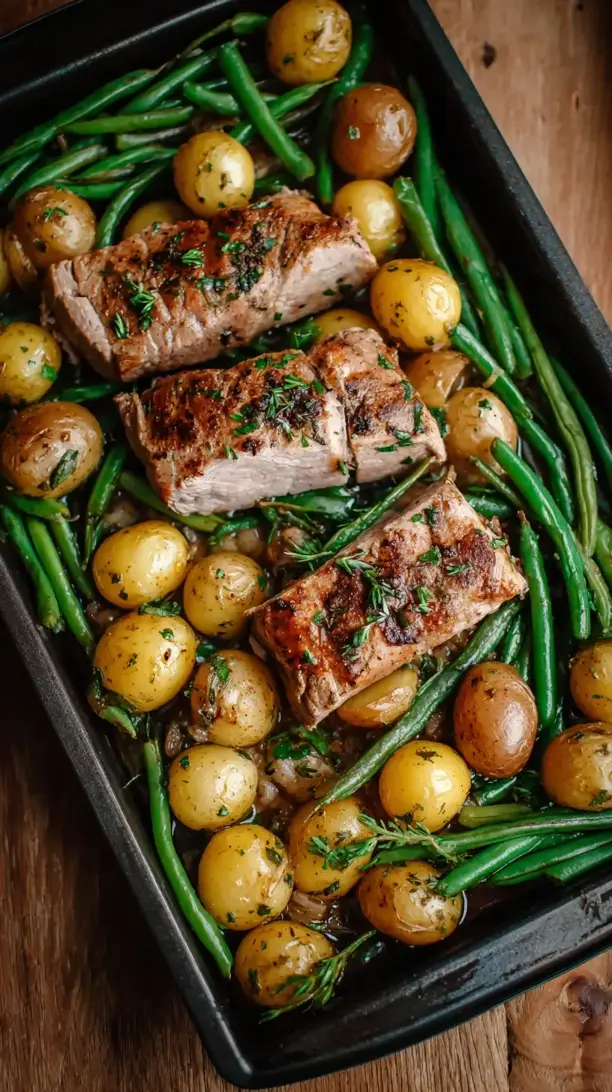
Sheet Pan Pork Tenderloin
Make this easy Sheet Pan Pork Tenderloin with potatoes & green beans for a complete, elegant dinner with minimal cleanup. Get the simple recipe now!
Ingredients
For the main ingredients
-
2 pork tenderloins (about 1 to 1.5 lbs or 450-680 g total)
-
1.5 lbs baby potatoes (halved)
-
12 oz fresh green beans (trimmed)
-
3 tbsp olive oil (divided)
-
4 cloves garlic (minced)
-
1 tbsp fresh rosemary (finely chopped)
-
1 tsp smoked paprika
-
1 tsp dried thyme
-
1 tsp onion powder
-
1 tsp kosher salt (plus more to taste)
-
0.5 tsp freshly cracked black pepper
-
1 lemon (cut into wedges)
Instructions
-
Preheat your oven to 425°F (220°C). While the oven heats, pat the pork tenderloins completely dry with paper towels and set them aside on a plate.01
-
In a small bowl, make your seasoning rub. Combine 2 tablespoons of the olive oil with the minced garlic, chopped rosemary, smoked paprika, dried thyme, onion powder, salt, and pepper. Stir it into a fragrant paste. Rub this mixture all over the entire surface of the pork tenderloins, coating them evenly.02
-
On your large, rimmed sheet pan, toss the halved baby potatoes with the remaining 1 tablespoon of olive oil and a pinch of salt and pepper. Spread them out in a single layer. Roast the potatoes in the preheated oven for 15 minutes.03
-
While the potatoes are par-cooking, heat a tablespoon of oil in a large skillet over medium-high heat. Carefully place the seasoned pork tenderloins in the hot skillet. Sear them for about 2-3 minutes per side, until you have a nice golden-brown crust on all sides.04
-
Remove the hot sheet pan from the oven. Push the potatoes to the outer edges of the pan to make space in the center. Place the seared pork tenderloins in the middle. Scatter the trimmed green beans around the pork and potatoes. Drizzle the beans very lightly with a touch more oil and season everything with another small pinch of salt.05
-
Place the sheet pan back into the oven and roast for 15-20 minutes. You’re looking for an internal temperature of 145°F (63°C) in the thickest part of the pork, which you should check with an instant-read thermometer. The green beans should be tender-crisp, and the potatoes should be easily pierced with a fork.06
-
Once cooked, remove the pan from the oven. Transfer the pork to a cutting board and tent it loosely with foil. Let it rest for a full 5-10 minutes. You can give the vegetables on the pan a quick toss during this time.07
-
After resting, slice the pork tenderloin into 1-inch thick medallions. Serve immediately on the sheet pan or a large platter, arranged with the roasted potatoes and green beans. Squeeze those fresh lemon wedges over everything right before eating.08
Not what you're looking for?