
This Sheet Pan Salmon and Potatoes delivers a complete, elegant dinner with minimal cleanup. Crispy potatoes and tender, flaky salmon roast together with lemon and herbs for a perfect weeknight meal. It’s a fuss-free recipe that feels special every time.
Nothing beats a great Sheet Pan Salmon and Potatoes. Whether you're a fan of Dinner Ideas or want to try something from our Appetizers & Snacks selection, keep scrolling!



Why You’ll Love This Sheet Pan Salmon and Potatoes
- Easy cleanup: Everything cooks together on one pan.
- Classic flavors: Savory potatoes and rich salmon with bright lemon and herbs.
- Versatile ingredients: Swap herbs based on what you have available.
- Perfect textures: Crispy potatoes contrast with tender, flaky salmon.
Ingredients & Tools
- 1 lb (450 g) baby potatoes, halved or quartered
- 2 tbsp olive oil, divided
- 1 tsp garlic powder
- 1 tsp dried oregano
- 4 (6 oz / 170 g each) salmon fillets, skin-on or skinless
- 1 large lemon, half juiced, half thinly sliced
- 2 tbsp fresh parsley, chopped
- To taste, salt and freshly ground black pepper
Tools: A large rimmed baking sheet, parchment paper (highly recommended for easy cleanup!), a small bowl, and a pair of tongs.
Notes: Use fresh, bright-colored salmon fillets. Don’t skip the fresh lemon juice at the end for a bright flavor boost.
Nutrition (per serving)
| Calories: | 420 kcal |
| Protein: | 35 g |
| Fat: | 22 g |
| Carbs: | 20 g |
| Fiber: | 3 g |
Serves: 4 | Prep Time: 15 minutes | Cook Time: 25 minutes | Total Time: 40 minutes
Before You Start: Tips & Ingredient Notes
- Cut your potatoes evenly. This is the secret to perfectly cooked potatoes. If they’re all roughly the same size—about 1-inch chunks—they’ll cook at the same rate and get evenly crispy and tender.
- Don’t be shy with the seasoning. Potatoes need a good amount of salt to taste their best, and seasoning both the potatoes and the salmon separately ensures every component is flavorful on its own.
- Pat your salmon dry. Use a paper towel to gently blot the surface of the salmon fillets right before seasoning. A dry surface helps the seasoning stick and promotes a nicer texture as it roasts, rather than steaming.
- Let the sheet pan get hot. If you have the time, pop your empty baking sheet into the oven as it preheats. Adding the potatoes to a hot pan gives them a fantastic head start on getting crispy.
How to Make Sheet Pan Salmon and Potatoes
Step 1: Preheat your oven to 425°F (220°C). While it’s heating, line your large rimmed baking sheet with parchment paper. This isn’t just for easy cleanup—it also helps prevent the potatoes from sticking and makes flipping them a breeze. If you’re feeling ambitious, you can place the empty sheet pan in the oven to preheat as well for extra crispy potatoes.
Step 2: Prepare the potatoes. Place your halved baby potatoes in a medium bowl. Drizzle them with one tablespoon of the olive oil, and then sprinkle with the garlic powder, dried oregano, and a generous pinch of salt and pepper. Toss everything together until the potatoes are evenly coated in the oil and seasonings. You’ll notice the aroma of the garlic and oregano already starting to come alive.
Step 3: Arrange the potatoes on the baking sheet. Spread them out in a single layer, making sure they’re not crowded and all have a cut side facing down on the pan. This contact with the hot surface is what creates that lovely golden-brown crust. Place the pan in the preheated oven and roast for 15 minutes.
Step 4: While the potatoes are roasting, prepare the salmon. Pat the fillets dry with a paper towel. This is a small but crucial step for getting a nice sear on the fish. Place them on a plate and drizzle with the remaining tablespoon of olive oil. Season both sides generously with salt and pepper.
Step 5: After the potatoes have roasted for 15 minutes, carefully remove the hot pan from the oven. Use a pair of tongs to flip the potatoes and push them towards the edges of the pan, creating a clear space in the center. This is where you’ll place the salmon fillets.
Step 6: Place the seasoned salmon fillets in the center of the pan, skin-side down if they have skin. Arrange the thin lemon slices over the top of the salmon fillets. The lemon will roast and caramelize slightly, adding a beautiful fragrance and flavor.
Step 7: Return the entire sheet pan to the oven. Roast for another 10-12 minutes. The exact time will depend on the thickness of your salmon. You’re looking for the salmon to be opaque and flake easily with a fork, and the potatoes to be fork-tender with crispy, browned edges.
Step 8: Once everything is cooked, carefully remove the pan from the oven. Immediately squeeze the juice from the remaining lemon half over the entire pan—the hot ingredients will soak up that bright, fresh juice. Sprinkle with the freshly chopped parsley for a burst of color and freshness. Let it rest for just a minute or two before serving directly from the pan.
Storage & Freshness Guide
- Fridge: Store leftovers in an airtight container for up to 2 days.
- Freezer: Not recommended; potatoes and salmon texture suffer.
- Reviving: Reheat gently in a 300°F oven until warm to preserve texture.
Serving Suggestions
Complementary Dishes
- A simple arugula salad — The peppery bite of arugula dressed with just a little lemon vinaigrette provides a fresh, crisp contrast to the rich, warm salmon and potatoes.
- Steamed asparagus or green beans — You can even toss these in with the potatoes during the last 10 minutes of cooking for a truly one-pan meal, adding a vibrant green vegetable element.
- Garlicky sautéed spinach — It wilts down quickly on the stovetop and its creamy, garlicky flavor is a perfect match for the flaky fish and crispy potatoes.
Drinks
- A crisp Sauvignon Blanc — Its citrusy and herbal notes mirror the lemon and parsley in the dish, cutting through the richness of the salmon beautifully.
- Sparkling water with lemon — For a non-alcoholic option, the bubbles and citrus are incredibly refreshing and help cleanse the palate between bites.
- A light Pinot Noir — If you prefer red, a lighter-bodied red like Pinot Noir has enough acidity to complement the meal without overpowering the delicate salmon.
Something Sweet
- Lemon sorbet — It continues the citrus theme in a refreshing, palate-cleansing way, offering a light and bright finish to the meal.
- Dark chocolate-covered almonds — Just a few of these provide a satisfying, not-too-sweet ending with a lovely crunch and a hint of bitterness.
- Fresh berries with whipped cream — Simple, elegant, and low-effort, the natural sweetness of the berries is a perfect follow-up to a savory dinner.
Top Mistakes to Avoid
- Overcrowding the pan. If you pack everything in too tightly, the potatoes will steam instead of roast, and you’ll miss out on all those delicious crispy edges. They need their personal space to get properly golden.
- Underseasoning the potatoes. Potatoes are like little flavor sponges, but they start out very bland. Be generous with the salt and herbs in the initial toss, or you’ll end up with seasoned salmon and bland potatoes.
- Overcooking the salmon. Salmon continues to cook for a minute or two after it comes out of the oven. If you wait until it looks completely done in the oven, it can become dry. Pull it out when it’s just slightly translucent in the very center.
- Adding the salmon at the same time as the potatoes. The potatoes need a significant head start to cook through and crisp up. If you put them in together, the salmon will be severely overcooked by the time the potatoes are tender.
Expert Tips
- Tip: For extra crispy potato skins, after you toss them in oil and seasoning, give them a quick 30-second blast in the microwave before spreading them on the hot pan. This jump-starts the cooking process, ensuring a fluffy inside and a super crispy outside by the time everything is done.
- Tip: If your salmon fillets are very different thicknesses, tuck a few lemon slices under the thinner ends. This elevates them slightly, preventing them from overcooking while the thicker parts catch up.
- Tip: Don’t discard the roasted lemon slices! They become soft, slightly sweet, and less acidic. You can actually eat them, skin and all, for a burst of intense, caramelized lemon flavor.
- Tip: Let the salmon come to room temperature for about 10-15 minutes before cooking. A cold fillet straight from the fridge can cook unevenly, while a slightly less-chilled one will roast more consistently from edge to center.
FAQs
Can I use a different type of potato?
Absolutely! Baby potatoes are great because they have thin skins and cook evenly, but you can use fingerling potatoes or even chop a large Yukon Gold or red potato into 1-inch cubes. Just be mindful that denser potatoes like russets might take a little longer to cook through, so you may need to give them an extra 5-10 minutes of roasting time before adding the salmon.
My salmon has skin on it. Should I remove it before cooking?
That’s entirely up to you! Leaving the skin on helps hold the fillet together during cooking and it gets wonderfully crispy and delicious. If you’re not a fan of eating the skin, it’s much easier to remove after cooking—just slide a spatula or fork between the skin and the flesh once it’s on your plate. I often cook it skin-on for the texture and then let people decide for themselves.
How do I know when the salmon is perfectly cooked?
The best test is the flake test. Gently press the top of a fillet with a fork or your finger; it should feel firm but still have a little give. Then, try to flake a piece from the thickest part. If it separates easily into large, moist flakes and is opaque all the way through, it’s done. A little translucency in the very center is okay, as it will carryover cook.
Can I prepare any part of this recipe ahead of time?
You can definitely get a head start! You can wash, cut, and season the potatoes a few hours in advance—just keep them submerged in water in the fridge to prevent browning, then drain and pat them very dry before tossing with oil and roasting. I wouldn’t season the salmon too far ahead, as the salt can start to “cook” the surface and change the texture.
What are good herb substitutions if I don’t have oregano?
Oregano is just a suggestion—this recipe is wonderfully adaptable. Dill is a classic pairing with salmon and lemon. Fresh or dried thyme works beautifully. You could also use an Italian seasoning blend, or even a sprinkle of smoked paprika for a different, slightly smoky flavor profile. Use what you love and have on hand!



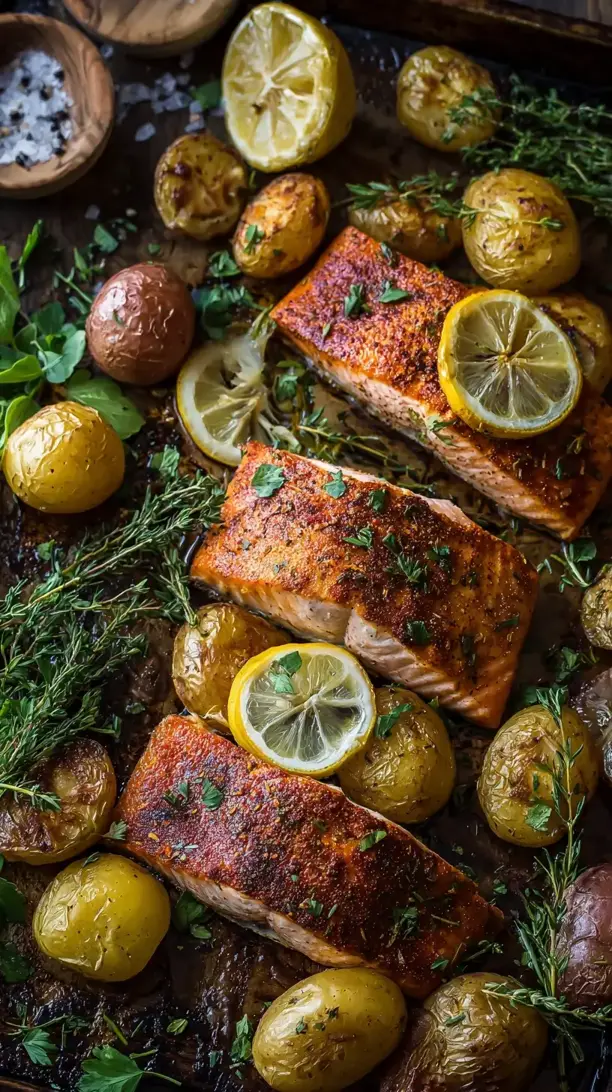
Sheet Pan Salmon And Potatoes
Make this easy Sheet Pan Salmon and Potatoes for a complete, healthy dinner with minimal cleanup. Get the recipe for crispy potatoes and tender salmon now!
Ingredients
For the Ingredients & Tools
-
1 lb baby potatoes (halved or quartered, 450 g)
-
2 tbsp olive oil (divided)
-
1 tsp garlic powder
-
1 tsp dried oregano
-
4 salmon fillets (6 oz / 170 g each, skin-on or skinless)
-
1 large lemon (half juiced, half thinly sliced)
-
2 tbsp fresh parsley (chopped)
-
salt and freshly ground black pepper (to taste)
Instructions
-
Preheat your oven to 425°F (220°C). While it’s heating, line your large rimmed baking sheet with parchment paper. This isn’t just for easy cleanup—it also helps prevent the potatoes from sticking and makes flipping them a breeze. If you’re feeling ambitious, you can place the empty sheet pan in the oven to preheat as well for extra crispy potatoes.01
-
Prepare the potatoes. Place your halved baby potatoes in a medium bowl. Drizzle them with one tablespoon of the olive oil, and then sprinkle with the garlic powder, dried oregano, and a generous pinch of salt and pepper. Toss everything together until the potatoes are evenly coated in the oil and seasonings. You’ll notice the aroma of the garlic and oregano already starting to come alive.02
-
Arrange the potatoes on the baking sheet. Spread them out in a single layer, making sure they’re not crowded and all have a cut side facing down on the pan. This contact with the hot surface is what creates that lovely golden-brown crust. Place the pan in the preheated oven and roast for 15 minutes.03
-
While the potatoes are roasting, prepare the salmon. Pat the fillets dry with a paper towel. This is a small but crucial step for getting a nice sear on the fish. Place them on a plate and drizzle with the remaining tablespoon of olive oil. Season both sides generously with salt and pepper.04
-
After the potatoes have roasted for 15 minutes, carefully remove the hot pan from the oven. Use a pair of tongs to flip the potatoes and push them towards the edges of the pan, creating a clear space in the center. This is where you’ll place the salmon fillets.05
-
Place the seasoned salmon fillets in the center of the pan, skin-side down if they have skin. Arrange the thin lemon slices over the top of the salmon fillets. The lemon will roast and caramelize slightly, adding a beautiful fragrance and flavor.06
-
Return the entire sheet pan to the oven. Roast for another 10-12 minutes. The exact time will depend on the thickness of your salmon. You’re looking for the salmon to be opaque and flake easily with a fork, and the potatoes to be fork-tender with crispy, browned edges.07
-
Once everything is cooked, carefully remove the pan from the oven. Immediately squeeze the juice from the remaining lemon half over the entire pan—the hot ingredients will soak up that bright, fresh juice. Sprinkle with the freshly chopped parsley for a burst of color and freshness. Let it rest for just a minute or two before serving directly from the pan.08
Not what you're looking for?