This Shrimp and Asparagus Risotto is a comforting, elegant meal that’s perfect for both weeknights and company. The creamy Arborio rice, sweet shrimp, and crisp asparagus create a beautifully balanced dish. Mastering the simple technique yields a restaurant-quality result every time.
Love Shrimp and Asparagus Risotto? So do we! If you're into Savory Combo Recipes or curious about Chicken Breast Recipes, you'll find plenty of inspiration below.



Why You’ll Love This Shrimp and Asparagus Risotto
Texture symphony: Creamy rice, juicy shrimp, and crisp asparagus in every bite.
Fancy but simple: Impressive results with straightforward technique.
Seasonal canvas: Easy to adapt with your favorite flavors.
Aromatic comfort: Toasting rice and wine create an inviting kitchen aroma.
Ingredients & Tools
- 1 lb large shrimp, peeled and deveined
- 1 bunch asparagus, tough ends trimmed, cut into 1-inch pieces
- 1.5 cups Arborio rice
- 1 large shallot, finely diced
- 2 cloves garlic, minced
- 1/2 cup dry white wine (like Sauvignon Blanc or Pinot Grigio)
- 5-6 cups warm chicken or vegetable stock
- 1/2 cup grated Parmesan cheese, plus more for serving
- 3 tbsp unsalted butter, divided
- 2 tbsp olive oil
- 1 tsp lemon zest
- Salt and freshly ground black pepper to taste
- 2 tbsp fresh parsley, chopped
Tools: A large, heavy-bottomed pot or Dutch oven, a ladle, a separate saucepan for warming stock
Notes: Don’t substitute Arborio rice—its starch is essential for creaminess. Warm stock helps the rice cook evenly.
Nutrition (per serving)
| Calories: | 480 kcal |
| Protein: | 28 g |
| Fat: | 14 g |
| Carbs: | 58 g |
| Fiber: | 3 g |
Serves: 4 | Prep Time: 15 minutes | Cook Time: 30 minutes | Total Time: 45 minutes
Before You Start: Tips & Ingredient Notes
- Warm your stock, always. This is the golden rule of risotto. Adding cold stock shocks the rice and stops the cooking process, leading to a grainy, uneven texture. Keep it simmering gently on a back burner.
- Don’t rinse the rice. You might be tempted, but please don’t! The dusty starch on the surface of Arborio rice is what creates the luxurious, creamy sauce we’re after. Rinsing it away is like washing off the magic.
- Prep everything within reach. Once you start adding stock, you’ll be at the stove for a solid 20 minutes. Having your ingredients pre-measured and within arm’s reach—what chefs call *mise en place*—makes the process smooth and enjoyable, not stressful.
- Choose your shrimp wisely. For the best texture and flavor, I highly recommend using raw, frozen shrimp that you’ve thawed yourself. They’re often fresher than the “fresh” shrimp sitting on ice at the counter. Pat them very dry before seasoning.
How to Make Shrimp and Asparagus Risotto
Step 1: Start by preparing your components. Pat the shrimp dry with paper towels and season lightly with salt and pepper. Trim the tough, woody ends from the asparagus—they’ll usually snap naturally at the right spot—and cut the spears into 1-inch pieces. Finely dice the shallot and mince the garlic. Finally, pour your stock into a saucepan and bring it to a gentle simmer over low heat. You want it hot and ready to go.
Step 2: In your large, heavy-bottomed pot, heat 1 tablespoon of olive oil and 1 tablespoon of butter over medium-high heat. Add the shrimp in a single layer and cook for just 1-2 minutes per side, until they’re pink and opaque. You’re not cooking them through entirely—they’ll finish later. Remove them to a clean plate and set aside. This prevents them from becoming tough and rubbery.
Step 3: In the same pot, add the remaining tablespoon of olive oil. Add the asparagus pieces and sauté for 3-4 minutes until they’re bright green and just starting to become tender. You want a little crunch left. Remove them to the same plate as the shrimp. Don’t worry about wiping the pot—those browned bits from the shrimp add fantastic flavor.
Step 4: Reduce the heat to medium. Add the remaining 2 tablespoons of butter to the pot. Once melted, add the diced shallot and cook for 3-4 minutes until soft and translucent. Add the minced garlic and cook for just 30 more seconds until fragrant—you don’t want it to burn. Now, add the Arborio rice. Stir constantly for about 2 minutes until the edges of the grains look translucent and you can smell a lovely, toasty aroma.
Step 5: Pour in the white wine. It will sizzle and steam dramatically—this is a good thing! Stir continuously until the wine is almost completely absorbed by the rice. You’ll notice the mixture will look quite thick. This step, called *deglazing*, lifts all the flavorful bits from the bottom of the pan and adds a crucial layer of acidity to balance the dish.
Step 6: Now begins the main event. Add one ladleful (about ½ to ¾ cup) of the warm stock to the rice. Stir gently but consistently until the liquid is almost fully absorbed. The mixture should maintain a gentle simmer. Once the first ladleful is absorbed, add the next. Repeat this process, ladle by ladle, for about 18-22 minutes. You’ll notice the rice plumping up and the whole mixture becoming increasingly creamy.
Step 7: Start tasting the rice around the 18-minute mark. You’re looking for a texture that is tender but still has a very slight bite to it—*al dente*. It should be creamy and loose, not stiff. If you run out of stock and the rice isn’t done, you can use hot water. Once it’s perfectly cooked, turn off the heat.
Step 8: This is the final, crucial step called *mantecatura*. Off the heat, stir in the grated Parmesan cheese, lemon zest, and the reserved shrimp and asparagus. The residual heat will warm the shrimp and asparagus through without overcooking them. Stir everything together until the cheese is melted and incorporated, creating an incredibly glossy, cohesive dish. Taste and adjust seasoning with more salt and pepper if needed. Stir in the fresh parsley and serve immediately—risotto waits for no one!
Storage & Freshness Guide
- Fridge: Cool completely, store in airtight container up to 3 days.
- Freezer: Portion and freeze up to 1 month; texture may soften slightly.
- Reviving: Reheat gently with a splash of stock or water, stirring until creamy.
Serving Suggestions
Complementary Dishes
- A simple arugula salad — The peppery bite of arugula dressed with just lemon juice and olive oil provides a crisp, refreshing contrast to the rich, creamy risotto.
- Garlic bread or focaccia — For the carb-lovers, a piece of crusty, garlicky bread is perfect for swooping up every last bit of risotto left in the bowl. It’s a necessity, really.
- Roasted cherry tomatoes — Their burst of sweet, tangy juice when you bite into them adds another layer of flavor and a beautiful pop of color to the plate.
Drinks
- A crisp Sauvignon Blanc — The wine you cooked with is also the perfect pairing. Its citrusy, high-acid profile cuts through the richness and complements the shrimp beautifully.
- A light Italian lager — Sometimes you just want a beer. A clean, bubbly lager like Peroni cleanses the palate between bites and is wonderfully refreshing.
- Sparkling water with lemon — For a non-alcoholic option, the effervescence and citrus are all you need to reset your taste buds for the next delicious forkful.
Something Sweet
- Lemon sorbet — This is the ultimate palate cleanser. Its bright, sharp citrus flavor is the perfect, light finish after a rich meal and echoes the lemon zest in the risotto.
- Panna Cotta with a berry coulis — The silky, cool texture of panna cotta provides a lovely contrast, and the sweet-tart berries are a delightful end note.
- Amaretti cookies — These little Italian almond cookies are crunchy, sweet, and just bitter enough to provide a simple, elegant end to the meal without any fuss.
Top Mistakes to Avoid
- Mistake: Using cold stock. I’ve said it before and I’ll say it again: this is the number one reason risotto turns out gritty. The temperature shock interrupts the starch release. Keep it warm!
- Mistake: Overcooking the shrimp. It’s so easy to do! Remember, you’re just giving them a quick sear at the beginning. They’ll finish cooking when you stir them in at the end. Overcooked shrimp are tough and sad.
- Mistake: Walking away during the stirring. I know, it’s a commitment. But consistent stirring is what coaxes the starch out of the rice and prevents it from sticking and burning on the bottom of the pot. Put on some music and embrace the rhythm.
- Mistake: Adding all the liquid at once. If you dump in all the stock, you’re essentially boiling the rice. You lose all control over the texture and you’ll never achieve that signature creamy consistency.
Expert Tips
- Tip: Toast the rice until it’s fragrant. Don’t rush the initial toasting step. When you can really smell a nutty aroma and the edges of the rice grains look glassy, you know you’ve properly sealed the grains, which helps them stay *al dente*.
- Tip: Use a wooden spoon or spatula. A metal spoon can sometimes crush or break the delicate rice grains as you stir. A flat-edged wooden spatula is gentle and is perfect for scraping the bottom of the pot to prevent sticking.
- Tip: Let it rest for a minute. After you’ve finished the *mantecatura* (adding the final butter/cheese), let the risotto sit off the heat for just 60 seconds before serving. This allows the flavors to meld together perfectly and the texture to settle into its ultimate creaminess.
- Tip: Reheat with a splash of liquid. Leftover risotto will thicken up in the fridge. The best way to reheat it is gently in a pan with a small splash of stock, water, or even milk, stirring until it’s loose and creamy again.
FAQs
Can I use a different type of rice?
I really don’t recommend it. Arborio rice is a short-grain variety with a high starch content that is essential for the creamy texture. Carnaroli or Vialone Nano are other Italian varieties that work wonderfully (some chefs even prefer them), but long-grain rice like jasmine or basmati simply won’t release enough starch and will result in a soupy, separate grain dish.
My risotto is too thick/dry. What happened?
This usually means the rice needed a bit more liquid. The perfect risotto should be creamy and flow slowly when spooned onto a plate—a consistency Italians call *all’onda* (wavy). If yours is too thick, simply stir in a few more tablespoons of warm stock or water until it loosens up to your liking. It’s an easy fix!
Can I make this vegetarian?
Absolutely! It’s a simple swap. Use vegetable stock instead of chicken stock, and you’re good to go. You could even add some sautéed mushrooms along with the asparagus for a deeper, earthier flavor profile. It’s a wonderfully versatile recipe.
Why is constant stirring so important?
It’s all about friction and starch. The gentle, consistent rubbing of the rice grains against each other and the bottom of the pot is what scrapes the starch off the outside of the grains and into the cooking liquid, creating that signature sauce. It also ensures even cooking and prevents any scorching.
Can I prepare risotto in advance?
You can *par-cook* it. About halfway through the cooking process (after adding roughly half the stock), spread the risotto out on a baking sheet to cool quickly, then refrigerate. To finish, return it to the pot and resume adding warm stock. For a fully cooked risotto, it’s best served immediately, but leftovers can be revived with a splash of liquid as mentioned above.


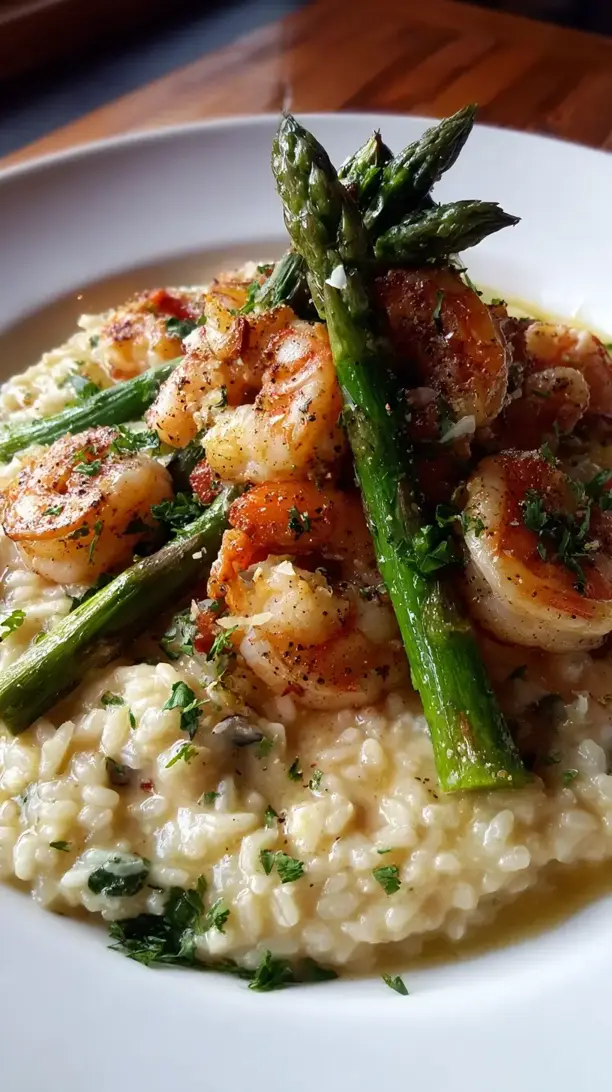
Shrimp And Asparagus Risotto
Learn how to make the best Shrimp and Asparagus Risotto with this easy recipe. Creamy, savory, and perfect for any night. Get the step-by-step guide now!
Ingredients
For the Ingredients
-
1 lb large shrimp (peeled and deveined)
-
1 bunch asparagus (tough ends trimmed, cut into 1-inch pieces)
-
1.5 cups Arborio rice
-
1 large shallot (finely diced)
-
2 cloves garlic (minced)
-
0.5 cup dry white wine (like Sauvignon Blanc or Pinot Grigio)
-
5-6 cups warm chicken or vegetable stock
-
0.5 cup grated Parmesan cheese (plus more for serving)
-
3 tbsp unsalted butter (divided)
-
2 tbsp olive oil
-
1 tsp lemon zest
-
Salt and freshly ground black pepper (to taste)
-
2 tbsp fresh parsley (chopped)
Instructions
-
Start by preparing your components. Pat the shrimp dry with paper towels and season lightly with salt and pepper. Trim the tough, woody ends from the asparagus—they’ll usually snap naturally at the right spot—and cut the spears into 1-inch pieces. Finely dice the shallot and mince the garlic. Finally, pour your stock into a saucepan and bring it to a gentle simmer over low heat. You want it hot and ready to go.01
-
In your large, heavy-bottomed pot, heat 1 tablespoon of olive oil and 1 tablespoon of butter over medium-high heat. Add the shrimp in a single layer and cook for just 1-2 minutes per side, until they’re pink and opaque. You’re not cooking them through entirely—they’ll finish later. Remove them to a clean plate and set aside. This prevents them from becoming tough and rubbery.02
-
In the same pot, add the remaining tablespoon of olive oil. Add the asparagus pieces and sauté for 3-4 minutes until they’re bright green and just starting to become tender. You want a little crunch left. Remove them to the same plate as the shrimp. Don’t worry about wiping the pot—those browned bits from the shrimp add fantastic flavor.03
-
Reduce the heat to medium. Add the remaining 2 tablespoons of butter to the pot. Once melted, add the diced shallot and cook for 3-4 minutes until soft and translucent. Add the minced garlic and cook for just 30 more seconds until fragrant—you don’t want it to burn. Now, add the Arborio rice. Stir constantly for about 2 minutes until the edges of the grains look translucent and you can smell a lovely, toasty aroma.04
-
Pour in the white wine. It will sizzle and steam dramatically—this is a good thing! Stir continuously until the wine is almost completely absorbed by the rice. You’ll notice the mixture will look quite thick. This step, called *deglazing*, lifts all the flavorful bits from the bottom of the pan and adds a crucial layer of acidity to balance the dish.05
-
Now begins the main event. Add one ladleful (about ½ to ¾ cup) of the warm stock to the rice. Stir gently but consistently until the liquid is almost fully absorbed. The mixture should maintain a gentle simmer. Once the first ladleful is absorbed, add the next. Repeat this process, ladle by ladle, for about 18-22 minutes. You’ll notice the rice plumping up and the whole mixture becoming increasingly creamy.06
-
Start tasting the rice around the 18-minute mark. You’re looking for a texture that is tender but still has a very slight bite to it—*al dente*. It should be creamy and loose, not stiff. If you run out of stock and the rice isn’t done, you can use hot water. Once it’s perfectly cooked, turn off the heat.07
-
This is the final, crucial step called *mantecatura*. Off the heat, stir in the grated Parmesan cheese, lemon zest, and the reserved shrimp and asparagus. The residual heat will warm the shrimp and asparagus through without overcooking them. Stir everything together until the cheese is melted and incorporated, creating an incredibly glossy, cohesive dish. Taste and adjust seasoning with more salt and pepper if needed. Stir in the fresh parsley and serve immediately—risotto waits for no one!08
Not what you're looking for?