This Shrimp and Tomato Linguine is a vibrant, garlicky pasta dish that comes together in under 30 minutes. Plump shrimp and a simple tomato sauce cling to every strand for a satisfying weeknight meal. The aroma alone makes this Shrimp and Tomato Linguine feel like a special treat.
Looking for Shrimp and Tomato Linguine inspiration? You'll love what we have! Explore more Savory Combo Recipes recipes or discover our Breakfast & Brunch favorites.


Why You’ll Love This Shrimp and Tomato Linguine
- Quick & Easy: From fridge to table in about 30 minutes.
- Perfectly Balanced: Sweet tomatoes, garlic, and a hint of spice.
- Versatile Base: Easily swap shrimp for scallops or add spinach.
- Effortlessly Fancy: Impressive enough for guests, simple enough for weeknights.
Ingredients & Tools
- 400 g linguine
- 450 g large raw shrimp, peeled and deveined
- 3 tbsp extra virgin olive oil, divided
- 5 cloves garlic, thinly sliced
- 1/2 tsp red pepper flakes (or to taste)
- 1 (800 g) can crushed tomatoes
- 1 tsp dried oregano
- 1 large handful fresh basil, plus more for garnish
- Salt and freshly ground black pepper to taste
- 60 g grated Parmesan cheese, for serving
Tools: A large pot for boiling pasta, a large skillet or sauté pan (at least 12 inches), tongs, a microplane or grater for the cheese.
Notes: Don’t skip toasting the garlic and pepper flakes—it builds a deep, aromatic foundation. Good-quality crushed tomatoes make a difference.
Nutrition (per serving)
| Calories: | 580 kcal |
| Protein: | 35 g |
| Fat: | 14 g |
| Carbs: | 78 g |
| Fiber: | 6 g |
Serves: 4 | Prep Time: 10 minutes | Cook Time: 20 minutes | Total Time: 30 minutes
Before You Start: Tips & Ingredient Notes
- Don’t skip the pasta water. The starchy, salty water is liquid gold for your sauce. It helps the tomato mixture emulsify and cling beautifully to the linguine, giving you that perfect restaurant-style coating.
- Get your shrimp right. For the best texture, use raw, not pre-cooked, shrimp. Pat them completely dry with a paper towel before seasoning—this is the secret to getting a nice sear instead of them steaming in their own moisture.
- Slice, don’t mince, the garlic. Thin slices will soften and mellow in the oil, infusing it with flavor without the risk of burning that comes with tiny minced pieces. You’ll get little bursts of sweet, cooked garlic in the final dish.
- Taste your tomatoes. Different brands of crushed tomatoes can vary in acidity and sweetness. Give yours a quick taste straight from the can so you know how much seasoning it might need later on.
How to Make Shrimp and Tomato Linguine
Step 1: Bring a large pot of generously salted water to a rolling boil. Add the linguine and cook according to package directions until al dente. Just before draining, carefully scoop out about a cup of the starchy pasta water and set it aside. This is your sauce’s best friend, so don’t forget it!
Step 2: While the pasta cooks, pat the shrimp dry with paper towels and season them generously with salt and pepper. Place your large skillet over medium-high heat and add one tablespoon of the olive oil. Once the oil is shimmering, add the shrimp in a single layer. Cook for about 1-2 minutes per side, just until they turn pink and opaque. You’re not cooking them through entirely here—just getting some color. Remove them from the skillet and set them aside on a plate.
Step 3: Reduce the heat to medium-low and add the remaining two tablespoons of olive oil to the same skillet. Add the sliced garlic and red pepper flakes. Cook, stirring constantly, for about 60-90 seconds until the garlic is fragrant and just starting to turn golden at the edges. You’ll notice the most wonderful aroma—this is the flavor base of your entire sauce, so don’t let the garlic burn.
Step 4: Pour in the crushed tomatoes and add the dried oregano. Stir everything together, scraping up any browned bits from the bottom of the pan. Let the sauce simmer gently for 5-7 minutes, stirring occasionally, until it has thickened slightly and the flavors have melded. Season with salt and pepper to taste.
Step 5: By now, your pasta should be ready. Add the drained linguine directly to the skillet with the tomato sauce. Also add about a half cup of the reserved pasta water. Use tongs to toss everything together vigorously. The sauce will loosen up and start to coat the pasta beautifully. If it seems too thick, add a splash more pasta water.
Step 6: Add the cooked shrimp and any accumulated juices back into the skillet. Toss gently to warm the shrimp through and distribute them evenly. Tear the fresh basil leaves with your hands and stir most of them in, saving a few for garnish. Give everything one final toss.
Step 7: Divide the pasta among warm bowls. Top with a generous sprinkle of grated Parmesan cheese and the remaining fresh basil. Serve immediately while it’s hot and the flavors are at their peak. Honestly, it doesn’t get much better than this.
Storage & Freshness Guide
- Fridge: Store in an airtight container for up to 2 days.
- Freezer: Not recommended; shrimp and pasta texture will suffer.
- Reviving: Reheat gently in a skillet with a splash of water or broth.
Serving Suggestions
Complementary Dishes
- A simple arugula salad — The peppery bite of arugula dressed with just lemon juice and olive oil provides a crisp, refreshing contrast to the rich, savory pasta.
- Garlic bread or focaccia — Essential for sopping up every last bit of that delicious tomato sauce left in the bowl. It’s a non-negotiable side for any pasta night in my house.
- Roasted asparagus — Tossed with olive oil, salt, and pepper and roasted until tender, its earthy flavor complements the sweetness of the shrimp and tomatoes perfectly.
Drinks
- A crisp Pinot Grigio — Its bright acidity and citrus notes cut through the richness of the sauce and cleanse the palate beautifully between bites.
- A chilled lager — The light carbonation and clean finish of a good lager is incredibly refreshing and doesn’t overpower the delicate flavors of the seafood.
- Sparkling water with lemon — For a non-alcoholic option, the bubbles and citrus are the perfect palate cleanser, making each mouthful of pasta taste as vibrant as the first.
Something Sweet
- Lemon sorbet — Its sharp, clean citrus flavor is the ultimate finish, leaving you feeling refreshed and satisfied without being overly full.
- Panna Cotta with a berry coulis — The creamy, delicate texture of panna cotta is a lovely, light contrast to the hearty pasta, and the berry sauce adds a fruity pop.
- Amaretti cookies — These classic Italian almond cookies are delightfully crunchy and not too sweet, offering a simple, elegant end to the meal with a cup of espresso.
Top Mistakes to Avoid
- Overcooking the shrimp. Shrimp cook in a flash and become rubbery and tough if left on the heat for too long. You’re just searing them initially, then they’ll warm through at the end. The goal is juicy and tender.
- Using pre-cooked shrimp. They’ve already been cooked once and will almost certainly become tough and chewy when reheated in the sauce. Always start with raw shrimp for the best texture.
- Skipping the step of toasting the garlic and chili flakes. This isn’t just for aroma; it gently infuses the oil with flavor, which then carries through the entire sauce. Rushing this step means a flatter-tasting dish.
- Not saving your pasta water. That starchy, salty liquid is the magic ingredient that transforms a separated sauce into a silky, emulsified coating that sticks to the pasta. It’s the difference between a good pasta and a great one.
Expert Tips
- Tip: For an extra layer of flavor, add a tablespoon of tomato paste to the pan after toasting the garlic and chili flakes. Let it cook for a minute until it darkens slightly—this deepens the tomato flavor in the sauce immensely.
- Tip: If you have them, a couple of anchovy fillets melted into the oil with the garlic will add an incredible, savory depth (umami) that no one will be able to pinpoint but everyone will love. They dissolve completely, I promise!
- Tip: Let your skillet cool down for a minute after searing the shrimp before adding the oil for the garlic. Going straight in can cause the garlic to burn from the residual high heat, giving the sauce a bitter taste.
- Tip: For a richer, creamier sauce, stir in a knob of cold butter or a splash of heavy cream right at the end, off the heat. It adds a lovely silkiness and rounds out the acidity of the tomatoes beautifully.
FAQs
Can I use a different type of pasta?
Absolutely! While linguine is classic, this sauce works wonderfully with other long shapes like spaghetti or bucatini. Short pasta like rigatoni or penne are great too—their nooks and crannies are perfect for trapping the sauce and little bits of shrimp. The key is to just adjust the amount of pasta water you use to get the right consistency for your chosen shape.
How should I store and reheat leftovers?
Store any leftovers in an airtight container in the refrigerator for up to 2 days. The best way to reheat is gently in a skillet with a tiny splash of water or broth over low heat, stirring frequently. The microwave can make the shrimp rubbery and the pasta mushy, so the stovetop is definitely preferred.
My sauce is a bit too acidic. How can I fix it?
A pinch of sugar is the classic fix, but honestly, I find a tiny pinch of baking soda works even better—it neutralizes the acid without adding sweetness. Start with literally 1/8 of a teaspoon, stir it in, and taste. You can also balance it with a bit more fat, like a drizzle of olive oil or that knob of butter I mentioned earlier.
Can I make this dish ahead of time?
You can prep the components—clean the shrimp, slice the garlic, measure your spices—but I wouldn’t recommend cooking the entire dish ahead. Pasta is always best served fresh. If you must, prepare the sauce (without the shrimp) a day ahead and gently reheat it while you cook a fresh batch of pasta, adding the shrimp at the last minute to warm through.
What’s the best way to devein shrimp?
If you’ve bought shrimp that still have the vein (the dark digestive tract), it’s easy to remove. Use a small, sharp paring knife to make a shallow cut along the back of the shrimp. You’ll see the vein; just use the tip of the knife or a toothpick to lift it out and discard it. It’s more about texture than taste, but it does make for a more pleasant eating experience.


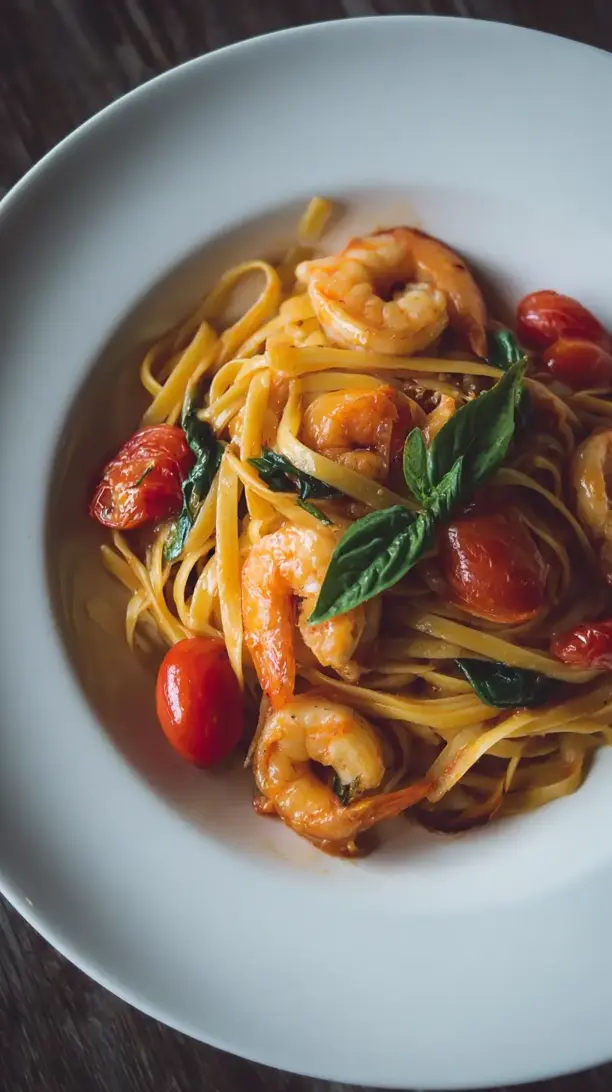
Shrimp And Tomato Linguine
Make this easy Shrimp and Tomato Linguine in just 30 minutes! A vibrant, garlicky pasta with plump shrimp and a simple tomato sauce. Get the recipe now!
Ingredients
For the Ingredients & Tools
-
400 g linguine
-
450 g large raw shrimp (peeled and deveined)
-
3 tbsp extra virgin olive oil (divided)
-
5 cloves garlic (thinly sliced)
-
0.5 tsp red pepper flakes (or to taste)
-
1 can crushed tomatoes (800 g)
-
1 tsp dried oregano
-
1 large handful fresh basil (plus more for garnish)
-
Salt and freshly ground black pepper (to taste)
-
60 g grated Parmesan cheese (for serving)
Instructions
-
Bring a large pot of generously salted water to a rolling boil. Add the linguine and cook according to package directions until al dente. Just before draining, carefully scoop out about a cup of the starchy pasta water and set it aside.01
-
While the pasta cooks, pat the shrimp dry with paper towels and season them generously with salt and pepper. Place your large skillet over medium-high heat and add one tablespoon of the olive oil. Once the oil is shimmering, add the shrimp in a single layer. Cook for about 1-2 minutes per side, just until they turn pink and opaque. Remove them from the skillet and set them aside on a plate.02
-
Reduce the heat to medium-low and add the remaining two tablespoons of olive oil to the same skillet. Add the sliced garlic and red pepper flakes. Cook, stirring constantly, for about 60-90 seconds until the garlic is fragrant and just starting to turn golden at the edges.03
-
Pour in the crushed tomatoes and add the dried oregano. Stir everything together, scraping up any browned bits from the bottom of the pan. Let the sauce simmer gently for 5-7 minutes, stirring occasionally, until it has thickened slightly and the flavors have melded. Season with salt and pepper to taste.04
-
Add the drained linguine directly to the skillet with the tomato sauce. Also add about a half cup of the reserved pasta water. Use tongs to toss everything together vigorously. If it seems too thick, add a splash more pasta water.05
-
Add the cooked shrimp and any accumulated juices back into the skillet. Toss gently to warm the shrimp through and distribute them evenly. Tear the fresh basil leaves with your hands and stir most of them in, saving a few for garnish.06
-
Divide the pasta among warm bowls. Top with a generous sprinkle of grated Parmesan cheese and the remaining fresh basil. Serve immediately.07
Not what you're looking for?