Shrimp Scampi Linguine is a classic dish that’s both elegant and simple to make. The garlicky, buttery, lemon-kissed sauce clings perfectly to pasta and plump shrimp. This recipe delivers maximum flavor with minimal effort for a reliably delicious meal.
If you're looking for the perfect Shrimp Scampi Linguine, you're in the right place. Whether you love Dinner Ideas or want to explore our Chicken Thigh Recipes collection, we've got you covered.

Why You’ll Love This Shrimp Scampi Linguine
- Incredibly fast: Ready in about 20 minutes of active cooking.
- Bright, balanced flavor: Butter, olive oil, white wine, and fresh lemon create a vibrant sauce.
- Fancy without fuss: Impressive results with simple, quick steps.
- Endlessly adaptable: Easy to tweak with broth, heat, or other variations.
Ingredients & Tools
- 450 g linguine
- 450 g large raw shrimp, peeled and deveined
- 6 cloves garlic, minced
- 120 ml dry white wine (like Sauvignon Blanc or Pinot Grigio)
- 120 ml chicken or vegetable broth
- Juice of 1 large lemon
- 115 g unsalted butter, cut into tablespoons
- 2 tbsp extra virgin olive oil
- 1/4 cup fresh parsley, finely chopped
- 1/2 tsp red pepper flakes (optional)
- Salt and freshly ground black pepper, to taste
Tools: A large pot for pasta, a large skillet (12-inch is ideal), tongs, a microplane or fine grater for garlic, and a lemon squeezer.
Notes: Don’t skip fresh lemon juice or use jarred garlic—they elevate the dish from good to unforgettable.
Nutrition (per serving)
| Calories: | 580 kcal |
| Protein: | 32 g |
| Fat: | 22 g |
| Carbs: | 60 g |
| Fiber: | 3 g |
Serves: 4 | Prep Time: 10 minutes | Cook Time: 15 minutes | Total Time: 25 minutes
Before You Start: Tips & Ingredient Notes
- Get your shrimp right. I highly recommend using raw, peeled, and deveined shrimp for the best texture and flavor. If they’re frozen, just thaw them overnight in the fridge or in a bowl of cold water. Avoid pre-cooked shrimp, as they’ll become tough and rubbery when reheated in the sauce.
- Don’t skimp on the pasta water. That starchy, salty water is liquid gold for your sauce. It helps the emulsified butter and oil cling to the linguine, creating a silky, cohesive sauce that isn’t watery or greasy. Always reserve at least a cup before you drain.
- Mise en place is your best friend. This recipe comes together very quickly once you start cooking. Have your garlic minced, your lemon juiced, and your butter measured out before you even turn on the stove. It makes the process smooth and stress-free.
- Choose your wine wisely. Use a dry white wine that you’d actually enjoy drinking. The alcohol cooks off, leaving behind a wonderful acidity and depth of flavor. If you prefer not to cook with wine, you can substitute with an equal amount of additional broth and a extra tablespoon of lemon juice.
How to Make Shrimp Scampi Linguine
Step 1: Bring a large pot of generously salted water to a rolling boil. You’ll want it to taste like the sea—this is your only chance to season the pasta itself from the inside out. Add the linguine and cook according to package directions until al dente. Just before draining, carefully scoop out about 1 1/2 cups of the starchy pasta water and set it aside. This is our secret weapon for the sauce later.
Step 2: While the pasta cooks, pat your shrimp completely dry with paper towels. This is a crucial step for getting a nice sear instead of them steaming in their own moisture. Season them lightly with salt and pepper on both sides. Heat your large skillet over medium-high heat and add the olive oil. Once the oil is shimmering, add the shrimp in a single layer. Cook for just 1-2 minutes per side, until they’re pink and opaque. You’ll notice they curl up nicely. Don’t overcrowd the pan—cook in batches if needed. Remove the shrimp to a plate and set aside; they’ll finish cooking later in the sauce.
Step 3: Reduce the heat to medium-low. In the same skillet, add the minced garlic and the optional red pepper flakes. Cook for about 30-60 seconds, stirring constantly, until the garlic is incredibly fragrant. You have to watch it like a hawk—burnt garlic is bitter and will ruin the entire dish. The moment it’s golden, pour in the white wine and broth, scraping up any browned bits from the bottom of the pan with a wooden spoon. Let it simmer for 2-3 minutes until the liquid has reduced by about half.
Step 4: Turn the heat down to low. Now, whisk in the cold butter, one tablespoon at a time, until it’s fully melted and incorporated into the sauce. This gradual process, called mounting with butter (monter au beurre), creates a beautifully glossy and slightly thickened emulsion. Stir in the fresh lemon juice. Take a quick taste and adjust the seasoning with more salt or pepper if needed.
Step 5: Add the drained, cooked linguine directly into the skillet with the sauce. Use tongs to toss everything together, coating every strand. Now, start adding your reserved pasta water, a splash at a time, while tossing continuously. You’ll see the sauce loosen up and become creamier, clinging to the pasta perfectly. You probably won’t need all of the water—stop when the sauce looks silky and coats the back of a spoon.
Step 6: Add the cooked shrimp and any accumulated juices back into the skillet along with most of the chopped parsley. Gently toss everything to warm the shrimp through and distribute them evenly, which should only take another minute. The goal is to just heat them, not cook them further. Serve immediately, garnished with the remaining fresh parsley and an extra wedge of lemon on the side for squeezing over the top.
Storage & Freshness Guide
- Fridge: Store in an airtight container for up to 2 days.
- Freezer: Not recommended; pasta and shrimp texture suffer.
- Reviving: Reheat gently in a skillet with a splash of water or broth.
Serving Suggestions
Complementary Dishes
- A simple arugula salad — The peppery bite of arugula dressed with just lemon juice, olive oil, and shaved Parmesan provides a crisp, refreshing contrast to the rich, garlicky pasta.
- Garlic bread or focaccia — It’s practically mandatory, right? You’ll want something to soak up every last drop of that incredible scampi sauce left on the plate.
- Roasted asparagus — Toss asparagus spears with oil, salt, and pepper and roast until tender-crisp. Their earthy flavor and slight char pair beautifully with the shrimp and lemon.
Drinks
- A crisp, chilled Sauvignon Blanc — The wine’s citrusy and herbal notes mirror the flavors in the dish itself, creating a harmonious pairing that cleanses the palate between bites.
- Sparkling water with lemon — For a non-alcoholic option, the effervescence is wonderfully refreshing and the lemon wedge continues the citrus theme of the meal.
- A light Italian lager — A cold, crisp beer like a Peroni can cut through the richness of the butter and provide a clean, bubbly counterpoint.
Something Sweet
- Lemon sorbet — A scoop of tangy, palate-cleansing sorbet is the perfect way to end the meal on a bright, light note that doesn’t feel too heavy.
- Panna Cotta with a berry coulis — The smooth, creamy, and subtly sweet panna cotta offers a lovely textural and flavor contrast after the savory, garlic-forward main course.
- Amaretti cookies and espresso — Sometimes, a simple, elegant finish is best. The almond flavor of the cookies and the strong coffee are a classic Italian way to cap off the evening.
Top Mistakes to Avoid
- Overcooking the shrimp. This is the number one error. Shrimp cook in just a few minutes and continue to cook from residual heat even after they’re out of the pan. As soon as they turn pink and opaque, they’re done. Overcooked shrimp become tough and rubbery.
- Burning the garlic. Garlic goes from golden and fragrant to burnt and bitter in a matter of seconds. Always use medium-low heat and keep it moving in the pan. If it burns, honestly, it’s best to start over with a clean pan.
- Skipping the pasta water. Without the starchy pasta water, your sauce will likely be too thin or, conversely, too greasy and won’t cling to the linguine. It’s the magic ingredient that brings everything together into a cohesive dish.
- Crowding the pan when searing the shrimp. If you pile all the shrimp in at once, they’ll steam instead of sear, and you’ll end up with pale, watery shrimp. Give them space to develop a little color and texture.
Expert Tips
- Tip: For an extra layer of flavor, add a couple of anchovy fillets to the pan when you cook the garlic. They’ll melt right in and add a wonderful, savory depth (umami) without tasting fishy at all.
- Tip: If your sauce ever looks like it’s starting to break or look greasy, don’t panic. Remove the pan from the heat and whisk in a splash of cold pasta water. The shock of the cold liquid will help re-emulsify the sauce.
- Tip: For a restaurant-style presentation, use tongs to twirl a neat nest of pasta into the center of a warm bowl, then artfully arrange the shrimp around the edges. Drizzle any remaining sauce over the top and finish with parsley.
- Tip: If you have them, use shrimp with the tails on for serving. They look more impressive and the tails add a bit more flavor to the sauce as they simmer. It’s a simple touch that elevates the whole dish.
FAQs
Can I make this dish ahead of time?
You can do some prep ahead, like peeling the shrimp and mincing the garlic, but I don’t recommend cooking the entire dish in advance. Pasta is best served immediately after it’s tossed with the sauce. The shrimp can become rubbery upon reheating, and the pasta will continue to absorb the liquid, making the dish dry. It’s truly a 25-minute meal, so it’s best enjoyed fresh.
What can I use instead of white wine?
Absolutely! An equal amount of additional chicken or vegetable broth works perfectly. To make up for the acidity that the wine provides, just add an extra tablespoon of fresh lemon juice. You could also use a splash of dry vermouth or even a non-alcoholic wine if you prefer.
My sauce turned out too watery. How can I fix it?
This usually happens if you added too much pasta water or didn’t let the wine/broth reduce enough. The fix is easy! Let the sauced pasta sit in the warm skillet for a minute or two off the heat—the pasta will absorb some liquid. If it’s still too thin, you can create a quick slurry by mixing a teaspoon of cornstarch with a tablespoon of cold water and stirring it into the sauce over low heat until it thickens.
Can I use a different type of pasta?
Of course! Linguine is classic because its flat shape holds the sauce beautifully, but other long pasta like spaghetti, fettuccine, or bucatini would be great. If you prefer short pasta, try rigatoni or fusilli—their nooks and crannies are excellent for trapping the garlicky sauce and little bits of shrimp.
How do I know when the shrimp are cooked perfectly?
Look for visual and textural cues. Raw shrimp are gray and translucent. Perfectly cooked shrimp will be pink on the outside and opaque white on the inside. In terms of shape, they’ll form a loose “C” shape. If they curl into a tight “O,” they’re likely overdone. They should feel firm but still slightly springy to the touch.



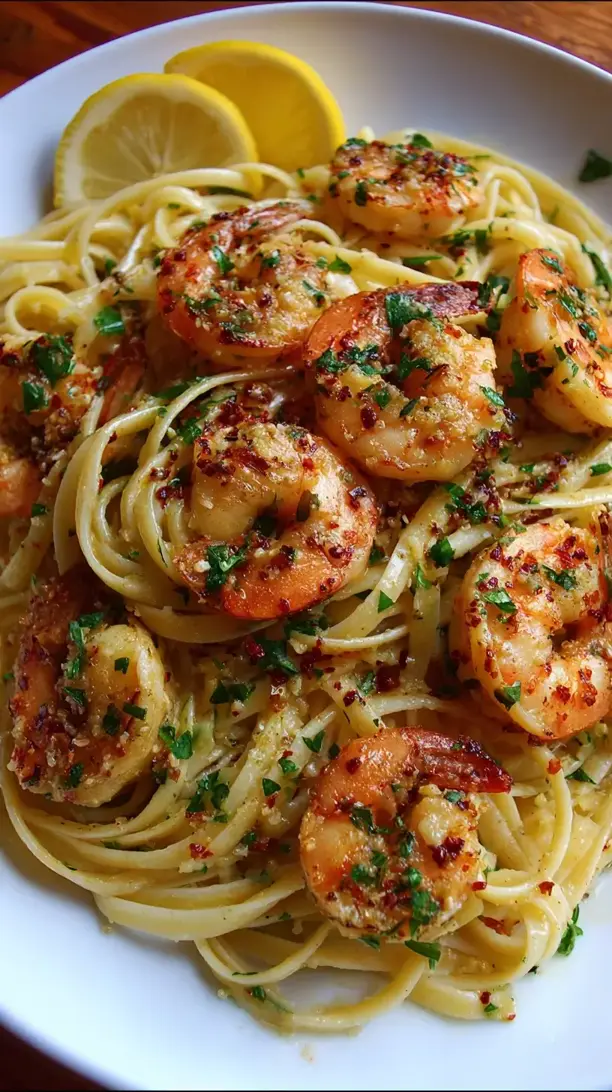
Shrimp Scampi Linguine
Make the best Shrimp Scampi Linguine with this easy 25-minute recipe. A garlicky, buttery, lemon sauce coats tender shrimp and pasta. Get the recipe now!
Ingredients
For the Ingredients
-
450 g linguine
-
450 g large raw shrimp (peeled and deveined)
-
6 cloves garlic (minced)
-
120 ml dry white wine (like Sauvignon Blanc or Pinot Grigio)
-
120 ml chicken or vegetable broth
-
1 juice of large lemon
-
115 g unsalted butter (cut into tablespoons)
-
2 tbsp extra virgin olive oil
-
0.25 cup fresh parsley (finely chopped)
-
0.5 tsp red pepper flakes (optional)
-
salt and freshly ground black pepper (to taste)
Instructions
-
Bring a large pot of generously salted water to a rolling boil. You’ll want it to taste like the sea—this is your only chance to season the pasta itself from the inside out. Add the linguine and cook according to package directions until al dente. Just before draining, carefully scoop out about 1 1/2 cups of the starchy pasta water and set it aside. This is our secret weapon for the sauce later.01
-
While the pasta cooks, pat your shrimp completely dry with paper towels. This is a crucial step for getting a nice sear instead of them steaming in their own moisture. Season them lightly with salt and pepper on both sides. Heat your large skillet over medium-high heat and add the olive oil. Once the oil is shimmering, add the shrimp in a single layer. Cook for just 1-2 minutes per side, until they’re pink and opaque. You’ll notice they curl up nicely. Don’t overcrowd the pan—cook in batches if needed. Remove the shrimp to a plate and set aside; they’ll finish cooking later in the sauce.02
-
Reduce the heat to medium-low. In the same skillet, add the minced garlic and the optional red pepper flakes. Cook for about 30-60 seconds, stirring constantly, until the garlic is incredibly fragrant. You have to watch it like a hawk—burnt garlic is bitter and will ruin the entire dish. The moment it’s golden, pour in the white wine and broth, scraping up any browned bits from the bottom of the pan with a wooden spoon. Let it simmer for 2-3 minutes until the liquid has reduced by about half.03
-
Turn the heat down to low. Now, whisk in the cold butter, one tablespoon at a time, until it’s fully melted and incorporated into the sauce. This gradual process, called mounting with butter (monter au beurre), creates a beautifully glossy and slightly thickened emulsion. Stir in the fresh lemon juice. Take a quick taste and adjust the seasoning with more salt or pepper if needed.04
-
Add the drained, cooked linguine directly into the skillet with the sauce. Use tongs to toss everything together, coating every strand. Now, start adding your reserved pasta water, a splash at a time, while tossing continuously. You’ll see the sauce loosen up and become creamier, clinging to the pasta perfectly. You probably won’t need all of the water—stop when the sauce looks silky and coats the back of a spoon.05
-
Add the cooked shrimp and any accumulated juices back into the skillet along with most of the chopped parsley. Gently toss everything to warm the shrimp through and distribute them evenly, which should only take another minute. The goal is to just heat them, not cook them further. Serve immediately, garnished with the remaining fresh parsley and an extra wedge of lemon on the side for squeezing over the top.06
Not what you're looking for?