This Spicy Sausage Pasta is a hearty, one-pan wonder that delivers big flavor with minimal cleanup. The spicy Italian sausage creates a rich, savory base balanced by sweet tomatoes and Parmesan. It’s the perfect weeknight meal that feels like a special occasion.
Looking for Spicy Sausage Pasta inspiration? You'll love what we have! Explore more Dinner Ideas recipes or discover our Burgers favorites.


Why You’ll Love This Spicy Sausage Pasta
- One-pan wonder: Everything cooks in a single skillet for maximum flavor and minimal cleanup.
- Complex flavor: Spicy sausage is balanced by sweet tomatoes and salty Parmesan.
- Highly adaptable: Easily adjust the heat or add vegetables like spinach.
- Indulgent yet balanced: Cooking pasta in the sauce creates a creamy, clingy texture without heavy cream.
Ingredients & Tools
- 1 tbsp olive oil
- 450 g spicy Italian sausage, casings removed
- 1 medium yellow onion, finely diced
- 4 cloves garlic, minced
- 1 tsp dried oregano
- ½ tsp crushed red pepper flakes (adjust to your heat preference)
- 120 ml dry red wine, like a Chianti or Merlot
- 800 g canned crushed tomatoes
- 240 ml chicken broth
- 225 g short pasta, like rigatoni or penne
- 60 g freshly grated Parmesan cheese, plus more for serving
- Handful of fresh basil or parsley, chopped
- To taste salt and black pepper
Tools: A large, deep skillet or Dutch oven with a lid, a wooden spoon, and a grater.
Notes: Using good quality sausage is key, as its fat forms the sauce foundation. The red wine deglazes the pan and adds depth.
Nutrition (per serving)
| Calories: | 580 kcal |
| Protein: | 28 g |
| Fat: | 28 g |
| Carbs: | 52 g |
| Fiber: | 6 g |
Serves: 4 | Prep Time: 15 minutes | Cook Time: 25 minutes | Total Time: 40 minutes
Before You Start: Tips & Ingredient Notes
- Choose your sausage wisely. For the best flavor and texture, look for Italian sausage with a good fat content (around 20-25%). If you can only find linked sausage, just squeeze the meat out of the casings—it’s a strangely satisfying task.
- Don’t rush the first step. Getting a good, proper brown on the sausage is non-negotiable. That caramelization equals flavor. If you stir it too soon, it’ll steam and turn gray, and we don’t want that.
- Grate your own Parmesan. I know, it’s an extra step, but pre-grated cheese contains anti-caking agents that can make your sauce grainy and prevent it from melting smoothly. A block of Parmigiano-Reggiano or a good Grana Padano makes all the difference.
- Pick the right pasta shape. Short, sturdy pasta like rigatoni, penne, or fusilli are perfect here. Their nooks and tubes are ideal for catching and holding onto the chunky sausage and rich sauce.
How to Make Spicy Sausage Pasta
Step 1: Heat the olive oil in your large skillet or Dutch oven over medium-high heat. Add the sausage, breaking it up with your wooden spoon into small, bite-sized crumbles. Let it cook without stirring for a good 3-4 minutes to get a beautiful brown crust on one side—this is where the magic starts. Then, you can continue breaking it up and cooking until it’s no longer pink, which should take about 6-8 minutes total.
Step 2: Push the sausage to one side of the pan and add the diced onion to the empty space. Cook for about 4-5 minutes, until the onion has softened and turned translucent. Now add the minced garlic, dried oregano, and red pepper flakes. Stir everything together and cook for just one more minute—you’ll be hit with that incredible aroma, but be careful not to let the garlic burn.
Step 3: Pour in the red wine to deglaze the pan. Use your wooden spoon to scrape up all the browned, stuck-on bits from the bottom—that’s pure flavor! Let the wine bubble and reduce by about half, which will take 2-3 minutes. This cooks off the harsh alcohol and leaves behind a wonderful fruity acidity.
Step 4: Now, stir in the crushed tomatoes and chicken broth. Bring the sauce to a lively simmer, then immediately reduce the heat to low. Season with a good pinch of salt and pepper, but remember the Parmesan added later is salty, so go a little easy here. Let this simmer gently for about 5 minutes to let the flavors start to marry.
Step 5: Add the uncooked pasta directly to the skillet, pushing it down so it’s mostly submerged in the sauce. Cover the pan with a lid and let it cook for the time indicated on your pasta package, usually around 12-14 minutes. Stir it every 3-4 minutes to prevent sticking and to ensure even cooking. The pasta will absorb the liquid and cook directly in the flavorful sauce.
Step 6: Once the pasta is al dente, turn off the heat. Stir in the freshly grated Parmesan cheese. The sauce will instantly become creamier and glossier. If the pasta seems a little too thick or dry for your liking, you can stir in a splash of hot water or more broth to loosen it up.
Step 7: Finally, stir in most of your chopped fresh herbs, saving a little for garnish on top. Give the whole pan one final taste and adjust the seasoning with more salt, pepper, or even a pinch of red pepper flakes if you want an extra kick. Serve immediately, topped with the remaining herbs and more Parmesan.
Storage & Freshness Guide
- Fridge: Cool completely and store in an airtight container for up to 3 days.
- Freezer: Freeze in sealed containers for up to 2 months.
- Reviving: Reheat with a splash of water or broth to loosen the sauce.
Serving Suggestions
Complementary Dishes
- A simple arugula salad — The peppery bite of arugula dressed with just lemon juice and olive oil provides a crisp, refreshing contrast to the rich and hearty pasta.
- Garlic bread or focaccia — It’s practically mandatory for sopping up every last bit of that incredible sauce left in the bowl. You won’t regret it.
- Sautéed broccoli rabe — Its slight bitterness, with a hint of garlic and chili, stands up beautifully to the robust flavors in the pasta dish.
Drinks
- A medium-bodied red wine — A Chianti or a Sangiovese is a classic pairing. Their bright acidity and cherry notes cut through the richness of the sausage and cheese perfectly.
- A crisp lager or pilsner — The carbonation and clean finish of a cold beer are fantastic for cleansing the palate between bites of this flavorful dish.
- Sparkling water with citrus — For a non-alcoholic option, the bubbles and a squeeze of lemon or lime provide a refreshing counterpoint to the spice.
Something Sweet
- Affogato — A scoop of vanilla gelato or ice cream with a shot of hot espresso poured over it. It’s simple, elegant, and the bitter coffee is a perfect follow-up to a savory meal.
- Dark chocolate almond clusters — Just a few pieces of something dark and slightly bitter with a nutty crunch feels like a sophisticated, yet easy, way to end the meal.
- Lemon sorbet — Incredibly light and palate-cleansing, its sharp citrus zing is the ultimate refresh after a dish with this much depth and spice.
Top Mistakes to Avoid
- Overcooking the garlic. Garlic burns in a heartbeat and turns bitter, which can ruin the entire sauce. Add it with the other aromatics and cook it for just a minute until fragrant, not brown.
- Using a pan that’s too small. You need enough surface area to brown the sausage properly and enough depth to hold all the pasta and liquid. A crowded pan steams instead of sautés. I’ve messed this up before too, and it makes a noticeable difference.
- Stirring the sausage too soon. Patience is a virtue here. Let the sausage sit and get a proper sear before you break it up. That caramelization is the foundation of your sauce’s flavor.
- Adding the pasta without enough liquid. The pasta needs to cook in the sauce, so if it looks a bit dry after adding the tomatoes and broth, don’t hesitate to add another splash of water or broth before you cover it.
Expert Tips
- Tip: Let the finished pasta rest for 5 minutes off the heat before serving. This allows the sauce to thicken slightly and cling to the pasta even better, and it gives the flavors one last chance to meld together beautifully.
- Tip: For an extra layer of flavor, toast your dried oregano and red pepper flakes in the dry pan for 30 seconds before adding the oil and sausage. This quick bloom will wake up their essential oils and make their flavor more pronounced.
- Tip: If you have time, let the sauce simmer for an extra 10-15 minutes *before* adding the pasta. This deeper simmer develops a richer, more concentrated tomato flavor that is absolutely worth the wait.
- Tip: Reserve a little of the starchy pasta cooking water if you boiled the pasta separately. If your sauce gets too thick at the end, a tablespoon or two of this magical water will loosen it up and help the sauce emulsify, making it silkier.
FAQs
Can I make this Spicy Sausage Pasta ahead of time?
Absolutely, and it actually reheats wonderfully. Let it cool completely before storing it in an airtight container in the fridge for up to 3 days. When reheating, add a splash of water or broth to the pan to loosen the sauce back up, as the pasta will continue to absorb liquid. Gently warm it over medium-low heat, stirring frequently. You can also freeze it for up to 2 months.
What can I use instead of red wine?
No problem! The wine adds acidity and depth, but you can easily substitute it with an equal amount of additional chicken broth. For a touch of that missing acidity, you could add a teaspoon of red wine vinegar or even a splash of balsamic vinegar at the end of cooking, which will brighten the whole dish up nicely.
My pasta is still hard, but the sauce is almost gone. What do I do?
This can happen if your pan isn’t sealed well or your heat was a bit high. Don’t worry! Simply add about half a cup of hot water or broth, put the lid back on, and continue cooking for another 3-5 minutes, checking frequently until the pasta is perfectly al dente. The sauce will rehydrate beautifully.
Can I use a different type of meat?
Of course! Ground beef, turkey, or even chicken will work well. Just keep in mind that leaner meats like turkey won’t render as much fat, so you might need to add an extra tablespoon of olive oil to the pan. And since they’re milder, you may want to be a bit more generous with the dried herbs and red pepper flakes to compensate for the missing spice from the sausage.
Is it really necessary to cook the pasta in the sauce?
It’s not strictly necessary, but it’s highly recommended for this recipe. This one-pan method means the pasta starch releases directly into the sauce, thickening it naturally and helping it cling to every noodle. It creates a more integrated, restaurant-quality dish. If you must cook the pasta separately, just undercook it by a minute or two and finish it by simmering in the sauce with a splash of the starchy pasta water.


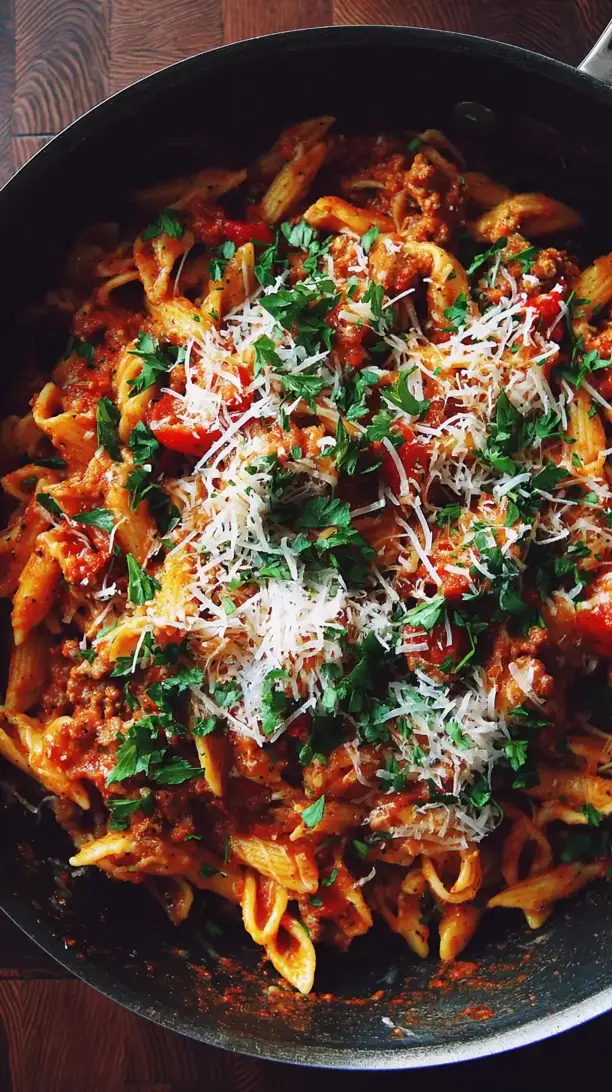
Spicy Sausage Pasta
Make this easy Spicy Sausage Pasta in one pan for maximum flavor and minimal cleanup. Ready in 40 minutes! Get the recipe now.
Ingredients
For the Ingredients
-
1 tbsp olive oil
-
450 g spicy Italian sausage (casings removed)
-
1 medium yellow onion (finely diced)
-
4 cloves garlic (minced)
-
1 tsp dried oregano
-
0.5 tsp crushed red pepper flakes (adjust to your heat preference)
-
120 ml dry red wine (like a Chianti or Merlot)
-
800 g canned crushed tomatoes
-
240 ml chicken broth
-
225 g short pasta (like rigatoni or penne)
-
60 g freshly grated Parmesan cheese (plus more for serving)
-
fresh basil or parsley (chopped, handful)
-
salt and black pepper (to taste)
Instructions
-
Heat the olive oil in your large skillet or Dutch oven over medium-high heat. Add the sausage, breaking it up with your wooden spoon into small, bite-sized crumbles. Let it cook without stirring for a good 3-4 minutes to get a beautiful brown crust on one side—this is where the magic starts. Then, you can continue breaking it up and cooking until it’s no longer pink, which should take about 6-8 minutes total.01
-
Push the sausage to one side of the pan and add the diced onion to the empty space. Cook for about 4-5 minutes, until the onion has softened and turned translucent. Now add the minced garlic, dried oregano, and red pepper flakes. Stir everything together and cook for just one more minute—you’ll be hit with that incredible aroma, but be careful not to let the garlic burn.02
-
Pour in the red wine to deglaze the pan. Use your wooden spoon to scrape up all the browned, stuck-on bits from the bottom—that’s pure flavor! Let the wine bubble and reduce by about half, which will take 2-3 minutes. This cooks off the harsh alcohol and leaves behind a wonderful fruity acidity.03
-
Now, stir in the crushed tomatoes and chicken broth. Bring the sauce to a lively simmer, then immediately reduce the heat to low. Season with a good pinch of salt and pepper, but remember the Parmesan added later is salty, so go a little easy here. Let this simmer gently for about 5 minutes to let the flavors start to marry.04
-
Add the uncooked pasta directly to the skillet, pushing it down so it’s mostly submerged in the sauce. Cover the pan with a lid and let it cook for the time indicated on your pasta package, usually around 12-14 minutes. Stir it every 3-4 minutes to prevent sticking and to ensure even cooking. The pasta will absorb the liquid and cook directly in the flavorful sauce.05
-
Once the pasta is al dente, turn off the heat. Stir in the freshly grated Parmesan cheese. The sauce will instantly become creamier and glossier. If the pasta seems a little too thick or dry for your liking, you can stir in a splash of hot water or more broth to loosen it up.06
-
Finally, stir in most of your chopped fresh herbs, saving a little for garnish on top. Give the whole pan one final taste and adjust the seasoning with more salt, pepper, or even a pinch of red pepper flakes if you want an extra kick. Serve immediately, topped with the remaining herbs and more Parmesan.07
Not what you're looking for?