Spicy Thai Basil Chicken delivers vibrant, aromatic flavor in minutes. This classic stir-fry balances savory, sweet, and spicy notes with peppery holy basil. It’s a quick, impressive meal perfect for any night.
Looking for Spicy Thai Basil Chicken inspiration? You'll love what we have! Explore more Dinner Ideas recipes or discover our Chicken Recipes favorites.


Why You’ll Love This Spicy Thai Basil Chicken
- Incredibly fast: Ready in about 15 minutes of active cooking.
- Balanced flavor punch: Savory, sweet, and spicy notes build with each bite.
- Wonderfully aromatic: Holy basil releases a peppery fragrance when heated.
- Surprisingly versatile: Easily adapt with different proteins or tofu.
Ingredients & Tools
- 450 g ground chicken (thigh meat is ideal for more flavor)
- 2 cups fresh holy basil leaves, loosely packed (plus more for garnish)
- 4-6 Thai bird’s eye chilies, finely minced (adjust to your heat tolerance)
- 6 cloves garlic, finely minced
- 1 large shallot, thinly sliced
- 2 tbsp avocado oil or coconut oil
- 3 tbsp coconut aminos
- 1 tbsp fish sauce (or vegan fish sauce)
- 1 tsp granulated erythritol or monk fruit sweetener
- 1 tbsp oyster sauce (or mushroom sauce for a vegetarian version)
- 2 tbsp chicken broth or water
- 1 fresh lime, cut into wedges for serving
Tools: A large wok or a large, heavy-bottomed skillet, a good spatula
Notes: Don’t skip the shallot—it adds sweet sharpness. Start with fewer chilies if sensitive to heat.
Nutrition (per serving)
| Calories: | 285 kcal |
| Protein: | 25 g |
| Fat: | 18 g |
| Carbs: | 6 g |
| Fiber: | 1 g |
Serves: 3 | Prep Time: 10 minutes | Cook Time: 8 minutes | Total Time: 18 minutes
Before You Start: Tips & Ingredient Notes
- Holy Basil vs. Sweet Basil. This is the most important swap to avoid. Holy basil (also called Tulsi or Bai Kaprow) has a spicier, more peppery flavor that stands up to the heat. Sweet basil will wilt and become too sweet. Check your local Asian market—it’s worth the trip.
- Get your mise en place ready. This dish cooks so quickly that you won’t have time to chop garlic once the chicken is in the wok. Have everything measured, chopped, and within arm’s reach. It makes the whole process feel like a graceful dance rather than a frantic scramble.
- Don’t skimp on the fat. Using a good amount of oil is key. It helps create a quick sear on the chicken and forms the base of the sauce. It’s not just for cooking; it’s part of the final texture and mouthfeel.
- Understanding Fish Sauce. It might smell potent straight from the bottle, but once it hits the heat, it mellows into a deep, savory umami that is absolutely essential. Think of it as the salt of Southeast Asia—it brings all the other flavors to life.
How to Make Spicy Thai Basil Chicken
Step 1: Create the Flavor Base. Place your wok or skillet over high heat and let it get seriously hot. You should see a slight shimmer of heat rising from the surface. Add the oil and swirl it around. Immediately add the minced garlic, shallot, and chilies. Stir-fry for just 30-45 seconds—you’re looking for them to become incredibly fragrant, but not brown. The aroma will be sharp and pungent, and that’s exactly what you want.
Step 2: Cook the Chicken. Crank the heat to its highest setting and add the ground chicken. Use your spatula to break it up into small crumbles. You want maximum contact with the hot surface to get a bit of browning, not just steaming. Let it cook, mostly undisturbed, for a minute or two to get some color. This step builds the foundational flavor of the entire dish.
Step 3: Build the Sauce. Once the chicken is about 80% cooked through (just a little pink remaining), it’s time for the sauce. Pour in the coconut aminos, fish sauce, oyster sauce, and sweetener. Add the chicken broth as well. Everything will sizzle and steam dramatically—that’s good! Stir everything together, making sure the sauce coats every bit of chicken. Let it bubble and reduce for about a minute. You’ll notice the sauce will start to thicken slightly and look glossy.
Step 4: The Grand Finale with Basil. This is the moment. Turn off the heat. Add all of the holy basil leaves directly into the hot wok and stir vigorously. The residual heat is perfect for wilting the basil without making it slimy. You’ll be hit with that incredible, signature peppery aroma. Stir for about 30 seconds, just until the basil is wilted and vibrant green. The trick is to let the heat of the dish and the wok do the work, not the burner.
Step 5: Taste and Adjust. This is your last chance to make it perfect. Grab a spoon and taste it. Need more salt? A dash more fish sauce. Not savory enough? A bit more oyster sauce. Not enough punch? A squeeze of fresh lime juice can brighten everything up. Trust your palate—you’re the boss of this wok.
Step 6: Serve Immediately. Spicy Thai Basil Chicken waits for no one. Serve it straight from the wok onto a plate of cauliflower rice or your chosen base. Top with a final sprinkle of fresh basil leaves and don’t forget that essential lime wedge on the side for squeezing over just before you eat. The contrast of the hot, savory chicken with the cool, fresh lime is everything.
Storage & Freshness Guide
- Fridge: Store in an airtight container for up to 3 days.
- Freezer: Freeze for up to 1 month; thaw in fridge before reheating.
- Reviving: Reheat in a skillet with a splash of broth to restore texture.
Serving Suggestions
Complementary Dishes
- A simple cucumber salad — The cool, crisp freshness of cucumber slices with a splash of rice vinegar is the perfect palate cleanser between bites of the spicy chicken.
- Stir-fried green beans — Tossed in a hot wok with a little garlic, they add a wonderful crunchy texture and a green, earthy note that complements the dish beautifully.
- Cauliflower rice — It soaks up the incredible sauce without weighing you down, making it the ideal low-carb vehicle for getting every last drop.
Drinks
- Iced jasmine green tea — Its floral, slightly sweet notes help tame the fire of the chilies and refresh your taste buds.
- A crisp, dry Riesling — If you enjoy a glass of wine, the slight sweetness and high acidity of a Riesling cut through the richness and spice perfectly.
- Sparkling water with lime — Sometimes the simple, bubbly contrast is all you need to reset your mouth for the next delicious, fiery forkful.
Something Sweet
- A few fresh raspberries — Their bright, tart sweetness is a lovely, light way to finish the meal and cleanse the palate after all that spice.
- Coconut chia pudding — Creamy, cool, and subtly sweet, it’s like a comforting hug for your taste buds after the flavor explosion of the main course.
- Dark chocolate (85% cacao) — Just a square or two. The bitterness of the chocolate provides a sophisticated counterpoint to the complex savory and spicy notes of the dish.
Top Mistakes to Avoid
- Overcrowding the wok. If you add too much chicken at once, it will steam and boil instead of searing. You’ll end up with a gray, watery mess instead of flavorful, browned crumbles. Cook in batches if you’re doubling the recipe.
- Burning the garlic and chilies. They go in first and cook for less than a minute. If they burn, they’ll turn the entire dish bitter. The goal is fragrance, not charcoal.
- Using sweet basil and cooking it too long. I’ve messed this up before too… sweet basil becomes mushy and loses its flavor if it’s cooked for more than a few seconds. Holy basil is sturdier, but you still add it at the very end, off the heat.
- Not tasting at the end. The balance of salty, sweet, and sour is personal. Your fish sauce might be saltier than mine. Always do a final taste and adjust with an extra splash of sauce or a squeeze of lime.
Expert Tips
- Tip: For an extra layer of flavor, lightly toast whole dried chilies in the dry wok for a minute before you start. Remove them, then proceed with the recipe. It adds a smoky, deep heat that’s just incredible.
- Tip: If you can’t find holy basil, a combination of sweet basil and a few fresh mint leaves is the closest substitute. It’s not perfect, but it brings a little of that peppery, cool complexity you’re looking for.
- Tip: Make a double batch of the sauce and keep it in a jar in the fridge. It becomes your secret weapon for a 5-minute stir-fry any night of the week. Just fry your protein and veggies, add a few tablespoons of the pre-made sauce, and you’re done.
- Tip: For a more traditional presentation, top your finished dish with a fried egg. The rich, runny yolk mixing with the spicy chicken and rice is a classic Thai street food move that takes this from great to sublime.
FAQs
Can I make this dish less spicy?
Absolutely! The heat comes almost entirely from the Thai bird’s eye chilies. You can control this in two ways: first, you can reduce the number of chilies. Start with one or two, minced. Second, you can remove the seeds and inner membranes from the chilies before mincing, as that’s where most of the capsaicin (the compound that creates heat) resides. You’ll still get that lovely chili flavor without the intense fire.
I can’t find holy basil anywhere. What’s the best substitute?
This is the most common hurdle. While there’s no perfect 1:1 swap, your best bet is to use a mix of Italian sweet basil and fresh mint. Try a ratio of 3 parts basil to 1 part mint. It won’t be identical, but the mint introduces a different kind of sharp, cool note that helps approximate the complexity of holy basil better than basil alone.
Can I use chicken breast instead of ground chicken?
You can, but the texture and cooking time will change. I’d recommend thinly slicing chicken breast against the grain. It will cook very quickly in the hot wok. The result is less of a classic “pad krapow” texture and more of a stir-fried sliced chicken dish, but it will still be utterly delicious with all the same flavors.
How do I store and reheat leftovers?
Store any leftovers in an airtight container in the refrigerator for up to 3 days. To reheat, I strongly recommend using a skillet over medium heat with a tiny splash of water or broth. The microwave will steam the basil and make it soggy. The stovetop method helps revive the texture and brings back some of the wok’s magic.
Is this recipe authentic?
This is my home-cook-friendly version of an authentic Thai street food classic. The core techniques and flavor profiles—the high-heat stir-fry, the holy basil, the balance of fish sauce and chilies—are true to the original. Some traditional versions might use a specific type of soy sauce and palm sugar, but I’ve adapted those to be low-carb friendly while aiming to preserve the soul of the dish.



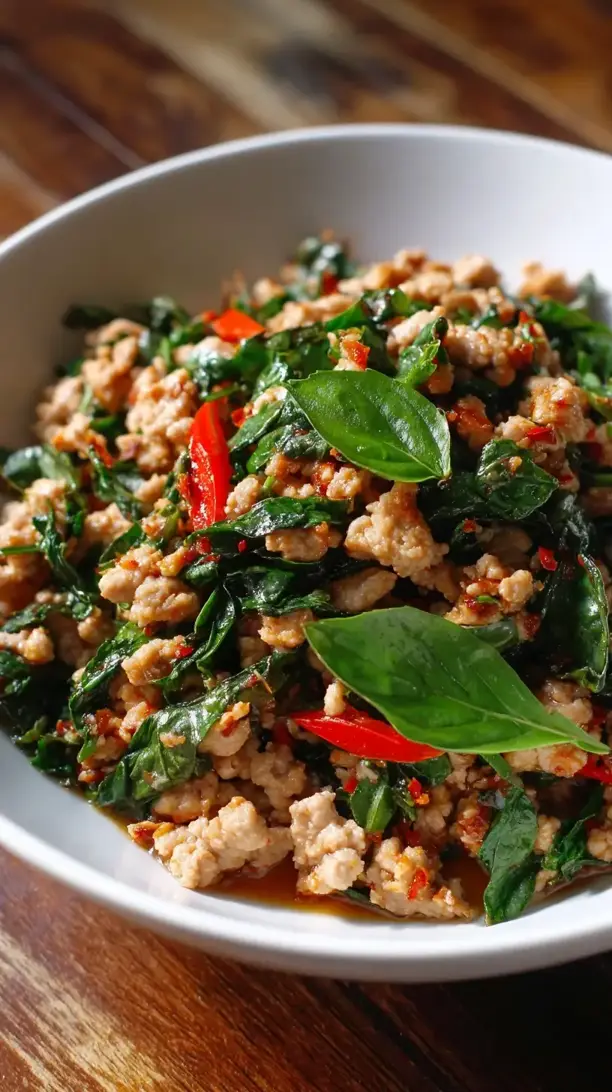
Spicy Thai Basil Chicken
Make authentic Spicy Thai Basil Chicken (Pad Krapow) in 20 minutes! This easy stir-fry is savory, sweet, and spicy. Get the recipe and cook it tonight!
Ingredients
For the Ingredients
-
450 g ground chicken (thigh meat is ideal for more flavor)
-
2 cups fresh holy basil leaves (loosely packed (plus more for garnish))
-
4-6 Thai bird's eye chilies (finely minced (adjust to your heat tolerance))
-
6 cloves garlic (finely minced)
-
1 large shallot (thinly sliced)
-
2 tbsp avocado oil or coconut oil
-
3 tbsp coconut aminos
-
1 tbsp fish sauce (or vegan fish sauce)
-
1 tsp granulated erythritol or monk fruit sweetener
-
1 tbsp oyster sauce (or mushroom sauce for a vegetarian version)
-
2 tbsp chicken broth or water
-
1 fresh lime (cut into wedges for serving)
Instructions
-
Place your wok or skillet over high heat and let it get seriously hot. You should see a slight shimmer of heat rising from the surface. Add the oil and swirl it around. Immediately add the minced garlic, shallot, and chilies. Stir-fry for just 30-45 seconds—you’re looking for them to become incredibly fragrant, but not brown. The aroma will be sharp and pungent, and that’s exactly what you want.01
-
Crank the heat to its highest setting and add the ground chicken. Use your spatula to break it up into small crumbles. You want maximum contact with the hot surface to get a bit of browning, not just steaming. Let it cook, mostly undisturbed, for a minute or two to get some color. This step builds the foundational flavor of the entire dish.02
-
Once the chicken is about 80% cooked through (just a little pink remaining), it’s time for the sauce. Pour in the coconut aminos, fish sauce, oyster sauce, and sweetener. Add the chicken broth as well. Everything will sizzle and steam dramatically—that’s good! Stir everything together, making sure the sauce coats every bit of chicken. Let it bubble and reduce for about a minute. You’ll notice the sauce will start to thicken slightly and look glossy.03
-
This is the moment. Turn off the heat. Add all of the holy basil leaves directly into the hot wok and stir vigorously. The residual heat is perfect for wilting the basil without making it slimy. You’ll be hit with that incredible, signature peppery aroma. Stir for about 30 seconds, just until the basil is wilted and vibrant green. The trick is to let the heat of the dish and the wok do the work, not the burner.04
-
This is your last chance to make it perfect. Grab a spoon and taste it. Need more salt? A dash more fish sauce. Not savory enough? A bit more oyster sauce. Not enough punch? A squeeze of fresh lime juice can brighten everything up. Trust your palate—you’re the boss of this wok.05
-
Spicy Thai Basil Chicken waits for no one. Serve it straight from the wok onto a plate of cauliflower rice or your chosen base. Top with a final sprinkle of fresh basil leaves and don’t forget that essential lime wedge on the side for squeezing over just before you eat. The contrast of the hot, savory chicken with the cool, fresh lime is everything.06
Not what you're looking for?