
Szechuan Chicken delivers that signature ma-la tingle with savory depth and a hint of sweetness. This version is surprisingly quick to make at home, with tender chicken in a glossy, complex sauce. It’s vibrant, bold, and guaranteed to wake up your taste buds.
If you're looking for the perfect Szechuan Chicken, you're in the right place. Whether you love Chicken Recipes or want to explore our Burgers collection, we've got you covered.



Why You’ll Love This Szechuan Chicken
- Addictive tingly spice: Szechuan peppercorns create that signature mouth-numbing warmth.
- Quick & straightforward: Most work happens in a hot wok in under 15 minutes.
- Incredibly versatile: Easily adjust heat or swap vegetables to suit your taste.
- Intoxicating aroma: Garlic, ginger, and dried chiles fill your kitchen with restaurant-style fragrance.
Ingredients & Tools
- 450 g boneless, skinless chicken thighs, cut into 1-inch pieces
- 1 tbsp Szechuan peppercorns
- 10-12 dried red chilies
- 3 tbsp vegetable oil
- 1 tbsp ginger, minced
- 4 cloves garlic, minced
- 2 scallions, sliced (white and green parts separated)
- 1 bell pepper, sliced into strips
- 1 tbsp chili bean paste (doubanjiang)
- 2 tbsp light soy sauce
- 1 tbsp dark soy sauce
- 1 tbsp Chinese black vinegar
- 1 tsp sugar
- 1 tbsp cornstarch
- 2 tbsp water
- 1 tsp sesame oil
Tools: A large wok or cast-iron skillet, a small spice grinder or mortar and pestle.
Notes: A little goes a long way with the Szechuan peppercorns and dried chilies — they’re the heart and soul of this dish. Don’t skip the chili bean paste either; it provides that deep, fermented base note that makes the sauce so incredibly rich and complex.
Nutrition (per serving)
| Calories: | 320 kcal |
| Protein: | 28 g |
| Fat: | 18 g |
| Carbs: | 12 g |
| Fiber: | 2 g |
Serves: 4 | Prep Time: 20 minutes | Cook Time: 10 minutes | Total Time: 30 minutes
Before You Start: Tips & Ingredient Notes
- Chicken thighs are your friend here. They stay much more tender and juicy during the high-heat stir-frying process compared to breast meat. The extra bit of fat is key to preventing dryness.
- Don’t skip toasting the Szechuan peppercorns. This quick step in a dry pan wakes up their aromatic oils and intensifies that characteristic numbing quality. You’ll notice the fragrance change dramatically.
- Have all your ingredients prepped and within arm’s reach. Stir-frying is a fast process, and there’s no time to mince garlic or measure soy sauce once you start cooking. This “mise en place” is the secret to a smooth, stress-free experience.
- Adjust the heat to your comfort level. The number of dried chilies controls the fiery heat, while the Szechuan peppercorns control the numbing sensation. Feel free to start with fewer and add more next time once you know your tolerance.
How to Make Szechuan Chicken
Step 1: First, let’s prepare the star of the show — the Szechuan peppercorns. Heat a small, dry skillet over medium heat and add the peppercorns. Toast them for 1-2 minutes, shaking the pan frequently, until they become very fragrant. Be careful not to burn them, or they’ll turn bitter. Transfer them to a spice grinder or mortar and pestle and grind them into a coarse powder. You’ll notice an incredible citrusy, floral aroma filling your kitchen.
Step 2: Now, let’s marinate the chicken. In a medium bowl, toss the cubed chicken thighs with 1 tablespoon of the ground toasted Szechuan peppercorns, 1 tablespoon of light soy sauce, and the cornstarch. Mix everything until the chicken is evenly coated. This cornstarch slurry is crucial — it’s what will give the chicken a velvety texture and help the sauce cling to it beautifully later on. Let it sit for 10-15 minutes while you prep the other ingredients.
Step 3: It’s time to build the sauce. In a small bowl or measuring jug, combine the remaining light soy sauce, dark soy sauce, Chinese black vinegar, sugar, and 2 tablespoons of water. The dark soy sauce is mostly for color, giving the final dish that gorgeous deep brown hue, while the black vinegar adds a subtle, tangy complexity that cuts through the richness. Give it a good whisk to dissolve the sugar.
Step 4: Get your wok or skillet screaming hot. Add the vegetable oil and swirl it around. Once the oil is shimmering, add the marinated chicken in a single layer. Let it sear undisturbed for about a minute to get a nice color, then stir-fry for 3-4 minutes until the chicken is cooked through and has a slight crust. Remove the chicken from the wok and set it aside on a plate.
Step 5: In the same wok, you should have a little oil left. Add the dried chilies and stir-fry for 30 seconds until they darken slightly and smell smoky. Then, add the ginger, garlic, and the white parts of the scallions. Stir-fry for just another 30 seconds until incredibly fragrant — you really don’t want to burn the garlic.
Step 6: Now, add the chili bean paste (doubanjiang) to the wok. Stir it around for about a minute to cook out the raw flavor and let its red oil release. This is the base of your sauce, and you’ll see the oil turn a vibrant red color. Then, add the sliced bell pepper and stir-fry for 1-2 minutes until it just begins to soften but still has a nice crunch.
Step 7: Return the cooked chicken to the wok, pouring in any accumulated juices. Give everything a good toss to combine. Now, pour your pre-mixed sauce over the chicken and vegetables. The sauce will bubble and thicken almost immediately thanks to the cornstarch from the chicken marinade. Stir constantly for 1-2 minutes until everything is glazed in that glossy, incredible-smelling sauce.
Step 8: Turn off the heat. Drizzle in the sesame oil and toss in the green parts of the scallions. Give it one final stir. The residual heat will wilt the scallions perfectly. Do a quick taste test — it should be savory, spicy, a little tangy, and subtly sweet. Serve immediately over a bed of fluffy steamed rice to soak up every last drop of that amazing sauce.
Storage & Freshness Guide
- Fridge: Cool completely, store in an airtight container for up to 3 days.
- Freezer: Freeze in a sealed container for up to 1 month; sauce may separate slightly upon thawing.
- Reviving: Reheat gently in a wok or skillet with a splash of water to refresh the sauce.
Serving Suggestions
Complementary Dishes
- Steamed Jasmine Rice — The fluffy, slightly sticky grains are the perfect neutral canvas to balance the intense, spicy flavors of the chicken and soak up the glorious sauce.
- Simple Garlicky Bok Choy — A quick stir-fry of greens with garlic provides a fresh, slightly bitter counterpoint that cleanses the palate between bites of spice.
- Cucumber Salad — Thinly sliced cucumbers with a light rice vinegar dressing offer a cool, crunchy, and refreshing contrast to the heat and richness of the main dish.
Drinks
- Jasmine Tea (Iced or Hot) — Its delicate floral notes are a wonderful companion to the spice, helping to soothe the palate and refresh your senses.
- A Light Lager — A crisp, cold beer like a lager or pilsner acts like a fire extinguisher for the heat, its carbonation and coolness providing immediate relief.
- Lychee Juice or Soda — The sweet, perfumed flavor of lychee is a classic pairing with Szechuan food, offering a fruity sweetness that complements the numbing spice.
Something Sweet
- Mango Pudding — The creamy, tropical sweetness and cool texture of mango pudding is a dreamy way to finish the meal and calm any lingering heat on the tongue.
- Fortune Cookies — A fun, classic ending that adds a little crunch and a sweet, vanilla-like flavor without being too heavy after a robust meal.
- Lychee Sorbet — Incredibly refreshing and light, this sorbet cleanses the palate completely with its bright, fruity flavor, leaving you feeling satisfied but not stuffed.
Top Mistakes to Avoid
- Mistake: Burning the garlic and ginger. They cook in seconds. If you add them to oil that’s too hot or leave them for too long, they’ll turn bitter and ruin the delicate balance of the entire dish.
- Mistake: Crowding the wok when cooking the chicken. If you add too much chicken at once, it will steam instead of sear. Cook in batches if necessary to get that beautiful, caramelized exterior.
- Mistake> Skipping the cornstarch marinade for the chicken. This step, called velveting, is non-negotiable for tender, restaurant-style chicken. Without it, the chicken can become tough and the sauce won’t cling properly.
- Mistake: Not toasting the Szechuan peppercorns. Using them raw means you’ll miss out on their full, aromatic potential. That quick toast makes a world of difference in flavor and fragrance.
Expert Tips
- Tip: Make a double batch of the toasted, ground Szechuan peppercorns. Store the extra in a sealed jar for up to a month. It’s fantastic sprinkled on roasted vegetables, noodles, or even popcorn for an instant flavor upgrade.
- Tip: Use kitchen shears to snip the dried chilies. Instead of chopping them on a board (which can send chili dust into the air), just hold them over the wok and snip them directly with scissors. It’s faster, easier, and safer for your eyes.
- Tip: For a thicker, glossier sauce, make a second cornstarch slurry. If your sauce isn’t thickening to your liking after adding the premixed sauce, just mix 1 teaspoon of cornstarch with 1 tablespoon of cold water and stir it in at the very end.
- Tip: Let the chili bean paste “bloom”. When you add the doubanjiang to the oil, don’t rush it. Let it fry for a full minute, stirring constantly. You’ll see the oil turn red and the paste’s aroma deepen significantly, which is the key to a rich base flavor.
FAQs
Can I make this dish less spicy?
Absolutely! The primary heat comes from the dried chilies. You can drastically reduce the number you use, or even just add them whole at the end for aroma without as much direct heat. Remember, you can also slit them open and shake out the seeds inside, which is where most of the capsaicin resides. Start mild and you can always add more crushed chili flakes at the table.
What’s a good substitute for Szechuan peppercorns?
Honestly, there’s no true substitute for that unique ma-la (numbing) sensation. If you absolutely can’t find them, a combination of freshly cracked black pepper and a tiny pinch of citrus zest (like orange or lemon) can provide a hint of the peppery and citrusy notes, but you’ll miss the signature tingle. It’s worth seeking out the real thing online or at an Asian market.
My sauce turned out too salty. How can I fix it?
It happens! The soy sauces and chili bean paste are all quite salty. If you find it’s too much, stir in a teaspoon of sugar or a splash more of Chinese black vinegar to balance it. For future batches, you can use low-sodium soy sauce. If it’s already in the pan, adding a bit more sliced bell pepper or serving it with extra plain rice can help dilute the saltiness on the plate.
Can I use chicken breast instead of thighs?
You can, but you’ll need to be extra careful not to overcook it. Breast meat cooks faster and has less fat, so it can easily become dry and tough in a high-heat stir-fry. If you do use breast, cut it slightly larger, reduce the cooking time by a minute or two, and consider a slightly longer velveting time in the cornstarch marinade to help protect it.
How do I store and reheat leftovers?
Let the chicken cool completely before storing it in an airtight container in the refrigerator; it will keep for up to 3 days. The best way to reheat it is in a wok or skillet over medium heat with a tiny splash of water to loosen the sauce. Microwaving can make the chicken rubbery and cause the sauce to separate, so stovetop is definitely preferred.



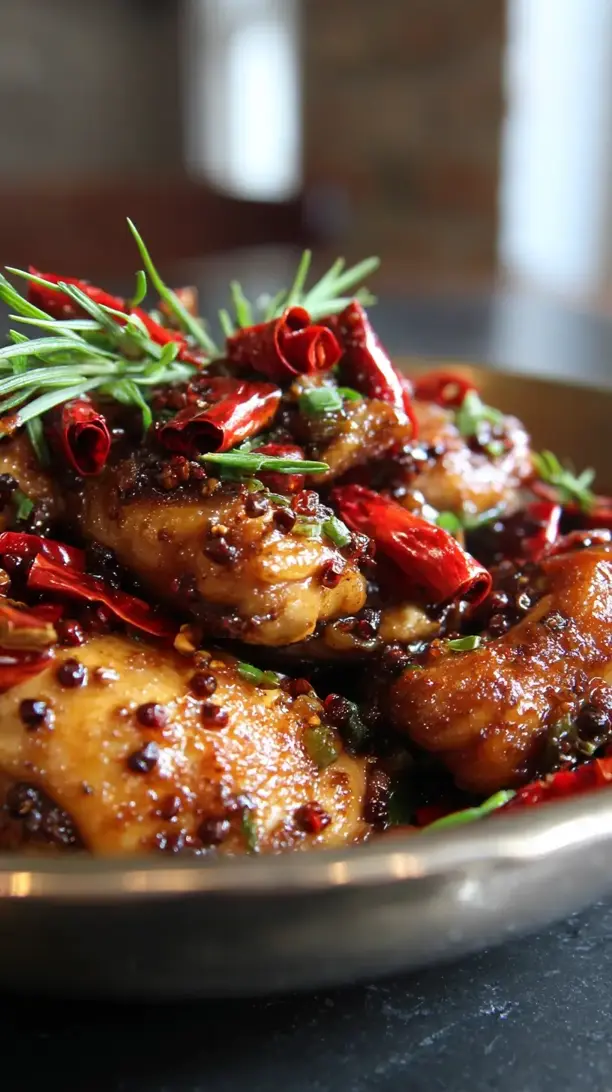
Szechuan Chicken
Make authentic Szechuan Chicken at home with this easy recipe. Tender chicken in a spicy, numbing sauce ready in 30 minutes. Get the recipe now!
Ingredients
For the main ingredients:
-
450 g boneless, skinless chicken thighs (cut into 1-inch pieces)
-
1 tbsp Szechuan peppercorns
-
10-12 dried red chilies
-
3 tbsp vegetable oil
-
1 tbsp ginger (minced)
-
4 cloves garlic (minced)
-
2 scallions (sliced (white and green parts separated))
-
1 bell pepper (sliced into strips)
-
1 tbsp chili bean paste (doubanjiang)
-
2 tbsp light soy sauce
-
1 tbsp dark soy sauce
-
1 tbsp Chinese black vinegar
-
1 tsp sugar
-
1 tbsp cornstarch
-
2 tbsp water
-
1 tsp sesame oil
Instructions
-
First, let's prepare the star of the show — the Szechuan peppercorns. Heat a small, dry skillet over medium heat and add the peppercorns. Toast them for 1-2 minutes, shaking the pan frequently, until they become very fragrant. Be careful not to burn them, or they’ll turn bitter. Transfer them to a spice grinder or mortar and pestle and grind them into a coarse powder. You’ll notice an incredible citrusy, floral aroma filling your kitchen.01
-
Now, let's marinate the chicken. In a medium bowl, toss the cubed chicken thighs with 1 tablespoon of the ground toasted Szechuan peppercorns, 1 tablespoon of light soy sauce, and the cornstarch. Mix everything until the chicken is evenly coated. This cornstarch slurry is crucial — it’s what will give the chicken a velvety texture and help the sauce cling to it beautifully later on. Let it sit for 10-15 minutes while you prep the other ingredients.02
-
It's time to build the sauce. In a small bowl or measuring jug, combine the remaining light soy sauce, dark soy sauce, Chinese black vinegar, sugar, and 2 tablespoons of water. The dark soy sauce is mostly for color, giving the final dish that gorgeous deep brown hue, while the black vinegar adds a subtle, tangy complexity that cuts through the richness. Give it a good whisk to dissolve the sugar.03
-
Get your wok or skillet screaming hot. Add the vegetable oil and swirl it around. Once the oil is shimmering, add the marinated chicken in a single layer. Let it sear undisturbed for about a minute to get a nice color, then stir-fry for 3-4 minutes until the chicken is cooked through and has a slight crust. Remove the chicken from the wok and set it aside on a plate.04
-
In the same wok, you should have a little oil left. Add the dried chilies and stir-fry for 30 seconds until they darken slightly and smell smoky. Then, add the ginger, garlic, and the white parts of the scallions. Stir-fry for just another 30 seconds until incredibly fragrant — you really don’t want to burn the garlic.05
-
Now, add the chili bean paste (doubanjiang) to the wok. Stir it around for about a minute to cook out the raw flavor and let its red oil release. This is the base of your sauce, and you’ll see the oil turn a vibrant red color. Then, add the sliced bell pepper and stir-fry for 1-2 minutes until it just begins to soften but still has a nice crunch.06
-
Return the cooked chicken to the wok, pouring in any accumulated juices. Give everything a good toss to combine. Now, pour your pre-mixed sauce over the chicken and vegetables. The sauce will bubble and thicken almost immediately thanks to the cornstarch from the chicken marinade. Stir constantly for 1-2 minutes until everything is glazed in that glossy, incredible-smelling sauce.07
-
Turn off the heat. Drizzle in the sesame oil and toss in the green parts of the scallions. Give it one final stir. The residual heat will wilt the scallions perfectly. Do a quick taste test — it should be savory, spicy, a little tangy, and subtly sweet. Serve immediately over a bed of fluffy steamed rice to soak up every last drop of that amazing sauce.08
Not what you're looking for?


