Teriyaki salmon delivers a perfect harmony of sweet and savory with a glossy glaze on tender, flaky fish. This surprisingly simple recipe builds layers of flavor for a restaurant-quality meal that’s also a comforting weeknight staple. You’ll get a beautifully caramelized exterior, moist interior, and a sauce so good you’ll want to put it on everything.
Looking for Teriyaki Salmon inspiration? You'll love what we have! Explore more Dinner Ideas recipes or discover our Appetizer Recipes favorites.



Why You’ll Love This Teriyaki Salmon
- Fast & foolproof: Ready in about 20 minutes of active time for a stress-free weeknight.
- Perfect flavor balance: Homemade glaze reduces to a sticky, glossy coating that’s not overly sweet.
- Versatile centerpiece: Pairs beautifully with steamed rice, stir-fried veggies, or whatever you have on hand.
- Pro chef results: Achieve a stunning, glazed presentation that boosts your kitchen confidence.
Ingredients & Tools
- 4 salmon fillets, skin-on or skinless (about 150-180 g each)
- 3 tbsp soy sauce (use tamari for gluten-free)
- 2 tbsp mirin
- 2 tbsp sake or dry white wine
- 1 ½ tbsp brown sugar
- 1 tbsp honey or maple syrup
- 2 cloves garlic, minced
- 1 tsp fresh ginger, grated
- 1 tbsp vegetable oil
- 1 tsp cornstarch mixed with 1 tbsp water (slurry)
- To garnish: sliced spring onions and sesame seeds
Tools: A large oven-safe skillet or frying pan, a small saucepan, and a brush for glazing.
Notes: The quality of your salmon really matters here—look for fillets that are bright in color and smell fresh, not fishy. And don’t skip the fresh ginger and garlic; they provide an aromatic backbone that powdered versions just can’t replicate.
Nutrition (per serving)
| Calories: | 320 kcal |
| Protein: | 29 g |
| Fat: | 16 g |
| Carbs: | 12 g |
| Fiber: | 0.5 g |
Serves: 4 | Prep Time: 10 minutes | Cook Time: 15 minutes | Total Time: 25 minutes
Before You Start: Tips & Ingredient Notes
- Pat your salmon dry. This is the single most important step for getting a beautiful sear and ensuring the glaze sticks properly. Use paper towels to thoroughly dry the surface of each fillet.
- What if I don’t have mirin or sake? No worries! For mirin, you can use a little extra dry white wine with a pinch of sugar. For the sake, a dry sherry or even just a bit more white wine works in a pinch.
- Skin-on or skin-off? I prefer skin-on for this recipe, as the skin gets wonderfully crispy and protects the delicate flesh during cooking. You can always remove it after cooking if you prefer.
- Bring the salmon to room temperature. Taking the salmon out of the fridge 15-20 minutes before cooking helps it cook more evenly, preventing a cold center and an overcooked exterior.
How to Make Teriyaki Salmon
Step 1: Make the Teriyaki Glaze. In your small saucepan, combine the soy sauce, mirin, sake, brown sugar, honey, minced garlic, and grated ginger. Whisk everything together and bring it to a gentle simmer over medium heat. Let it bubble away for 2-3 minutes until the sugar has fully dissolved and the sauce has slightly thickened. You’ll notice the aroma becoming rich and fragrant. Give it a quick taste—it should be a powerful balance of salty and sweet. Remove it from the heat and set it aside for now.
Step 2: Prepare and Sear the Salmon. Now, pat those salmon fillets completely dry with paper towels. Season both sides lightly with a tiny pinch of salt (remember, the soy sauce is salty) and some black pepper. Heat the vegetable oil in your large skillet over medium-high heat. Once the oil is shimmering hot, carefully place the salmon fillets in the pan, skin-side down if they have skin. Sear them for 3-4 minutes without moving them. You’re looking for a golden-brown, crispy crust to form.
Step 3: Flip and Add the Glaze. Gently flip the salmon fillets. If you’re using an oven-safe skillet and prefer to finish in the oven, you can preheat it to 200°C (400°F) at this point. Otherwise, we’ll continue on the stovetop. Pour about two-thirds of your prepared teriyaki glaze over and around the salmon. The sauce will sizzle and bubble up beautifully. Let it cook for another 2-3 minutes, occasionally spooning the glaze over the top of the fillets.
Step 4: Thicken the Sauce. Transfer the cooked salmon to a clean plate. You should have a pan full of delicious, but perhaps a bit thin, sauce. Bring this remaining sauce back to a simmer. Give your cornstarch slurry a quick stir (the cornstarch settles quickly) and then whisk it into the simmering sauce. It will thicken up almost instantly into a gorgeous, glossy, coating consistency. Cook for just 30 more seconds to remove the raw starch taste.
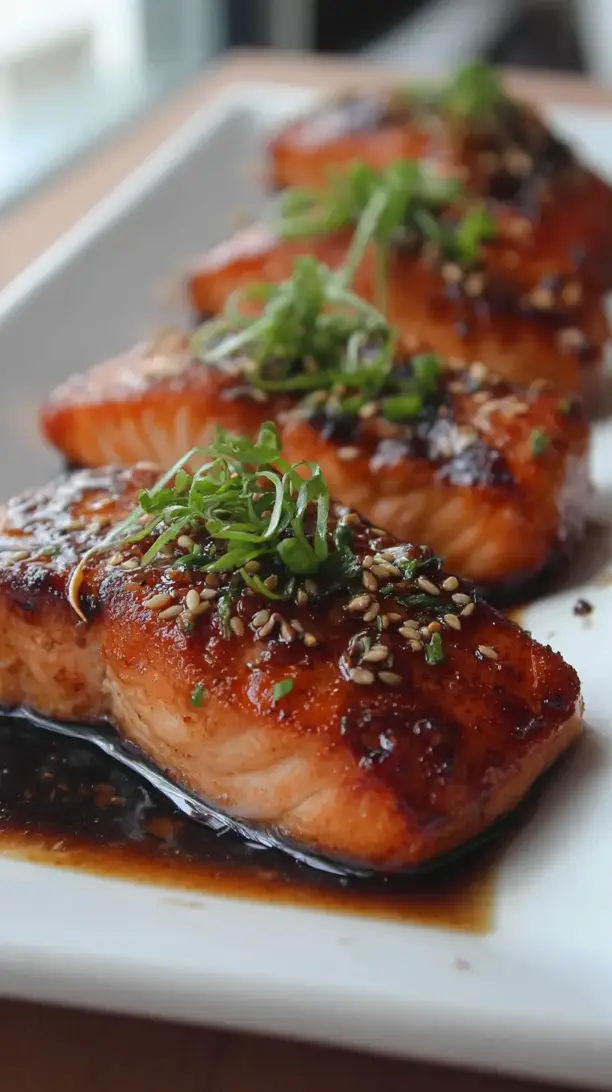
Step 5: Glaze and Serve. Return the salmon fillets to the pan, turning them a few times to coat them generously in the freshly thickened teriyaki sauce. Let them warm through for about a minute. The final texture should be sticky and glistening. Plate your salmon, drizzle with any extra sauce from the pan, and finish with a generous sprinkle of sliced spring onions and sesame seeds for a pop of color and crunch.
Storage & Freshness Guide
- Fridge: Store leftovers in an airtight container for up to 2 days.
- Freezer: Freezing is not recommended as the texture may become watery upon thawing.
- Reviving: Reheat gently in a covered skillet with a splash of water or in a 300°F oven to restore moisture.
Serving Suggestions
Complementary Dishes
- Steamed Japanese short-grain rice — The ultimate companion; its sticky texture is perfect for soaking up every last drop of that incredible teriyaki sauce.
- A simple cucumber sesame salad — Its cool, crisp, and slightly tangy flavor provides a refreshing contrast to the rich, savory salmon.
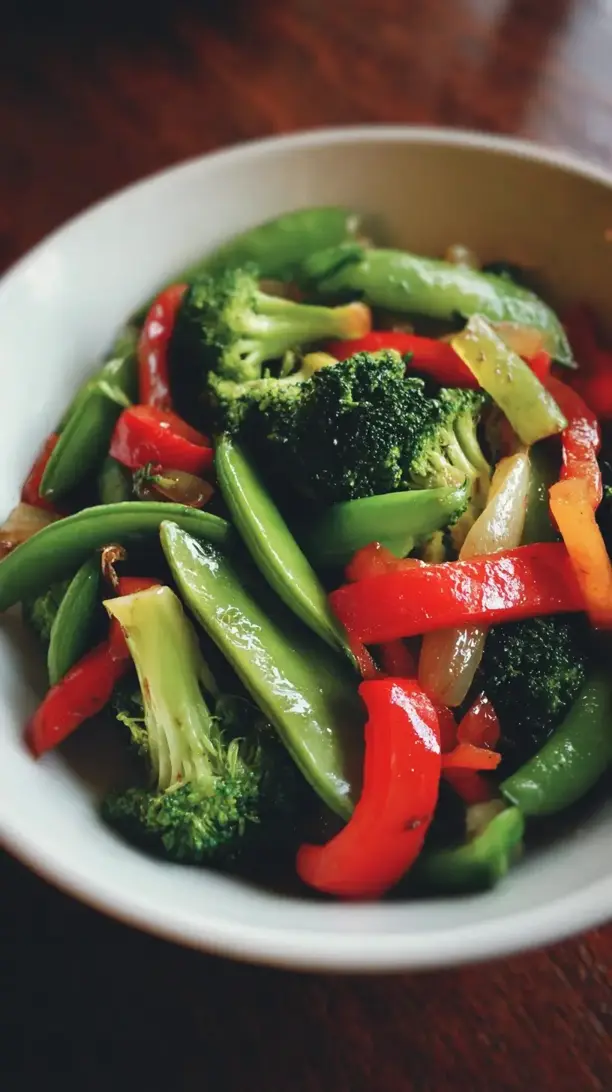
- Stir-fried bok choy or broccoli — Toss some greens in the pan after the salmon is done for a quick, flavorful side that cooks in minutes.
Drinks
- A crisp, dry Riesling — Its bright acidity and slight sweetness beautifully cut through the richness of the glaze and complement the fish’s flavor.
- Jasmine green tea — A warm, fragrant cup of tea is a classic, non-alcoholic pairing that cleanses the palate between bites.
- A light Japanese lager — The crisp, clean bubbles are incredibly refreshing and won’t overpower the delicate taste of the salmon.
Something Sweet
- Green tea ice cream (Matcha) — The slightly bitter, earthy notes of matcha are a sublime and traditional finish to a Japanese-inspired meal.
- Mochi ice cream — These chewy, sweet pockets of ice cream are fun, light, and offer a delightful textural experience after your main course.
- A simple fruit platter with lychee and mango — Fresh, sweet, and hydrating fruit is a wonderfully light way to end the meal on a bright note.
Top Mistakes to Avoid
- Mistake: Using a bottled teriyaki sauce. Most store-bought versions are loaded with corn syrup, preservatives, and an unbalanced, overpowering saltiness. The homemade version is so easy and tastes infinitely better, giving you full control over the flavor.
- Mistake: Overcooking the salmon. Salmon continues to cook after you take it off the heat (car


Teriyaki Salmon
Learn how to make the best Teriyaki Salmon with a glossy, homemade glaze. This easy 25-minute recipe is perfect for a quick, delicious weeknight meal. Get the recipe now!
Ingredients
For the Teriyaki Glaze
-
3 tbsp soy sauce (use tamari for gluten-free)
-
2 tbsp mirin
-
2 tbsp sake or dry white wine
-
1 ½ tbsp brown sugar
-
1 tbsp honey or maple syrup
-
2 cloves garlic (minced)
-
1 tsp fresh ginger (grated)
For the Salmon & Garnish
-
4 salmon fillets (skin-on or skinless (about 150-180 g each))
-
1 tbsp vegetable oil
-
1 tsp cornstarch mixed with 1 tbsp water (slurry)
-
sliced spring onions and sesame seeds
Instructions
-
In your small saucepan, combine the soy sauce, mirin, sake, brown sugar, honey, minced garlic, and grated ginger. Whisk everything together and bring it to a gentle simmer over medium heat. Let it bubble away for 2-3 minutes until the sugar has fully dissolved and the sauce has slightly thickened. You’ll notice the aroma becoming rich and fragrant. Give it a quick taste—it should be a powerful balance of salty and sweet. Remove it from the heat and set it aside for now.01
-
Now, pat those salmon fillets completely dry with paper towels. Season both sides lightly with a tiny pinch of salt (remember, the soy sauce is salty) and some black pepper. Heat the vegetable oil in your large skillet over medium-high heat. Once the oil is shimmering hot, carefully place the salmon fillets in the pan, skin-side down if they have skin. Sear them for 3-4 minutes without moving them. You’re looking for a golden-brown, crispy crust to form.02
-
Gently flip the salmon fillets. If you’re using an oven-safe skillet and prefer to finish in the oven, you can preheat it to 200°C (400°F) at this point. Otherwise, we’ll continue on the stovetop. Pour about two-thirds of your prepared teriyaki glaze over and around the salmon. The sauce will sizzle and bubble up beautifully. Let it cook for another 2-3 minutes, occasionally spooning the glaze over the top of the fillets.03
-
Transfer the cooked salmon to a clean plate. You should have a pan full of delicious, but perhaps a bit thin, sauce. Bring this remaining sauce back to a simmer. Give your cornstarch slurry a quick stir (the cornstarch settles quickly) and then whisk it into the simmering sauce. It will thicken up almost instantly into a gorgeous, glossy, coating consistency. Cook for just 30 more seconds to remove the raw starch taste.04
-
Return the salmon fillets to the pan, turning them a few times to coat them generously in the freshly thickened teriyaki sauce. Let them warm through for about a minute. The final texture should be sticky and glistening. Plate your salmon, drizzle with any extra sauce from the pan, and finish with a generous sprinkle of sliced spring onions and sesame seeds for a pop of color and crunch.05
Not what you're looking for?