
This Thai Coconut Curry Soup is a warm, fragrant hug in a bowl. It combines creamy coconut milk, aromatic spices, and fresh herbs for a comforting yet exciting meal. You can have it ready in under 30 minutes with flexible ingredients.
Looking for Thai Coconut Curry Soup inspiration? You'll love what we have! Explore more Soup Recipes recipes or discover our Crockpot Recipes favorites.



Why You’ll Love This Thai Coconut Curry Soup
- Complex & aromatic: Layers of heat, sweetness, and zest in every spoonful.
- Highly adaptable: Easy to customize with your favorite proteins and veggies.
- Quick to make: Ready in under 30 minutes with mostly hands-off simmering.
- Comforting yet light: Feels indulgent but is actually nourishing and satisfying.
Ingredients & Tools
- 1 tbsp coconut oil or vegetable oil
- 3 tbsp red curry paste
- 1 medium onion, thinly sliced
- 3 cloves garlic, minced
- 1 tbsp fresh ginger, grated
- 1 red bell pepper, sliced into thin strips
- 4 cups (1 liter) vegetable or chicken broth
- 2 (14 oz / 400 ml) cans full-fat coconut milk
- 2 tbsp fish sauce (or soy sauce for a vegetarian option)
- 1 tbsp brown sugar or coconut sugar
- 1 lb (450 g) protein of choice: shrimp, chicken breast (thinly sliced), or firm tofu (cubed)
- 2 limes, juiced
- Fresh cilantro and Thai basil for garnish
- 1-2 red chili peppers, sliced (optional, for extra heat)
Tools: A large pot or Dutch oven, a wooden spoon, a sharp knife, and a grater for the ginger and garlic.
Notes: Full-fat coconut milk is key for a creamy texture, and quality red curry paste makes a big difference. Don’t skimp on the fresh herbs at the end.
Nutrition (per serving)
| Calories: | 380 kcal |
| Protein: | 22 g |
| Fat: | 28 g |
| Carbs: | 14 g |
| Fiber: | 3 g |
Serves: 4 | Prep Time: 10 minutes | Cook Time: 20 minutes | Total Time: 30 minutes
Before You Start: Tips & Ingredient Notes
- Don’t skip toasting the curry paste. This is a crucial step for unlocking the deepest, most complex flavors from the paste. You’ll cook it in the oil for a minute or so until it becomes fragrant—it makes the entire soup taste richer and more authentic.
- What if I can’t find Thai basil? No worries! Regular basil will work in a pinch, though the flavor profile will be slightly different. Thai basil has a more licorice-like, peppery note that’s lovely, but the soup will still be delicious with the classic sweet basil you might have on hand.
- Adjust the heat to your liking. The spice level can be easily controlled. Start with the recommended amount of curry paste and add more at the end if you want it hotter. The fresh chili garnish also lets everyone customize their own bowl.
- Full-fat coconut milk is non-negotiable. I know it’s tempting to reach for the light version, but trust me on this—the rich, creamy texture and flavor that full-fat coconut milk provides is what makes this soup so indulgent and satisfying. Light coconut milk can make the soup taste a bit watery.
How to Make Thai Coconut Curry Soup
Step 1: Start by heating the coconut oil in your large pot over medium heat. Once the oil is shimmering, add the red curry paste. You’ll want to cook this for about 1-2 minutes, stirring constantly with your wooden spoon. The trick is to let it sizzle and become incredibly fragrant—this toasting process deepens its flavor significantly and forms the foundation of your soup.
Step 2: Add the sliced onion, minced garlic, and grated ginger to the pot. Sauté this mixture for another 3-4 minutes, until the onions have softened and turned translucent. You’ll notice the aroma becoming even more complex and inviting. Be careful not to burn the garlic, as it can turn bitter. If things are cooking too quickly, just reduce the heat a little.
Step 3: Now, stir in the sliced red bell pepper. Let it cook for just a minute to soften slightly. Then, pour in the vegetable or chicken broth, scraping the bottom of the pot with your spoon to lift up all those delicious browned bits. This is called deglazing, and it adds a ton of flavor to the broth.
Step 4: Bring the broth to a gentle simmer. Once it’s bubbling lightly, add your protein. If you’re using shrimp, they’ll only need 2-3 minutes to turn pink and opaque. For chicken, it will take about 5-7 minutes to cook through. If you’re using tofu, which is already cooked, you can add it later just to heat through. The key is not to overcook your protein, especially shrimp, as they can become rubbery.
Step 5: Reduce the heat to low and pour in the two cans of full-fat coconut milk. Stir gently to combine—you’ll see the soup transform into a beautiful, creamy orange hue. Now, add the fish sauce (or soy sauce) and the brown sugar. The fish sauce adds that essential savory, umami depth, while the sugar balances the spice and acidity perfectly.
Step 6: Let the soup heat through for about 3-4 minutes, but do not let it come to a rolling boil. Boiling can cause the coconut milk to separate, which affects the texture. You just want it hot. Right before serving, turn off the heat and stir in the fresh lime juice. This last-minute addition provides that essential bright, zesty kick that makes the flavors pop.
Step 7: Ladle the hot soup into bowls and garnish generously with fresh cilantro, Thai basil, and sliced red chilies if you like some extra heat. Serve it immediately while it’s steaming hot. The contrast between the hot, creamy soup and the cool, fresh herbs is absolutely divine.
Storage & Freshness Guide
- Fridge: Cool completely and store in an airtight container for up to 3 days.
- Freezer: Freeze without fresh herbs for up to 3 months. Thaw in the fridge overnight.
- Reviving: Reheat gently over low heat, stirring occasionally. Add fresh herbs and lime juice after reheating.
Serving Suggestions
Complementary Dishes
- Jasmine Rice — A fluffy bed of jasmine rice is the perfect neutral base to soak up the flavorful broth. Its delicate floral aroma complements the curry without overpowering it.
- Fresh Spring Rolls — These light, refreshing rolls filled with shrimp, herbs, and vermicelli noodles offer a cool, crisp contrast to the warm, rich soup.
- Thai Cucumber Salad — The cool, sweet, and tangy flavors of this simple salad provide a palate-cleansing counterpoint that cuts through the creaminess of the curry.
Drinks
- Thai Iced Tea — The sweet, creamy, and strongly brewed tea is a classic pairing that balances the soup’s spice beautifully.
- A Crisp Lager — A light, cold beer helps cleanse the palate between bites and complements the soup’s aromatic spices without competing with them.
- Gewürztraminer Wine — This slightly sweet, aromatic white wine has lychee and spice notes that harmonize wonderfully with the flavors in the curry.
Something Sweet
- Mango with Sticky Rice — This iconic Thai dessert is a must. The sweet, ripe mango and creamy coconut-infused sticky rice are the perfect, comforting end to the meal.
- Coconut Ice Cream — A simple scoop of rich coconut ice cream continues the tropical theme and provides a cool, sweet finish.
- Pandan Waffles — If you’re feeling adventurous, these fragrant, green-hued waffles have a unique, vanilla-like flavor that’s a delightful and unexpected treat.
Top Mistakes to Avoid
- Mistake: Boiling the soup after adding the coconut milk. This is probably the most common error. High heat can cause the coconut milk to separate and become oily, giving the soup a grainy texture rather than a smooth, creamy one. Always simmer gently after it’s added.
- Mistake: Adding the lime juice too early. If you add the lime juice while the soup is still actively cooking, the heat will cause its bright, fresh flavor to dissipate. Stir it in right at the end, off the heat, to preserve its zesty punch.
- Mistake: Overcooking the protein. Whether it’s shrimp, chicken, or tofu, nobody likes a rubbery texture. Add your protein according to its cooking time—shrimp cook very quickly, while chicken takes a bit longer. I’ve messed this up before too, and it really affects the final dish.
- Mistake: Not tasting and adjusting at the end. Soups need seasoning! Before serving, always taste and adjust. You might find it needs another pinch of salt, a squeeze more lime, or a dash more fish sauce to achieve the perfect balance for your palate.
Expert Tips
- Tip: Make a double batch and freeze it. This soup freezes remarkably well (just leave out any fresh herbs and add them after reheating). Having a container in the freezer means a fantastic homemade meal is never more than a thaw away on a busy night.
- Tip: Use homemade broth if you can. While store-bought is perfectly fine, using a high-quality homemade vegetable or chicken broth will elevate the flavor of the soup to a whole new level. The depth it adds is honestly worth the extra effort.
- Tip: Bloom your own spices for a next-level curry paste. If you’re feeling ambitious, toasting whole coriander seeds, cumin seeds, and dried chilies before grinding them into your paste will create an unbelievably aromatic and complex base flavor.
- Tip: Add vegetables in stages. For a heartier soup with more veggies, add harder vegetables like carrots or potatoes with the broth so they have time to soften. Softer vegetables, like spinach or zucchini, should be stirred in at the very end just to wilt.
FAQs
Can I make this soup vegetarian or vegan?
Absolutely! It’s very easy to adapt. Simply use vegetable broth instead of chicken broth, and swap the fish sauce for soy sauce or tamari. For protein, firm tofu or a mix of hearty mushrooms like shiitake or oyster work wonderfully. Just be sure to check that your red curry paste is also vegan, as some brands contain shrimp paste.
How long will leftovers keep in the fridge?
Leftovers will stay fresh in an airtight container in the refrigerator for up to 3 days. The flavors often meld and become even better the next day. When reheating, do so gently over low heat to prevent the coconut milk from separating. I don’t recommend freezing it with noodles if you’ve added any, as they can become mushy.
My soup is too spicy! How can I tone down the heat?
Don’t worry, this happens! The easiest fix is to add a bit more coconut milk and broth to dilute the spice level. A teaspoon of sugar or a splash of lime juice can also help balance the heat. For future reference, you can start with less curry paste and add more gradually until it’s to your liking.
What’s the best red curry paste brand to use?
This is a matter of personal taste, but Mae Ploy and Thai Kitchen are two widely available brands that are consistently good. Mae Ploy tends to be more robust and spicy, while Thai Kitchen is a bit milder. I’d recommend trying a few to see which one you prefer—it really is the heart of the soup.
Can I add noodles to this soup to make it more substantial?
Of course! Rice noodles are a classic addition. Just cook them separately according to package instructions and add them to the bowl before ladling the hot soup over the top. If you add them directly to the pot, they’ll soak up all the broth and become too soft, especially for leftovers.



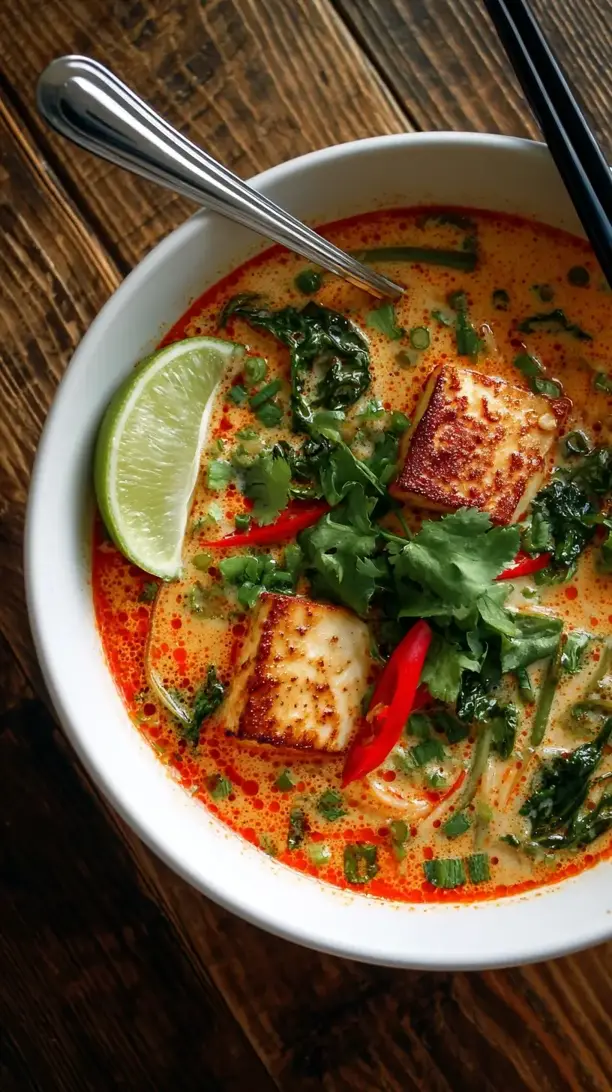
Thai Coconut Curry Soup
Make this easy Thai Coconut Curry Soup in 30 minutes! A creamy, aromatic blend of coconut milk, red curry, and fresh herbs. Get the simple recipe now!
Ingredients
For the Ingredients
-
1 tbsp coconut oil or vegetable oil
-
3 tbsp red curry paste
-
1 medium onion (thinly sliced)
-
3 cloves garlic (minced)
-
1 tbsp fresh ginger (grated)
-
1 red bell pepper (sliced into thin strips)
-
4 cups vegetable or chicken broth (1 liter)
-
2 cans full-fat coconut milk (14 oz / 400 ml each)
-
2 tbsp fish sauce (or soy sauce for a vegetarian option)
-
1 tbsp brown sugar or coconut sugar
-
1 lb protein of choice (shrimp, chicken breast (thinly sliced), or firm tofu (cubed), 450 g)
-
2 limes (juiced)
-
Fresh cilantro and Thai basil (for garnish)
-
1-2 red chili peppers (sliced, optional, for extra heat)
Instructions
-
Start by heating the coconut oil in your large pot over medium heat. Once the oil is shimmering, add the red curry paste. You’ll want to cook this for about 1-2 minutes, stirring constantly with your wooden spoon. The trick is to let it sizzle and become incredibly fragrant—this toasting process deepens its flavor significantly and forms the foundation of your soup.01
-
Add the sliced onion, minced garlic, and grated ginger to the pot. Sauté this mixture for another 3-4 minutes, until the onions have softened and turned translucent. You’ll notice the aroma becoming even more complex and inviting. Be careful not to burn the garlic, as it can turn bitter. If things are cooking too quickly, just reduce the heat a little.02
-
Now, stir in the sliced red bell pepper. Let it cook for just a minute to soften slightly. Then, pour in the vegetable or chicken broth, scraping the bottom of the pot with your spoon to lift up all those delicious browned bits. This is called deglazing, and it adds a ton of flavor to the broth.03
-
Bring the broth to a gentle simmer. Once it’s bubbling lightly, add your protein. If you’re using shrimp, they’ll only need 2-3 minutes to turn pink and opaque. For chicken, it will take about 5-7 minutes to cook through. If you’re using tofu, which is already cooked, you can add it later just to heat through. The key is not to overcook your protein, especially shrimp, as they can become rubbery.04
-
Reduce the heat to low and pour in the two cans of full-fat coconut milk. Stir gently to combine—you’ll see the soup transform into a beautiful, creamy orange hue. Now, add the fish sauce (or soy sauce) and the brown sugar. The fish sauce adds that essential savory, umami depth, while the sugar balances the spice and acidity perfectly.05
-
Let the soup heat through for about 3-4 minutes, but do not let it come to a rolling boil. Boiling can cause the coconut milk to separate, which affects the texture. You just want it hot. Right before serving, turn off the heat and stir in the fresh lime juice. This last-minute addition provides that essential bright, zesty kick that makes the flavors pop.06
-
Ladle the hot soup into bowls and garnish generously with fresh cilantro, Thai basil, and sliced red chilies if you like some extra heat. Serve it immediately while it’s steaming hot. The contrast between the hot, creamy soup and the cool, fresh herbs is absolutely divine.07
Not what you're looking for?