
This Thai Red Curry Chicken Stew is a deeply flavorful, soul-warming dish that’s surprisingly simple to make. The coconut milk melds with curry paste, lemongrass, and kaffir lime for an aromatic, comforting meal. It’s a flexible one-pot wonder that tastes even better the next day.
If you're looking for the perfect Thai Red Curry Chicken Stew, you're in the right place. Whether you love Stew or want to explore our Chicken Thigh Recipes collection, we've got you covered.


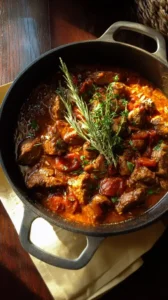
Why You’ll Love This Thai Red Curry Chicken Stew
- Complex & aromatic: Layers of spicy, savory, and sweet flavors.
- One-pot wonder: Easy cleanup and more time to enjoy.
- Wonderfully adaptable: Swap veggies or protein to your liking.
- Better next day: Flavors deepen overnight for perfect leftovers.
Ingredients & Tools
- 1.5 lbs boneless, skinless chicken thighs, cut into 1-inch pieces
- 2 tbsp vegetable or coconut oil
- 1 large yellow onion, thinly sliced
- 4 cloves garlic, minced
- 1 tbsp fresh ginger, grated
- 3–4 tbsp Thai red curry paste
- 1 (14 oz) can full-fat coconut milk
- 1.5 cups chicken broth
- 2 tbsp fish sauce
- 1 tbsp palm sugar or brown sugar
- 2 kaffir lime leaves (fresh or frozen)
- 1 lemongrass stalk, bruised and cut into 3-inch pieces
- 1 red bell pepper, sliced
- 1 cup sliced carrots
- 1 cup bamboo shoots, drained
- 1 cup Thai eggplant or zucchini, cubed
- Juice of 1 lime
- Fresh cilantro and Thai basil for garnish
Tools: A large Dutch oven or heavy-bottomed pot, a wooden spoon, and a fine grater for the ginger and garlic.
Notes: Don’t skip the fresh aromatics—lemongrass and kaffir lime leaves add an authentic, perfumed quality. Full-fat coconut milk is key for a luxuriously creamy base.
Nutrition (per serving)
| Calories: | 420 kcal |
| Protein: | 28 g |
| Fat: | 28 g |
| Carbs: | 16 g |
| Fiber: | 4 g |
Serves: 4 | Prep Time: 20 minutes | Cook Time: 35 minutes | Total Time: 55 minutes
Before You Start: Tips & Ingredient Notes
- Choosing your curry paste. Not all red curry pastes are created equal! I prefer Mae Ploy or Maesri brands for their balanced flavor and heat. If you’re sensitive to spice, start with 2 tablespoons and add more later.
- Why chicken thighs? Thighs stay incredibly juicy and tender during simmering, whereas breast meat can dry out. Trust me on this—the richer flavor and texture are worth it.
- Don’t rush the curry paste. Frying the paste in oil for a minute or two before adding liquids is a crucial step. It wakes up the spices and removes any raw flavor, giving you a much deeper, more aromatic base.
- Fresh herbs make all the difference. If you can find Thai basil, its anise-like flavor is a game-changer. Regular basil works in a pinch, but the unique aroma of Thai basil really elevates the dish.
How to Make Thai Red Curry Chicken Stew
Step 1: Pat the chicken thighs dry with paper towels and season lightly with salt. Heat 1 tablespoon of oil in your Dutch oven over medium-high heat. Once the oil is shimmering, add the chicken in a single layer—you might need to do this in two batches to avoid crowding the pan. Sear until golden brown on all sides, about 4–5 minutes total. The chicken doesn’t need to be cooked through yet—you’re just building flavor and color here. Remove the chicken to a plate and set aside.
Step 2: Reduce the heat to medium and add the remaining tablespoon of oil to the same pot. Toss in the sliced onion and cook, stirring occasionally, until it’s softened and starting to turn translucent, about 4–5 minutes. You’ll notice the sweet aroma filling your kitchen—this is a good sign! Add the minced garlic and grated ginger and cook for another minute until fragrant, being careful not to let the garlic burn.
Step 3: Push the onions and garlic to one side of the pot and add the red curry paste to the empty space. Let it fry for 1–2 minutes, stirring constantly, until it darkens slightly and becomes incredibly fragrant. This step is non-negotiable for depth of flavor—it transforms the paste from sharp and raw to complex and aromatic.
Step 4: Now, pour in about half of the coconut milk—just the thick, creamy part from the top of the can if it has separated. Stir it into the curry paste and let it bubble gently for a minute. You’ll see the oil start to separate and shimmer on the surface, which means your curry base is ready. This is the foundation of your stew’s rich flavor.
Step 5: Return the seared chicken (and any accumulated juices) to the pot. Add the remaining coconut milk, chicken broth, fish sauce, palm sugar, kaffir lime leaves, and the bruised lemongrass stalks. Give everything a good stir, scraping up any browned bits from the bottom of the pot—that’s pure flavor right there.
Step 6: Bring the stew to a gentle simmer, then reduce the heat to low, cover the pot, and let it cook for 15 minutes. This allows the chicken to become tender and the flavors to start marrying. You should hear a soft, occasional bubble—a full rolling boil is too aggressive here.
Step 7: After 15 minutes, add the harder vegetables: the sliced carrots and Thai eggplant (if using). Let them simmer for 5 minutes, then add the bell pepper and bamboo shoots. Cook for another 5–7 minutes, or until all the vegetables are tender-crisp. You want them to have a bit of bite, not turn to mush.
Step 8: Turn off the heat. Remove the lemongrass stalks and kaffir lime leaves (if you can find them—it’s okay if a leaf or two stays in!). Stir in the fresh lime juice. Taste the stew and adjust the seasoning—you might want a pinch more sugar for balance, a dash more fish sauce for saltiness, or another squeeze of lime for brightness.
Step 9: Ladle the stew into deep bowls and garnish generously with fresh cilantro and Thai basil leaves. The heat of the stew will wilt the herbs slightly, releasing their incredible fragrance. Serve immediately with jasmine rice to soak up every last drop of that glorious coconut curry broth.
Storage & Freshness Guide
- Fridge: Cool completely, store in an airtight container for 3–4 days.
- Freezer: Freeze without vegetables for best texture; lasts up to 3 months.
- Reviving: Reheat gently on the stovetop; stir in a splash of broth or coconut milk if needed.
Serving Suggestions
Complementary Dishes
- Jasmine rice — The fluffy, slightly sticky grains are the perfect neutral canvas for the rich, spicy curry broth.
- Quick-pickled cucumbers — A simple salad of thinly sliced cucumbers with rice vinegar, sugar, and chili flakes adds a refreshing, crunchy contrast.
- Spring rolls — Crispy or fresh, they make a delightful starter that doesn’t compete with the stew’s bold flavors.
Drinks
- Thai iced tea — Its sweet, creamy, slightly spiced profile is a classic pairing that cools the palate between spicy bites.
- A crisp lager or pale ale — The carbonation and mild bitterness help cut through the richness of the coconut milk.
- Sparkling water with lime — Sometimes simplicity is best; the bubbles and citrus are incredibly refreshing.
Something Sweet
- Mango with sticky rice — You can’t go wrong with this iconic Thai dessert. The sweet, creamy mango balances the stew’s heat beautifully.
- Coconut ice cream — A few scoops continue the coconut theme while providing a cool, sweet finish.
- Lychee sorbet — Light, floral, and not too heavy, it cleanses the palate perfectly after a robust meal.
Top Mistakes to Avoid
- Mistake: Boiling the coconut milk aggressively. A rapid boil can cause the coconut milk to separate and become oily or grainy. A gentle simmer is your friend here.
- Mistake: Overcooking the vegetables. Adding all the veggies at the same time will result in some being mushy and others undercooked. Stagger their addition based on how long they take to become tender-crisp.
- Mistake: Skipping the taste-and-adjust step at the end. The balance of salty (fish sauce), sweet (sugar), sour (lime), and spicy (curry) is personal. Not tasting and tweaking at the end is a missed opportunity for a perfect bowl.
- Mistake: Using light coconut milk. It will make your stew watery and less rich. Full-fat coconut milk provides the necessary body and creaminess that makes this dish so satisfying.
Expert Tips
- Tip: Bruise your lemongrass properly. Use the back of your knife to whack the lemongrass stalk a few times along its length before cutting it. This releases its incredible citrusy oils into the stew.
- Tip: Make it ahead for deeper flavor. This stew tastes even better the next day. Let it cool completely, store it in the fridge overnight, and gently reheat it the next day. The flavors will have melded into something even more magical.
- Tip: Freeze kaffir lime leaves. They’re often sold in large batches. Just pop the extras in a zip-top bag and freeze them—they’ll keep for months and you can use them straight from the freezer.
- Tip: Customize your protein and veggies. This recipe is a template! Try it with shrimp (add them in the last 5 minutes of cooking), firm tofu, or whatever vegetables you have on hand—broccoli, snap peas, and mushrooms all work wonderfully.
FAQs
Can I make this vegetarian or vegan?
Absolutely! Swap the chicken for extra-firm tofu (pan-sear it first for the best texture) or chickpeas. Use vegetable broth instead of chicken broth, and substitute soy sauce or a vegan fish sauce alternative. The core flavors of the curry will still shine through beautifully.
My stew is too spicy. How can I tone it down?
Don’t panic! The easiest fix is to stir in a bit more coconut milk or a teaspoon of sugar to balance the heat. Serving it with extra plain jasmine rice will also help dilute the spiciness in each bite. For next time, remember to start with less curry paste.
Can I freeze the leftovers?
You can, but with a caveat. The texture of the coconut milk can sometimes separate a bit upon thawing, and the vegetables may become softer. It will still taste great, but the consistency might not be as perfect. For best results, freeze without the vegetables and add fresh ones when you reheat.
I can’t find kaffir lime leaves or lemongrass. What can I use instead?
While the flavor won’t be exactly the same, you can add the zest of one lime to the stew along with a bay leaf to mimic some of the citrusy, floral notes. It’s a decent stand-in that will still give you a lovely result.
How long will this keep in the refrigerator?
Stored in an airtight container, your Thai Red Curry Chicken Stew will keep beautifully for 3 to 4 days. The flavors continue to develop, making the leftovers something to look forward to. Reheat it gently on the stovetop over low heat.


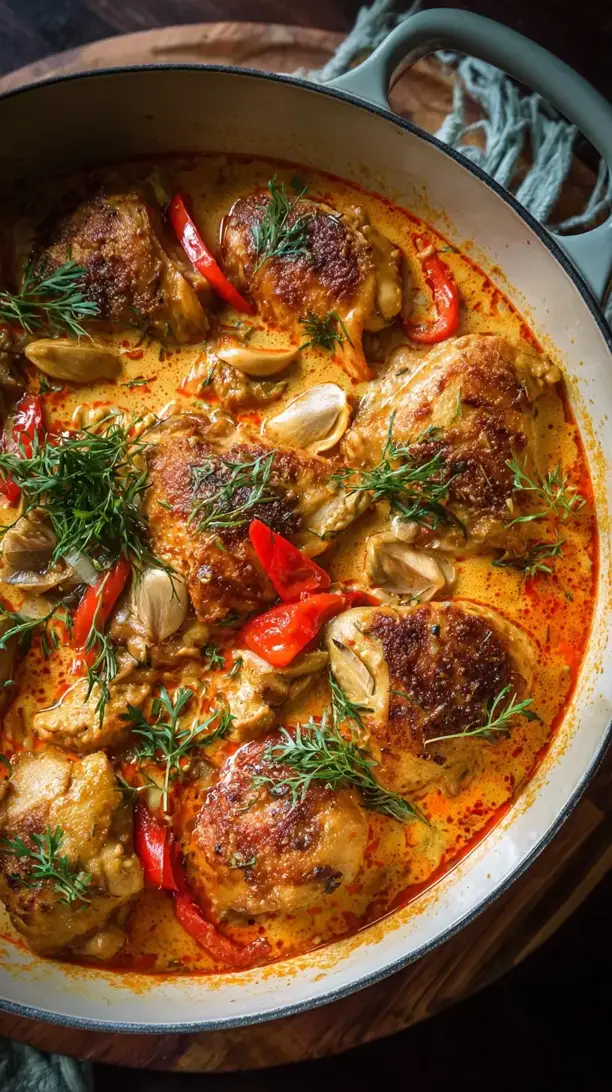
Thai Red Curry Chicken Stew
Make this easy one-pot Thai Red Curry Chicken Stew for a flavorful, comforting meal. Ready in under an hour! Get the simple recipe and cook tonight.
Ingredients
For the Ingredients
-
1.5 lbs boneless, skinless chicken thighs (cut into 1-inch pieces)
-
2 tbsp vegetable or coconut oil
-
1 large yellow onion (thinly sliced)
-
4 cloves garlic (minced)
-
1 tbsp fresh ginger (grated)
-
3–4 tbsp Thai red curry paste
-
1 can full-fat coconut milk (14 oz)
-
1.5 cups chicken broth
-
2 tbsp fish sauce
-
1 tbsp palm sugar or brown sugar
-
2 kaffir lime leaves (fresh or frozen)
-
1 stalk lemongrass (bruised and cut into 3-inch pieces)
-
1 red bell pepper (sliced)
-
1 cup sliced carrots
-
1 cup bamboo shoots (drained)
-
1 cup Thai eggplant or zucchini (cubed)
-
Juice of 1 lime
-
Fresh cilantro and Thai basil (for garnish)
Instructions
-
Pat the chicken thighs dry with paper towels and season lightly with salt. Heat 1 tablespoon of oil in your Dutch oven over medium-high heat. Once the oil is shimmering, add the chicken in a single layer—you might need to do this in two batches to avoid crowding the pan. Sear until golden brown on all sides, about 4–5 minutes total. The chicken doesn’t need to be cooked through yet—you’re just building flavor and color here. Remove the chicken to a plate and set aside.01
-
Reduce the heat to medium and add the remaining tablespoon of oil to the same pot. Toss in the sliced onion and cook, stirring occasionally, until it’s softened and starting to turn translucent, about 4–5 minutes. You’ll notice the sweet aroma filling your kitchen—this is a good sign! Add the minced garlic and grated ginger and cook for another minute until fragrant, being careful not to let the garlic burn.02
-
Push the onions and garlic to one side of the pot and add the red curry paste to the empty space. Let it fry for 1–2 minutes, stirring constantly, until it darkens slightly and becomes incredibly fragrant. This step is non-negotiable for depth of flavor—it transforms the paste from sharp and raw to complex and aromatic.03
-
Now, pour in about half of the coconut milk—just the thick, creamy part from the top of the can if it has separated. Stir it into the curry paste and let it bubble gently for a minute. You’ll see the oil start to separate and shimmer on the surface, which means your curry base is ready. This is the foundation of your stew’s rich flavor.04
-
Return the seared chicken (and any accumulated juices) to the pot. Add the remaining coconut milk, chicken broth, fish sauce, palm sugar, kaffir lime leaves, and the bruised lemongrass stalks. Give everything a good stir, scraping up any browned bits from the bottom of the pot—that’s pure flavor right there.05
-
Bring the stew to a gentle simmer, then reduce the heat to low, cover the pot, and let it cook for 15 minutes. This allows the chicken to become tender and the flavors to start marrying. You should hear a soft, occasional bubble—a full rolling boil is too aggressive here.06
-
After 15 minutes, add the harder vegetables: the sliced carrots and Thai eggplant (if using). Let them simmer for 5 minutes, then add the bell pepper and bamboo shoots. Cook for another 5–7 minutes, or until all the vegetables are tender-crisp. You want them to have a bit of bite, not turn to mush.07
-
Turn off the heat. Remove the lemongrass stalks and kaffir lime leaves (if you can find them—it’s okay if a leaf or two stays in!). Stir in the fresh lime juice. Taste the stew and adjust the seasoning—you might want a pinch more sugar for balance, a dash more fish sauce for saltiness, or another squeeze of lime for brightness.08
-
Ladle the stew into deep bowls and garnish generously with fresh cilantro and Thai basil leaves. The heat of the stew will wilt the herbs slightly, releasing their incredible fragrance. Serve immediately with jasmine rice to soak up every last drop of that glorious coconut curry broth.09
Not what you're looking for?


