
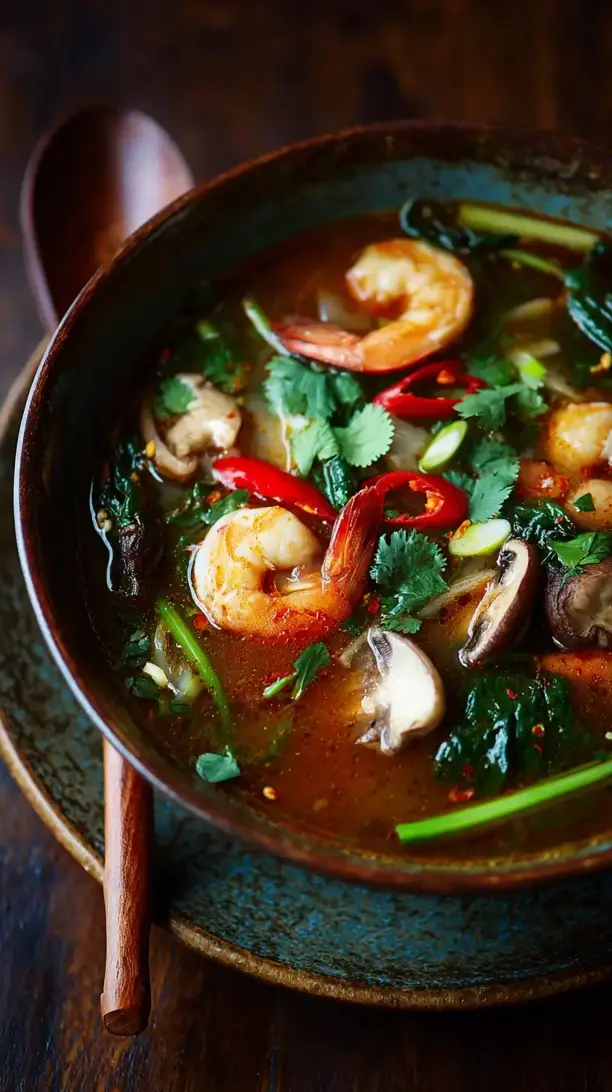
There’s something magical about a great Thai Tom Yum Soup. That first spoonful—hot, sour, salty, and fragrant—hits you like a warm tropical breeze. This iconic soup is surprisingly simple to make at home and feels like a special occasion every time.
Craving a delicious Thai Tom Yum Soup? You've come to the right spot! From Soup Recipes favorites to amazing Chicken Recipes recipes, there's something here for everyone.



Why You’ll Love This Thai Tom Yum Soup
- Flavor explosion: Masterfully balances sour, salty, spicy, and aromatic notes.
- Quick & flexible: Comes together in under 20 minutes; easily swap protein or adjust heat.
- Sensory experience: Vibrant color, incredible aroma, and complex textures.
- Deeply comforting: A restorative hug in a bowl that’s both light and warming.
Ingredients & Tools
- 4 cups chicken or vegetable stock
- 2 stalks lemongrass, bruised and cut into 2-inch pieces
- 4-5 kaffir lime leaves, torn
- 3-4 slices galangal (about 1-inch thick)
- 2-4 Thai bird’s eye chilies, lightly bruised (adjust to taste)
- 200 g shrimp, peeled and deveined, or chicken breast/thigh, thinly sliced
- 200 g mushrooms (straw or oyster mushrooms work great), sliced
- 1 medium tomato, cut into wedges
- 1 small red onion, thinly sliced
- 3 tbsp fish sauce (or soy sauce for a vegetarian version)
- 2-3 tbsp fresh lime juice (from about 1-2 limes)
- 1 tsp palm sugar or brown sugar
- 1/4 cup roughly chopped cilantro, for garnish
Tools: A medium-sized soup pot, a fine-mesh strainer (optional but helpful), and a mortar and pestle for the best chili paste.
Notes: Fresh lemongrass, kaffir lime leaves, and galangal are non-negotiable for that authentic, perfumed broth—they’re the soul of the soup.
Nutrition (per serving)
| Calories: | 180 kcal |
| Protein: | 18 g |
| Fat: | 3 g |
| Carbs: | 18 g |
| Fiber: | 3 g |
Serves: 3 | Prep Time: 15 minutes | Cook Time: 15 minutes | Total Time: 30 minutes
Before You Start: Tips & Ingredient Notes
- Find the fresh stuff. While dried herbs can work in a pinch, the vibrant, citrusy top notes in Tom Yum come from fresh lemongrass, kaffir lime leaves, and galangal. Check your local Asian market—they’re worth the trip.
- To bruise or not to bruise? Bruising the lemongrass (smashing it with the flat side of your knife) and chilies is a small step with a big payoff. It helps them release their essential oils and flavors into the broth much more effectively.
- Balance is key. Tom Yum is all about the harmony between sour (lime), salty (fish sauce), spicy (chili), and a hint of sweet (sugar). Taste as you go and adjust these elements at the very end to get it just right for your palate.
- Don’t overcook your protein. Shrimp and thinly sliced chicken cook very quickly. Add them towards the end and remove the pot from the heat as soon as they turn opaque to keep them tender and juicy.
How to Make Thai Tom Yum Soup
Step 1: Start by infusing your broth. Pour the chicken or vegetable stock into your pot and bring it to a gentle simmer over medium-high heat. Once it’s simmering, add the bruised lemongrass stalks, torn kaffir lime leaves, galangal slices, and the bruised chilies. Let this aromatic base simmer for about 8-10 minutes. You’ll know it’s ready when the kitchen smells incredible and the broth has taken on a subtle yellow-green hue from the herbs.
Step 2: While the broth is infusing, prepare your main ingredients. Make sure your shrimp are peeled and deveined, or your chicken is sliced thinly against the grain. Slice your mushrooms and cut the tomato into wedges. Having everything ready to go makes the next steps smooth and fast.
Step 3: Build the body of the soup. After the broth has been infused, you can choose to strain out the tough lemongrass and galangal for a more elegant soup, or leave them in for a more rustic feel. Add the mushrooms and sliced red onion to the hot broth and let them cook for 2-3 minutes until the mushrooms have softened slightly and the onion has lost its raw edge.
Step 4: Cook your protein. Now, add your shrimp or chicken to the pot. The key here is not to overcook. Shrimp will turn pink and opaque in just 2-3 minutes, and thin chicken slices will cook through in about the same time. As soon as your protein is cooked, immediately turn off the heat.
Step 5: The final flavor balancing act. This is the most crucial part. Off the heat, stir in the fish sauce, fresh lime juice, and palm sugar. The reason we add the lime juice last, away from direct heat, is to preserve its bright, fresh acidity. Taste the soup—is it sour enough? Salty enough? Adjust with more lime juice or fish sauce as needed. The sugar should just be a background note to round everything out.
Step 6: Serve immediately. Ladle the hot soup into bowls, making sure each portion gets a good amount of shrimp, mushrooms, and tomatoes. Garnish generously with fresh, chopped cilantro. The soup is best enjoyed right away, while the broth is steaming and the herbs are at their most fragrant.
Storage & Freshness Guide
- Fridge: Store in an airtight container for up to 2 days.
- Freezer: Not recommended; texture of protein and herbs will suffer.
- Reviving: Reheat gently on the stovetop; add a splash of stock or water if needed.
Serving Suggestions
Complementary Dishes
- Steamed Jasmine Rice — A simple bowl of fluffy jasmine rice is the perfect neutral canvas to enjoy alongside the bold, brothy soup. You can even spoon the soup directly over the rice.
- Fresh Spring Rolls — The cool, crisp, and clean flavors of fresh spring rolls with shrimp and herbs provide a lovely textural and temperature contrast to the hot and sour soup.
- Thai Green Papaya Salad (Som Tum) — The fiery, sharp, and crunchy salad is a classic partner to Tom Yum, creating a meal that is an explosion of contrasting yet complementary Thai flavors.
Drinks
- Thai Iced Tea — The creamy, sweet, and slightly spiced notes of this iconic drink are a fantastic foil for the soup’s heat and acidity, cooling the palate beautifully.
- Cold Light Lager — A crisp, clean lager helps cut through the richness and spice of the soup, making each sip and spoonful feel refreshing.
- Sparkling Water with Lime — Sometimes the simplest option is the best. The bubbles and citrus cleanse your palate, ensuring you taste every complex layer of the soup.
Something Sweet
- Mango with Sticky Rice — You can’t go wrong with this classic Thai dessert. The sweet, creamy mango and rich coconut sticky rice are the ultimate happy ending to a spicy meal.
- Coconut Ice Cream — A few scoops of rich, dairy-free coconut ice cream are wonderfully soothing after the chili heat and provide a lovely, cool creaminess.
- Lychees Chilled in Their Syrup — This is a light, fragrant, and refreshing option. The sweet, floral lychees are a simple yet elegant way to finish the meal on a bright note.
Top Mistakes to Avoid
- Mistake: Boiling the lime juice. Adding lime juice while the soup is still boiling or simmering will make it taste bitter and cooked, completely losing that bright, fresh acidity that is so vital. Always add it off the heat.
- Mistake: Not tasting and adjusting at the end. The balance of sour, salty, and spicy is deeply personal. If you just dump in the measured ingredients and serve, you might miss the magic. Taste it and don’t be afraid to add more lime or fish sauce.
- Mistake> Overcooking the shrimp or chicken. There’s nothing sadder than rubbery, tough protein in a beautiful broth. They cook in mere minutes, so keep a close eye and pull them out as soon as they’re done.
- Mistake: Skipping the sugar. It might seem counterintuitive, but that tiny bit of palm sugar is not meant to make the soup sweet. It’s there to round out the sharp edges of the sour and salty flavors, creating a more harmonious and complex taste.
Expert Tips
- Tip: For an even more robust and authentic flavor, make a quick nam prik pao (Thai chili paste) by mashing 1-2 chilies with a clove of garlic and a tiny shallot in a mortar and pestle. Stir a teaspoon of this paste into the broth at the same time you add the fish sauce. It adds an incredible depth of smoky, savory flavor.
- Tip: If you want a creamy Tom Yum Nam Khon, simply stir in a couple of tablespoons of evaporated milk or coconut milk at the very end, after you’ve turned off the heat. It creates a beautiful, slightly pink, creamy broth that is equally delicious.
- Tip: To make this soup a complete meal, add some rice noodles directly to the broth in the last few minutes of cooking. Just be aware that the noodles will continue to absorb liquid, so you may need to add a bit more stock if you have leftovers.
- Tip: For the clearest, most beautiful broth, consider straining out the lemongrass, galangal, and lime leaves after the initial infusion step. It takes an extra minute, but it results in a very clean and elegant soup where you’re not fishing around for woody herbs.
FAQs
Can I make Tom Yum Soup vegetarian or vegan?
Absolutely! It’s a very easy swap. Use a robust vegetable stock as your base and substitute the fish sauce with soy sauce or vegan fish sauce. For protein, firm tofu, sliced and lightly pan-fried, works wonderfully. Just be sure to add the tofu at the end so it doesn’t break apart. All the other aromatics are plant-based, so you’ll still get that incredible, authentic flavor.
I can’t find galangal. What can I use instead?
While galangal has a unique peppery, citrusy flavor that’s hard to replicate, in a pinch, you can use fresh ginger. The flavor profile is different—ginger is warmer and less sharp—but it will still give your broth a lovely aromatic kick. Just know that the final soup will taste slightly different from the classic version.
How do I store and reheat leftovers?
Store any leftovers in an airtight container in the refrigerator for up to 2 days. Reheat very gently on the stovetop over low heat. Do not boil it vigorously, as this will toughen the protein and kill the fresh lime flavor. You may find you need to add a splash of water or stock when reheating, as the soup can thicken slightly.
My soup is too spicy! How can I fix it?
Don’t worry, it happens to the best of us! The easiest fix is to dilute the soup by adding a bit more plain stock or even some hot water. You can also add a touch more palm sugar or a splash of coconut milk, which will help tame the heat by coating the palate. Next time, remember to bruise fewer chilies or remove the seeds for less heat.
What’s the difference between Tom Yum Goong and Tom Yum Gai?
It’s all about the protein! “Goong” means shrimp in Thai, so Tom Yum Goong is the classic version made with prawns. “Gai” means chicken, so Tom Yum Gai is made with chicken. The broth base and method are identical; you’re just swapping out the main protein. Feel free to use whichever you prefer or even a combination of both.


Thai Tom Yum Soup
Learn to make authentic Thai Tom Yum Soup in just 30 minutes! This hot & sour soup features shrimp, mushrooms & aromatic herbs. Get the easy recipe now!
Ingredients
For the Ingredients
-
4 cups chicken or vegetable stock
-
2 stalks lemongrass (bruised and cut into 2-inch pieces)
-
4-5 kaffir lime leaves (torn)
-
3-4 slices galangal (about 1-inch thick)
-
2-4 Thai bird's eye chilies (lightly bruised, adjust to taste)
-
200 g shrimp (peeled and deveined, or chicken breast/thigh, thinly sliced)
-
200 g mushrooms (straw or oyster mushrooms work great, sliced)
-
1 medium tomato (cut into wedges)
-
1 small red onion (thinly sliced)
-
3 tbsp fish sauce (or soy sauce for a vegetarian version)
-
2-3 tbsp fresh lime juice (from about 1-2 limes)
-
1 tsp palm sugar or brown sugar
-
1/4 cup roughly chopped cilantro (for garnish)
Instructions
-
Start by infusing your broth. Pour the chicken or vegetable stock into your pot and bring it to a gentle simmer over medium-high heat. Once it's simmering, add the bruised lemongrass stalks, torn kaffir lime leaves, galangal slices, and the bruised chilies. Let this aromatic base simmer for about 8-10 minutes. You'll know it's ready when the kitchen smells incredible and the broth has taken on a subtle yellow-green hue from the herbs.01
-
While the broth is infusing, prepare your main ingredients. Make sure your shrimp are peeled and deveined, or your chicken is sliced thinly against the grain. Slice your mushrooms and cut the tomato into wedges. Having everything ready to go makes the next steps smooth and fast.02
-
Build the body of the soup. After the broth has been infused, you can choose to strain out the tough lemongrass and galangal for a more elegant soup, or leave them in for a more rustic feel. Add the mushrooms and sliced red onion to the hot broth and let them cook for 2-3 minutes until the mushrooms have softened slightly and the onion has lost its raw edge.03
-
Cook your protein. Now, add your shrimp or chicken to the pot. The key here is not to overcook. Shrimp will turn pink and opaque in just 2-3 minutes, and thin chicken slices will cook through in about the same time. As soon as your protein is cooked, immediately turn off the heat.04
-
The final flavor balancing act. This is the most crucial part. Off the heat, stir in the fish sauce, fresh lime juice, and palm sugar. The reason we add the lime juice last, away from direct heat, is to preserve its bright, fresh acidity. Taste the soup—is it sour enough? Salty enough? Adjust with more lime juice or fish sauce as needed. The sugar should just be a background note to round everything out.05
-
Serve immediately. Ladle the hot soup into bowls, making sure each portion gets a good amount of shrimp, mushrooms, and tomatoes. Garnish generously with fresh, chopped cilantro. The soup is best enjoyed right away, while the broth is steaming and the herbs are at their most fragrant.06
Not what you're looking for?