There’s something magical about the scent of butter-toasted breadcrumbs mingling with bubbling, golden cheese—it’s like a warm hug for your senses. This Four-Cheese Macaroni and Cheese isn’t just a dish; it’s a celebration of creamy indulgence and bold, layered flavors. Forget those sad, boxed versions—this homemade masterpiece brings together sharp cheddar, nutty Gruyère, velvety Fontina, and salty Parmesan for a symphony of taste and texture. And that crispy panko crown? It’s the perfect crunch to contrast the luscious, gooey center. Whether you’re feeding a crowd, prepping for the holidays, or just treating yourself, this recipe is your ticket to mac and cheese nirvana.
Craving a delicious Four-Cheese Macaroni and Cheese? You've come to the right spot! From Pasta favorites to amazing Chicken Breast Recipes recipes, there's something here for everyone.


Why This Recipe Works
- Universal Appeal: Rich, cheesy, and comforting—this dish is a crowd-pleaser every time.
- Meal-Prep Hero: Assemble it ahead and bake when you’re ready—no last-minute stress.
- Endless Flexibility: Swap cheeses, pasta shapes, or add-ins to make it your own.
The Story Behind the Sauce
Baked mac and cheese is a cornerstone of American comfort food, evolving alongside the rise of accessible cheese production. This Four-Cheese Macaroni and Cheese pays homage to that legacy while adding a gourmet twist.
Essential Ingredients & Tools
Ingredients for the Pasta
- 1 lb (454g) elbow macaroni (or cavatappi/shells for extra sauce pockets)
- 1 tbsp kosher salt (because bland pasta is a crime)
Ingredients for the Cheese Sauce
- 4 tbsp (57g) unsalted butter (the richer, the better)
- 1/4 cup (30g) all-purpose flour (the backbone of your roux)
- 3 cups (710ml) whole milk, warmed (cold milk = lumpy sauce)
- 1 cup (237ml) heavy cream (because we’re not messing around)
- 8 oz (226g) sharp cheddar, freshly grated (pre-shredded won’t melt as smoothly)
- 4 oz (113g) Gruyère, freshly grated (for that nutty depth)
- 4 oz (113g) Fontina, freshly grated (the melt-in-your-mouth star)
- 2 oz (57g) Parmesan, freshly grated (for a salty punch)
- 1 tsp dry mustard powder (trust me, it’s a game-changer)
- 1/4 tsp cayenne pepper (optional, but adds a subtle kick)
- Pinch of freshly grated nutmeg (just a whisper—it’s magic)
- 1 tsp kosher salt (adjust to taste)
- 1/2 tsp black pepper (freshly ground, please)
Ingredients for the Topping
- 2 tbsp (28g) unsalted butter, melted (for that golden crunch)
- 1 cup panko breadcrumbs (the crispiest of them all)
- 2 tbsp reserved Parmesan (because more cheese is always better)
Tools You’ll Need
- Large pot (for pasta)
- Heavy-bottomed saucepan (for sauce—no thin pans allowed)
- Whisk and wooden spoon (your trusty sidekicks)
- 9×13-inch baking dish (the stage for your cheesy masterpiece)
- Box grater (freshly grated cheese is non-negotiable)
Serves: 8 | Prep: 25 min | Cook: 35 min (sauce/pasta) + 25 min (baking) | Total: 85 min
How to Make Four-Cheese Macaroni and Cheese
- Cook the Pasta Al Dente: Bring a large pot of salted water to a rolling boil—this is your chance to season the pasta from the inside out. Add the 1 lb (454g) elbow macaroni and cook for 1–2 minutes less than the package says. Why? Because the pasta will keep cooking in the oven, and nobody wants mushy mac and cheese. Drain it and give it a quick rinse under cool water to stop the cooking, then toss with a drizzle of oil to keep it from sticking together like glue.
- Make the Roux: In a heavy-bottomed saucepan, melt the 4 tbsp (57g) unsalted butter over medium heat. Once it’s foamy and fragrant, whisk in the 1/4 cup (30g) all-purpose flour to create your roux—the secret to a thick, velvety sauce. Cook it for 2 minutes, stirring constantly, until it turns a pale golden color. This step is crucial—it cooks out the raw flour taste and ensures your sauce won’t be grainy.
- Create the Béchamel: Slowly whisk in the 3 cups (710ml) warmed whole milk and 1 cup (237ml) heavy cream, pouring in a steady stream to avoid lumps. Warm milk is key here—cold milk will shock the roux and make your sauce lumpy. Simmer gently, stirring frequently, until the sauce thickens enough to coat the back of a spoon (3–5 minutes). Congratulations, you’ve just made a béchamel—the foundation of every great cheese sauce.
- Season the Sauce: Take the saucepan off the heat and stir in the 1 tsp dry mustard powder, 1/4 tsp cayenne pepper, pinch of nutmeg, 1 tsp kosher salt, and 1/2 tsp black pepper. These spices are the unsung heroes—they elevate the cheese without stealing the spotlight. Taste and adjust the seasoning—the sauce should be slightly saltier than you’d like, since the pasta will balance it out.
- Melt the Cheeses: Remove the saucepan from the heat and start adding the cheeses gradually, beginning with the 8 oz (226g) sharp cheddar and 4 oz (113g) Gruyère. Stir until they’re fully melted before adding the 4 oz (113g) Fontina and 2 oz (57g) Parmesan. Adding cheese off the heat is critical—it prevents the proteins from seizing up and turning your sauce grainy. The result should be a glossy, velvety pool of cheesy goodness.
- Combine Pasta and Sauce: Gently fold the cooked pasta into the cheese sauce until every noodle is coated in that luscious, cheesy embrace. The sauce will seem thick now, but it’ll loosen up a bit during baking. If it feels too tight, you can stir in ½ cup of reserved pasta water to loosen it up.
- Prepare the Topping: In a small bowl, mix the 2 tbsp (28g) melted butter, 1 cup panko breadcrumbs, and 2 tbsp reserved Parmesan. The butter ensures the breadcrumbs crisp up beautifully, while the Parmesan adds a savory depth. For extra crunch, toast the panko in a dry skillet for 2 minutes before mixing—it’s a small step with big rewards.
- Bake to Perfection: Transfer the mac and cheese to a 9×13-inch baking dish and sprinkle the topping evenly over the surface. Bake at 375°F (190°C) for 25–30 minutes, or until the topping is golden and the edges are bubbling like a cheesy volcano. Rotate the dish halfway through for even browning.
- Rest Before Serving: Let the dish sit for 10–15 minutes after baking. This allows the sauce to thicken slightly and makes serving a breeze. Skipping this step can lead to a runny mess—patience is a virtue here.
Pro Technique
Mastering the Roux
A perfect roux is the backbone of your cheese sauce. Cook it just until it smells nutty and turns pale gold—overcooking can darken the sauce and add a bitter note. Use a heavy-bottomed pan to distribute heat evenly and whisk constantly to prevent burning. For a gluten-free version, swap the flour with cornstarch or rice flour, but keep an eye on it—it thickens faster.
Cheese Melting 101
Always grate your own cheese—pre-shredded stuff is coated in cellulose, which can make your sauce grainy. Add cheese off the heat and in batches, starting with the high-moisture cheeses (like cheddar) and finishing with the drier ones (like Parmesan). If the sauce thickens too much, gently reheat it with a splash of milk, stirring constantly.
Chef’s Wisdom
The Golden Rule of Undercooking Pasta
Pasta keeps absorbing liquid and softening in the oven, so undercook it by 1–2 minutes during boiling. This ensures the final dish has that perfect al dente texture—firm to the bite but not crunchy. For gluten-free pasta, undercook even further—it tends to turn mushy faster.
Why Your Sauce Turns Grainy (and How to Fix It)
Graininess happens when cheese proteins overheat and coagulate. To prevent this, remove the béchamel from heat before adding cheese, and avoid boiling the sauce once the cheese is in. If your sauce does break, blend in 1–2 tbsp of hot milk or cream while whisking like your life depends on it—this can often bring it back together.
Storage & Freshness Guide
Short-Term Storage
Let the mac and cheese cool completely before transferring it to an airtight container. It’ll keep in the fridge for up to 4 days. To reheat, sprinkle with a few drops of milk, cover with foil, and bake at 350°F (175°C) for 15–20 minutes, or until heated through.
Freezing for Later
Portion the cooled mac and cheese into freezer-safe bags or containers, pressing out excess air to prevent freezer burn. It’ll last for up to 2 months. Thaw overnight in the fridge before reheating. For best results, add a fresh breadcrumb topping after thawing.
Reviving Leftovers
Leftovers can dry out in the fridge. To bring them back to life, reheat gently on the stovetop with a splash of milk or cream, stirring frequently. Avoid the microwave—it can make the sauce separate.
Nutrition Profile
This dish is rich, indulgent, and packed with protein and calcium—but let’s be real, it’s a treat.
| Nutrient | Amount per serving |
|---|---|
| Calories | 720 |
| Protein | 28g |
| Carbohydrates | 62g |
| Fat | 40g |
| Fiber | 2g |
Ingredient Variations and Their Impact
- Gluten-Free Pasta: Use gluten-free elbow pasta or brown rice pasta. Add 1 tbsp cornstarch to the roux for extra stability—GF pasta releases more starch into the sauce.
- Smoked Gouda: Replace half the cheddar with smoked Gouda. Pair with crispy pancetta for a smoky, savory twist.
- Pepper Jack: Substitute Gruyère with pepper Jack for a spicy kick. Stir in roasted poblano peppers to amplify the heat.
- Cavatappi Pasta: Use cavatappi instead of elbows for better sauce adherence. Toss with sautéed garlic breadcrumbs for extra texture.
- Vegan Version: Use cashew cream and dairy-free cheese (like Miyoko’s or Violife). Add nutritional yeast for a cheesy umami boost.
Perfect Pairings
Complementary Dishes
- Crisp Green Salad: A tangy vinaigrette cuts through the richness. Try arugula or frisée with a lemon-Dijon dressing.
- Garlic Roasted Broccoli: The caramelized edges and garlicky bite balance the creaminess. Roast at 400°F (200°C) until tender-crisp.
Drinks
- Dry Cider: The effervescence and acidity cleanse the palate between bites.
- Pinot Noir: A light red wine with berry notes complements the cheese without overpowering it.
Something Sweet
- Apple Crisp: Warm cinnamon-spiced apples contrast the savory dish. Serve with Vanilla Ice Cream for a temperature play.
- Dark Chocolate Truffles: A bite of bittersweet chocolate resets the palate after a rich meal.
FAQs
- Q: Can I use pre-shredded cheese?
A: Avoid it—anti-caking agents prevent smooth melting. Freshly grated is the way to go. - Q: How do I prevent a dry sauce when reheating?
A: Add a splash of milk or cream before reheating—it’s a lifesaver. - Q: Can I make this gluten-free?
A: Absolutely! Use GF pasta and substitute flour with cornstarch for the roux.


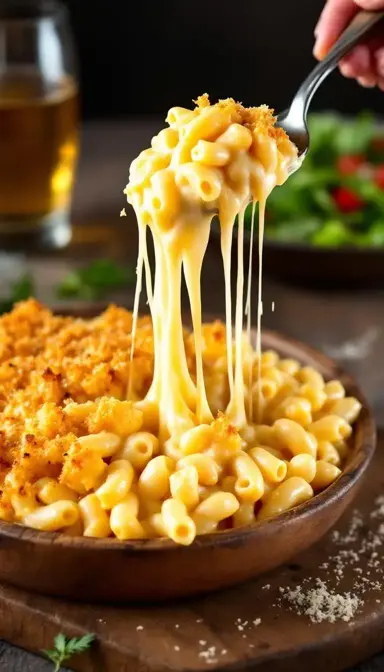
The Ultimate Four-Cheese Macaroni and Cheese: A Love Letter to Comfort Food
Make the ultimate Four-Cheese Macaroni and Cheese with sharp cheddar, Gruyère, Fontina, and Parmesan. Creamy, crispy, and totally irresistible—get the recipe now!
Ingredients
For the Pasta
-
1 lb elbow macaroni (454g)
-
1 tbsp kosher salt
For the Cheese Sauce
-
4 tbsp unsalted butter (57g)
-
1/4 cup all-purpose flour (30g)
-
3 cups whole milk (warmed, 710ml)
-
1 cup heavy cream (237ml)
-
8 oz sharp cheddar (freshly grated, 226g)
-
4 oz Gruyère (freshly grated, 113g)
-
4 oz Fontina (freshly grated, 113g)
-
2 oz Parmesan (freshly grated, 57g)
-
1 tsp dry mustard powder
-
1/4 tsp cayenne pepper
-
Pinch of freshly grated nutmeg
-
1 tsp kosher salt
-
1/2 tsp black pepper
For the Topping
-
2 tbsp unsalted butter (melted, 28g)
-
1 cup panko breadcrumbs
-
2 tbsp reserved Parmesan
Instructions
-
Cook the pasta al dente in salted water, undercooking by 1–2 minutes. Drain and rinse briefly under cool water.01
-
Melt butter in a saucepan, whisk in flour, and cook for 2 minutes to make a roux.02
-
Gradually whisk in warmed milk and cream, simmering until thickened.03
-
Off heat, stir in mustard powder, cayenne, nutmeg, salt, and pepper.04
-
Gradually add cheeses, stirring until fully melted.05
-
Fold pasta into cheese sauce until evenly coated.06
-
Mix melted butter, panko, and Parmesan for the topping.07
-
Transfer to a baking dish, sprinkle with topping, and bake at 375°F (190°C) for 25–30 minutes.08
-
Let rest for 10–15 minutes before serving.09
Not what you're looking for?