
This Tomato and Basil Frittata is a rustic yet elegant dish perfect for brunch or a quick dinner. The sweet cherry tomatoes and fresh basil create a vibrant, comforting flavor. It’s a versatile one-pan wonder that’s easy to master.
Nothing beats a great Tomato and Basil Frittata. Whether you're a fan of Savory Breakfast or want to try something from our Christmas Cookie selection, keep scrolling!


Why You’ll Love This Tomato and Basil Frittata
- Versatile meal: Enjoy for breakfast, lunch, or dinner.
- Fresh flavors: Sweet tomatoes and aromatic basil shine.
- One-pan wonder: Start on stovetop, finish in oven.
- Creative canvas: Perfect for using up leftover ingredients.
Ingredients & Tools
- 8 large eggs
- 200 g cherry tomatoes, halved
- 1 large handful fresh basil leaves, roughly torn
- 100 g grated Parmesan cheese
- 60 ml whole milk or single cream
- 1 small yellow onion, finely diced
- 2 cloves garlic, minced
- 2 tbsp olive oil
- 1/2 tsp salt, or to taste
- 1/4 tsp freshly ground black pepper
- A pinch of red pepper flakes (optional, for a little heat)
Tools: A good 10-inch oven-safe non-stick or well-seasoned cast-iron skillet is essential here.
Notes: The quality of your ingredients really shines through in a simple dish like this. Using the best eggs you can find and truly fresh, ripe cherry tomatoes will make a world of difference in the final flavor and texture.
Nutrition (per serving)
| Calories: | 280 kcal |
| Protein: | 20 g |
| Fat: | 20 g |
| Carbs: | 6 g |
| Fiber: | 1 g |
Serves: 4 | Prep Time: 10 minutes | Cook Time: 20 minutes | Total Time: 30 minutes
Before You Start: Tips & Ingredient Notes
- Why an oven-safe skillet? This is non-negotiable. You’ll start cooking on the stovetop to set the bottom, then transfer the whole pan to the oven to cook the top evenly. A plastic handle will melt, so cast iron or a skillet with a metal handle is a must.
- Can I use other tomatoes? Cherry or grape tomatoes are ideal because they’re less watery than larger varieties. If you only have Roma or beefsteak tomatoes, scoop out the seeds and gel to prevent a soggy frittata.
- Don’t skip the dairy. That splash of milk or cream isn’t just for richness—it introduces fat and liquid that help create a softer, more tender custard-like texture as the eggs cook. Watery frittatas are a sad affair.
- Fresh basil is key. Dried basil just won’t give you that vibrant, aromatic flavor. If you must substitute, fresh parsley or chives would be a better bet, though the character of the dish will change.
How to Make Tomato and Basil Frittata
Step 1: First, get your oven preheated to 190°C (375°F). This is crucial because you want a hot, ready oven the moment your stovetop step is done. While it’s heating, crack your eggs into a large bowl. Add the milk (or cream), about three-quarters of your grated Parmesan, salt, black pepper, and those optional red pepper flakes if you’re using them. Whisk it all together until it’s just combined—you don’t want to incorporate too much air, just break up the yolks and mix everything evenly.
Step 2: Now, place your oven-safe skillet over medium heat and add the olive oil. Once the oil shimmers, add your diced onion. Sauté for about 4-5 minutes, until it becomes soft and translucent. You’ll notice a sweet aroma starting to develop. Then, add the minced garlic and cook for just another minute—be careful not to let the garlic burn, as it will turn bitter.
Step 3: It’s tomato time! Scatter your halved cherry tomatoes, cut-side down, into the hot skillet. Let them cook undisturbed for about 2 minutes. This quick sear will caramelize their natural sugars a little and help them hold their shape, preventing them from making the eggs too watery. You should hear a gentle sizzle.
Step 4: Give your egg mixture one last quick whisk and then pour it evenly over the tomatoes and onions in the skillet. The eggs will start to set immediately around the edges. Toss most of your torn basil leaves over the top, reserving a few for garnish. Let the frittata cook on the stovetop, untouched, for about 3-4 minutes. You’ll see the edges becoming firm and pulling away slightly from the pan.
Step 5: Sprinkle the remaining Parmesan cheese over the top. This will create a beautifully golden, cheesy crust. Carefully transfer the entire skillet to your preheated oven. Bake for 12-15 minutes. The frittata is done when the top is puffed and golden, and the center is just set—a slight jiggle in the very middle is okay, as it will continue to cook from residual heat.
Step 6: This is the hardest part—be patient! Let the frittata rest in the skillet for at least 5 minutes after pulling it from the oven. This allows the proteins in the eggs to relax and firm up, making it much easier to slice. Use a thin spatula to loosen the edges, then slice into wedges. Garnish with the remaining fresh basil before serving.
Storage & Freshness Guide
- Fridge: Cool completely, cover, and refrigerate for up to 2 days.
- Freezer: Wrap slices tightly and freeze for up to 1 month.
- Reviving: Reheat gently in oven or microwave until warmed through.
Serving Suggestions
Complementary Dishes
- A simple arugula salad — The peppery bite of arugula dressed with just lemon juice and olive oil provides a crisp, refreshing contrast to the rich, creamy frittata.
- Buttery, toasted sourdough — There’s nothing better than using a crusty piece of bread to scoop up every last bit of egg and tomato from your plate. It’s a textural dream.
- Roasted new potatoes — For a more substantial brunch spread, some crispy, herby roasted potatoes on the side make the meal feel complete and wonderfully hearty.
Drinks
- A dry Prosecco or sparkling wine — The bubbles and acidity cut through the richness of the eggs and cheese beautifully, making brunch feel like a true celebration.
- Freshly squeezed orange juice — A classic for a reason. Its bright, sweet acidity is a perfect palate cleanser between bites of the savory frittata.
- Iced coffee with a dash of cinnamon — The warm spice of cinnamon complements the sweet tomatoes and adds a lovely, aromatic depth to your coffee.
Something Sweet
- Fresh berry compote with yogurt — A light, slightly tart berry compote over thick Greek yogurt provides a sweet finish that doesn’t feel too heavy after the egg-based main.
- Lemon poppy seed muffins — The zesty, bright flavor of lemon is a fantastic way to round off the meal, leaving your taste buds feeling refreshed.
- Dark chocolate almond biscotti — They’re perfect for dipping into your coffee and provide a satisfying, crunchy-sweet endnote to your brunch.
Top Mistakes to Avoid
- Over-whisking the eggs. Whisk just until the yolks and whites are blended. Over-whisking incorporates too much air, which can lead to a tough, spongy texture as the air bubbles expand and contract during cooking.
- Using a pan that’s not oven-safe. I’ve made this mistake before, and let me tell you, the smell of melting plastic handle is not an aroma you want in your kitchen. Always double-check your skillet.
- Overcooking it in the oven. The frittata continues to cook after it comes out due to carryover heat. Pull it out when the center still has a slight jiggle; it will firm up perfectly during the rest time. An overcooked frittata is dry and rubbery.
- Adding the basil too early. If you add all the basil at the beginning, it will wilt and turn black in the heat. Saving some for a fresh garnish at the end ensures you get that beautiful color and burst of flavor.
Expert Tips
- Tip: Let your eggs come to room temperature before you start. Cold eggs straight from the fridge don’t blend as smoothly with the dairy and can lead to uneven cooking. Just take them out about 20-30 minutes beforehand.
- Tip: For an extra-fluffy frittata, separate your eggs. Whisk the yolks with the dairy and cheese, then beat the whites to soft peaks in a separate bowl and fold them in at the very end. It’s a bit more work, but the result is incredibly light and airy.
- Tip: Don’t stir the frittata once you pour the eggs into the pan! You want to let the bottom set to create a stable base. Stirring will break it up and give you a scrambled egg texture instead of a cohesive, sliceable pie.
- Tip: If you’re unsure about doneness, use the knife test. Insert a thin knife or a toothpick into the center. If it comes out clean, with no wet egg mixture clinging to it, your frittata is ready to come out of the oven.
FAQs
Can I make this frittata ahead of time?
Absolutely! This is one of its best features. You can cook it completely, let it cool to room temperature, and then store it covered in the fridge for up to 2 days. It’s fantastic cold, or you can reheat slices gently in a microwave or a warm oven. It also travels well, making it perfect for picnics or potlucks.
What other cheeses can I use?
Parmesan is great for its salty, nutty flavor, but feel free to experiment. Gruyère will give you a more sophisticated, melty richness, a sharp cheddar provides a bold punch, and a soft goat cheese will offer a lovely tangy creaminess that pairs wonderfully with the tomatoes. A little goes a long way with stronger cheeses.
My frittata stuck to the pan. What happened?
This usually boils down to two things: the pan wasn’t properly preheated with enough oil, or it’s not truly non-stick. Make sure your oil is shimmering before adding the onions. For cast iron, ensure it’s well-seasoned. Running a thin spatula around the edges right after it comes out of the oven also helps release any tricky spots.
Can I add other vegetables?
Of course! Sautéed mushrooms, spinach (make sure to wilt it and squeeze out excess water first), bell peppers, or even some cooked and crumbled sausage would be delicious additions. Just remember that wet vegetables can make the frittata soggy, so always pre-cook them to drive off moisture.
Why did my frittata deflate?
A little deflation is totally normal—it’s just the hot air inside escaping as it cools. However, a major collapse can happen if it was severely over-whisked (too much air) or undercooked (the structure wasn’t set). Don’t worry, even a slightly deflated frittata will still taste incredible!


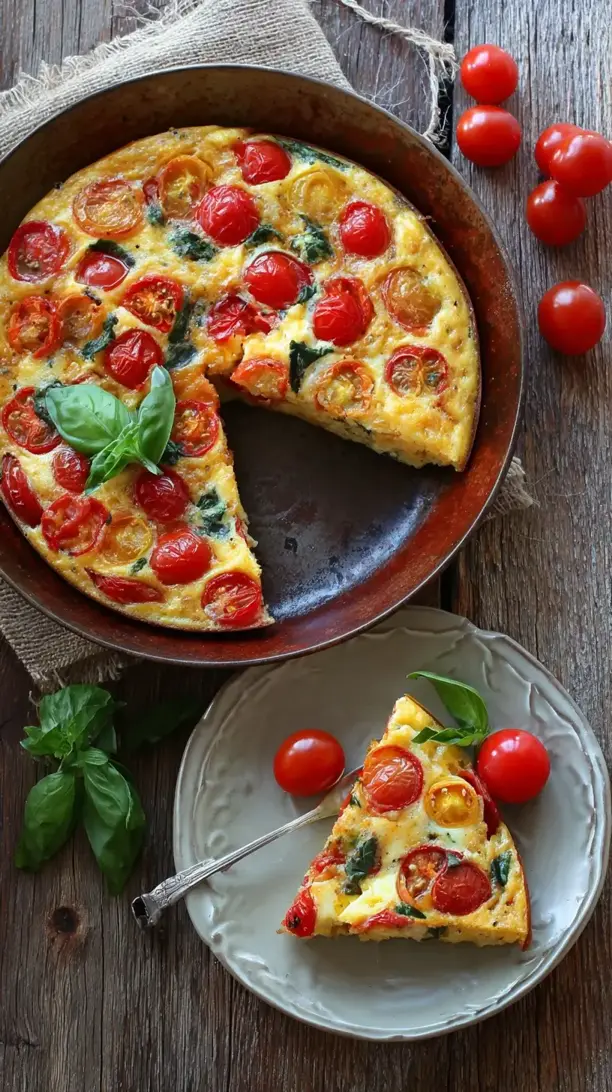
Tomato And Basil Frittata
Make this easy Tomato and Basil Frittata for a quick brunch or dinner. Ready in 30 minutes with fresh, vibrant flavors. Get the simple recipe now!
Ingredients
For the Ingredients
-
8 large eggs
-
200 g cherry tomatoes (halved)
-
1 large handful fresh basil leaves (roughly torn)
-
100 g grated Parmesan cheese
-
60 ml whole milk or single cream
-
1 small yellow onion (finely diced)
-
2 cloves garlic (minced)
-
2 tbsp olive oil
-
1/2 tsp salt (or to taste)
-
1/4 tsp freshly ground black pepper
-
A pinch red pepper flakes (optional, for a little heat)
Instructions
-
First, get your oven preheated to 190°C (375°F). This is crucial because you want a hot, ready oven the moment your stovetop step is done. While it’s heating, crack your eggs into a large bowl. Add the milk (or cream), about three-quarters of your grated Parmesan, salt, black pepper, and those optional red pepper flakes if you're using them. Whisk it all together until it's just combined—you don't want to incorporate too much air, just break up the yolks and mix everything evenly.01
-
Now, place your oven-safe skillet over medium heat and add the olive oil. Once the oil shimmers, add your diced onion. Sauté for about 4-5 minutes, until it becomes soft and translucent. You’ll notice a sweet aroma starting to develop. Then, add the minced garlic and cook for just another minute—be careful not to let the garlic burn, as it will turn bitter.02
-
It’s tomato time! Scatter your halved cherry tomatoes, cut-side down, into the hot skillet. Let them cook undisturbed for about 2 minutes. This quick sear will caramelize their natural sugars a little and help them hold their shape, preventing them from making the eggs too watery. You should hear a gentle sizzle.03
-
Give your egg mixture one last quick whisk and then pour it evenly over the tomatoes and onions in the skillet. The eggs will start to set immediately around the edges. Toss most of your torn basil leaves over the top, reserving a few for garnish. Let the frittata cook on the stovetop, untouched, for about 3-4 minutes. You’ll see the edges becoming firm and pulling away slightly from the pan.04
-
Sprinkle the remaining Parmesan cheese over the top. This will create a beautifully golden, cheesy crust. Carefully transfer the entire skillet to your preheated oven. Bake for 12-15 minutes. The frittata is done when the top is puffed and golden, and the center is just set—a slight jiggle in the very middle is okay, as it will continue to cook from residual heat.05
-
This is the hardest part—be patient! Let the frittata rest in the skillet for at least 5 minutes after pulling it from the oven. This allows the proteins in the eggs to relax and firm up, making it much easier to slice. Use a thin spatula to loosen the edges, then slice into wedges. Garnish with the remaining fresh basil before serving.06
Not what you're looking for?


