This Tomato Basil Chicken Pasta is a comforting, one-pan meal that comes together quickly. It features juicy chicken, a vibrant tomato cream sauce, and fresh basil for a satisfying Italian-inspired dinner. You’ll love how the flavors meld together for a simple yet spectacular dish.
Love Tomato Basil Chicken Pasta? So do we! If you're into Dinner Ideas or curious about Crockpot Recipes, you'll find plenty of inspiration below.



Why You’ll Love This Tomato Basil Chicken Pasta
One-pan wonder: Protein, veggies, and carbs cook together for easy cleanup.
Fresh & vibrant: Bright tomatoes and basil create a light yet satisfying sauce.
Flexible ingredients: Easily adapt with what you have on hand.
Quick to table: Restaurant-quality results in well under an hour.
Ingredients & Tools
- 450 g boneless, skinless chicken breasts, cut into 1-inch pieces
- 1 tbsp olive oil
- 1 medium yellow onion, finely diced
- 4 cloves garlic, minced
- 500 g cherry or grape tomatoes, halved
- 120 ml dry white wine (like Sauvignon Blanc) or chicken broth
- 240 ml heavy cream (or half-and-half for a lighter version)
- 1 large handful fresh basil leaves, chopped, plus more for garnish
- 100 g freshly grated Parmesan cheese
- 450 g pasta of choice (penne, fusilli, or fettuccine work wonderfully)
- To taste salt and freshly ground black pepper
Tools: A large skillet or sauté pan, a large pot for boiling pasta, tongs, a sharp knife, and a grater.
Notes: Using fresh basil and a good dry white wine makes a noticeable difference in flavor.
Nutrition (per serving)
| Calories: | 580 kcal |
| Protein: | 35 g |
| Fat: | 22 g |
| Carbs: | 55 g |
| Fiber: | 4 g |
Serves: 4 | Prep Time: 15 minutes | Cook Time: 25 minutes | Total Time: 40 minutes
Before You Start: Tips & Ingredient Notes
- Get your mise en place ready. This recipe moves quickly once you start cooking, so having your onions diced, garlic minced, and chicken cubed before you turn on the heat will make the process smooth and enjoyable.
- Don’t skip salting your pasta water. It should taste like the sea! This is your one and only chance to season the pasta itself from the inside out, and it makes a world of difference in the final dish.
- Use a wine you’d actually drink. If you wouldn’t enjoy a glass of it, don’t cook with it. The flavor concentrates in the sauce, so a decent-quality dry white wine is your best bet.
- Freshly grate your Parmesan. The pre-shredded stuff often contains anti-caking agents that can make your sauce a bit grainy. Taking a minute to grate a block of Parmigiano-Reggiano will give you a much smoother, more flavorful result.
How to Make Tomato Basil Chicken Pasta
Step 1: Start by bringing a large pot of generously salted water to a rolling boil. While that’s heating up, you can prep your chicken. Pat the chicken breasts dry with a paper towel—this helps them get a nice sear—and then cut them into uniform, one-inch pieces. Season them liberally with salt and pepper on all sides. You’ll notice that drying the chicken first prevents it from steaming and gives you those lovely golden-brown bits in the pan.
Step 2: Heat the olive oil in your large skillet over medium-high heat. Once the oil is shimmering, carefully add the chicken pieces in a single layer, making sure not to overcrowd the pan. You might need to do this in two batches. Cook for about 4-5 minutes per side, until the chicken is cooked through and has a beautiful golden-brown crust. Remove the chicken from the skillet and set it aside on a plate. It will finish cooking later, so don’t worry if it’s not 100% done in the middle.
Step 3: Reduce the heat to medium and add the diced onion to the same skillet. You should still have some delicious chicken drippings and oil in there. Sauté the onion for about 4-5 minutes, until it becomes soft and translucent. Then, add the minced garlic and cook for just another minute until it becomes incredibly fragrant—be careful not to let it burn, or it will turn bitter.
Step 4: Now, add all of those halved cherry tomatoes to the skillet. Give everything a good stir and cook for 4-5 minutes. You’ll notice the tomatoes will start to soften, wrinkle, and release their juices, creating the base of your sauce. Use your spoon to gently press down on some of them to help them along. This is where the magic starts to happen!
Step 5: Pour in the white wine (or chicken broth) to deglaze the pan. Scrape up all those browned bits from the bottom of the skillet with a wooden spoon—that’s pure flavor! Let the liquid simmer and reduce by about half, which should take 2-3 minutes. This step cooks off the alcohol and leaves behind a wonderful depth of flavor.
Step 6: Lower the heat to medium-low and stir in the heavy cream. Let the sauce simmer gently for 3-4 minutes, allowing it to thicken slightly. You’ll see it start to coat the back of a spoon. At this point, stir in about half of your grated Parmesan cheese until it melts smoothly into the sauce, making it rich and velvety.
Step 7: By now, your pasta water should be boiling. Cook your pasta according to the package directions until it is al dente. Just before draining, reserve about a cup of the starchy pasta water—this is liquid gold for adjusting your sauce later!
Step 8: Return the cooked chicken (and any accumulated juices) to the skillet with the sauce. Add the drained pasta and most of the chopped fresh basil. Toss everything together until the pasta and chicken are beautifully coated in the creamy tomato sauce. If the sauce seems a bit too thick, add a splash of the reserved pasta water, a little at a time, until it reaches your desired consistency.
Step 9: Taste and adjust the seasoning with more salt and pepper if needed. Serve the pasta immediately, garnished with the remaining fresh basil and a generous sprinkle of the leftover Parmesan cheese. The final flourish of basil right at the end keeps its flavor bright and aromatic.
Storage & Freshness Guide
- Fridge: Store leftovers in an airtight container for 3–4 days.
- Freezer: Freeze without pasta for up to 3 months; thaw in fridge before reheating.
- Reviving: Reheat gently with a splash of water or broth to loosen the sauce.
Serving Suggestions
Complementary Dishes
- A simple arugula salad with a lemon vinaigrette — The peppery arugula and sharp lemon cut through the richness of the pasta perfectly, providing a fresh, crisp contrast.
- Garlic bread or focaccia — It’s practically mandatory for sopping up every last bit of that delicious creamy tomato sauce left on your plate.
- Roasted asparagus or green beans — A simple side of roasted vegetables adds a lovely textural element and makes the meal feel even more complete.
Drinks
- A crisp Pinot Grigio or Sauvignon Blanc — The bright, citrusy notes in these white wines mirror the acidity of the tomatoes and cleanse the palate between bites.
- A light-bodied Chianti — If you prefer red, a young Chianti has enough acidity to stand up to the tomatoes without overpowering the delicate cream and basil.
- Sparkling water with a twist of lemon — A non-alcoholic option that provides a refreshing, bubbly contrast to the creamy, savory dish.
Something Sweet
- Lemon sorbet — Its sharp, clean citrus flavor is the perfect palate-cleanser after a rich and savory meal, leaving you feeling refreshed.
- Panna Cotta with a berry coulis — A silky, cool panna cotta continues the creamy theme but in a sweet, elegant way that feels like a real treat.
- Dark chocolate affogato — A scoop of vanilla gelato with a shot of hot espresso poured over it is a simple, sophisticated, and incredibly satisfying end to the meal.
Top Mistakes to Avoid
- Overcooking the chicken. Since the chicken goes back into the sauce at the end, it will continue to cook a little more. If you cook it all the way through during the initial sear, it can become tough and dry by the time you serve it.
- Adding the garlic at the same time as the onion. Garlic burns much faster than onions and will turn bitter. Always add it later, just for that final minute of fragrant cooking.
- Skipping the step of reserving pasta water. That starchy, salty water is the secret weapon for bringing your sauce together. It helps the sauce cling to the pasta and allows you to thin it out without making it watery.
- Using dried basil instead of fresh. I’ve messed this up before too, thinking it wouldn’t matter. But dried basil lacks the vibrant, peppery punch that defines this dish. Fresh is non-negotiable here.
Expert Tips
- Tip: Let the chicken come to room temperature before cooking. Taking the chicken out of the fridge 15-20 minutes before you start cooking helps it cook more evenly, preventing a cold center and an overcooked exterior.
- Tip: Undercook your pasta by one minute. Since you’ll be finishing the pasta in the sauce, it will continue to absorb liquid and cook. Pulling it from the boiling water a minute early ensures it stays perfectly al dente.
- Tip: Use kitchen shears to chiffonade your basil. Instead of chopping, stack the basil leaves, roll them tightly, and snip them with scissors. It’s faster and creates beautiful, thin ribbons that look professional.
- Tip: Wilt in some fresh spinach. For an extra veggie boost, stir in a couple of large handfuls of fresh spinach right at the end, just until it wilts into the warm sauce. It adds color and nutrients without changing the flavor profile.
FAQs
Can I make this Tomato Basil Chicken Pasta ahead of time?
You can absolutely prep the components ahead to save time! Cook the chicken and make the sauce, then store them separately in the fridge for up to two days. When you’re ready to eat, simply cook fresh pasta and reheat the sauce and chicken together in a skillet. The pasta itself is best cooked fresh, as it can become mushy if stored in the sauce. If you do have leftovers, they will keep for 3-4 days in the fridge, though the pasta will soften—still delicious, just a different texture.
What can I use instead of heavy cream?
If you’re looking for a lighter option, half-and-half is a great substitute, though the sauce will be a bit less rich. For a dairy-free version, full-fat canned coconut milk works surprisingly well and adds a subtle sweetness. You could also create a lighter sauce by pureeing some of the cooked tomatoes with a splash of pasta water to create a creamy texture without any cream at all. The trick is to find a substitute that will still emulsify and coat the pasta nicely.
My sauce is too thin. How can I thicken it?
Don’t worry, this is an easy fix! First, let the sauce simmer for a few more minutes uncovered—the excess liquid will evaporate. If it’s still too thin, create a quick slurry by mixing a teaspoon of cornstarch with a tablespoon of cold water, then stir it into the simmering sauce. It should thicken up within a minute. Another pro tip is to add a bit more grated Parmesan, as the cheese will naturally help thicken the sauce as it melts.
Can I use a different type of pasta?
Of course! This sauce works with almost any shape. Short pasta like penne, rigatoni, or fusilli are fantastic because their nooks and crannies trap the sauce and little bits of chicken. Long pasta like fettuccine or linguine are also great for a more elegant presentation. I’d avoid very delicate pasta like angel hair, as it can be overwhelmed by the hearty chunks of chicken and tomatoes. The key is to match the pasta to the texture of the sauce.
Why did my sauce break or look curdled?
This usually happens if the heat is too high when you add the cream, causing it to separate. To prevent this, always lower the heat to medium-low before stirring in the cream. If it does happen, all is not lost! Remove the pan from the heat immediately and vigorously whisk in a tablespoon of cold water or pasta water. This can often bring the sauce back together. It’s a little culinary rescue mission that usually works like a charm.


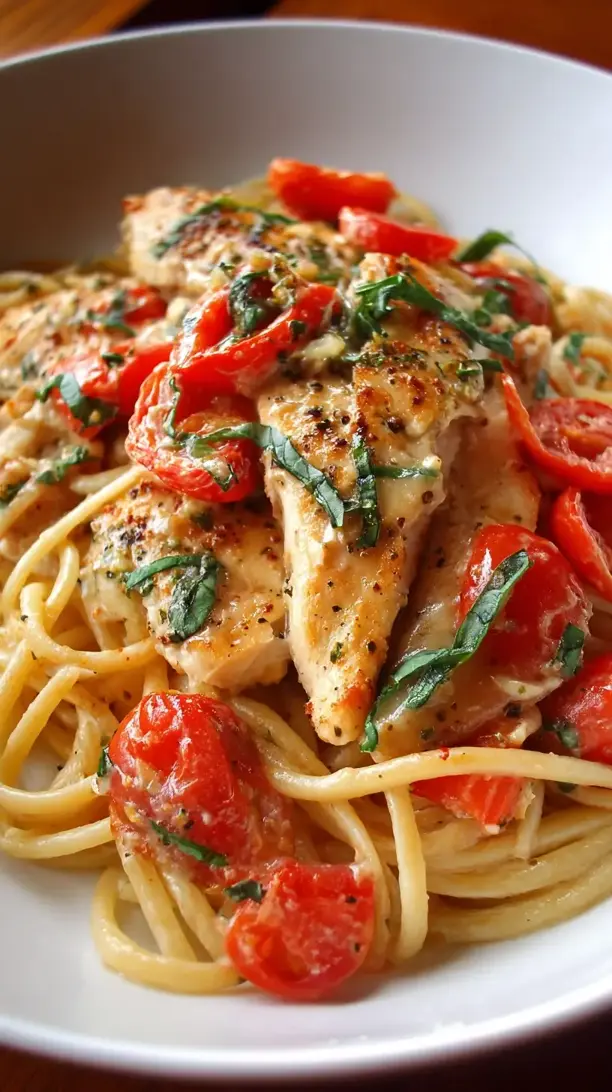
Tomato Basil Chicken Pasta
Make this easy one-pan Tomato Basil Chicken Pasta with a creamy sauce and fresh basil. Ready in 40 minutes for a perfect weeknight dinner. Get the recipe now!
Ingredients
For the Ingredients
-
450 g boneless, skinless chicken breasts (cut into 1-inch pieces)
-
1 tbsp olive oil
-
1 medium yellow onion (finely diced)
-
4 cloves garlic (minced)
-
500 g cherry or grape tomatoes (halved)
-
120 ml dry white wine or chicken broth (like Sauvignon Blanc)
-
240 ml heavy cream (or half-and-half for a lighter version)
-
1 large handful fresh basil leaves (chopped, plus more for garnish)
-
100 g freshly grated Parmesan cheese
-
450 g pasta of choice (penne, fusilli, or fettuccine work wonderfully)
-
salt and freshly ground black pepper (to taste)
Instructions
-
Start by bringing a large pot of generously salted water to a rolling boil. While that’s heating up, you can prep your chicken. Pat the chicken breasts dry with a paper towel—this helps them get a nice sear—and then cut them into uniform, one-inch pieces. Season them liberally with salt and pepper on all sides. You’ll notice that drying the chicken first prevents it from steaming and gives you those lovely golden-brown bits in the pan.01
-
Heat the olive oil in your large skillet over medium-high heat. Once the oil is shimmering, carefully add the chicken pieces in a single layer, making sure not to overcrowd the pan. You might need to do this in two batches. Cook for about 4-5 minutes per side, until the chicken is cooked through and has a beautiful golden-brown crust. Remove the chicken from the skillet and set it aside on a plate. It will finish cooking later, so don’t worry if it’s not 100% done in the middle.02
-
Reduce the heat to medium and add the diced onion to the same skillet. You should still have some delicious chicken drippings and oil in there. Sauté the onion for about 4-5 minutes, until it becomes soft and translucent. Then, add the minced garlic and cook for just another minute until it becomes incredibly fragrant—be careful not to let it burn, or it will turn bitter.03
-
Now, add all of those halved cherry tomatoes to the skillet. Give everything a good stir and cook for 4-5 minutes. You’ll notice the tomatoes will start to soften, wrinkle, and release their juices, creating the base of your sauce. Use your spoon to gently press down on some of them to help them along. This is where the magic starts to happen!04
-
Pour in the white wine (or chicken broth) to deglaze the pan. Scrape up all those browned bits from the bottom of the skillet with a wooden spoon—that’s pure flavor! Let the liquid simmer and reduce by about half, which should take 2-3 minutes. This step cooks off the alcohol and leaves behind a wonderful depth of flavor.05
-
Lower the heat to medium-low and stir in the heavy cream. Let the sauce simmer gently for 3-4 minutes, allowing it to thicken slightly. You’ll see it start to coat the back of a spoon. At this point, stir in about half of your grated Parmesan cheese until it melts smoothly into the sauce, making it rich and velvety.06
-
By now, your pasta water should be boiling. Cook your pasta according to the package directions until it is al dente. Just before draining, reserve about a cup of the starchy pasta water—this is liquid gold for adjusting your sauce later!07
-
Return the cooked chicken (and any accumulated juices) to the skillet with the sauce. Add the drained pasta and most of the chopped fresh basil. Toss everything together until the pasta and chicken are beautifully coated in the creamy tomato sauce. If the sauce seems a bit too thick, add a splash of the reserved pasta water, a little at a time, until it reaches your desired consistency.08
-
Taste and adjust the seasoning with more salt and pepper if needed. Serve the pasta immediately, garnished with the remaining fresh basil and a generous sprinkle of the leftover Parmesan cheese. The final flourish of basil right at the end keeps its flavor bright and aromatic.09
Not what you're looking for?