This Tomato Basil Chicken Skillet is a comforting one-pan meal that comes together quickly. Juicy chicken simmers in a vibrant, garlicky tomato sauce bursting with fresh basil. It’s a low-carb dinner that feels like a treat.
Love Tomato Basil Chicken Skillet? So do we! If you're into Dinner Ideas or curious about Breakfast & Brunch, you'll find plenty of inspiration below.


Why You’ll Love This Tomato Basil Chicken Skillet
- One-pan wonder: Maximum flavor with minimal cleanup.
- Bright & herbaceous: Sweet tomatoes and fresh basil create a vibrant sauce.
- Incredibly versatile: Serve as-is or over cauliflower rice or zoodles.
- Fancy without effort: Rustic, elegant look perfect for any occasion.
Ingredients & Tools
- 4 boneless, skinless chicken breasts (about 1.5 lbs or 680 g)
- 2 tbsp olive oil, divided
- 1 medium yellow onion, finely diced
- 4 cloves garlic, minced
- 1 pint cherry or grape tomatoes, halved
- 1/2 cup chicken broth
- 1/4 cup heavy cream
- 1/2 cup freshly grated Parmesan cheese
- 1 cup fresh basil leaves, loosely packed, plus more for garnish
- 1 tsp dried oregano
- To taste salt and freshly ground black pepper
Tools: A large (12-inch) oven-safe skillet is essential here.
Notes: The quality of your ingredients really shines through in a simple recipe like this. Using fresh, plump cherry tomatoes and real, fragrant basil—not the dried kind—makes all the difference in the world. That hit of fresh herb at the end is what lifts the entire dish.
Nutrition (per serving)
| Calories: | 385 kcal |
| Protein: | 42 g |
| Fat: | 20 g |
| Carbs: | 8 g |
| Fiber: | 2 g |
Serves: 4 | Prep Time: 15 minutes | Cook Time: 25 minutes | Total Time: 40 minutes
Before You Start: Tips & Ingredient Notes
- Get your chicken to room temp. Taking the chicken out of the fridge 15-20 minutes before cooking helps it cook more evenly. A cold chicken breast thrown into a hot pan will seize up and can cook unevenly, leaving you with a dry exterior and an undercooked center.
- Don’t skimp on searing. That beautiful golden-brown crust on the chicken isn’t just for looks. It’s called the Maillard reaction, and it’s where a ton of deep, savory flavor develops. Let the chicken sear undisturbed for a few minutes to get it right.
- Fresh basil is non-negotiable. I know it’s tempting to use dried herbs, but for this recipe, the bright, almost peppery flavor of fresh basil is the star. Tear it by hand at the very end to preserve its delicate aroma and prevent it from turning black.
- Use an oven-safe skillet. While we finish this recipe on the stovetop in the instructions, having an oven-safe skillet gives you the flexibility to pop the whole thing under the broiler for a minute to melt and brown the cheese if you’d like. It’s a great backup tool.
How to Make Tomato Basil Chicken Skillet
Step 1: First, prep your chicken. Pat the chicken breasts completely dry with paper towels—this is the secret to a good sear. Then, season them generously on both sides with salt and pepper. You’ll notice that seasoning at this stage, rather than later, makes the flavor penetrate the meat itself.
Step 2: Heat one tablespoon of the olive oil in your large skillet over medium-high heat. Once the oil is shimmering hot, carefully add the chicken breasts. You should hear a satisfying sizzle. Let them cook without moving them for about 6-7 minutes, until a beautiful golden-brown crust forms on the bottom.
Step 3: Flip the chicken over and cook for another 5-6 minutes on the other side. The goal here is to cook them about 80% of the way through. They will finish cooking in the sauce later. Remove the chicken from the skillet and set it aside on a plate. It will look underdone, and that’s perfectly fine.
Step 4: Reduce the heat to medium and add the remaining tablespoon of olive oil to the same skillet. Toss in the diced onion and cook for about 4-5 minutes, stirring occasionally, until it becomes soft and translucent. You’re building layers of flavor in that same pan, using the fond—those little browned bits left from the chicken.
Step 5: Now, add the minced garlic and dried oregano. Stir constantly for just about 30 seconds to one minute. You’ll smell the garlic becoming fragrant—be careful not to let it burn, as burnt garlic will turn the entire sauce bitter. This step happens quickly!
Step 6: It’s tomato time! Add the halved cherry tomatoes to the skillet. Cook them for 3-4 minutes, stirring occasionally. You’ll see them start to soften, wrinkle a bit, and release their sweet juices into the pan. This natural juice is the base of your sauce, so let them do their thing.
Step 7: Pour in the chicken broth, using your spoon to scrape up any of those delicious browned bits stuck to the bottom of the pan. Let the liquid simmer for about 2 minutes, allowing it to reduce slightly. This concentrates the flavor and creates a more robust sauce base.
Step 8: Stir in the heavy cream and the grated Parmesan cheese. Keep stirring until the cheese has melted and the sauce becomes smooth and creamy. The sauce should look cohesive and glossy at this point. Now, taste it and adjust the seasoning with more salt and pepper if needed.
Step 9: Return the partially cooked chicken breasts and any accumulated juices from the plate back into the skillet, nestling them into the sauce. Let everything simmer together over medium-low heat for another 5-7 minutes, or until the chicken is cooked through and reaches an internal temperature of 165°F (74°C).
Step 10: Turn off the heat. This is the most important part for the basil! Take your fresh basil leaves, tear them with your hands, and stir them gently into the sauce. Tearing, rather than chopping, helps to prevent bruising and releases more of its essential oils. The residual heat will wilt the basil perfectly, preserving its vibrant color and flavor.
Step 11: Let the skillet sit for a couple of minutes off the heat. This allows the sauce to thicken up just a little bit more as it cools slightly. Serve immediately, garnished with an extra sprinkle of Parmesan and a few whole basil leaves for a beautiful presentation.
Storage & Freshness Guide
- Fridge: Store in an airtight container for up to 3 days.
- Freezer: Freeze for up to 2 months; thaw overnight in fridge.
- Reviving: Reheat gently on stovetop with a splash of broth.
Serving Suggestions
Complementary Dishes
- Garlic Sautéed Spinach — The earthy flavor of spinach cooked with a little garlic is a perfect, simple green side that doesn’t compete with the main dish.
- Cauliflower Mash — A creamy, buttery cauliflower puree is fantastic for soaking up every last drop of that delicious tomato basil sauce.
- Zucchini Noodles (Zoodles) — A light, fresh option that adds a nice texture and makes the meal feel even more garden-fresh.
Drinks
- A Crisp Pinot Grigio — The bright acidity and citrus notes in this white wine cut through the richness of the cream and complement the tomatoes beautifully.
- Sparkling Water with Lemon — For a non-alcoholic option, the bubbles and citrus are incredibly refreshing and help cleanse the palate between bites.
- Iced Herbal Tea — A chilled peppermint or lemon verbena tea offers a cool, soothing contrast to the warm, savory skillet.
Something Sweet
- Mixed Berry Parfait — A few fresh berries layered with a dollop of whipped cream provides a light, fruity, and low-carb finish that feels indulgent.
- Dark Chocolate Square — Just a single square of high-quality, high-cocoa dark chocolate is the perfect bitter-sweet note to end the meal on.
- Lemon Sorbet — Its sharp, clean citrus flavor is a fantastic palate-cleanser that feels light and refreshing after a savory dinner.
Top Mistakes to Avoid
- Overcooking the chicken. Since the chicken finishes cooking in the sauce, it’s crucial to not fully cook it during the initial sear. Taking it out when it’s about 80% done ensures it stays juicy and tender and doesn’t become tough and dry.
- Adding the basil too early. Fresh basil is very delicate. If you add it while the sauce is at a rolling boil, it will wilt into a dark, bitter mess. Stirring it in at the very end, off the heat, keeps it bright green and flavorful.
- Crowding the pan when searing. If you put all four chicken breasts in a skillet that’s too small, they’ll steam instead of sear. You need space for the moisture to evaporate so a crust can form. If necessary, sear them in two batches.
- Using pre-shredded Parmesan cheese. The bags of pre-shredded cheese contain anti-caking agents like potato starch or cellulose, which can make your sauce grainy and prevent it from melting smoothly. A little goes a long way—just grate a block of Parmigiano-Reggiano yourself.
Expert Tips
- Tip: Butterfly your chicken breasts. If your chicken breasts are very thick, slice them horizontally to create two thinner cutlets. This ensures they cook quickly and evenly throughout, and they’ll absorb more of the sauce’s flavor.
- Tip: Let the sauce reduce. After you add the chicken back in, if your sauce looks a little too thin, just let it simmer for an extra few minutes uncovered. You’ll notice it thickens to a lovely, coating consistency as the water evaporates.
- Tip: Bloom your dried oregano. Adding the dried oregano with the garlic for that quick 30-second fry in the oil “blooms” the spice, waking up its essential oils and giving you a much deeper, more aromatic flavor than just stirring it into the liquid.
- Tip: Make it ahead. This dish reheats wonderfully. You can make the entire skillet, let it cool completely, and store it in the fridge for up to 3 days. The flavors actually meld and improve. Just reheat gently on the stovetop over low heat.
FAQs
Can I use chicken thighs instead of breasts?
Absolutely, you can! Bone-in, skin-on thighs would be fantastic and add even more flavor. Just be aware that they will take a bit longer to cook through during the initial sear. You might need to add a few minutes per side. The rich, dark meat pairs beautifully with the tomato and basil. If using boneless, skinless thighs, the cooking time will be similar to breasts, maybe just a minute or two longer.
My sauce is too thin. How can I thicken it?
The most common reason for a thin sauce is not letting it reduce enough. The good news is, it’s an easy fix! Simply let the skillet simmer over medium heat for a few more minutes after the chicken is cooked, stirring occasionally. The excess water will evaporate, leaving you with a thicker, richer sauce. You can also create a quick slurry by mixing a teaspoon of xanthan gum with a tablespoon of cold water and stirring it in, but letting it reduce is the most natural method.
Can I make this dairy-free?
You can, with a couple of simple swaps. Omit the heavy cream and Parmesan cheese. To add creaminess, stir in about a 1/4 cup of full-fat coconut milk or a dollop of dairy-free cream cheese at the end. For a cheesy flavor, a sprinkle of nutritional yeast works surprisingly well. The sauce will be different but still deliciously rich and satisfying.
What’s the best way to store and reheat leftovers?
Store any leftovers in an airtight container in the refrigerator for up to 3 days. To reheat, I strongly recommend using the stovetop over low heat, adding a tiny splash of chicken broth or water to loosen the sauce back up. The microwave can work in a pinch, but it tends to make the chicken a bit rubbery and can separate the sauce. Gentle, slow reheating is key.
Can I use canned diced tomatoes instead of fresh cherry tomatoes?
You can, but the result will be different. A 14.5 oz can of fire-roasted diced tomatoes would add a deeper, smokier flavor. The sauce will also be more liquidy, so you’ll likely need to let it simmer and reduce for a few extra minutes to thicken up. The bright, fresh sweetness of cherry tomatoes is ideal, but canned is a perfectly good pantry-friendly alternative.

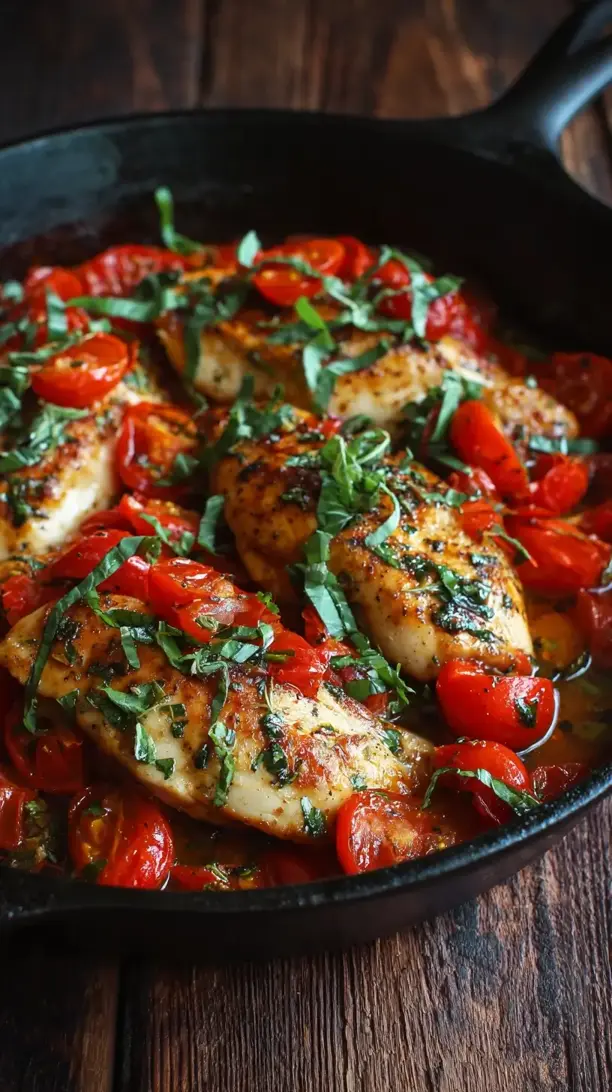
Tomato Basil Chicken Skillet
Make this easy Tomato Basil Chicken Skillet for a quick, one-pan dinner. Juicy chicken in a creamy tomato basil sauce is ready in 40 minutes. Get the recipe now!
Ingredients
For the Ingredients
-
4 boneless, skinless chicken breasts (about 1.5 lbs or 680 g)
-
2 tbsp olive oil (divided)
-
1 medium yellow onion (finely diced)
-
4 cloves garlic (minced)
-
1 pint cherry or grape tomatoes (halved)
-
1/2 cup chicken broth
-
1/4 cup heavy cream
-
1/2 cup freshly grated Parmesan cheese
-
1 cup fresh basil leaves (loosely packed, plus more for garnish)
-
1 tsp dried oregano
-
salt and freshly ground black pepper (to taste)
Instructions
-
First, prep your chicken. Pat the chicken breasts completely dry with paper towels—this is the secret to a good sear. Then, season them generously on both sides with salt and pepper. You’ll notice that seasoning at this stage, rather than later, makes the flavor penetrate the meat itself.01
-
Heat one tablespoon of the olive oil in your large skillet over medium-high heat. Once the oil is shimmering hot, carefully add the chicken breasts. You should hear a satisfying sizzle. Let them cook without moving them for about 6-7 minutes, until a beautiful golden-brown crust forms on the bottom.02
-
Flip the chicken over and cook for another 5-6 minutes on the other side. The goal here is to cook them about 80% of the way through. They will finish cooking in the sauce later. Remove the chicken from the skillet and set it aside on a plate. It will look underdone, and that’s perfectly fine.03
-
Reduce the heat to medium and add the remaining tablespoon of olive oil to the same skillet. Toss in the diced onion and cook for about 4-5 minutes, stirring occasionally, until it becomes soft and translucent. You’re building layers of flavor in that same pan, using the fond—those little browned bits left from the chicken.04
-
Now, add the minced garlic and dried oregano. Stir constantly for just about 30 seconds to one minute. You’ll smell the garlic becoming fragrant—be careful not to let it burn, as burnt garlic will turn the entire sauce bitter. This step happens quickly!05
-
It’s tomato time! Add the halved cherry tomatoes to the skillet. Cook them for 3-4 minutes, stirring occasionally. You’ll see them start to soften, wrinkle a bit, and release their sweet juices into the pan. This natural juice is the base of your sauce, so let them do their thing.06
-
Pour in the chicken broth, using your spoon to scrape up any of those delicious browned bits stuck to the bottom of the pan. Let the liquid simmer for about 2 minutes, allowing it to reduce slightly. This concentrates the flavor and creates a more robust sauce base.07
-
Stir in the heavy cream and the grated Parmesan cheese. Keep stirring until the cheese has melted and the sauce becomes smooth and creamy. The sauce should look cohesive and glossy at this point. Now, taste it and adjust the seasoning with more salt and pepper if needed.08
-
Return the partially cooked chicken breasts and any accumulated juices from the plate back into the skillet, nestling them into the sauce. Let everything simmer together over medium-low heat for another 5-7 minutes, or until the chicken is cooked through and reaches an internal temperature of 165°F (74°C).09
-
Turn off the heat. This is the most important part for the basil! Take your fresh basil leaves, tear them with your hands, and stir them gently into the sauce. Tearing, rather than chopping, helps to prevent bruising and releases more of its essential oils. The residual heat will wilt the basil perfectly, preserving its vibrant color and flavor.10
-
Let the skillet sit for a couple of minutes off the heat. This allows the sauce to thicken up just a little bit more as it cools slightly. Serve immediately, garnished with an extra sprinkle of Parmesan and a few whole basil leaves for a beautiful presentation.11
Not what you're looking for?