This vegetable curry is a comforting one-pot meal with deep, aromatic spices and a rich, creamy sauce. It’s incredibly versatile, forgiving, and perfect for using up any vegetables you have on hand. You’ll love how this simple vegetable curry delivers restaurant-quality flavor with minimal cleanup.
Craving a delicious Vegetable Curry? You've come to the right spot! From Dinner Ideas favorites to amazing Appetizers & Snacks recipes, there's something here for everyone.



Why You’ll Love This Vegetable Curry
- Versatile & forgiving: Use almost any vegetables you have available.
- Deep flavor, simple process: Toasting spices builds complex layers easily.
- One-pot wonder: Everything cooks in a single pot for easy cleanup.
- Nourishing & satisfying: Packed with fiber, vitamins, and plant-based protein.
Ingredients & Tools
- 2 tbsp coconut oil or a neutral oil
- 1 large yellow onion, finely diced
- 4 garlic cloves, minced
- 1 tbsp fresh ginger, grated
- 1-2 fresh green chilies, finely chopped (seeds removed for less heat)
- 2 tbsp tomato paste
- 1 tbsp ground coriander
- 2 tsp ground cumin
- 1 tsp turmeric
- 1/2 tsp cayenne pepper (adjust to taste)
- 1 can (400 ml) full-fat coconut milk
- 1 can (400 g) diced tomatoes
- 1 can (400 g) chickpeas, drained and rinsed
- 1 large sweet potato, peeled and cubed
- 1/2 head of cauliflower, cut into florets
- 1 red bell pepper, chopped
- 1 large handful fresh spinach or kale
- Juice of 1/2 a lime
- Salt and freshly ground black pepper to taste
- Fresh cilantro for garnish
Tools: A large, heavy-bottomed pot or Dutch oven, a wooden spoon, and a good chef’s knife.
Notes: Don’t be intimidated by the spices—they are the soul of this dish. Full-fat coconut milk provides a luxurious creaminess, and the fresh lime juice at the end is non-negotiable for brightness.
Nutrition (per serving)
| Calories: | 380 kcal |
| Protein: | 10 g |
| Fat: | 22 g |
| Carbs: | 42 g |
| Fiber: | 11 g |
Serves: 4 | Prep Time: 15 minutes | Cook Time: 25 minutes | Total Time: 40 minutes
Before You Start: Tips & Ingredient Notes
- Why use full-fat coconut milk? It’s richer and creamier, which helps create a more luxurious sauce that clings to the vegetables. Light coconut milk can make the curry taste a bit watery.
- Can I use different vegetables? Absolutely! The trick is to consider cooking times. Add hard veggies like carrots or potatoes early, and delicate ones like zucchini or spinach at the very end.
- Is toasting the spices really that important? Yes, it’s a game-changer. Heating the ground spices in oil for a minute or two completely transforms their flavor, making them more aromatic and complex. Don’t skip this step!
- What if I don’t have fresh chilies? You can use 1/2 to 1 teaspoon of red pepper flakes instead. Start with less—you can always add more heat later, but you can’t take it away.
How to Make Vegetable Curry
Step 1: Start by preparing all your vegetables. Dice the onion, mince the garlic, grate the ginger, and chop the chilies. Having everything prepped and ready to go (your *mise en place*) makes the cooking process smooth and enjoyable. Cube the sweet potato and chop the cauliflower and bell pepper into bite-sized pieces.
Step 2: Heat the coconut oil in your large pot over medium heat. Add the diced onion and cook for about 5-7 minutes, until it becomes soft and translucent. You’ll notice a lovely sweet aroma starting to develop. Now, add the garlic, ginger, and fresh chilies, and cook for another minute until fragrant—be careful not to burn the garlic.
Step 3: Push the onion mixture to one side of the pot and add the tomato paste to the empty space. Let it cook for a minute to caramelize slightly—this deepens its flavor. Then, add all the ground spices: coriander, cumin, turmeric, and cayenne. Stir everything together and cook for 1-2 minutes until the spices are toasted and incredibly fragrant. This is where the magic happens!
Step 4: Now, pour in the diced tomatoes and the full-fat coconut milk. Stir well to combine, scraping up any browned bits from the bottom of the pot. Those bits are pure flavor. Bring the sauce to a gentle simmer.
Step 5: Add the harder vegetables first: the cubed sweet potato and cauliflower florets. Stir to coat them in the sauce. Let the curry simmer, uncovered, for about 15 minutes. You’ll notice the sauce will start to thicken and the sweet potato will become tender when pierced with a fork.
Step 6: Stir in the chickpeas and the chopped red bell pepper. Continue to simmer for another 5-7 minutes. The bell pepper should still have a little bite to it for a nice textural contrast.
Step 7: Turn off the heat. Now, stir in the large handful of fresh spinach or kale. It will wilt perfectly in the residual heat without getting slimy. Finally, squeeze in the juice of half a lime and season generously with salt and black pepper. Taste and adjust the seasoning—you might need a pinch more salt or another squeeze of lime.
Step 8: Let the curry sit for a few minutes off the heat. This allows the flavors to meld together beautifully. Garnish with a generous amount of fresh cilantro just before serving.
Storage & Freshness Guide
- Fridge: Cool completely and store in an airtight container for up to 4 days.
- Freezer: Freeze in sealed containers or bags for up to 3 months.
- Reviving: Reheat gently on the stove, adding a splash of water or coconut milk to loosen.
Serving Suggestions
Complementary Dishes
- Fluffy basmati rice — The classic pairing. Its light, floral scent and separate grains are the perfect canvas for the rich, saucy curry.
- Warm, buttery naan bread — Absolutely essential for scooping up every last bit of sauce from your bowl. It’s a truly satisfying experience.
- A simple cucumber salad — With thinly sliced cucumbers, red onion, and a tangy yogurt dressing, it provides a cool, refreshing crunch that balances the warmth of the curry.
Drinks
- A cold, crisp lager — The effervescence and slight bitterness of a good lager cut through the richness of the coconut milk beautifully.
- Sweet mango lassi — This creamy yogurt drink is cooling and slightly sweet, making it the perfect antidote if you’ve been a little heavy-handed with the chili.
- Iced mint tea — Its herbal, refreshing quality cleanses the palate between bites and is wonderfully light.
Something Sweet
- Cardamom-scented rice pudding (Kheer) — A traditional Indian dessert that’s creamy, lightly sweet, and spiced with cardamom. It feels like a natural, comforting end to the meal.
- Fresh mango slices — Sometimes, simple is best. The sweet, juicy fruit is a delightful, healthy way to finish after a flavorful and spiced main course.
- A square of dark chocolate with sea salt — The bitterness of the chocolate and the pop of salt provide a sophisticated and quick finish that contrasts nicely with the curry’s spices.
Top Mistakes to Avoid
- Mistake: Not toasting the spices. If you add raw spices directly to the liquid, the flavor will be flat and dusty. Taking that extra minute to toast them in oil is what gives the curry its deep, authentic flavor profile.
- Mistake: Overcrowding the pot with vegetables. If you add too many veggies at once, they’ll steam instead of simmer in the sauce, which can water it down. Stick to the quantities suggested or use a pot large enough to accommodate everything comfortably.
- Mistake: Skipping the acid at the end. That final squeeze of lime juice is crucial. It balances the richness of the coconut milk and brightens all the other flavors. Without it, the curry can taste a little one-dimensional.
- Mistake: Using low-fat coconut milk. I’ve made this error before, and the result is a thin, less creamy sauce that doesn’t have the same satisfying mouthfeel. Trust me, the full-fat version is worth the extra calories.
Expert Tips
- Tip: Bloom whole spices for an even deeper flavor. If you have them, toast a teaspoon of whole cumin seeds and coriander seeds in the oil before adding the ground spices. Grind them yourself in a spice grinder or mortar and pestle for an incredible aroma.
- Tip: Make it a day ahead. Curries almost always taste better the next day. The flavors have more time to meld and intensify. Just gently reheat it on the stove, adding a splash of water if it’s too thick.
- Tip: Create a layered garnish. Don’t just stop at cilantro. Add a sprinkle of toasted coconut flakes, a drizzle of chili oil, and a few extra lime wedges on the side. This adds different textures and lets everyone customize their bowl.
- Tip: For a super-smooth sauce, use an immersion blender. If you prefer a less chunky texture, you can blend about one-third of the finished curry right in the pot. This will thicken the sauce and make it velvety while still keeping some vegetable pieces intact.
FAQs
Can I freeze this vegetable curry?
Absolutely! This curry freezes beautifully. Let it cool completely, then transfer it to airtight containers or freezer bags. It will keep well for up to 3 months. The texture might change slightly upon thawing—the vegetables will be softer—but the flavor will still be fantastic. Thaw overnight in the fridge and reheat gently on the stove, adding a little water or coconut milk to loosen it up.
What other protein can I add besides chickpeas?
Chickpeas are great, but you have options! Firm tofu, cubed and pan-fried until golden, is a wonderful addition. You could also use lentils—red lentils will cook down into the sauce and thicken it, while brown or green lentils will hold their shape. If you’re not vegetarian, cooked, shredded chicken would work well stirred in at the end just to heat through.
My curry is too thin. How can I thicken it?
No worries, this is an easy fix. The simplest way is to let it simmer uncovered for a bit longer—the excess liquid will evaporate. If you’re in a hurry, you can create a quick slurry by mixing one tablespoon of cornstarch with two tablespoons of cold water. Stir this into the simmering curry and it will thicken up in just a minute or two.
Is this curry spicy?
As written, it has a mild to medium warmth. The heat level is completely in your control. For a milder curry, remove the seeds from the fresh chilies or omit the cayenne pepper entirely. For more fire, leave the seeds in, add extra cayenne, or serve with a spicy chili oil on the side for drizzling.
Can I make this in a slow cooker or Instant Pot?
Yes to both! For a slow cooker, sauté the onions, garlic, and spices on the stove first (this step is important for flavor), then transfer everything except the spinach and lime juice to the slow cooker. Cook on low for 6-7 hours or high for 3-4. For an Instant Pot, use the sauté function for the first steps, then add everything except the spinach and lime, and pressure cook on high for 5 minutes. Quick release, then stir in the spinach and lime juice.



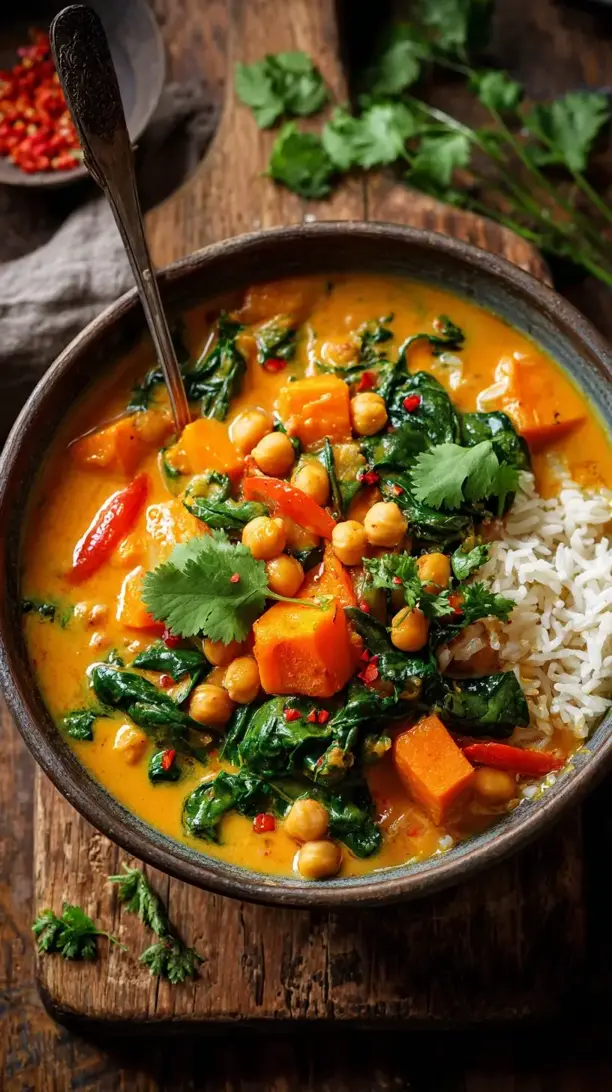
Vegetable Curry
Make this easy, one-pot Vegetable Curry with aromatic spices and creamy coconut milk. Ready in 40 minutes! Get the simple, delicious recipe now.
Ingredients
For the Ingredients
-
2 tbsp coconut oil or a neutral oil
-
1 large yellow onion (finely diced)
-
4 garlic cloves (minced)
-
1 tbsp fresh ginger (grated)
-
1-2 fresh green chilies (finely chopped (seeds removed for less heat))
-
2 tbsp tomato paste
-
1 tbsp ground coriander
-
2 tsp ground cumin
-
1 tsp turmeric
-
1/2 tsp cayenne pepper (adjust to taste)
-
1 can full-fat coconut milk (400 ml)
-
1 can diced tomatoes (400 g)
-
1 can chickpeas (400 g, drained and rinsed)
-
1 large sweet potato (peeled and cubed)
-
1/2 head cauliflower (cut into florets)
-
1 red bell pepper (chopped)
-
1 large handful fresh spinach or kale
-
1/2 lime (juice of)
-
Salt and freshly ground black pepper (to taste)
-
Fresh cilantro (for garnish)
Instructions
-
Start by preparing all your vegetables. Dice the onion, mince the garlic, grate the ginger, and chop the chilies. Having everything prepped and ready to go (your mise en place) makes the cooking process smooth and enjoyable. Cube the sweet potato and chop the cauliflower and bell pepper into bite-sized pieces.01
-
Heat the coconut oil in your large pot over medium heat. Add the diced onion and cook for about 5-7 minutes, until it becomes soft and translucent. You’ll notice a lovely sweet aroma starting to develop. Now, add the garlic, ginger, and fresh chilies, and cook for another minute until fragrant—be careful not to burn the garlic.02
-
Push the onion mixture to one side of the pot and add the tomato paste to the empty space. Let it cook for a minute to caramelize slightly—this deepens its flavor. Then, add all the ground spices: coriander, cumin, turmeric, and cayenne. Stir everything together and cook for 1-2 minutes until the spices are toasted and incredibly fragrant. This is where the magic happens!03
-
Now, pour in the diced tomatoes and the full-fat coconut milk. Stir well to combine, scraping up any browned bits from the bottom of the pot. Those bits are pure flavor. Bring the sauce to a gentle simmer.04
-
Add the harder vegetables first: the cubed sweet potato and cauliflower florets. Stir to coat them in the sauce. Let the curry simmer, uncovered, for about 15 minutes. You’ll notice the sauce will start to thicken and the sweet potato will become tender when pierced with a fork.05
-
Stir in the chickpeas and the chopped red bell pepper. Continue to simmer for another 5-7 minutes. The bell pepper should still have a little bite to it for a nice textural contrast.06
-
Turn off the heat. Now, stir in the large handful of fresh spinach or kale. It will wilt perfectly in the residual heat without getting slimy. Finally, squeeze in the juice of half a lime and season generously with salt and black pepper. Taste and adjust the seasoning—you might need a pinch more salt or another squeeze of lime.07
-
Let the curry sit for a few minutes off the heat. This allows the flavors to meld together beautifully. Garnish with a generous amount of fresh cilantro just before serving.08
Not what you're looking for?