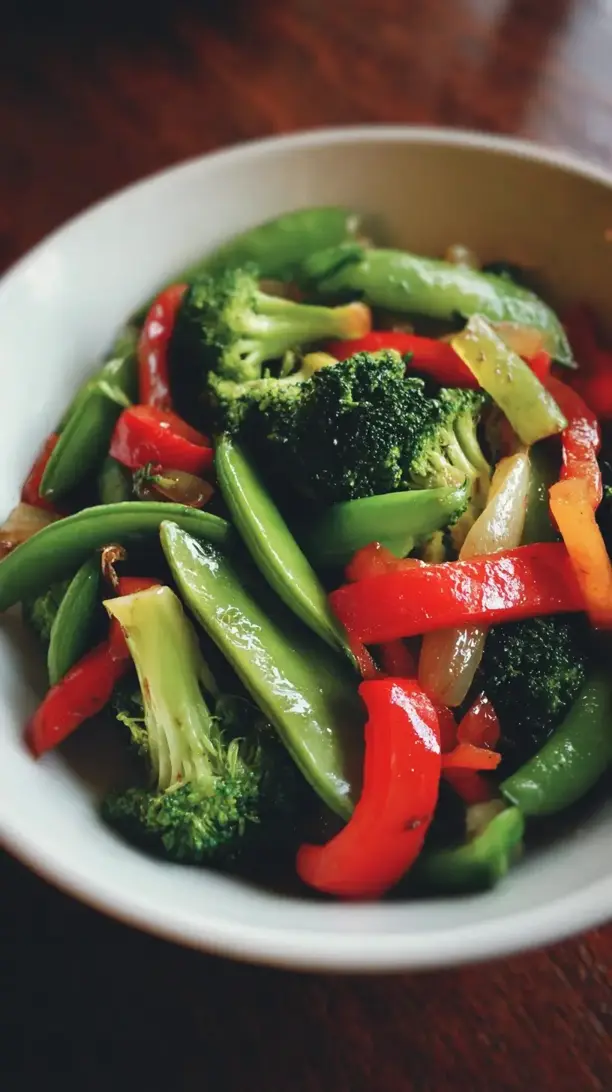
This Vegetable Lo Mein is a quick, satisfying dinner that feels like a treat. It’s packed with colorful vegetables and a savory, slightly sweet sauce that clings perfectly to every strand. You get that wonderful, slurpable noodle experience in about 20 minutes, using fresh ingredients that leave you feeling light and energized.
Nothing beats a great Vegetable Lo Mein. Whether you're a fan of Dinner Ideas or want to try something from our Appetizer Recipes selection, keep scrolling!

Why You’ll Love This Vegetable Lo Mein
- Fast & flexible: A true 20-minute meal that adapts to your fridge’s contents.
- Sauce magic: Perfectly balanced savory, sweet, and umami coating without heaviness.
- Noodle craving solved: Low-carb noodles deliver slurpable texture while fitting dietary goals.
- One-pan complete meal: Protein, veggies, and noodles cook together for maximum flavor and minimal cleanup.
Ingredients & Tools
- 2 packages (14 oz / 400 g total) shirataki noodles (or kelp noodles), rinsed and drained well
- 2 tbsp avocado oil or sesame oil, divided
- 3 cloves garlic, minced
- 1 tbsp fresh ginger, grated
- 1 medium carrot, julienned
- 1 red bell pepper, thinly sliced
- 1 cup shredded green cabbage
- 1 cup snap peas or snow peas
- 2 green onions, sliced (white and green parts separated)
- 1/4 cup tamari or coconut aminos
- 1 tbsp rice vinegar
- 1 tsp sesame oil (to finish)
- 1 tsp erythritol or allulose (optional, for a touch of sweetness)
- Toasted sesame seeds for garnish
Tools: A large wok or skillet, a couple of bowls for mixing, and a good pair of tongs for tossing.
Notes: Prep all ingredients before cooking—this dish moves fast. Fresh ginger and garlic make a big difference, and don’t skip the final sesame oil drizzle for nutty fragrance.
Nutrition (per serving)
| Calories: | 180 kcal |
| Protein: | 6 g |
| Fat: | 10 g |
| Carbs: | 12 g |
| Fiber: | 5 g |
Serves: 2 | Prep Time: 10 minutes | Cook Time: 10 minutes | Total Time: 20 minutes
Storage & Freshness Guide
- Fridge: Store in an airtight container up to 2 days; veggies will soften.
- Freezer: Not recommended—noodles become rubbery upon thawing.
- Reviving: Reheat quickly in a hot skillet to restore texture; avoid microwaving.
Serving Suggestions
Complementary Dishes
- A simple cucumber salad — The cool, crisp freshness of sliced cucumbers with a little rice vinegar and salt provides a perfect, palate-cleansing contrast to the rich, savory noodles.
- Steamed or roasted broccoli — An extra side of greens never hurts, and broccoli’s sturdy texture and mild flavor make it a fantastic vehicle for soaking up any extra sauce left in your bowl.
- Pan-seared tofu or chicken — If you want to bulk up the protein, some simply seasoned, pan-seared tofu or shredded rotisserie chicken blends seamlessly into the lo mein for a more substantial meal.
Drinks
- Jasmine green tea — Its delicate, floral notes are a classic pairing that cuts through the umami richness of the dish beautifully, cleansing your palate between bites.
- A crisp, dry white wine like Sauvignon Blanc — The wine’s bright acidity and citrusy notes mirror the tang in the sauce and lift all the flavors, making each mouthful taste even brighter.
- Sparkling water with a lime wedge — Sometimes you just need the simple, effervescent cleanse of bubbles to reset your taste buds, especially with a flavor-packed dish like this.
Something Sweet
- A few fresh raspberries or strawberries — The natural sweetness and slight tartness of berries are a light, refreshing, and low-carb way to finish your meal on a sweet note.
- A square of dark chocolate (85% cocoa or higher) — Let a piece melt slowly on your tongue. The bitter, complex notes are a wonderful contrast to the savory meal you just enjoyed.
- A small bowl of sugar-free vanilla chia pudding — It’s creamy, cool, and subtly sweet, providing a lovely textural and temperature contrast that feels like a proper dessert without the sugar spike.
Before You Start: Tips & Ingredient Notes
- Don’t skip the noodle prep. Shirataki noodles have a unique smell straight from the package. Rinsing them thoroughly under cold water for a minute or two and then giving them a quick pan-fry without oil helps to evaporate any residual liquid and gives them a much better, more pasta-like texture.
- Cut your veggies uniformly. Try to slice your carrots and bell peppers into similar-sized julienne or thin strips. This isn’t just for looks—it ensures everything cooks at the same rate, so you get a perfect crunch in every bite without any undercooked or mushy pieces.
- Have your sauce mixed and ready. Combine the tamari, rice vinegar, and sweetener in a small bowl before you even turn on the stove. When it’s time to add it to the wok, you can just pour it in all at once, which prevents over-reducing one component and keeps the flavor balanced.
- Your wok or pan should be screaming hot. For that classic “wok hei” stir-fry character, you need high, high heat. This sears the vegetables quickly, locking in their color and crunch, and helps the sauce thicken and cling to the noodles almost instantly.
How to Make Vegetable Lo Mein
Step 1: First, tackle the noodles. Open the packages and drain the shirataki noodles into a colander. Rinse them very well under cold running water for a good minute—this is the secret to getting rid of that faint, natural aroma. I like to give them a little squeeze to get out any extra moisture. No need to be gentle here.
Step 2: Now, let’s dry them out. Heat a large, dry wok or skillet over medium-high heat. Add the rinsed noodles and stir them around constantly for 3-4 minutes. You’ll notice steam rising as the water evaporates. You want them to look drier and make a faint squeaking sound against the pan. Once they’re ready, transfer them back to the colander or a bowl for a moment.
Step 3: It’s sauce time. In a small bowl or a measuring cup, whisk together the tamari (or coconut aminos), rice vinegar, and your optional sweetener. Having this ready to go is a game-changer for the speed of this recipe. Give it a quick taste—it should be savory with a bright, tangy finish.
Step 4: Back to the wok. Add one tablespoon of your oil and let it heat until it shimmers. Add the minced garlic and grated ginger, and stir-fry for just 30 seconds until incredibly fragrant. Be careful not to let it burn, or it will turn bitter. You just want to wake up those flavors.
Step 5: Time for the hard vegetables. Push the garlic and ginger to one side and add the remaining oil. Toss in your julienned carrots and sliced bell pepper. Stir-fry for about 2 minutes until they just start to soften and become brighter in color. You’re aiming for a tender-crisp texture, not soft.
Step 6: Add the remaining veggies. Now throw in the shredded cabbage, snap peas, and the white parts of your green onions. Continue to stir-fry for another 2 minutes. The cabbage will wilt slightly and the snap peas will turn a vibrant green. The wok should be sizzling loudly—that’s how you know you’ve got the right heat.


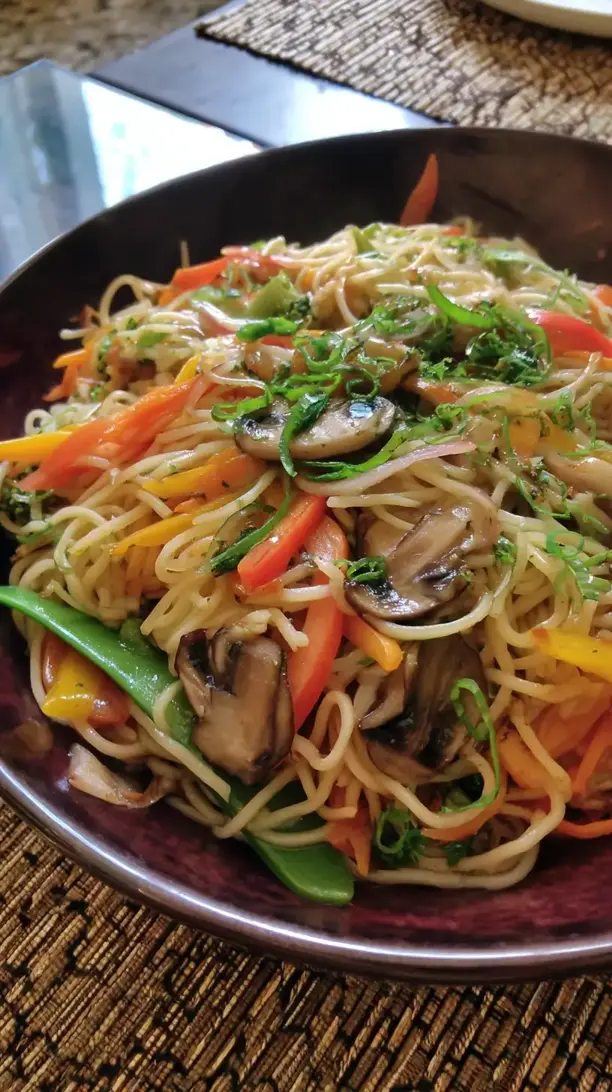
Vegetable Lo Mein
Make this easy 20-minute Vegetable Lo Mein for a healthy, flavorful dinner. Packed with fresh veggies and a savory sauce. Get the simple recipe now!
Ingredients
For the Noodles & Sauce
-
2 packages shirataki noodles (or kelp noodles) (14 oz / 400 g total, rinsed and drained well)
-
1/4 cup tamari or coconut aminos
-
1 tbsp rice vinegar
-
1 tsp erythritol or allulose (optional, for a touch of sweetness)
For the Vegetables & Aromatics
-
2 tbsp avocado oil or sesame oil (divided)
-
3 cloves garlic (minced)
-
1 tbsp fresh ginger (grated)
-
1 medium carrot (julienned)
-
1 red bell pepper (thinly sliced)
-
1 cup shredded green cabbage
-
1 cup snap peas or snow peas
-
2 green onions (sliced (white and green parts separated))
For Finishing
-
1 tsp sesame oil (to finish)
-
Toasted sesame seeds (for garnish)
Instructions
-
First, tackle the noodles. Open the packages and drain the shirataki noodles into a colander. Rinse them very well under cold running water for a good minute—this is the secret to getting rid of that faint, natural aroma. I like to give them a little squeeze to get out any extra moisture. No need to be gentle here.01
-
Now, let's dry them out. Heat a large, dry wok or skillet over medium-high heat. Add the rinsed noodles and stir them around constantly for 3-4 minutes. You’ll notice steam rising as the water evaporates. You want them to look drier and make a faint squeaking sound against the pan. Once they’re ready, transfer them back to the colander or a bowl for a moment.02
-
It’s sauce time. In a small bowl or a measuring cup, whisk together the tamari (or coconut aminos), rice vinegar, and your optional sweetener. Having this ready to go is a game-changer for the speed of this recipe. Give it a quick taste—it should be savory with a bright, tangy finish.03
-
Back to the wok. Add one tablespoon of your oil and let it heat until it shimmers. Add the minced garlic and grated ginger, and stir-fry for just 30 seconds until incredibly fragrant. Be careful not to let it burn, or it will turn bitter. You just want to wake up those flavors.04
-
Time for the hard vegetables. Push the garlic and ginger to one side and add the remaining oil. Toss in your julienned carrots and sliced bell pepper. Stir-fry for about 2 minutes until they just start to soften and become brighter in color. You’re aiming for a tender-crisp texture, not soft.05
-
Add the remaining veggies. Now throw in the shredded cabbage, snap peas, and the white parts of your green onions. Continue to stir-fry for another 2 minutes. The cabbage will wilt slightly and the snap peas will turn a vibrant green. The wok should be sizzling loudly—that’s how you know you’ve got the right heat.06
Not what you're looking for?