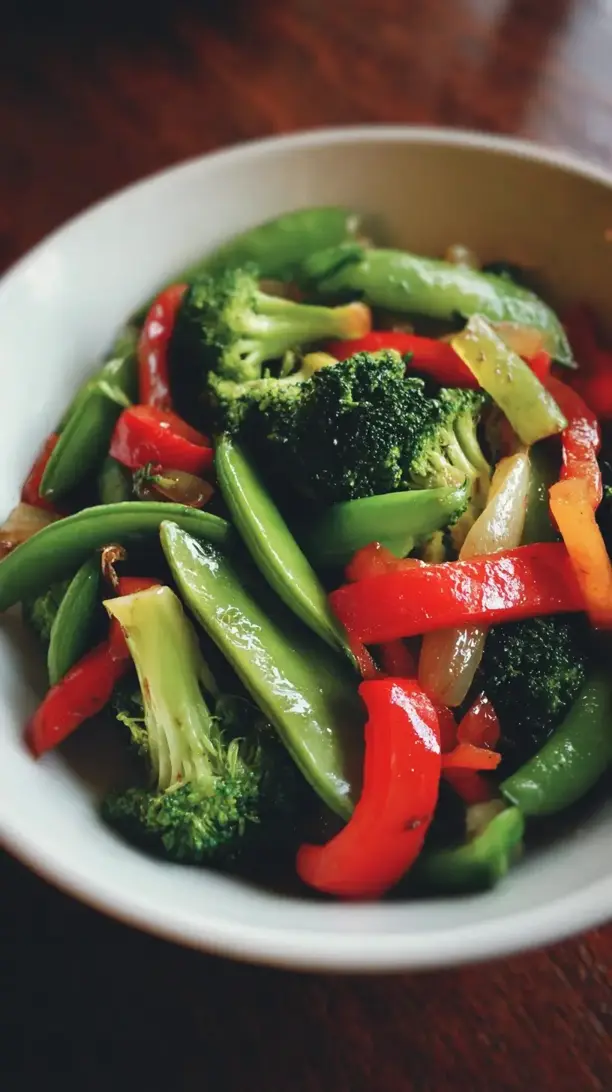
This Veggie Lo Mein is a fast, flexible, and deeply satisfying noodle stir-fry that beats takeout any night. It’s loaded with crisp-tender vegetables and coated in a savory, glossy sauce made from pantry staples. You can customize the veggies based on what you have, making it a perfect clean-out-the-fridge meal.
Love Veggie Lo Mein? So do we! If you're into Dinner Ideas or curious about Christmas Cookie, you'll find plenty of inspiration below.


Why You’ll Love This Veggie Lo Mein
- Faster than takeout: Ready in about 20 minutes from start to finish.
- Fridge-cleanout hero: Easily adapt with whatever vegetables you have on hand.
- Magic sauce: Savory, glossy, and perfectly clings to every noodle and veggie.
- Crowd-pleaser: Easily made vegetarian or vegan to suit all diets.
Ingredients & Tools
- 8 oz lo mein noodles, spaghetti, or ramen noodles
- 2 tbsp sesame oil, divided
- 3 cloves garlic, minced
- 1 tbsp fresh ginger, grated
- 1 medium onion, thinly sliced
- 2 medium carrots, julienned or thinly sliced
- 1 red bell pepper, thinly sliced
- 2 cups green cabbage, thinly sliced
- 1 cup snap peas or snow peas
- 2 scallions, sliced (for garnish)
- 1/4 cup soy sauce (or tamari for gluten-free)
- 2 tbsp oyster sauce (or vegetarian oyster sauce)
- 1 tbsp hoisin sauce
- 1 tsp honey or maple syrup
- 1 tsp rice vinegar
Tools: A large wok or skillet, a large pot for boiling noodles, a whisk or fork for the sauce.
Notes: Don’t stress if you’re missing an ingredient or two. The beauty of this dish is its flexibility.
Don’t stress if you’re missing an ingredient or two. The beauty of this dish is its flexibility. The key is to have your sauce mixed and your veggies prepped before you start cooking—it all comes together in a flash!
Nutrition (per serving)
| Calories: | 380 kcal |
| Protein: | 12 g |
| Fat: | 8 g |
| Carbs: | 68 g |
| Fiber: | 6 g |
Serves: 4 | Prep Time: 15 minutes | Cook Time: 10 minutes | Total Time: 25 minutes
Before You Start: Tips & Ingredient Notes
- Prep is everything. This dish cooks incredibly fast, so have all your vegetables chopped, your sauce mixed in a small bowl, and your noodles ready to go. It makes the process seamless and stress-free.
- What if I can’t find lo mein noodles? No problem at all! Spaghetti, linguine, or even ramen noodles (discard the seasoning packet) work beautifully. You’re looking for a long, chewy noodle that can stand up to the stir-fry.
- Don’t skip the sesame oil. It provides that foundational, nutty aroma that makes this dish taste authentically like your favorite Chinese restaurant. Using it to cook the aromatics and then drizzling a little more at the end makes all the difference.
- Customize your veggie lineup. This is your canvas! Broccoli florets, sliced mushrooms, baby corn, or water chestnuts would all be fantastic additions. Just remember to add harder veggies (like carrots) first and softer ones (like spinach) last.
How to Make Veggie Lo Mein
Step 1: Cook your noodles according to the package directions, but make sure to undercook them slightly—about a minute less than recommended. They’re going to finish cooking in the wok, and this prevents them from becoming mushy. Once drained, toss them with a tiny bit of neutral oil to prevent sticking and set them aside.
Step 2: While the noodles cook, whisk together your sauce. In a small bowl or measuring cup, combine the soy sauce, oyster sauce, hoisin sauce, honey, and rice vinegar. Give it a good whisk until it’s smooth and homogenous. Having this ready means you can add it all at once later without fumbling with bottles.
Step 3: Now, heat your wok or large skillet over medium-high heat. Add one tablespoon of the sesame oil. Once the oil is shimmering, add the minced garlic and grated ginger. Stir-fry for just 30-60 seconds—you’ll be hit with that incredible fragrance, but be careful not to let it burn!
Step 4: Time for the veggies! Add the onion and carrots first, as they take a bit longer to soften. Stir-fry for about 2-3 minutes until they just start to become tender. Then, add the bell pepper, cabbage, and snap peas. Continue to stir-fry for another 2-3 minutes. You want the vegetables to be crisp-tender, still with a bit of a bite—they shouldn’t be soggy.
Step 5: Create a well in the center of the vegetables by pushing them to the sides of the wok. Pour your prepared sauce into the center. It should sizzle and bubble immediately. Let it cook and reduce for about 30 seconds—this helps the flavors meld and the sauce thicken slightly.
Step 6: Add the drained, par-cooked noodles to the wok. Using a pair of tongs or two forks, gently toss everything together, ensuring the noodles get thoroughly coated in the sauce and are mixed well with the vegetables. Keep tossing for 1-2 minutes until the noodles have absorbed the sauce and are heated through.
Step 7: Turn off the heat. Drizzle the remaining tablespoon of sesame oil over the top and add most of your sliced scallions. Give it one final, gentle toss. The residual heat will wilt the scallions just slightly and that final hit of sesame oil will make the aroma absolutely irresistible.
Step 8: Serve immediately! Divide the lo mein into bowls and garnish with the remaining fresh scallions. It’s best enjoyed hot, right from the wok, when the noodles are at their most glorious and slick.
Storage & Freshness Guide
- Fridge: Store in an airtight container for up to 3 days.
- Freezer: Not recommended; noodles can become mushy upon thawing.
- Reviving: Reheat in a hot wok or skillet with a splash of water or broth to restore texture.
Serving Suggestions
Complementary Dishes
- Simple Steamed Dumplings — The soft, savory filling of pork or vegetable dumplings provides a wonderful textural contrast to the slippery noodles.
- Asian-Inspired Cucumber Salad — A quick, sharp salad with rice vinegar and a touch of chili cuts through the richness of the lo mein beautifully.
- Spring Rolls with Sweet Chili Dip — The crisp, light crunch of a fresh spring roll is the perfect starter or side to enjoy alongside your noodle bowl.
Drinks
- Jasmine Green Tea — Its delicate, floral notes cleanse the palate between bites and complement the umami flavors without overpowering them.
- A Crisp Lager — The light carbonation and clean finish of a cold lager are a classic pairing that works wonderfully with the savory, salty notes of the dish.
- Ginger Beer — The spicy-sweet kick of a non-alcoholic ginger beer mirrors the ginger in the lo mein and adds a refreshing zing.
Something Sweet
- Mango Sticky Rice — The creamy, sweet, and tropical flavors are a dreamy way to end the meal on a high note after all that savory goodness.
- Fortune Cookies and Green Tea Ice Cream — A little bit of fun and a little bit of cool, creamy sophistication—it’s the perfect homage to a takeout-style feast.
- Lychee Sorbet — Light, floral, and refreshing, a scoop of lychee sorbet is like a palate-cleansing cloud after your flavorful noodle adventure.
Top Mistakes to Avoid
- Overcooking the noodles. This is the number one way to end up with a mushy, gummy lo mein. Remember to undercook them in the boiling water since they’ll finish in the wok. You want a chewy, springy texture.
- Crowding the wok. If you add all the vegetables at once, they’ll steam instead of stir-fry, losing that lovely crisp-tender texture and becoming watery. Add them in stages based on how long they take to cook.
- Using low heat. You need that high, fierce heat to get a proper stir-fry. It sears the flavors in and quickly cooks the veggies without making them soggy. Don’t be shy with the burner!
- Adding the sauce too late or too early. Letting the sauce bubble and reduce in the center of the wok for a moment before adding the noodles is a key step. It deepens the flavor and helps it cling perfectly.
Expert Tips
- Tip: For an extra layer of flavor, add a spoonful of Chinese chili crisp or a dash of sriracha to your sauce mixture. It gives a lovely warmth and complexity that’s completely addictive.
- Tip: If you want a thicker, glossier sauce that really sticks to the noodles, mix one teaspoon of cornstarch with one tablespoon of cold water and whisk it into your sauce before adding it to the wok.
- Tip: To make this a more substantial meal, add a protein! Thinly sliced tofu, tempeh, or chickpeas are great vegetarian options. For a non-veg version, shredded rotisserie chicken or cooked shrimp work wonderfully—just stir them in to heat through at the very end.
- Tip: Always taste and adjust at the end! Depending on your soy sauce brand, you might want an extra splash for saltiness, a squeeze of lime for acidity, or another drizzle of honey for balance. Make it your own.
FAQs
Can I make this Veggie Lo Mein ahead of time?
You can, but the texture is best fresh. If you need to, prep all the components separately: cook the noodles, chop the veggies, and make the sauce. Store them in airtight containers in the fridge. When ready to eat, the stir-fry will come together in just 5 minutes. Reheating a full batch can make the noodles a bit soft, so I recommend the component method for meal prep.
How do I store and reheat leftovers?
Store any leftovers in an airtight container in the refrigerator for up to 3 days. To reheat, I strongly advise against the microwave, as it can make the noodles rubbery. Instead, toss them back into a hot wok or skillet with a tiny splash of water or broth. Stir-fry for a few minutes until heated through. This helps revive the texture much better.
Is this recipe gluten-free?
It can be easily adapted! Use tamari instead of soy sauce, and ensure your oyster sauce is a certified gluten-free version (or use a vegetarian alternative). Also, check that your noodles are gluten-free—rice noodles are a great option here.
My sauce turned out too salty. How can I fix it?
It happens! The saltiness can vary by brand. To balance it out, add a squeeze of fresh lime or lemon juice to introduce acidity. You can also add a touch more honey or a splash of water or unsalted vegetable broth to dilute it slightly. Next time, you might use a low-sodium soy sauce.
Can I use frozen vegetables?
You can, but be cautious. Frozen vegetables release a lot of water as they cook, which can make your lo mein watery. If you do use them, don’t thaw them first—add them straight from the freezer to the hot wok to minimize the liquid, and consider increasing the heat to evaporate the excess moisture quickly.


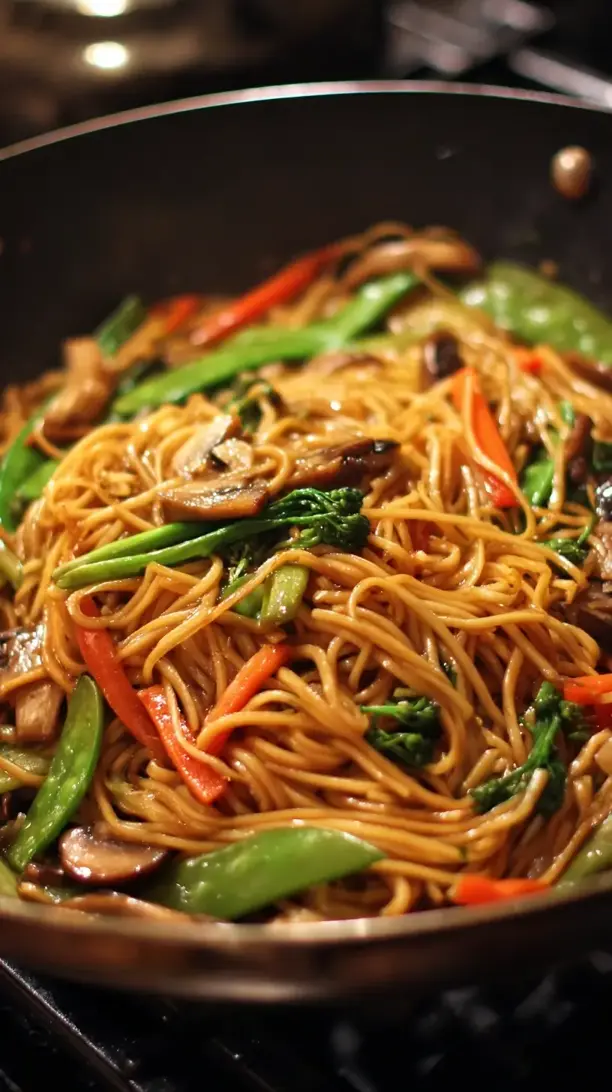
Veggie Lo Mein
Make better-than-takeout Veggie Lo Mein in just 20 minutes! This easy, customizable recipe is loaded with fresh veggies and a savory sauce. Get the recipe now!
Ingredients
For the Noodles & Aromatics:
-
8 oz lo mein noodles, spaghetti, or ramen noodles
-
2 tbsp sesame oil (divided)
-
3 cloves garlic (minced)
-
1 tbsp fresh ginger (grated)
For the Vegetables:
-
1 medium onion (thinly sliced)
-
2 medium carrots (julienned or thinly sliced)
-
1 red bell pepper (thinly sliced)
-
2 cups green cabbage (thinly sliced)
-
1 cup snap peas or snow peas
-
2 scallions (sliced (for garnish))
For the Sauce:
-
1/4 cup soy sauce (or tamari for gluten-free)
-
2 tbsp oyster sauce (or vegetarian oyster sauce)
-
1 tbsp hoisin sauce
-
1 tsp honey or maple syrup
-
1 tsp rice vinegar
Instructions
-
Cook your noodles according to the package directions, but make sure to undercook them slightly—about a minute less than recommended. They’re going to finish cooking in the wok, and this prevents them from becoming mushy. Once drained, toss them with a tiny bit of neutral oil to prevent sticking and set them aside.01
-
While the noodles cook, whisk together your sauce. In a small bowl or measuring cup, combine the soy sauce, oyster sauce, hoisin sauce, honey, and rice vinegar. Give it a good whisk until it’s smooth and homogenous. Having this ready means you can add it all at once later without fumbling with bottles.02
-
Now, heat your wok or large skillet over medium-high heat. Add one tablespoon of the sesame oil. Once the oil is shimmering, add the minced garlic and grated ginger. Stir-fry for just 30-60 seconds—you’ll be hit with that incredible fragrance, but be careful not to let it burn!03
-
Time for the veggies! Add the onion and carrots first, as they take a bit longer to soften. Stir-fry for about 2-3 minutes until they just start to become tender. Then, add the bell pepper, cabbage, and snap peas. Continue to stir-fry for another 2-3 minutes. You want the vegetables to be crisp-tender, still with a bit of a bite—they shouldn’t be soggy.04
-
Create a well in the center of the vegetables by pushing them to the sides of the wok. Pour your prepared sauce into the center. It should sizzle and bubble immediately. Let it cook and reduce for about 30 seconds—this helps the flavors meld and the sauce thicken slightly.05
-
Add the drained, par-cooked noodles to the wok. Using a pair of tongs or two forks, gently toss everything together, ensuring the noodles get thoroughly coated in the sauce and are mixed well with the vegetables. Keep tossing for 1-2 minutes until the noodles have absorbed the sauce and are heated through.06
-
Turn off the heat. Drizzle the remaining tablespoon of sesame oil over the top and add most of your sliced scallions. Give it one final, gentle toss. The residual heat will wilt the scallions just slightly and that final hit of sesame oil will make the aroma absolutely irresistible.07
-
Serve immediately! Divide the lo mein into bowls and garnish with the remaining fresh scallions. It’s best enjoyed hot, right from the wok, when the noodles are at their most glorious and slick.08
Not what you're looking for?