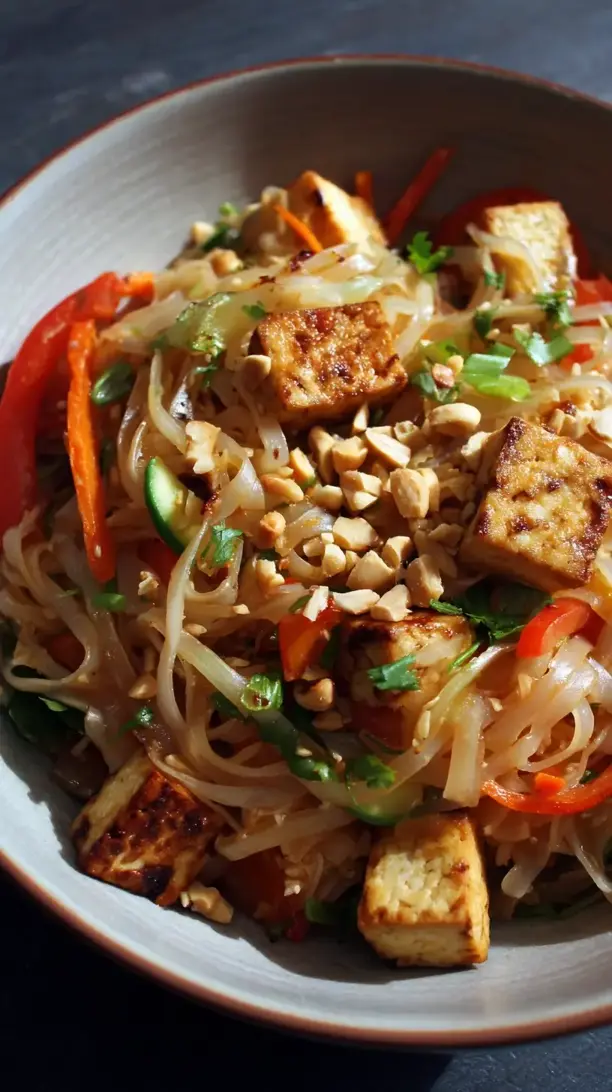
This Veggie Pad Thai delivers the perfect balance of sweet, sour, salty, and umami in a vibrant, satisfying meal. It’s a fast, high-heat stir-fry that comes together in minutes, capturing authentic street-food flavor at home. With colorful vegetables and a signature tangy sauce, it’s a complete dish that’s better than takeout.
Nothing beats a great Veggie Pad Thai. Whether you're a fan of Dinner Ideas or want to try something from our Appetizer Recipes selection, keep scrolling!

Why You’ll Love This Veggie Pad Thai
- Flavor explosion: The sauce hits every note with tangy tamarind, sweet palm sugar, and savory soy.
- Incredibly versatile: A fantastic fridge-cleaner that welcomes any vegetables you have on hand.
- Perfect texture: Enjoy soft noodles, crisp-tender veggies, and crunchy toppings in every bite.
- Faster than delivery: Cooks in under 10 minutes once your prep is done.
Ingredients & Tools
- 200 g flat rice noodles (the kind that are about 3-5 mm wide)
- 3 tbsp tamarind paste
- 3 tbsp palm sugar, finely chopped or grated
- 2 tbsp soy sauce (or tamari for gluten-free)
- 1 tbsp rice vinegar
- 2 large eggs
- 3 cloves garlic, minced
- 1 small red onion, thinly sliced
- 2 medium carrots, julienned
- 1 red bell pepper, thinly sliced
- 150 g firm tofu, pressed and cubed
- 100 g fresh bean sprouts
- 4 spring onions, sliced on the diagonal
- 50 g roasted peanuts, roughly chopped
- 1 lime, cut into wedges
- 2 tbsp vegetable oil
- Optional: fresh coriander and red chilli flakes for garnish
Tools: A large wok or very large non-stick frying pan, a couple of medium bowls, and a spatula.
Notes: Don’t skip the tamarind—it’s essential for the signature sour tang. Palm sugar adds a deeper, caramel-like sweetness compared to brown sugar.
Nutrition (per serving)
| Calories: | 485 kcal |
| Protein: | 16 g |
| Fat: | 18 g |
| Carbs: | 68 g |
| Fiber: | 5 g |
Serves: 3 | Prep Time: 20 minutes | Cook Time: 10 minutes | Total Time: 30 minutes
Before You Start: Tips & Ingredient Notes
- Get your mise en place ready. This is not a joke, I promise. Pad Thai cooks incredibly fast over high heat, and you won’t have time to chop or measure once you start. Have every single ingredient measured, chopped, and within arm’s reach of the stove.
- Soak your noodles correctly. Don’t boil them! You’ll just end up with a sticky, gummy mess. The trick is to soak them in just-boiled water until they are pliable but still have a definite bite to them (al dente). They’ll finish cooking in the wok.
- Can’t find tamarind? If you’re really in a bind, you can use a mix of lime juice and a bit of brown sugar as a substitute, but the flavor profile will be different. It’ll still be tasty, but it won’t have that distinct, authentic sourness.
- Press your tofu. Taking the extra 15 minutes to press the water out of your tofu will make a world of difference. It allows the cubes to get beautifully golden and crispy on the outside instead of steaming and becoming rubbery.
How to Make Veggie Pad Thai
Step 1: Start by preparing your rice noodles. Place them in a large heatproof bowl and cover with just-boiled water from a kettle. Let them soak for about 8-10 minutes, stirring once or twice to prevent sticking. You’re looking for noodles that are flexible but still firm—they should bend without snapping. Once they’re ready, drain them thoroughly and toss with a tiny drizzle of oil to keep them from clumping together.
Step 2: While the noodles soak, make your sauce. In a medium bowl, whisk together the tamarind paste, palm sugar, soy sauce, and rice vinegar. The palm sugar might be a little stubborn to dissolve, so just keep whisking until it’s mostly incorporated. Don’t worry if there are a few tiny granules left; they’ll melt in the wok. Taste it—you should get a powerful hit of sour, then sweet, then salty. Adjust to your liking, knowing the flavors will mellow a bit once combined with everything else.
Step 3: Now, heat your wok or large pan over high heat until it’s seriously hot. Add one tablespoon of the vegetable oil and swirl it around. Add the pressed tofu cubes and let them cook undisturbed for a minute or two to get a golden-brown crust. Toss them and continue cooking until they’re crispy on most sides, then remove them from the wok and set them aside on a plate.
Step 4: In the same wok, add the remaining tablespoon of oil. Toss in the minced garlic and sliced red onion. Stir-fry for just 30-60 seconds until they become fragrant—you’ll notice that amazing aroma filling your kitchen. Be careful not to let the garlic burn, as it can turn bitter very quickly.
Step 5: Push the garlic and onion to one side of the wok. Crack the two eggs into the empty space. Let them set for about 20 seconds before you start scrambling them right there in the wok. Once they’re mostly cooked through, you can mix them in with the garlic and onion.
Step 6: Now, add the harder vegetables: the julienned carrots and sliced bell pepper. Stir-fry them for about 2 minutes. You want them to soften slightly but still retain a good crunch. This quick cook keeps their vibrant color and texture intact.
Step 7: It’s go time! Add the drained noodles and the prepared sauce to the wok. Using two utensils, like a spatula and a pair of tongs, toss and fold everything together vigorously. You want every single noodle to be coated in that glorious sauce. It should sizzle and steam dramatically. Keep tossing for 1-2 minutes until the noodles have absorbed the sauce and are perfectly tender.
Step 8: Add back in the crispy tofu, along with about two-thirds of your fresh bean sprouts and sliced spring onions. Give everything one final, quick toss—just enough to warm the tofu through and slightly wilt the veggies. This is where it all comes together.
Step 9: Immediately take the wok off the heat. Divide the Pad Thai between serving plates. Top with the remaining fresh bean sprouts and spring onions for that extra crunch, a generous handful of chopped peanuts, and a big wedge of lime for squeezing over just before you eat. Dig in right away!
Storage & Freshness Guide
- Fridge: Store in an airtight container for up to 2 days.
- Freezer: Not recommended; noodles can become mushy upon thawing.
- Reviving: Reheat in a wok or pan with a splash of water to re-steam.
Serving Suggestions
Complementary Dishes
- A simple cucumber salad — The cool, crisp freshness of thinly sliced cucumbers with a splash of rice vinegar and a pinch of salt provides a perfect, palate-cleansing contrast to the rich, savory noodles.
- Vegetable spring rolls — These offer a different, lighter kind of crunch and are fantastic for dipping into a sweet chilli sauce, making the whole meal feel like a special occasion.
- Stir-fried greens with garlic — A side of bok choy or kale quickly wilted with lots of garlic adds a healthy, savory green element that complements the main event beautifully.
Drinks
- A crisp, cold lager — The effervescence and slight bitterness of a light beer cuts through the richness of the dish and cleanses the palate wonderfully between bites.
- Thai iced tea — If you’re going all out, the creamy, sweet, and spiced flavor of this classic drink is an unbeatable partner for the tangy and savory notes of the Pad Thai.
- Sparkling water with lime — Sometimes the best pairing is the simplest. The bubbles and citrus are incredibly refreshing and won’t compete with the complex flavors of your meal.
Something Sweet
- Mango with sticky rice — It’s the classic Thai dessert for a reason. The sweet, creamy mango and slightly salty coconut rice are a dreamy way to finish this meal.
- Coconut ice cream — A scoop of rich, dairy-free coconut ice cream is a quick, easy, and utterly satisfying end to your feast, echoing the tropical vibes.
- Lychees served chilled — For a light and refreshing option, a bowl of cold, canned lychees provides a burst of floral sweetness that feels clean and elegant.
Top Mistakes to Avoid
- Overcooking the noodles during soaking. If they’re completely soft before they hit the wok, they’ll turn to mush when you stir-fry them. You need that initial firmness so they can absorb the sauce and finish cooking to the perfect texture in the pan.
- Using a pan that’s too small. Crowding the wok is the enemy of good stir-fry. You need space to toss and flip the ingredients efficiently. Without it, you’ll steam everything instead of frying it, leading to soggy, limp vegetables and noodles.
- Adding the sauce too late. The sauce needs a minute or two in the wok to caramelize slightly and cling to the noodles. If you add it at the very end, it will just pool at the bottom and your dish will be watery.
- Skipping the final fresh toppings. I’ve messed this up before too, thinking the cooking was the only important part. But those last-minute additions of raw bean sprouts, peanuts, and lime are non-negotiable for that signature texture and freshness.
Expert Tips
- Tip: For an extra layer of flavor, toast your raw peanuts in a dry pan for a few minutes before chopping them. It deepens their nutty flavor and makes them even more fragrant and delicious sprinkled over the top.
- Tip: If your sauce seems too thick when you mix it, you can thin it out with a single tablespoon of water. You want it to be pourable but still coat the back of a spoon nicely.
- Tip: Leftovers are best enjoyed the next day, cold, straight from the fridge—trust me on this one. The flavors have a chance to meld and intensify, and the texture is a different but equally delicious experience.
- Tip: To make this dish ahead, you can prep all the vegetables and mix the sauce a day in advance. Store them separately in airtight containers in the fridge. When you’re ready to eat, all you need to do is soak the noodles and fire up the wok.
FAQs
Can I make this Veggie Pad Thai gluten-free?
Absolutely! The only potential source of gluten is the soy sauce. Simply swap it for tamari, which is a gluten-free soy sauce alternative that tastes nearly identical. Be sure to check your rice vinegar label as well, though it is typically gluten-free. All the other core ingredients—the rice noodles, tamarind, and vegetables—are naturally gluten-free, so it’s a very easy adaptation.
My noodles turned out sticky and clumpy. What happened?
This is almost always due to overcooked noodles or insufficient oil during tossing. Remember, you’re only soaking the noodles until they are bendable but still firm. After draining, a tiny drizzle of a neutral oil tossed through them works wonders to create a barrier. Also, make sure your wok is hot enough when you add them—the high heat helps sear the noodles quickly rather than steaming them.
Can I use a different protein instead of tofu?
Of course! This recipe is wonderfully flexible. Cubed tempeh is a fantastic option—just pan-fry it the same way you would the tofu until crispy. For a non-vegetarian version, peeled prawns or thinly sliced chicken breast work beautifully; just cook them through in the wok before you add the garlic and onion, then set them aside and add them back in with the tofu.
How do I store and reheat leftovers?
Store any leftovers in an airtight container in the fridge for up to 2 days. The best way to reheat is in a wok or frying pan over medium heat with a tiny splash of water. This will help re-steam the noodles and refresh them without making them oily. I don’t recommend the microwave, as it tends to make the noodles rubbery.
Is tamarind paste really that important?
Honestly, yes. It’s the key ingredient that defines the sour profile of a classic Pad Thai. Lime juice is a common substitute, but it gives a much sharper, more citrusy acidity. Tamarind is deeper, fruitier, and more complex. It’s worth seeking out in an Asian grocery store or online—a jar lasts for ages in the fridge and opens up a world of authentic Thai cooking for you.


Veggie Pad Thai
Make the best Veggie Pad Thai at home with this easy recipe. It's faster than takeout and packed with authentic flavor. Get the step-by-step guide now!
Ingredients
For the Sauce:
-
3 tbsp tamarind paste
-
3 tbsp palm sugar (finely chopped or grated)
-
2 tbsp soy sauce (or tamari for gluten-free)
-
1 tbsp rice vinegar
For the Stir-fry:
-
200 g flat rice noodles (the kind that are about 3-5 mm wide)
-
2 large eggs
-
3 cloves garlic (minced)
-
1 small red onion (thinly sliced)
-
2 medium carrots (julienned)
-
1 red bell pepper (thinly sliced)
-
150 g firm tofu (pressed and cubed)
-
100 g fresh bean sprouts
-
4 spring onions (sliced on the diagonal)
-
50 g roasted peanuts (roughly chopped)
-
1 lime (cut into wedges)
-
2 tbsp vegetable oil
-
fresh coriander and red chilli flakes (optional, for garnish)
Instructions
-
Start by preparing your rice noodles. Place them in a large heatproof bowl and cover with just-boiled water from a kettle. Let them soak for about 8-10 minutes, stirring once or twice to prevent sticking. You’re looking for noodles that are flexible but still firm—they should bend without snapping. Once they’re ready, drain them thoroughly and toss with a tiny drizzle of oil to keep them from clumping together.01
-
While the noodles soak, make your sauce. In a medium bowl, whisk together the tamarind paste, palm sugar, soy sauce, and rice vinegar. The palm sugar might be a little stubborn to dissolve, so just keep whisking until it’s mostly incorporated. Don’t worry if there are a few tiny granules left; they’ll melt in the wok. Taste it—you should get a powerful hit of sour, then sweet, then salty. Adjust to your liking, knowing the flavors will mellow a bit once combined with everything else.02
-
Now, heat your wok or large pan over high heat until it’s seriously hot. Add one tablespoon of the vegetable oil and swirl it around. Add the pressed tofu cubes and let them cook undisturbed for a minute or two to get a golden-brown crust. Toss them and continue cooking until they’re crispy on most sides, then remove them from the wok and set them aside on a plate.03
-
In the same wok, add the remaining tablespoon of oil. Toss in the minced garlic and sliced red onion. Stir-fry for just 30-60 seconds until they become fragrant—you’ll notice that amazing aroma filling your kitchen. Be careful not to let the garlic burn, as it can turn bitter very quickly.04
-
Push the garlic and onion to one side of the wok. Crack the two eggs into the empty space. Let them set for about 20 seconds before you start scrambling them right there in the wok. Once they’re mostly cooked through, you can mix them in with the garlic and onion.05
-
Now, add the harder vegetables: the julienned carrots and sliced bell pepper. Stir-fry them for about 2 minutes. You want them to soften slightly but still retain a good crunch. This quick cook keeps their vibrant color and texture intact.06
-
It’s go time! Add the drained noodles and the prepared sauce to the wok. Using two utensils, like a spatula and a pair of tongs, toss and fold everything together vigorously. You want every single noodle to be coated in that glorious sauce. It should sizzle and steam dramatically. Keep tossing for 1-2 minutes until the noodles have absorbed the sauce and are perfectly tender.07
-
Add back in the crispy tofu, along with about two-thirds of your fresh bean sprouts and sliced spring onions. Give everything one final, quick toss—just enough to warm the tofu through and slightly wilt the veggies. This is where it all comes together.08
-
Immediately take the wok off the heat. Divide the Pad Thai between serving plates. Top with the remaining fresh bean sprouts and spring onions for that extra crunch, a generous handful of chopped peanuts, and a big wedge of lime for squeezing over just before you eat. Dig in right away!09
Not what you're looking for?