This Roasted Veggie Pesto Pasta is a vibrant, flavor-packed dish that comes together with minimal effort. The magic happens in the oven where humble vegetables transform into sweet, caramelized gems, then get tossed with al dente pasta and homemade basil pesto. It’s a satisfying meal that’s both nourishing and indulgent.
Nothing beats a great Roasted Veggie Pesto Pasta. Whether you're a fan of Dinner Ideas or want to try something from our Crockpot Recipes selection, keep scrolling!

Why You’ll Love This Roasted Veggie Pesto Pasta
- Flavor explosion: Roasting unlocks sweetness and depth, contrasting with bright, garlicky pesto.
- Versatile & forgiving: Easily adapt with whatever veggies or nuts you have on hand.
- Perfect textures: Tender pasta, charred veggies, and creamy pesto create a satisfying bite.
- Great leftovers: Flavors meld overnight for an even better next-day lunch.
Ingredients & Tools
- 400 g pasta of choice (penne, fusilli, or farfalle work great)
- 1 large zucchini, chopped into 1-inch chunks
- 1 red bell pepper, sliced
- 1 yellow bell pepper, sliced
- 1 small red onion, cut into wedges
- 200 g cherry tomatoes
- 3 tbsp olive oil, divided
- 1 tsp dried Italian herbs
- Salt and black pepper to taste
- 100 g fresh basil leaves, packed
- 50 g grated Parmesan cheese, plus more for serving
- 50 g pine nuts
- 2 cloves garlic, peeled
- Juice of 1/2 a lemon
Tools: A large baking sheet, a large pot for pasta, a food processor or high-speed blender, and a large mixing bowl.
Notes: Don’t be shy with the salt when roasting your veggies—it really makes all the difference in drawing out their flavor. And for the pesto, using fresh, high-quality Parmesan and a good extra virgin olive oil will elevate it from good to absolutely sublime.
Nutrition (per serving)
| Calories: | 485 kcal |
| Protein: | 15 g |
| Fat: | 22 g |
| Carbs: | 58 g |
| Fiber: | 6 g |
Serves: 4 | Prep Time: 15 mins | Cook Time: 25 mins | Total Time: 40 mins
Before You Start: Tips & Ingredient Notes
- Veggie size matters. Try to chop your vegetables into roughly similar-sized pieces. This ensures they all roast evenly and finish at the same time, so you don’t end up with some burnt bits and some undercooked ones.
- Don’t crowd the pan. If your baking sheet looks a little too full, use two. Overcrowding will steam the vegetables instead of roasting them, and you’ll miss out on all that lovely caramelization we’re after.
- Toasting the pine nuts is a game-changer. Just a quick toast in a dry pan for a few minutes until they’re golden and fragrant will deepen their flavor immensely and make your pesto taste nuttier and more complex.
- Reserve that pasta water! Before you drain your pasta, scoop out about a cup of the starchy cooking water. This liquid gold is the secret to making a silky, emulsified sauce that clings perfectly to every noodle and veggie piece.
How to Make Roasted Veggie Pesto Pasta
Step 1: First, get your oven nice and hot—preheat it to 220°C (425°F). While it’s heating up, spread your chopped zucchini, bell peppers, red onion, and cherry tomatoes on a large baking sheet. Drizzle them with about two tablespoons of the olive oil, and then sprinkle generously with the dried Italian herbs, salt, and pepper. Use your hands to toss everything together, making sure every piece of vegetable is lightly coated in that herby oil. You’ll notice the colors already start to look vibrant.
Step 2: Pop the baking sheet into the preheated oven and let the veggies roast for 20-25 minutes. You’re looking for them to be tender and have those beautiful, slightly charred edges. The tomatoes will have burst and the onions will be sweet and soft. The aroma filling your kitchen at this point is just incredible—sweet, savory, and utterly mouthwatering.
Step 3: While the vegetables are roasting, it’s time to make the pesto. In your food processor, combine the fresh basil leaves, toasted pine nuts, garlic cloves, and the grated Parmesan cheese. Pulse it a few times until the ingredients are roughly chopped and combined. You don’t want a puree just yet.
Step 4: With the processor running on low, slowly stream in the remaining tablespoon of olive oil and the lemon juice. Let it blend until the pesto is mostly smooth but still has a little bit of texture. Season it with a pinch of salt and pepper, then give it a taste. Adjust the seasoning if needed—maybe a touch more lemon juice for brightness or salt to make the flavors pop.
Step 5: Now, cook your pasta. Bring a large pot of well-salted water to a rolling boil and cook your chosen pasta according to the package directions until it’s al dente. This means it should have a firm bite to it, as it will continue to soften a little when you mix it with the sauce and veggies. Just before draining, remember to scoop out that crucial cup of starchy pasta water!
Step 6: This is the fun part—bringing it all together. In a large mixing bowl, combine the drained, hot pasta with the roasted vegetables. Dollop all of that gorgeous green pesto on top. Now, start adding the reserved pasta water, a few tablespoons at a time, while you toss everything together. You’ll see the sauce loosen up and become glossy, coating every single ingredient perfectly. The trick is to add just enough water to make it saucy, but not soupy.
Step 7: Give the final dish one last taste and adjust the seasoning if necessary. Sometimes it needs another crack of black pepper or a tiny pinch of salt. Serve it immediately, topped with an extra sprinkle of Parmesan cheese and maybe a few fresh basil leaves for a pretty finish. Dig in while it’s still wonderfully warm.
Storage & Freshness Guide
- Fridge: Store in an airtight container for up to 3 days.
- Freezer: Not recommended for the assembled dish; pasta becomes mushy upon thawing.
- Reviving: Reheat gently with a splash of water or olive oil to loosen the sauce.
Serving Suggestions
Complementary Dishes
- A simple arugula salad with a lemon vinaigrette — The peppery arugula and sharp lemon cut through the richness of the pasta beautifully, adding a fresh, crisp element to the meal.
- Grilled chicken or shrimp — For those wanting a extra protein boost, some simply seasoned grilled meat or seafood on the side makes this a very hearty and complete dinner.
- Garlic bread or focaccia — Because who can say no to bread? It’s perfect for mopping up every last bit of pesto left in the bowl.
Drinks
- A crisp Sauvignon Blanc — Its citrusy and herbal notes are a fantastic match for the basil and lemon in the pesto, creating a really refreshing pairing.
- A light Italian lager — The carbonation and mild bitterness of a cold beer help to cleanse the palate between bites of the savory, garlicky pasta.
- Sparkling water with a lemon wedge — A non-alcoholic option that still provides a bubbly, bright contrast to the meal’s richness.
Something Sweet
- Lemon sorbet — It’s incredibly light and palate-cleansing after a robust pasta dish. The intense citrus flavor is a perfect, refreshing finale.
- Dark chocolate affogato — A scoop of vanilla gelato with a shot of hot espresso poured over it, maybe with some dark chocolate shavings. It’s sophisticated and not too heavy.
- Almond biscotti — These crunchy, nutty cookies are ideal for dipping into a cup of coffee or tea, ending the meal on a lovely, subtle note.
Top Mistakes to Avoid
- Overcooking the pasta. Mushy pasta can ruin the whole texture of the dish. Always aim for al dente, as it holds its shape and provides a pleasing chew against the soft vegetables.
- Skipping the toasting step for the nuts. I’ve messed this up before too, thinking it’s an extra hassle. But untoasted nuts can make the pesto taste a bit bland and raw. That quick toast brings out their essential oils and deep, nutty flavor.
- Adding the pesto to a hot, dry pan. If you dump the pesto into the empty pot over heat, the basil can turn dark and bitter. Always mix it in a bowl with the other ingredients off the heat to preserve its vibrant color and fresh taste.
- Forgetting the pasta water. This is the biggest one! Without the starchy pasta water, your pesto will just sit on top of the pasta instead of becoming a cohesive, silky sauce that binds everything together.
Expert Tips
- Tip: Roast your veggies on parchment paper. This isn’t just for easy cleanup—it also prevents the vegetables from sticking and burning on the pan, giving you a more even roast without needing excessive oil.
- Tip: Make a double batch of pesto. Homemade pesto freezes beautifully. Just spoon it into an ice cube tray, freeze it solid, and then pop the cubes into a freezer bag. You’ll have instant flavor bombs for future pasta nights, sandwiches, or as a marinade.
- Tip: Add the cherry tomatoes halfway through. If you want them to stay more intact and not completely collapse, add them to the baking sheet about 10 minutes into the roasting time. This way they still soften and sweeten but keep a bit of their shape.
- Tip: Let the roasted veggies rest. When they first come out of the oven, they are steaming hot. Giving them just a minute or two to cool slightly before mixing with the pasta helps them firm up a bit so they don’t turn to complete mush when tossed.
FAQs
Can I use store-bought pesto instead?
Absolutely, you can! Look for a high-quality brand in the refrigerated section for the best flavor. Just keep in mind that store-bought versions can be quite salty, so taste your dish before adding any extra salt. You might also want to brighten it up with a fresh squeeze of lemon juice to mimic that homemade freshness.
How can I make this dish vegan?
It’s really easy to adapt. For the pesto, simply omit the Parmesan cheese or use a vegan Parmesan alternative. You could also add a tablespoon of nutritional yeast, which gives a lovely cheesy, umami flavor. For the main dish, just ensure your pasta is egg-free, and you’re all set for a delicious vegan meal.
What other vegetables can I use?
Oh, the possibilities are endless! Broccoli florets, cauliflower, asparagus, sliced mushrooms, or even cubed butternut squash would all be fantastic. The key is to choose vegetables that roast well and have a cooking time similar to the ones in the recipe (around 20-25 minutes).
How long do leftovers keep in the fridge?
Stored in an airtight container, your pasta will keep well for up to 3 days. The pesto might darken a little due to the basil oxidizing, but it will still taste great. I don’t recommend freezing the assembled dish, as the pasta can become mushy upon thawing.
My pesto turned out bitter. What happened?
This is usually caused by over-blending the basil, which can bruise the leaves and release bitter compounds. Pulse your food processor instead of letting it run continuously. Another culprit could be the garlic—if it’s very old or has a green sprout in the center, it can impart a bitter taste. Removing the sprout before blending can help.


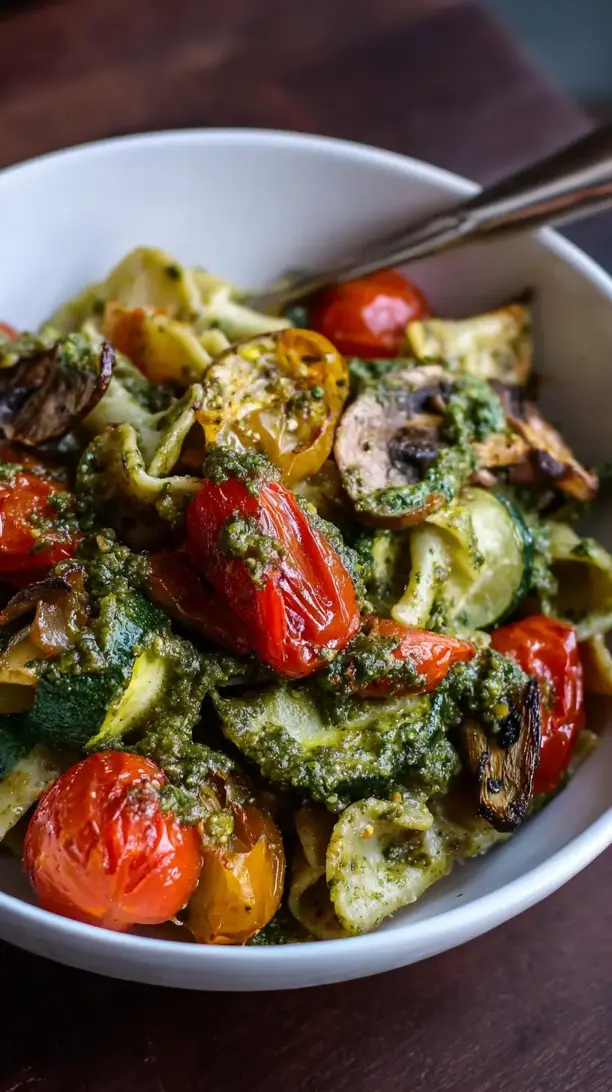
Roasted Veggie Pesto Pasta
Make this easy Roasted Veggie Pesto Pasta with sweet, caramelized vegetables and homemade basil pesto. A vibrant, satisfying meal in 40 minutes. Get the recipe!
Ingredients
For the Pasta and Vegetables
-
400 g pasta of choice (penne, fusilli, or farfalle work great)
-
1 large zucchini (chopped into 1-inch chunks)
-
1 red bell pepper (sliced)
-
1 yellow bell pepper (sliced)
-
1 small red onion (cut into wedges)
-
200 g cherry tomatoes
-
3 tbsp olive oil (divided)
-
1 tsp dried Italian herbs
-
Salt and black pepper (to taste)
For the Pesto
-
100 g fresh basil leaves (packed)
-
50 g grated Parmesan cheese (plus more for serving)
-
50 g pine nuts
-
2 cloves garlic (peeled)
-
Juice of 1/2 a lemon
Instructions
-
First, get your oven nice and hot—preheat it to 220°C (425°F). While it’s heating up, spread your chopped zucchini, bell peppers, red onion, and cherry tomatoes on a large baking sheet. Drizzle them with about two tablespoons of the olive oil, and then sprinkle generously with the dried Italian herbs, salt, and pepper. Use your hands to toss everything together, making sure every piece of vegetable is lightly coated in that herby oil.01
-
Pop the baking sheet into the preheated oven and let the veggies roast for 20-25 minutes. You’re looking for them to be tender and have those beautiful, slightly charred edges.02
-
While the vegetables are roasting, it’s time to make the pesto. In your food processor, combine the fresh basil leaves, toasted pine nuts, garlic cloves, and the grated Parmesan cheese. Pulse it a few times until the ingredients are roughly chopped and combined.03
-
With the processor running on low, slowly stream in the remaining tablespoon of olive oil and the lemon juice. Let it blend until the pesto is mostly smooth but still has a little bit of texture. Season it with a pinch of salt and pepper, then give it a taste.04
-
Now, cook your pasta. Bring a large pot of well-salted water to a rolling boil and cook your chosen pasta according to the package directions until it’s al dente. Just before draining, remember to scoop out that crucial cup of starchy pasta water!05
-
In a large mixing bowl, combine the drained, hot pasta with the roasted vegetables. Dollop all of that gorgeous green pesto on top. Now, start adding the reserved pasta water, a few tablespoons at a time, while you toss everything together.06
-
Give the final dish one last taste and adjust the seasoning if necessary. Serve it immediately, topped with an extra sprinkle of Parmesan cheese and maybe a few fresh basil leaves for a pretty finish.07
Not what you're looking for?