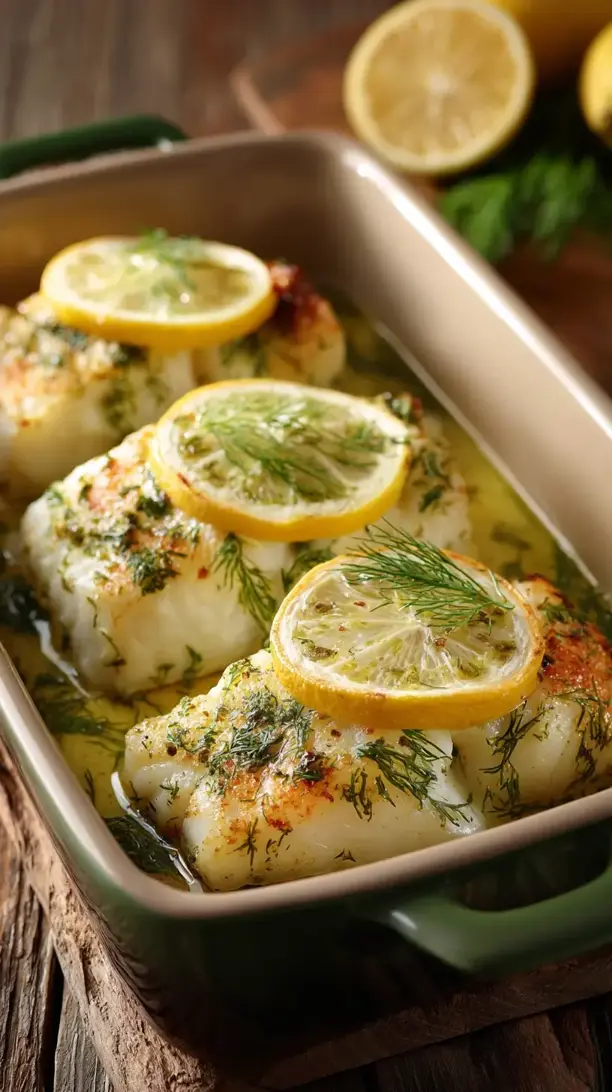
This Baked Cod with Lemon and Dill is a simple, elegant dinner that comes together in under 30 minutes. The cod bakes up tender and flaky, while fresh lemon and dill create a bright, aromatic sauce. It’s a fuss-free meal that delivers maximum flavor with minimal effort.
If you're looking for the perfect Baked Cod with Lemon and Dill, you're in the right place. Whether you love Dinner Ideas or want to explore our Dessert Recipes collection, we've got you covered.


Why You’ll Love This Baked Cod with Lemon and Dill
- Foolproof & Simple: Minimal prep and straightforward baking deliver perfect results.
- Fresh & Vibrant: Zesty lemon and fragrant dill make the delicate cod shine.
- Healthy & Lean: Packed with protein and naturally low in carbs.
- Quick & Easy: Ready from start to finish in under 30 minutes.
Ingredients & Tools
- 4 (150 g each) cod fillets, about 1-inch thick
- 2 tbsp olive oil
- 2 medium lemons
- 3 tbsp fresh dill, finely chopped
- 2 cloves garlic, minced
- 1/2 tsp sea salt
- 1/4 tsp black pepper, freshly ground
- 1/4 tsp paprika (optional, for a hint of color)
Tools: A small baking dish or sheet pan, microplane or zester, small bowl for mixing.
Notes: Use the freshest cod and fresh dill for best flavor; dried dill won’t provide the same vibrant punch.
Nutrition (per serving)
| Calories: | 195 kcal |
| Protein: | 28 g |
| Fat: | 8 g |
| Carbs: | 3 g |
| Fiber: | 1 g |
Serves: 4 | Prep Time: 10 minutes | Cook Time: 15 minutes | Total Time: 25 minutes
Before You Start: Tips & Ingredient Notes
- Pat your cod completely dry. This is the single most important step for getting a nice, non-steamy bake. Use paper towels and really press down to absorb any surface moisture—this helps the seasoning stick and promotes a better texture.
- Zest your lemons before you juice them. It is infinitely easier to zest a whole, firm lemon than a floppy, juiced one. Trust me on this one, it’s a tiny step that saves a lot of frustration.
- Don’t skip the fresh dill. I know I already mentioned it, but it’s worth repeating. The flavor profile of this dish hinges on that bright, anise-like freshness that only comes from the fresh herb. If you absolutely must substitute, fresh parsley or tarragon would be your best bets.
- Check the thickness of your fillets. If your cod fillets are thinner or thicker than the recommended 1-inch, you’ll need to adjust the cooking time accordingly. A little visual check towards the end of baking is your best friend.
How to Make Baked Cod with Lemon and Dill
Step 1: First, preheat your oven to 400°F (200°C). While it’s warming up, grab your cod fillets and pat them thoroughly dry with paper towels. This might seem fussy, but it’s the secret to a beautifully cooked piece of fish, not a steamed one. Place the dried fillets in a single layer in your baking dish.
Step 2: Now, let’s make that gorgeous, fragrant topping. In a small bowl, combine the olive oil, the zest from one lemon, the juice from half a lemon, the chopped fresh dill, minced garlic, salt, pepper, and paprika if you’re using it. Stir it all together until it forms a loose, herb-flecked paste. You’ll notice the aroma is just incredible already.
Step 3: Using a spoon or a pastry brush, divide the lemon-dill mixture evenly over the top of each cod fillet. Make sure to coat them well, getting the mixture into all the nooks and crannies. The oil in the mixture will help the fish stay moist and carry all those lovely flavors right into the flesh as it bakes.
Step 4: Take your second lemon and slice it into thin rounds. Tuck these lemon slices around and even on top of the cod fillets in the baking dish. As they bake, they’ll release their juices and caramelize slightly, adding another layer of citrusy depth to the sauce that forms at the bottom of the pan.
Step 5: Carefully place the baking dish in the preheated oven. Bake for 12-15 minutes. The trick is to look for the fish to become opaque and flake easily with a fork. It should feel firm to the touch but still look incredibly moist. Be careful not to overcook it—cod can go from perfect to dry in a matter of minutes.
Step 6: Once baked, remove the dish from the oven. Let the cod rest for just a couple of minutes right in the pan. This allows the juices to redistribute throughout the fish, ensuring every single bite is succulent. To serve, spoon some of the delicious pan juices from the bottom of the dish over the top of each fillet.
Storage & Freshness Guide
- Fridge: Store leftovers in an airtight container for up to 2 days.
- Freezer: Freeze cooked cod in a sealed bag for up to 1 month; thaw in fridge before reheating.
- Reviving: Reheat gently in a 300°F oven until warmed through to prevent drying.
Serving Suggestions
Complementary Dishes
- Garlic Sautéed Spinach — The sharp, garlicky greens are a perfect textural and flavor contrast to the mild, flaky fish.
- Cauliflower Rice Pilaf — It soaks up the lovely lemony sauce from the cod beautifully, turning a simple side into something special.
- Roasted Asparagus Spears — Their earthy, slightly charred flavor pairs wonderfully with the bright, herbal notes of the main dish.
Drinks
- A Crisp Sauvignon Blanc — Its citrusy and grassy notes are a match made in heaven with the lemon and dill in the recipe.
- Sparkling Water with Cucumber — For a non-alcoholic option, this provides a clean, refreshing palate cleanser between bites.
- Chilled Pinot Grigio — A light, dry white wine that won’t overpower the delicate flavor of the cod.
Something Sweet
- Mixed Berry Parfait — Layers of whipped cream and fresh berries offer a light, sweet finish that doesn’t feel too heavy.
- Lemon Sorbet — It continues the citrus theme in a refreshing, palate-cleansing way that feels just right after a savory meal.
- Dark Chocolate-Dipped Strawberries — A few of these provide a rich, yet simple, sweet bite that perfectly rounds out the dinner.
Top Mistakes to Avoid
- Overcooking the cod. Cod is a very lean fish and has a tendency to dry out quickly. The moment it becomes opaque and flakes easily, it’s done. I’ve messed this up before too—it’s better to check a minute early than a minute late.
- Using dried dill instead of fresh. The flavor is just not the same; dried dill is much weaker and can have a slightly hay-like taste that will let your beautiful, fresh cod down.
- Skipping the step of patting the fish dry. Excess moisture will steam the fish instead of letting it bake, resulting in a soggy texture and diluted flavor. It only takes a second but makes a world of difference.
- Not letting the fish rest after baking. If you cut into it immediately, all those precious juices will run out onto the plate. A brief 2-3 minute rest allows the fibers to relax and reabsorb the moisture.
Expert Tips
- Tip: For an extra burst of freshness, stir another tablespoon of chopped fresh dill into the pan juices right before serving. The heat will wilt it slightly and release its aroma, making the sauce even more vibrant.
- Tip: If your cod fillets are uneven in thickness, you can tuck a folded piece of parchment paper under the thinner end to prop it up. This helps the entire fillet cook at the same rate, preventing the thin end from becoming overcooked and tough.
- Tip: Don’t throw out any leftover lemon-dill pan juices! They are liquid gold. You can drizzle them over your side dishes or even use them as a base for a quick vinaigrette for a lunch salad the next day.
- Tip: To get the most juice out of your lemon, roll it firmly on the countertop under the palm of your hand before you cut and squeeze it. This breaks down the internal membranes and makes the juicing process much more efficient.
FAQs
Can I use frozen cod for this recipe?
Absolutely, you can. The key is to thaw it properly. The best way is to move it from the freezer to the refrigerator the night before you plan to cook. Never thaw fish at room temperature or in warm water, as this can compromise texture and safety. Once fully thawed, pat it extra dry, as frozen fish tends to release more water. The cooking time might be a minute or two longer, so just keep an eye on it.
What other types of fish can I use?
This lemon and dill method is wonderfully versatile. Haddock, halibut, or even a sturdy fish like salmon would work beautifully. Just be mindful of the thickness of the fillets—that will be your main guide for adjusting the cooking time. Thinner fillets will cook much faster, while a thick piece of salmon might need a few extra minutes.
My sauce at the bottom of the pan is very watery. What happened?
This usually happens if the fish wasn’t patted dry enough before seasoning, or if the fish itself was previously frozen and retained a lot of moisture. Don’t worry, you can fix it! After removing the cooked fish, pour the juices into a small saucepan and simmer for a few minutes until they reduce and thicken slightly. Then pour it back over your dish.
How can I tell if the cod is cooked through without cutting into it?
The best test is the flake test. Gently press the tines of a fork into the thickest part of the fillet and twist slightly. The fish should break apart easily into clean, opaque flakes. It should also feel firm to the touch, not soft or jelly-like. An instant-read thermometer should read 145°F (63°C) at the center.
Can I prepare this dish ahead of time?
You can do some of the prep ahead to save time. You can mix the lemon-dill-oil marinade, chop the herbs, and slice the lemons a few hours in advance and keep them separate in the fridge. But I’d recommend assembling and baking the fish just before you’re ready to serve, as the salt in the marinade can start to “cook” the fish (a process called denaturing) and affect its delicate texture if left for too long.



Baked Cod With Lemon And Dill
Make tender, flaky Baked Cod with Lemon and Dill in under 30 minutes. A healthy, elegant dinner that's simple and foolproof. Get the easy recipe now!
Ingredients
For the Ingredients
-
4 cod fillets (150 g each, about 1-inch thick)
-
2 tbsp olive oil
-
2 lemons (medium)
-
3 tbsp fresh dill (finely chopped)
-
2 cloves garlic (minced)
-
1/2 tsp sea salt
-
1/4 tsp black pepper (freshly ground)
-
1/4 tsp paprika (optional, for a hint of color)
Instructions
-
First, preheat your oven to 400°F (200°C). While it’s warming up, grab your cod fillets and pat them thoroughly dry with paper towels. This might seem fussy, but it’s the secret to a beautifully cooked piece of fish, not a steamed one. Place the dried fillets in a single layer in your baking dish.01
-
Now, let’s make that gorgeous, fragrant topping. In a small bowl, combine the olive oil, the zest from one lemon, the juice from half a lemon, the chopped fresh dill, minced garlic, salt, pepper, and paprika if you’re using it. Stir it all together until it forms a loose, herb-flecked paste. You’ll notice the aroma is just incredible already.02
-
Using a spoon or a pastry brush, divide the lemon-dill mixture evenly over the top of each cod fillet. Make sure to coat them well, getting the mixture into all the nooks and crannies. The oil in the mixture will help the fish stay moist and carry all those lovely flavors right into the flesh as it bakes.03
-
Take your second lemon and slice it into thin rounds. Tuck these lemon slices around and even on top of the cod fillets in the baking dish. As they bake, they’ll release their juices and caramelize slightly, adding another layer of citrusy depth to the sauce that forms at the bottom of the pan.04
-
Carefully place the baking dish in the preheated oven. Bake for 12-15 minutes. The trick is to look for the fish to become opaque and flake easily with a fork. It should feel firm to the touch but still look incredibly moist. Be careful not to overcook it—cod can go from perfect to dry in a matter of minutes.05
-
Once baked, remove the dish from the oven. Let the cod rest for just a couple of minutes right in the pan. This allows the juices to redistribute throughout the fish, ensuring every single bite is succulent. To serve, spoon some of the delicious pan juices from the bottom of the dish over the top of each fillet.06
Not what you're looking for?