This Baked Pesto Salmon is a magical combination of rich, herbaceous pesto and tender, flaky fish. It’s incredibly simple to prepare yet elegant enough for any occasion. The aroma that fills your kitchen is absolutely incredible.
Craving a delicious Baked Pesto Salmon? You've come to the right spot! From Dinner Ideas favorites to amazing Crockpot Recipes recipes, there's something here for everyone.


Why You’ll Love This Baked Pesto Salmon
- Quick & fuss-free: Just 5 minutes of prep before the oven takes over.
- Unbeatable flavor: Vibrant pesto complements the salmon’s natural richness.
- Versatile centerpiece: Pairs beautifully with pasta, salads, or roasted veggies.
- Foolproof method: Baking ensures moist, perfectly cooked salmon every time.
Ingredients & Tools
- 4 salmon fillets (about 150-180 g / 5-6 oz each), skin-on or skinless
- ½ cup high-quality basil pesto (homemade or store-bought)
- 1 lemon
- 2 tbsp olive oil
- ½ tsp sea salt, or to taste
- ¼ tsp freshly cracked black pepper
- 1 tbsp toasted pine nuts (optional, for garnish)
- Fresh basil leaves (optional, for garnish)
Tools: A baking sheet, parchment paper or aluminum foil, a small bowl, and a basting brush.
Notes: The quality of your pesto makes a difference. Homemade is fantastic, but a good jarred pesto works too—taste it first and adjust with extra salt or lemon juice if needed.
Nutrition (per serving)
| Calories: | 385 kcal |
| Protein: | 35 g |
| Fat: | 26 g |
| Carbs: | 3 g |
| Fiber: | 1 g |
Serves: 4 | Prep Time: 5 minutes | Cook Time: 12-15 minutes | Total Time: 20 minutes
Before You Start: Tips & Ingredient Notes
- What kind of salmon should I use? I prefer center-cut fillets for their even thickness, which helps them cook uniformly. You can use skin-on or skinless—the skin can help protect the bottom from drying out and becomes deliciously crisp if you sear it first, but skinless is perfectly fine for pure simplicity.
- Is homemade pesto worth the effort? Honestly, for this recipe, it really shines. A fresh homemade pesto has a brighter, more vibrant flavor that isn’t muted by preservatives. If you’re using jarred, don’t be shy about giving it a refresh with a squeeze of fresh lemon juice to wake up the flavors.
- Don’t skip bringing the salmon to room temperature. Taking the salmon out of the fridge 15-20 minutes before baking might seem like a small step, but it ensures the fish cooks evenly from edge to center, preventing a cold, undercooked middle and an overcooked exterior.
- Consider your pesto’s oil content. If your pesto seems a little too oily or runny, you can blot the top with a paper towel or give it a quick stir to re-emulsify before spreading. A thicker pesto will adhere to the salmon better and create a more defined crust.
How to Make Baked Pesto Salmon
Step 1: First, preheat your oven to 200°C (400°F) and line a rimmed baking sheet with parchment paper. This little bit of prep makes cleanup an absolute breeze. Pat the salmon fillets completely dry with paper towels—this is a crucial step for getting a nice sear on the fish and helping the pesto stick properly, rather than sliding off a wet surface.
Step 2: Place the dried salmon fillets on the prepared baking sheet. Drizzle them lightly with about one tablespoon of the olive oil and season generously with sea salt and black pepper. Use your hands or a brush to rub the oil and seasoning all over the top and sides of each fillet. You’ll notice this base layer of oil helps the pesto spread more easily and promotes beautiful browning.
Step 3: Now, for the main event! Spoon the pesto onto the center of each salmon fillet. Using the back of the spoon, gently spread the pesto in an even layer over the entire top surface and down the sides a little. You want a good, generous coating—don’t be shy! This layer will become fragrant and slightly caramelized in the heat of the oven.
Step 4: Thinly slice half of the lemon and arrange the slices underneath or around the salmon fillets on the baking sheet. This isn’t just for looks—the lemon will steam and release its juices, infusing the salmon with a subtle, bright acidity. Squeeze the juice from the remaining lemon half evenly over the top of the pesto-covered fillets.
Step 5: Carefully transfer the baking sheet to the preheated oven. Bake for 12-15 minutes. The exact time will depend on the thickness of your fillets. You’re looking for the salmon to be opaque and flake easily with a fork at its thickest part. The pesto should look set and be fragrant. Be careful not to overbake—remember, the salmon will continue to cook for a minute or two after you take it out of the oven.
Step 6: Once out of the oven, let the salmon rest on the baking sheet for 2-3 minutes. This allows the juices to redistribute throughout the fish, ensuring every single bite is moist. Just before serving, garnish with the optional toasted pine nuts and fresh basil leaves for a beautiful finish and an extra layer of texture and flavor.
Storage & Freshness Guide
- Fridge: Store leftovers in an airtight container for up to 2 days.
- Freezer: Not recommended; pesto may darken and texture can suffer.
- Reviving: Reheat gently in a 300°F oven until just warm to avoid drying out.
Serving Suggestions
Complementary Dishes
- Garlic Parmesan Roasted Asparagus — The sharp, savory notes from the cheese and garlic are a perfect match for the herby salmon, and it can roast alongside the fish on another rack in the oven.
- Lemon Herb Quinoa — A light, fluffy quinoa pilaf with lemon zest and chopped fresh herbs like dill or parsley soaks up the delicious pesto juices from the salmon beautifully.
- Creamy Polenta — For ultimate comfort, serve the flaky salmon over a bed of soft, creamy polenta. The mild corn flavor is a wonderful canvas for the bold pesto.
Drinks
- A Crisp Sauvignon Blanc — The wine’s classic citrus and grassy notes create a refreshing contrast that cuts through the richness of the salmon and pesto perfectly.
- Sparkling Water with Lemon & Mint — A non-alcoholic option that’s incredibly refreshing; the bubbles and citrus cleanse the palate between each flavorful bite.
- A Light Pale Ale — The slight bitterness and carbonation in a pale ale can stand up to the robust pesto without overwhelming the delicate flavor of the fish.
Something Sweet
- Lemon Sorbet — After a rich meal, a scoop of tangy, palate-cleansing lemon sorbet feels light, refreshing, and provides the perfect sweet ending.
- Almond Biscotti — The nutty flavor of the biscotti echoes the pine nuts in the pesto, and their crunchy texture is lovely for dipping into a cup of coffee.
- Fresh Berry Crostata — A rustic, free-form tart filled with seasonal berries offers a sweet and slightly tart finish that doesn’t feel too heavy.
Top Mistakes to Avoid
- Mistake: Using a dark-colored baking sheet without parchment. Dark pans absorb more heat and can cause the bottom of the salmon to cook too quickly and potentially burn, while the parchment prevents sticking and promotes even cooking.
- Mistake: Spreading pesto on wet salmon. If you don’t pat the fillets dry, the pesto won’t adhere properly and can slide right off. You’ll also end up steaming the fish instead of getting a nice, flavorful crust.
- Mistake: Overbaking the salmon. It’s the most common error! Salmon continues to cook after it leaves the oven (carryover cooking). Take it out when it’s still slightly translucent in the very center—it will perfect itself during the rest time.
- Mistake: Skipping the rest time. Cutting into the salmon immediately causes all those precious juices to run out onto the plate, leaving the fish drier than it needs to be. A brief rest is non-negotiable for moist results.
Expert Tips
- Tip: For a crispier top, use the broiler. For the last 1-2 minutes of cooking, switch your oven to a high broiler setting. Watch it like a hawk! This will blister and slightly char the top of the pesto, adding a wonderful smoky depth and extra texture.
- Tip: Customize your pesto. Don’t be afraid to experiment! Try a sun-dried tomato pesto for a sweeter, deeper flavor, or a kale and walnut pesto for a heartier, earthier twist. The method remains exactly the same.
- Tip: Check for doneness with a thermometer. For absolute precision, use an instant-read thermometer. Insert it into the thickest part of the fillet; you’re aiming for an internal temperature of 52-54°C (125-130°F) for medium-rare, or 57°C (135°F) for medium. It will rise a few more degrees as it rests.
- Tip: Make it a complete sheet pan meal. Add your favorite vegetables to the same pan! Chopped zucchini, cherry tomatoes, and red onion tossed in oil and seasoning will roast beautifully alongside the salmon, making dinner even easier.
FAQs
Can I use frozen salmon for this recipe?
Absolutely, but proper thawing is key. The best way is to transfer the frozen fillets to your refrigerator and let them thaw overnight. Never thaw salmon at room temperature or in warm water, as this can compromise texture and safety. Once fully thawed, pat it very dry with paper towels before proceeding with the recipe. You may find frozen fillets release more water, so the drying step is even more important.
How do I know when the salmon is perfectly cooked?
The most reliable method is the flake test. Gently press a fork onto the top of the salmon and twist slightly. The flesh should separate easily into large, moist flakes. It should also be opaque throughout, perhaps with a slightly darker, still-translucent line in the very center for medium. Remember, it will continue to cook after being removed from the oven, so it’s better to err on the side of slightly underdone.
Can I make this ahead of time?
You can prep the components ahead to save time! You can spread the pesto on the salmon fillets, cover the baking sheet tightly with plastic wrap, and refrigerate for up to 4 hours before baking. I don’t recommend baking it far in advance, as reheating can easily dry out the fish. It’s truly best enjoyed fresh from the oven.
What can I use instead of pine nuts for garnish?
If you have a nut allergy or just want to switch things up, toasted sunflower seeds or pumpkin seeds (pepitas) are fantastic, crunchy alternatives. For a nut-free pesto itself, you can use those same seeds blended in, or even breadcrumbs for a different texture.
My pesto turned dark in the oven. Is that normal?
Yes, completely! Basil is a delicate herb, and it will darken when exposed to heat—it’s a natural reaction. It doesn’t mean it’s burnt, just that the chlorophyll has cooked. It will still taste delicious. To keep it a brighter green, you can tent the baking sheet with foil for the first half of the cooking time, then remove it to let the top set.


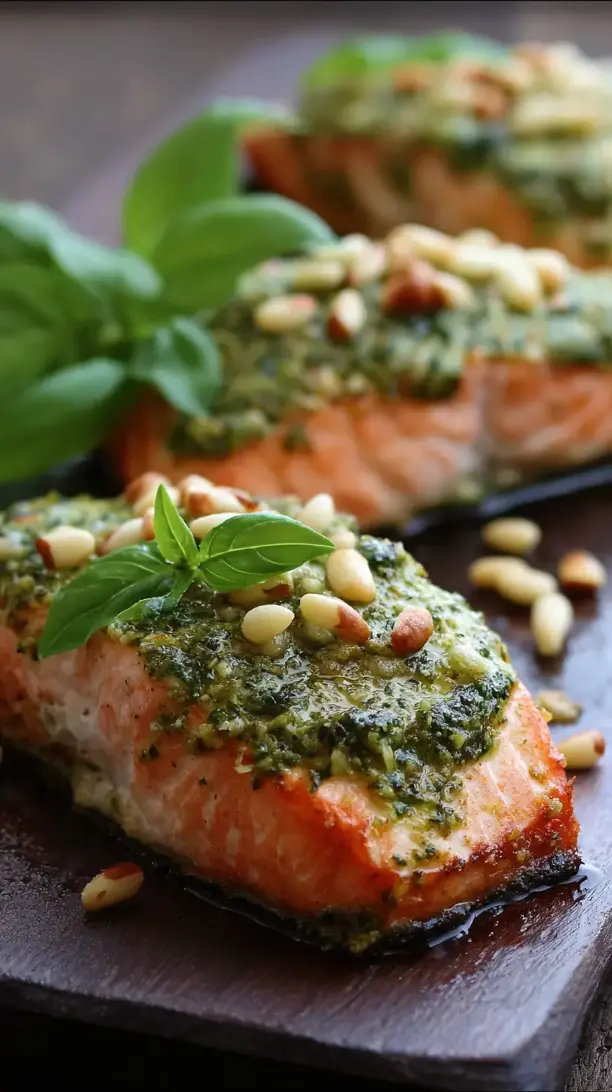
Baked Pesto Salmon
Make this easy Baked Pesto Salmon recipe for a quick, elegant dinner. Tender salmon with flavorful pesto is ready in 20 minutes. Get the simple recipe now!
Ingredients
For the Ingredients & Tools
-
4 salmon fillets (about 150-180 g / 5-6 oz each, skin-on or skinless)
-
½ cup high-quality basil pesto (homemade or store-bought)
-
1 lemon
-
2 tbsp olive oil
-
½ tsp sea salt (or to taste)
-
¼ tsp freshly cracked black pepper
-
1 tbsp toasted pine nuts (optional, for garnish)
-
Fresh basil leaves (optional, for garnish)
Instructions
-
First, preheat your oven to 200°C (400°F) and line a rimmed baking sheet with parchment paper. Pat the salmon fillets completely dry with paper towels.01
-
Place the dried salmon fillets on the prepared baking sheet. Drizzle them lightly with about one tablespoon of the olive oil and season generously with sea salt and black pepper. Use your hands or a brush to rub the oil and seasoning all over the top and sides of each fillet.02
-
Spoon the pesto onto the center of each salmon fillet. Using the back of the spoon, gently spread the pesto in an even layer over the entire top surface and down the sides a little.03
-
Thinly slice half of the lemon and arrange the slices underneath or around the salmon fillets on the baking sheet. Squeeze the juice from the remaining lemon half evenly over the top of the pesto-covered fillets.04
-
Carefully transfer the baking sheet to the preheated oven. Bake for 12-15 minutes. You’re looking for the salmon to be opaque and flake easily with a fork at its thickest part. The pesto should look set and be fragrant.05
-
Once out of the oven, let the salmon rest on the baking sheet for 2-3 minutes. Just before serving, garnish with the optional toasted pine nuts and fresh basil leaves.06
Not what you're looking for?