
Chicken Cacciatore is a rustic Italian hunter’s stew that’s hearty and deeply flavorful. This one-pot wonder features tender chicken simmered in a rich tomato, herb, and wine sauce. It’s a comforting, timeless dish perfect for family dinners or easy entertaining.
Nothing beats a great Chicken Cacciatore. Whether you're a fan of Stew or want to try something from our Christmas Cookie selection, keep scrolling!



Why You’ll Love This Chicken Cacciatore
- One-pot wonder: Everything cooks in a single pot for maximum flavor and easy cleanup.
- Deep, complex flavor: Seared chicken, vegetables, tomato, and wine create a rich, savory sauce.
- Forgiving & flexible: Adapts easily to ingredient swaps—the slow simmer ensures success.
- Better next day: Flavors meld and deepen overnight, making it ideal for make-ahead meals.
Ingredients & Tools
- 1.5 kg chicken pieces (a mix of thighs and drumsticks works beautifully)
- 2 tbsp olive oil
- 1 large yellow onion, thinly sliced
- 3 cloves garlic, minced
- 200 g cremini or button mushrooms, sliced
- 1 large red bell pepper, sliced into strips
- 120 ml dry red wine (like a Chianti or Merlot)
- 800 g canned crushed tomatoes
- 2 tbsp tomato paste
- 2 fresh rosemary sprigs
- 4 fresh thyme sprigs
- 2 bay leaves
- Salt and freshly ground black pepper to taste
Tools: A large Dutch oven or heavy-bottomed pot with a lid is essential here.
Notes: Use good-quality canned crushed tomatoes for the richest sauce. Don’t skip the red wine—it adds essential acidity and depth.
Nutrition (per serving)
| Calories: | 480 kcal |
| Protein: | 42 g |
| Fat: | 22 g |
| Carbs: | 18 g |
| Fiber: | 5 g |
Serves: 4 | Prep Time: 20 minutes | Cook Time: 1 hour 10 minutes | Total Time: 1 hour 30 minutes
Before You Start: Tips & Ingredient Notes
- Chicken skin is your flavor friend. When browning the chicken, make sure the skin is dry and you get a really good, deep golden sear. This isn’t just for looks—that fond (the browned bits at the bottom of the pot) is the foundation of your sauce’s flavor.
- Don’t rush the vegetable sauté. Let the onions, mushrooms, and peppers soften and release their moisture. You’ll know they’re ready when the onions are translucent and the mushrooms have a nice golden tinge. This step builds sweetness and complexity.
- Use a wine you’d actually drink. There’s an old cooking rule that holds true here: if you wouldn’t enjoy a glass of it, don’t cook with it. The wine’s flavor concentrates, so a harsh or overly sweet wine will negatively impact the final dish.
- Fresh herbs make a difference. While dried herbs can work in a pinch, the bright, aromatic quality of fresh rosemary and thyme is really what gives this dish its authentic, vibrant character. If you must substitute, use one-third the amount of dried.
How to Make Chicken Cacciatore
Step 1: Pat the chicken pieces completely dry with paper towels and season them generously on all sides with salt and pepper. This is a crucial step for getting that beautifully crisp, browned skin. Heat the olive oil in your Dutch oven over medium-high heat until it shimmers. Working in batches to avoid crowding the pan, add the chicken pieces skin-side down and sear for 5-7 minutes, without moving them, until the skin is deeply golden and releases easily from the pot. Flip and cook for another 2-3 minutes on the other side. Transfer the browned chicken to a plate and set aside.
Step 2: Reduce the heat to medium. You should have a lovely layer of rendered chicken fat and oil in the pot—this is liquid gold! Add the sliced onion and a pinch of salt. Sauté for about 5 minutes, stirring occasionally, until the onions have softened and started to become translucent. Now, add the minced garlic and stir for just 30 seconds until fragrant. You’ll notice that incredible aroma filling your kitchen.
Step 3: Add the sliced mushrooms and bell pepper to the pot. Cook, stirring now and then, for about 8-10 minutes. The vegetables will release their liquid and then start to brown slightly. The trick is to let them cook down and concentrate their flavor. You’re building the soul of the sauce right here in this pot.
Step 4: Push the vegetables to the side and add the tomato paste to the center of the pot. Let it cook for a minute, stirring, until it darkens slightly and smells sweet. This quick cook removes the raw tinny taste. Now, pour in the red wine to deglaze the pot, using your spoon to scrape up all those delicious browned bits from the bottom. Let it bubble and reduce by about half, which should take 2-3 minutes.
Step 5: Stir in the crushed tomatoes, then add the fresh rosemary, thyme, and bay leaves. Nestle the seared chicken pieces back into the sauce, along with any accumulated juices from the plate. Bring the sauce to a gentle simmer, then immediately reduce the heat to low. Cover the pot with the lid slightly ajar to allow some steam to escape.
Step 6: Let the cacciatore simmer gently for 45 minutes to 1 hour. You’re looking for the chicken to be fork-tender and practically falling off the bone. The sauce should have thickened nicely and the oil will likely be separating a little on the surface—that’s a sign of a good, long-cooked sauce. Taste the sauce and adjust the seasoning with more salt and pepper if needed. Remove the bay leaves and herb stems before serving.
Storage & Freshness Guide
- Fridge: Cool completely and store in an airtight container for 3–4 days.
- Freezer: Freeze in sealed containers or bags for up to 3 months.
- Reviving: Reheat gently on the stovetop, adding a splash of water or broth if the sauce has thickened too much.
Serving Suggestions
Complementary Dishes
- Creamy Polenta — The soft, creamy texture is the perfect canvas to soak up every last drop of the rich sauce. It’s a classic pairing for a reason.
- Crusty Garlic Bread — For a more casual meal, nothing beats a thick slice of toasted, garlic-rubbed bread for scooping up the chicken and vegetables.
- Pappardelle Pasta — The wide, flat ribbons of pappardelle hold the chunky sauce beautifully, making for a truly hearty and satisfying plate.
Drinks
- A medium-bodied Chianti — The classic Italian choice, its bright acidity and cherry notes cut through the richness of the tomato sauce perfectly.
- An Italian Pale Ale — If you prefer beer, the crisp, hoppy character of a Italian-style pale ale provides a refreshing contrast.
- Sparkling Water with Lemon — A simple, effervescent non-alcoholic option that cleanses the palate between each flavorful bite.
Something Sweet
- Tiramisu — The coffee-soaked layers and light mascarpone cream offer a cool, creamy finish that contrasts wonderfully with the savory stew.
- Lemon Sorbet — A scoop of sharp, refreshing sorbet is the perfect palate-cleanser after a rich and hearty meal.
- Panna Cotta with Berry Compote — The silky, delicate vanilla flavor of the panna cotta provides a simple, elegant end note.
Top Mistakes to Avoid
- Mistake: Crowding the pan when browning the chicken. If you add too many chicken pieces at once, they’ll steam instead of sear. You’ll miss out on that crucial fond and the skin will be pale and rubbery. I’ve messed this up before too—patience is key!
- Mistake: Skipping the deglazing step. After sautéing the vegetables, those browned bits are packed with flavor. Not using the wine to scrape them all up means you’re literally leaving the best part of the flavor behind in the pot.
- Mistake: Boiling the stew instead of simmering. A gentle simmer is what tenderizes the chicken without making it tough. A rolling boil will cause the meat to seize up and the sauce may scorch on the bottom.
- Mistake: Adding dried herbs at the very end. Unlike fresh herbs, dried herbs need time to rehydrate and release their flavor into the sauce. Add them when you add the tomatoes, not right before serving.
Expert Tips
- Tip: For an even richer sauce, marinate the chicken. A few hours before cooking, rub the chicken with a little olive oil, salt, pepper, and one of the chopped herb sprigs. This simple step adds another subtle layer of flavor throughout the meat.
- Tip: Brown the tomato paste. As mentioned in the steps, taking that extra minute to cook the tomato paste until it darkens removes its raw edge and unlocks a deeper, sweeter, more complex flavor that permeates the entire dish.
- Tip: Finish with fresh herbs. While the stewed herbs provide the base flavor, chopping a little extra fresh rosemary or thyme and sprinkling it over the finished dish just before serving adds a vibrant, aromatic lift that makes all the difference.
- Tip: Let it rest before serving. If you can manage it, turn off the heat and let the cacciatore sit, covered, for 10-15 minutes before serving. This allows the chicken to reabsorb some of the juices, making it even more succulent.
FAQs
Can I make Chicken Cacciatore in a slow cooker?
Absolutely! Follow the steps to brown the chicken and sauté the vegetables in a skillet first—this is non-negotiable for flavor. Then, transfer everything to your slow cooker, add the remaining ingredients, and cook on low for 6-7 hours or on high for 3-4 hours. The chicken will be incredibly tender, though the sauce might be a bit thinner; you can thicken it at the end by simmering uncovered.
What can I use instead of red wine?
If you prefer not to cook with alcohol, you have a couple of great options. You can use an equal amount of chicken broth with a tablespoon of red wine vinegar or balsamic vinegar stirred in to mimic the acidity. Another option is unsweetened cranberry juice, which provides a similar tartness, though the flavor profile will be slightly fruitier.
Can I use boneless, skinless chicken breasts?
You can, but you’ll need to adjust the cooking time significantly to prevent them from drying out. Brown them quickly as in step one, but then add them back to the sauce to simmer for only the last 20-25 minutes of cooking, just until cooked through. Thighs are much more forgiving for this long, slow-cooked method.
How long do leftovers keep?
Stored in an airtight container in the refrigerator, Chicken Cacciatore will keep beautifully for 3-4 days. In fact, many argue it’s even better on the second day as the flavors have more time to meld. You can also freeze it for up to 3 months. Thaw overnight in the fridge before reheating gently on the stovetop.
My sauce is too thin. How can I thicken it?
If your sauce hasn’t reduced to your liking, the easiest fix is to remove the chicken and simmer the sauce uncovered over medium heat for 10-15 minutes, stirring occasionally, until it reaches your desired consistency. Alternatively, you can mix a tablespoon of cornstarch with two tablespoons of cold water and stir this slurry into the simmering sauce until it thickens.


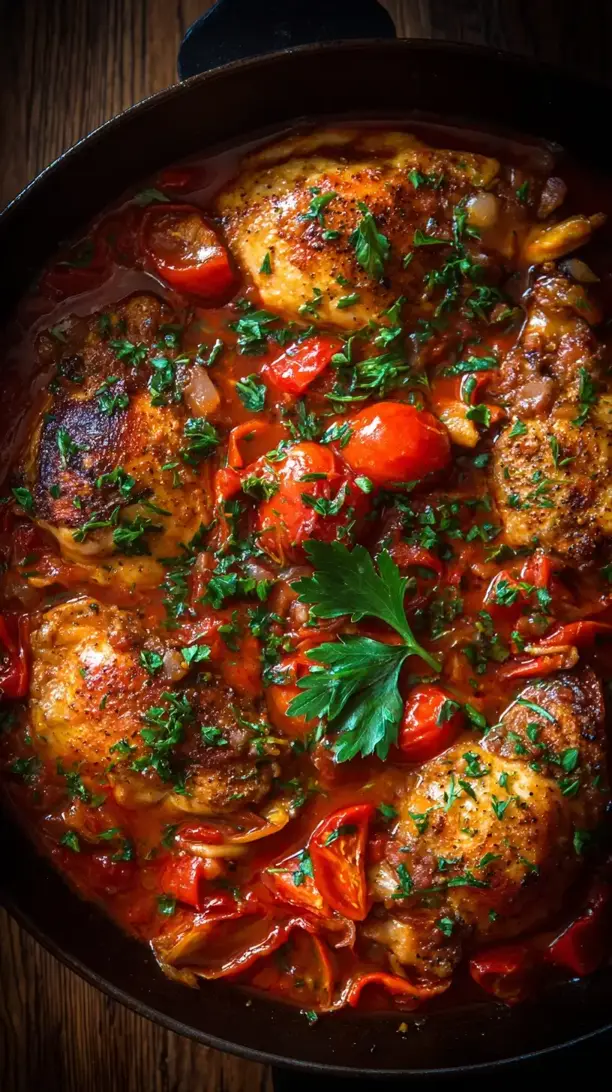
Chicken Cacciatore
Make classic Chicken Cacciatore, a rustic Italian one-pot stew with tender chicken in a rich tomato and herb sauce. Get the easy, authentic recipe now!
Ingredients
For the Ingredients
-
1.5 kg chicken pieces (a mix of thighs and drumsticks works beautifully)
-
2 tbsp olive oil
-
1 large yellow onion (thinly sliced)
-
3 cloves garlic (minced)
-
200 g cremini or button mushrooms (sliced)
-
1 large red bell pepper (sliced into strips)
-
120 ml dry red wine (like a Chianti or Merlot)
-
800 g canned crushed tomatoes
-
2 tbsp tomato paste
-
2 fresh rosemary sprigs
-
4 fresh thyme sprigs
-
2 bay leaves
-
Salt and freshly ground black pepper (to taste)
Instructions
-
Pat the chicken pieces completely dry with paper towels and season them generously on all sides with salt and pepper. Heat the olive oil in your Dutch oven over medium-high heat until it shimmers. Working in batches to avoid crowding the pan, add the chicken pieces skin-side down and sear for 5-7 minutes, without moving them, until the skin is deeply golden and releases easily from the pot. Flip and cook for another 2-3 minutes on the other side. Transfer the browned chicken to a plate and set aside.01
-
Reduce the heat to medium. Add the sliced onion and a pinch of salt. Sauté for about 5 minutes, stirring occasionally, until the onions have softened and started to become translucent. Add the minced garlic and stir for just 30 seconds until fragrant.02
-
Add the sliced mushrooms and bell pepper to the pot. Cook, stirring now and then, for about 8-10 minutes. The vegetables will release their liquid and then start to brown slightly.03
-
Push the vegetables to the side and add the tomato paste to the center of the pot. Let it cook for a minute, stirring, until it darkens slightly and smells sweet. Pour in the red wine to deglaze the pot, using your spoon to scrape up all those delicious browned bits from the bottom. Let it bubble and reduce by about half, which should take 2-3 minutes.04
-
Stir in the crushed tomatoes, then add the fresh rosemary, thyme, and bay leaves. Nestle the seared chicken pieces back into the sauce, along with any accumulated juices from the plate. Bring the sauce to a gentle simmer, then immediately reduce the heat to low. Cover the pot with the lid slightly ajar to allow some steam to escape.05
-
Let the cacciatore simmer gently for 45 minutes to 1 hour. You’re looking for the chicken to be fork-tender and practically falling off the bone. The sauce should have thickened nicely and the oil will likely be separating a little on the surface. Taste the sauce and adjust the seasoning with more salt and pepper if needed. Remove the bay leaves and herb stems before serving.06
Not what you're looking for?


