Spaghetti Carbonara is a lesson in simplicity, timing, and trusting the process. This classic Roman dish delivers an impossibly creamy sauce without cream, clinging to each strand of pasta. It’s deeply savory, wonderfully rich, and comes together in under thirty minutes.
If you're looking for the perfect Spaghetti Carbonara, you're in the right place. Whether you love Dinner Ideas or want to explore our Christmas Cookie collection, we've got you covered.



Why You’ll Love This Spaghetti Carbonara
- Simple ingredients: Just five main components create a spectacular result.
- Creamy without cream: The emulsion of eggs, cheese, and starchy water creates a silky sauce.
- Quick to make: Ready from start to finish in about 25 minutes.
- Authentic Roman taste: Salty guanciale and sharp Pecorino deliver true Italian flavor.
Ingredients & Tools
- 400 g spaghetti
- 150 g guanciale, diced
- 3 large egg yolks + 1 whole egg
- 100 g Pecorino Romano, finely grated, plus more for serving
- 1 tsp freshly cracked black pepper
- Fine sea salt, for the pasta water
Tools: A large pot for pasta, a large skillet or frying pan, a mixing bowl, tongs, and a microplane or fine grater.
Notes: Guanciale provides the best flavor base; Pecorino Romano’s sharp, salty character is essential.
Nutrition (per serving)
| Calories: | 650 kcal |
| Protein: | 28 g |
| Fat: | 32 g |
| Carbs: | 60 g |
| Fiber: | 3 g |
Serves: 4 | Prep Time: 10 minutes | Cook Time: 15 minutes | Total Time: 25 minutes
Before You Start: Tips & Ingredient Notes
- Guanciale vs. Pancetta vs. Bacon. Guanciale (cured pork cheek) is traditional and provides an unparalleled richness. Pancetta is a great substitute, but bacon will add a smoky flavor that isn’t classic. If you use bacon, blanch it first to reduce the smokiness.
- The egg situation. Using mostly yolks with one whole egg gives you the richest, creamiest sauce with a beautiful yellow color, without making it too eggy. Have them at room temperature to help them incorporate more smoothly into the hot pasta.
- Grate your own cheese. Pre-grated cheese contains anti-caking agents like potato starch, which can prevent your sauce from becoming silky and smooth. A microplane grater will give you a fine, fluffy grate that melts perfectly.
- Your pasta water is liquid gold. Salt it well—it should taste like the sea—and save a generous amount before draining. The starch in the water is the key to emulsifying the sauce and getting it to the right consistency.
How to Make Spaghetti Carbonara
Step 1: Begin by bringing a large pot of well-salted water to a rolling boil. While you wait, you can get all your other components ready. This is a fast-paced dish, so having everything prepped and within arm’s reach—what the French call *mise en place*—is absolutely crucial for success. You’ll notice the difference it makes when you’re not scrambling to grate cheese while your pasta is already cooked.
Step 2: Add your spaghetti to the boiling water and cook according to the package directions, but aim for al dente. You want a firm bite to it because it will cook for another minute in the pan later. While the pasta cooks, place your diced guanciale in a large, cold skillet. Turn the heat to medium and let it render slowly. You’re looking for the fat to become translucent and the meaty bits to become golden and crispy. This should take about 8-10 minutes. Be careful not to burn it.
Step 3: While the guanciale renders and the pasta boils, it’s time to make the heart of the sauce. In a medium mixing bowl, combine the 3 egg yolks and 1 whole egg. Whisk them together until just combined—you’re not trying to add air, just to homogenize them. Then, whisk in your finely grated Pecorino Romano and the freshly cracked black pepper. The mixture will be very thick, almost like a paste. That’s exactly what you want at this stage.
Step 4: Once the guanciale is crispy, use a slotted spoon to remove it from the skillet, leaving the rendered fat behind. Turn the heat off under the skillet. You now have a pan full of incredibly flavorful fat. This is your sauce base. The goal is to keep this fat hot, but not so hot that it scrambles the eggs when you add them later.
Step 5: This is the most critical part—the assembly. Just before your pasta is perfectly al dente, use tongs to transfer it directly from the pot into the skillet with the guanciale fat. A little water clinging to the pasta is good! Now, toss the pasta vigorously in the fat. You’ll see it start to glisten and coat every strand. The trick is to work quickly but confidently from here.
Step 6: Take the skillet completely off the heat source. Let it sit for about 30 seconds to cool down slightly—this is your insurance policy against scrambled eggs. Now, slowly drizzle in a couple of tablespoons of the hot, starchy pasta water into your egg and cheese mixture while whisking constantly. This step, called tempering, gently raises the temperature of the eggs.
Step 7: Now, pour the tempered egg mixture over the pasta in the skillet. Immediately start tossing and stirring with rapid, confident motions. Use the tongs to lift and fold the pasta, coating everything. The residual heat from the pasta and pan will cook the eggs, creating a creamy, glossy sauce. If it looks too thick, add another splash of pasta water until it flows smoothly and coats the spaghetti luxuriously.
Step 8: Finally, stir in the crispy guanciale pieces, reserving a few for garnish on top. Give everything one final toss to distribute the meat evenly. Serve immediately in warm bowls, with an extra crack of black pepper and a generous snowfall of additional Pecorino Romano. The sauce will continue to thicken as it sits, so speed is your friend here.
Storage & Freshness Guide
- Fridge: Store leftovers in an airtight container for up to 1 day. Reheat gently.
- Freezer: Not recommended; the sauce will separate and become grainy upon thawing.
- Reviving: Reheat gently in a skillet with a splash of water, stirring constantly.
Serving Suggestions
Complementary Dishes
- A simple arugula salad — The peppery, bitter notes of fresh arugula dressed with just lemon juice and olive oil provide a crisp, refreshing counterpoint to the rich, savory pasta.
- Sautéed bitter greens — Something like broccoli rabe or kale, quickly wilted with garlic and a pinch of chili flake, adds a wonderful earthy depth and a textural variation that complements the creaminess.
- Garlic breadsticks — For the ultimate carb-lover’s experience, a few warm, cheesy breadsticks are perfect for swooping up any last traces of that incredible sauce left in the bowl.
Drinks
- A crisp Italian white wine — A glass of Verdicchio or Vermentino, with its bright acidity and citrus notes, cuts through the richness of the dish beautifully and cleanses the palate between bites.
- A light Italian red — If you prefer red, opt for a chilled, low-tannin wine like a Frappato or a young Chianti that won’t overpower the delicate egg and cheese sauce.
- Sparkling water with lemon — The bubbles and citrus are a non-alcoholic way to achieve that same palate-cleansing effect, making each bite of carbonara taste as vibrant as the first.
Something Sweet
- Affogato — A simple scoop of vanilla gelato or ice cream “drowned” with a shot of hot espresso is the quintessential Italian finish, offering a hit of bitter coffee and cool, creamy sweetness.
- Almond biscotti — These crunchy, twice-baked cookies are perfect for dipping into a small glass of Vin Santo or a cup of strong coffee, providing a lovely, nutty end to the meal.
- Lemon sorbet — Its sharp, clean, and refreshing citrus flavor acts as a perfect palate cleanser after a rich and savory main course, leaving you feeling light and satisfied.
Top Mistakes to Avoid
- Adding cream. This is the cardinal sin of carbonara. The creaminess should come solely from the emulsified eggs, cheese, and pasta water. Adding dairy cream makes the dish heavy and masks the beautiful, sharp flavor of the Pecorino.
- Using a hot pan to mix in the eggs. If your skillet is still on the heat when you add the egg mixture, you will instantly get scrambled eggs with pasta. Always, always take the pan off the heat and let it cool for a moment first.
- Not saving your pasta water. That starchy, salty water is the magic potion that brings your sauce together. Without it, your egg and cheese mixture will likely be too thick and clumpy instead of fluid and silky.
- Overcooking the pasta. You need that firm, al dente texture because the pasta continues to cook slightly when you toss it with the hot sauce. Mushy spaghetti will result in a sad, bloated final dish.
Expert Tips
- Tip: Warm your serving bowls. Place your empty bowls in the oven on the lowest setting for a few minutes before serving. A warm bowl will keep your carbonara hot and creamy for longer, preventing the sauce from seizing up as you eat.
- Tip: Use the pasta cooking water to temper. Instead of adding the raw egg mixture directly to the hot pasta, first whisk a few tablespoons of the starchy pasta water into the eggs. This tempers them, raising their temperature gradually and making it much harder to accidentally scramble them.
- Tip: Don’t drain the pasta in a colander. Use tongs to transfer the pasta directly from the pot to the skillet. This method ensures you carry over just the right amount of starchy water with the pasta, which is essential for the sauce.
- Tip: Toast your black pepper. Add the cracked black pepper to the rendered guanciale fat for just 30 seconds before you add the pasta. This toasts the pepper, unlocking deeper, more aromatic flavors that will permeate the entire dish.
FAQs
Can I make carbonara ahead of time?
Honestly, no, and I wouldn’t recommend it. Spaghetti Carbonara is a dish that demands to be eaten the moment it’s made. The sauce is an emulsion that is held together by the heat of the fresh pasta. As it sits, the sauce will break, become greasy, and the pasta will continue to absorb the liquid, leaving you with a dry, clumpy mess. It’s a 25-minute recipe for a reason—it’s meant to be immediate comfort food.
My sauce turned out watery. What happened?
This usually means you either didn’t use enough cheese to thicken the emulsion, or you added too much pasta water too quickly. The sauce should tighten up as you toss it. If it’s runny, try adding a little more grated cheese and tossing vigorously off the heat. If that doesn’t work, you can try placing it over the *lowest possible heat* for just a few seconds while stirring constantly, but be very careful not to scramble the eggs.
Why did my eggs scramble?
The pan was too hot when you added the egg mixture. This is the most common carbonara mishap. The key is to remove the pan from the heat entirely and let it cool for about 30 seconds before you add the tempered eggs. The residual heat from the pasta and pan is more than enough to gently cook the eggs into a creamy sauce without curdling them.
Is it safe to eat raw eggs?
The eggs in a properly made carbonara are not raw; they are gently cooked by the residual heat of the pasta and pan. If you are concerned about food safety, you can use pasteurized eggs, which are heated to a temperature that kills bacteria without cooking the egg. The risk from fresh, quality eggs is generally very low, but using pasteurized eggs can provide extra peace of mind.
Can I use a different type of pasta?
Absolutely! While spaghetti is the classic choice, other long, strand-like pastas like bucatini (a hollow spaghetti) or linguine work wonderfully. You can even use short, tubular shapes like rigatoni, which are great for capturing little bits of guanciale and creamy sauce in their nooks and crannies. Just adjust the cooking time according to the package directions.


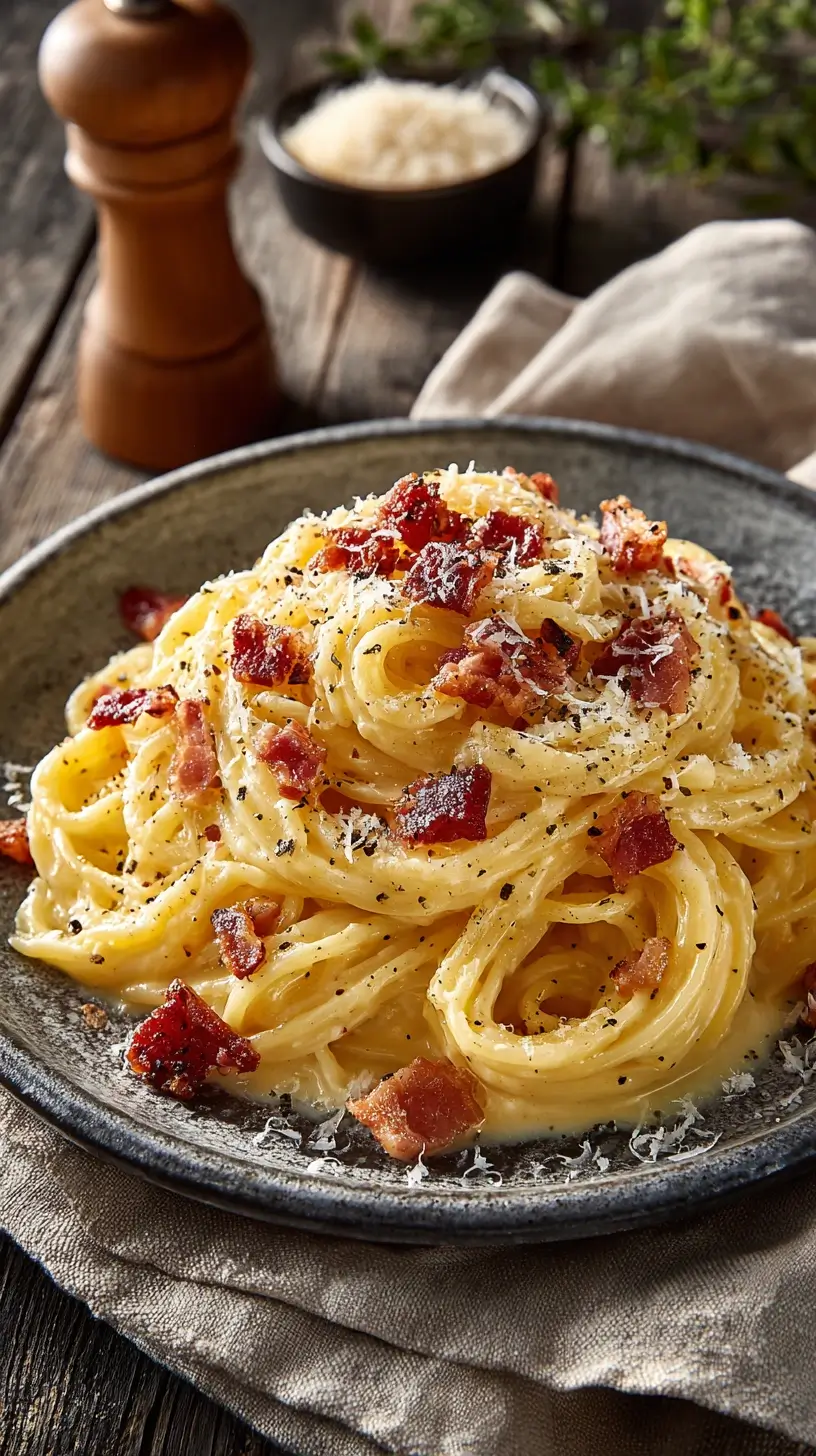
Spaghetti Carbonara
Learn how to make authentic Spaghetti Carbonara with this easy recipe. Creamy, rich, and ready in 25 minutes without any cream. Cook this classic Roman pasta tonight!
Ingredients
For the Ingredients & Tools
-
400 g spaghetti
-
150 g guanciale (diced)
-
3 large egg yolks (plus 1 whole egg)
-
100 g Pecorino Romano (finely grated, plus more for serving)
-
1 tsp freshly cracked black pepper
-
Fine sea salt (for the pasta water)
Instructions
-
Begin by bringing a large pot of well-salted water to a rolling boil. While you wait, you can get all your other components ready. This is a fast-paced dish, so having everything prepped and within arm's reach—what the French call *mise en place*—is absolutely crucial for success. You'll notice the difference it makes when you're not scrambling to grate cheese while your pasta is already cooked.01
-
Add your spaghetti to the boiling water and cook according to the package directions, but aim for al dente. You want a firm bite to it because it will cook for another minute in the pan later. While the pasta cooks, place your diced guanciale in a large, cold skillet. Turn the heat to medium and let it render slowly. You're looking for the fat to become translucent and the meaty bits to become golden and crispy. This should take about 8-10 minutes. Be careful not to burn it.02
-
While the guanciale renders and the pasta boils, it's time to make the heart of the sauce. In a medium mixing bowl, combine the 3 egg yolks and 1 whole egg. Whisk them together until just combined—you're not trying to add air, just to homogenize them. Then, whisk in your finely grated Pecorino Romano and the freshly cracked black pepper. The mixture will be very thick, almost like a paste. That's exactly what you want at this stage.03
-
Once the guanciale is crispy, use a slotted spoon to remove it from the skillet, leaving the rendered fat behind. Turn the heat off under the skillet. You now have a pan full of incredibly flavorful fat. This is your sauce base. The goal is to keep this fat hot, but not so hot that it scrambles the eggs when you add them later.04
-
This is the most critical part—the assembly. Just before your pasta is perfectly al dente, use tongs to transfer it directly from the pot into the skillet with the guanciale fat. A little water clinging to the pasta is good! Now, toss the pasta vigorously in the fat. You'll see it start to glisten and coat every strand. The trick is to work quickly but confidently from here.05
-
Take the skillet completely off the heat source. Let it sit for about 30 seconds to cool down slightly—this is your insurance policy against scrambled eggs. Now, slowly drizzle in a couple of tablespoons of the hot, starchy pasta water into your egg and cheese mixture while whisking constantly. This step, called tempering, gently raises the temperature of the eggs.06
-
Now, pour the tempered egg mixture over the pasta in the skillet. Immediately start tossing and stirring with rapid, confident motions. Use the tongs to lift and fold the pasta, coating everything. The residual heat from the pasta and pan will cook the eggs, creating a creamy, glossy sauce. If it looks too thick, add another splash of pasta water until it flows smoothly and coats the spaghetti luxuriously.07
-
Finally, stir in the crispy guanciale pieces, reserving a few for garnish on top. Give everything one final toss to distribute the meat evenly. Serve immediately in warm bowls, with an extra crack of black pepper and a generous snowfall of additional Pecorino Romano. The sauce will continue to thicken as it sits, so speed is your friend here.08
Not what you're looking for?